


Winnipeg Transit holds onto unclaimed items for a maximum of 30 days before they’re cleared out for good. That window feels generous right up until the moment someone remembers, three weeks after the fact, that they left a jacket on the bus and never followed up. Winnipeg Transit lost and found works, and items genuinely do turn up, but only within a real deadline that most riders have no idea exists until it’s already ticking down. To report a lost item or claim something found on a Winnipeg Transit bus, visit the Lost Property Office in the Southwest Concourse under Portage and Main, open weekdays from 9 a.m. to 4:30 p.m., or report it online. Have the item description, the route number, and the approximate time you were travelling ready, since all three speed up the search considerably.
- Where the Lost Property Office Actually Is
- How to Report a Lost Item
- How to Drop Off a Found Item
- What Happens After You Report It
- If What You Lost Was Your peggo Card
- If You Lost Something on Winnipeg Transit Plus Instead
- What to Have Ready Before You Go or Call
- What to Actually Do Next
- Frequently Asked Questions
The rest of this covers exactly how to reach the office, what actually happens once you report something, and a couple of situations, like a lost peggo card or a Transit Plus trip, that follow a different process entirely.
Where the Lost Property Office Actually Is
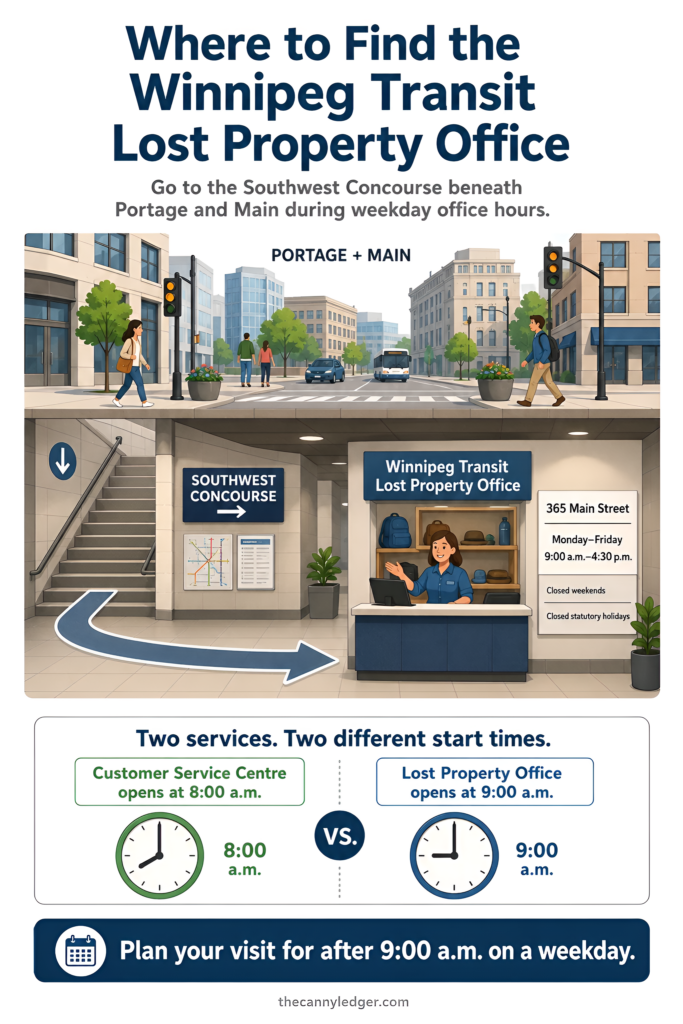
Winnipeg Transit’s Lost Property Office sits inside the Portage and Main Underground Concourse, on the southwest side, at 365 Main Street. It shares space with the Downtown Transit Customer Service Centre, but its hours run slightly differently from the rest of that centre.
The general Customer Service Centre operates Monday to Friday, 8 a.m. to 4:30 p.m. The Lost Property Office specifically opens a bit later, running weekdays from 9 a.m. to 4:30 p.m., and it’s closed entirely on weekends and statutory holidays. That half-hour gap between the centre’s opening and the Lost Property Office’s opening is easy to miss if you’re planning an early-morning visit before work, so it’s worth building that extra time into your trip if you’re hoping to check first thing.
How to Report a Lost Item
You have two ways to report something missing. Showing up in person at the Lost Property Office lets staff check current inventory against your description right there, which is often the fastest way to find out if your item has already turned up. Winnipeg Transit also accepts lost item reports online through a dedicated form, useful if you can’t get downtown during the office’s limited weekday hours or want to get the report filed the moment you realize something’s missing.
Whichever route you choose, come prepared with three pieces of information: a brief description of the item, the route number you were travelling on, and the approximate time of day you rode. Route number and timing matter more than people expect, since Winnipeg Transit runs dozens of routes across the city, and narrowing down which bus and roughly when dramatically shortens how long it takes staff to track an item back to the specific vehicle and driver.


How to Drop Off a Found Item
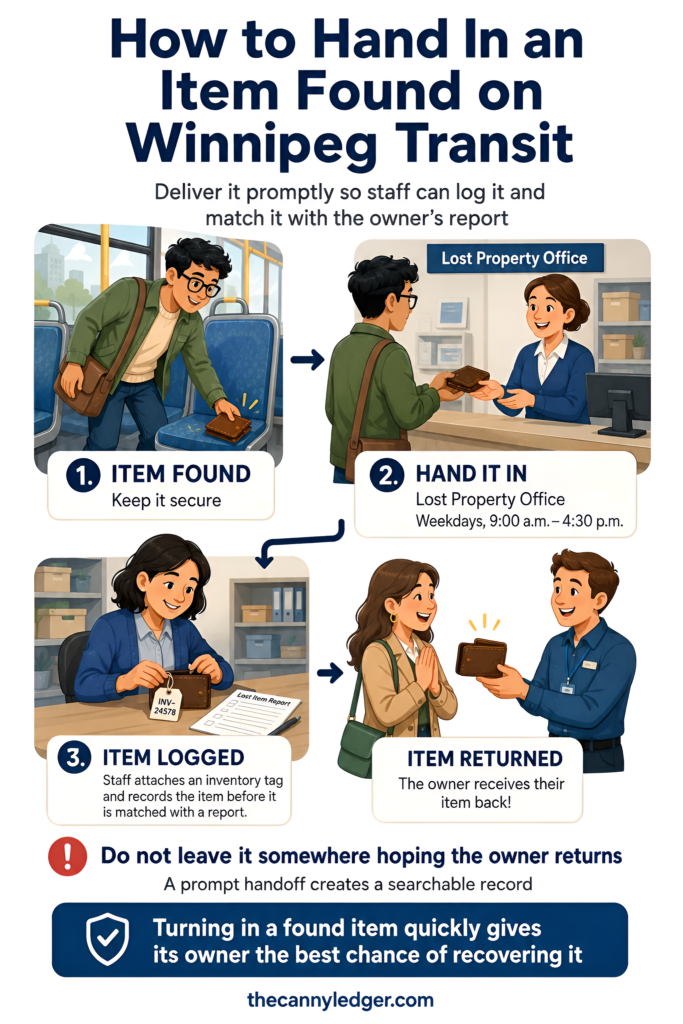
If you’re the one who found something, whether it was left on a seat or forgotten at a stop, the process runs through the same Lost Property Office. Drop it off during the same weekday hours, 9 a.m. to 4:30 p.m., and staff will log it the same way they would an item recovered directly from a bus operator.
This matters for a city where thousands of people ride transit daily. A found wallet, phone, or set of keys handed in promptly gives its owner a real shot at getting it back within that 30-day window, rather than it sitting somewhere it’ll never be connected to a lost item report.
What Happens After You Report It
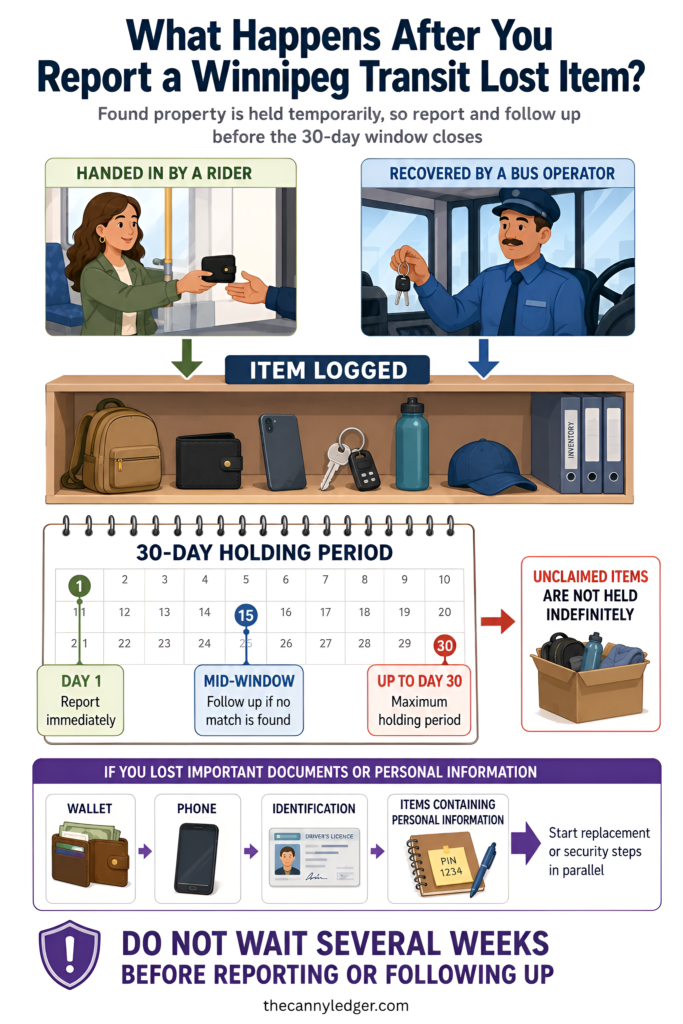
Once an item is logged, whether it was handed in by a rider or recovered by a bus operator during a routine check, it stays in the system for up to 30 days. That’s the outer limit, not a guarantee of exactly 30 days for every item, so the honest advice is to check as soon as you realize something’s missing rather than waiting to see if it turns up.
If you filed a report and haven’t heard back, following up directly at the office or by phone is worth doing before that window closes, since items that go unclaimed past the retention period aren’t held indefinitely afterward. For something like ID, a phone, or anything containing personal information, this urgency matters even more. A lost wallet often means dealing with more than the wallet itself, and if a Social Insurance Number card in Winnipeg was inside it, that’s a separate replacement process worth starting in parallel rather than waiting on the transit search to resolve first.
If What You Lost Was Your peggo Card
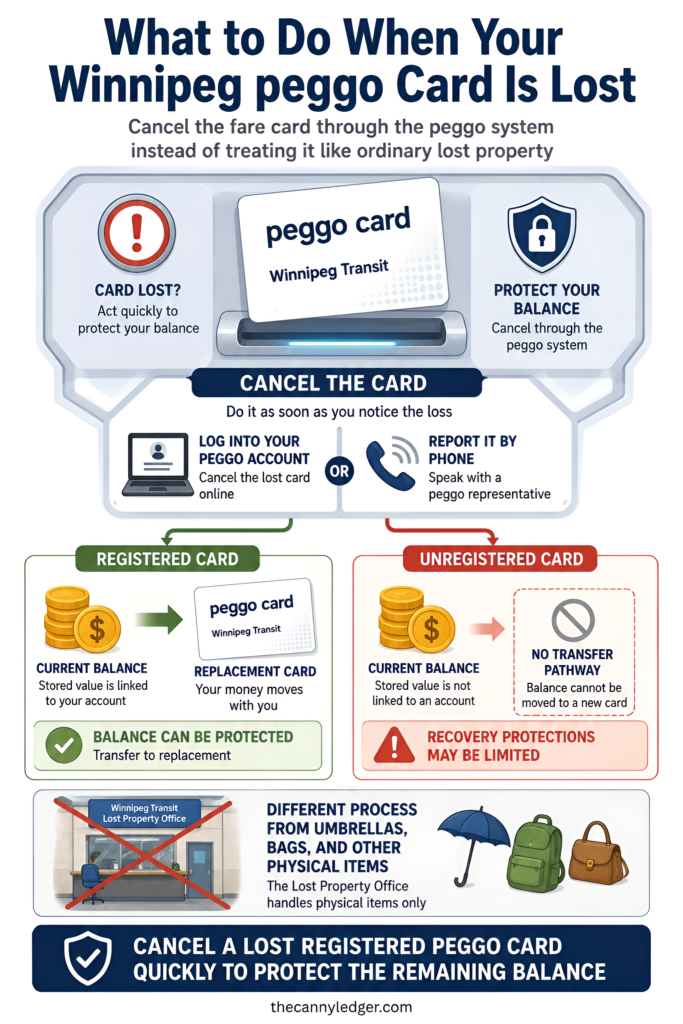
A missing peggo card doesn’t go through the Lost Property Office the same way a dropped umbrella would. Instead, it runs through Winnipeg Transit’s fare card system directly, either by logging into your peggo account online and cancelling the card, or by reporting it over the phone. Registered cards can have their remaining balance transferred to a replacement, which is a completely different recovery path than physically searching for a misplaced object. The full breakdown of how peggo cards work, including what registration actually protects and what a replacement costs, covers this specific situation in detail, since it’s genuinely a different process from general lost and found.
If You Lost Something on Winnipeg Transit Plus Instead
Winnipeg Transit Plus, the door-to-door service for riders who qualify, runs its own separate lost and found process rather than funnelling through the downtown Lost Property Office. If you lost or found an item on a Transit Plus vehicle specifically, the guidance is to call the Transit Plus office directly and as soon as possible, since time-sensitive lost property concerns aren’t handled through general online contact forms for that service. Have the same core details ready, a description of the item and the approximate time and trip details, when you call.

What to Have Ready Before You Go or Call
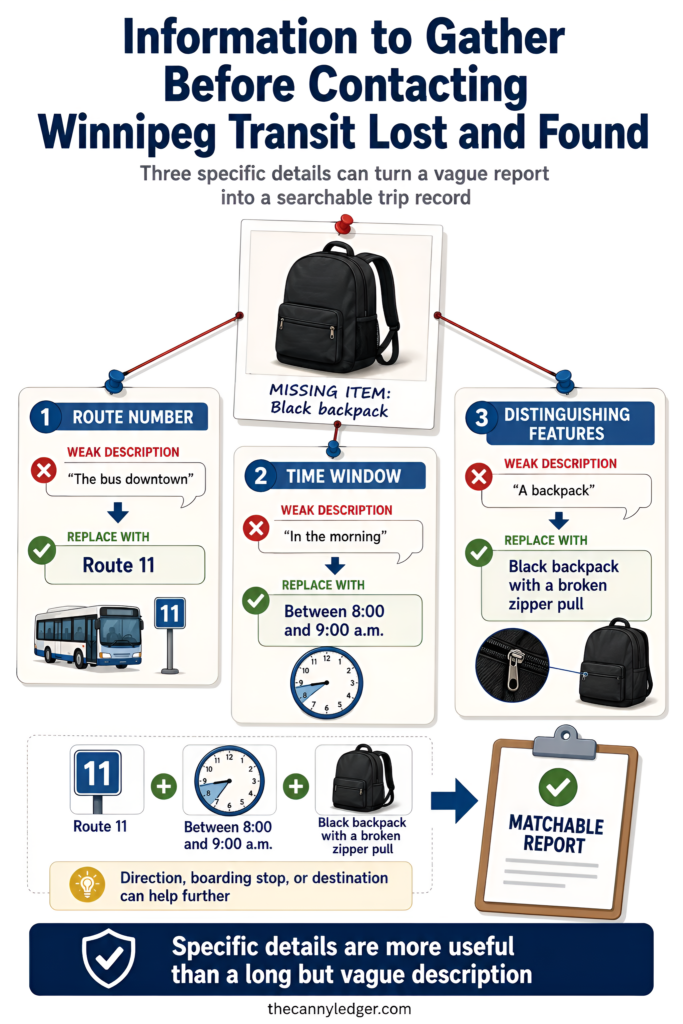
A little preparation makes the difference between a quick resolution and a frustrating back-and-forth. Write down the specific route number if you remember it, since “the bus downtown” doesn’t narrow much when dozens of routes cross through the same area daily. Note the approximate time, even a rough window like “sometime between 8 and 9 in the morning” gives staff something concrete to work with. And describe the item specifically rather than generally: a black backpack with a broken zipper pull is far easier to match against found items than simply “a backpack.”
What to Actually Do Next
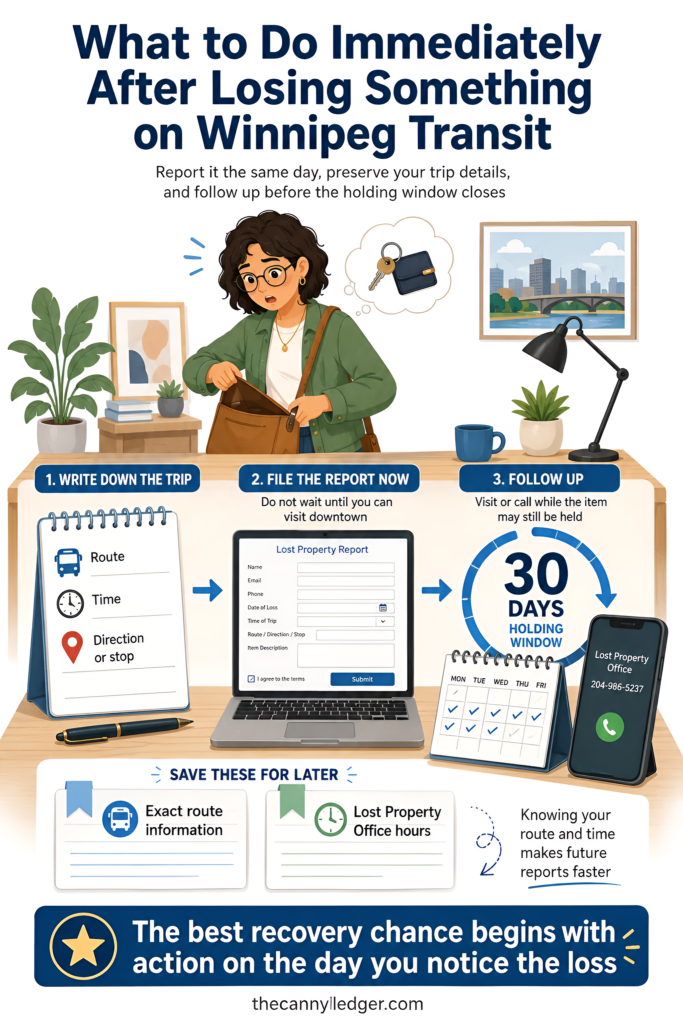
If you’ve just realized something is missing, don’t wait to see if it’ll turn up on its own. File a report online right away if you can’t get downtown during the Lost Property Office’s weekday hours, and follow up in person once you’re able to, since a report filed the same day you noticed the loss gives staff the best chance of matching it to what a driver or another rider has already turned in. If your commute regularly runs through downtown anyway, it’s worth keeping the office’s hours in mind for next time, since checking early in that 30-day window beats hoping it’s still there weeks later.
For everything else about getting around the city day to day, the Winnipeg Transit guide and Navigo trip planner are worth bookmarking alongside this, since knowing your exact route and timing is exactly the information that makes a lost item report actually work.
Frequently Asked Questions
Can I call instead of visiting the Lost Property Office in person? Yes, contacting Winnipeg Transit by phone through 311 is an option alongside the in-person visit or the online report form, particularly useful if you’re not near downtown.
Does Winnipeg Transit charge a fee to return a found item? No, there’s no fee to claim a lost item once it’s been located and matched to your report.
What happens to items that are never claimed within 30 days? Once the retention period passes without a successful match to an owner, items are no longer held in the Lost Property Office system, which is exactly why reporting promptly matters more than most riders assume.