

A pawn loan under $1,000 in Canada can legally carry an annual percentage rate of up to 48 percent, a full 13 points above the general 35 percent cap that applies to most other lending. That’s not a loophole or an oversight. It’s written directly into federal law, updated as recently as June 2024, and it exists because a pawn shop in Winnipeg works on a completely different risk model than a typical loan. The lender’s only recourse if you don’t pay is taking the item you left behind, never your wages, your credit score, or a collections call.
- How a Pawn Loan Actually Works
- What Manitoba Actually Regulates, and What It Doesn’t
- Winnipeg’s Own Rule Most Cities Don’t Have
- The Federal Interest Rate Cap That’s Higher Than You’d Expect
- Pawn Loan vs. Payday Loan vs. Selling Outright
- What Happens If You Don’t Redeem the Item
- Real Winnipeg Pawn Shops to Know
- Questions to Ask Before You Pawn Something
- What to Actually Do Next
Here’s the direct version: a pawn loan is a short-term, no-credit-check loan secured by an item you leave with the shop as collateral. You get cash upfront, a set period to repay it plus interest and redeem your item, and if you don’t, the shop simply keeps and resells what you pawned. No default follows you home the way it does with most other borrowing.
Understanding exactly where that higher interest rate comes from, what Manitoba does and doesn’t regulate about this industry, and how it stacks up against a payday loan is worth knowing before you walk into one, whether you’re pawning something or just curious how the whole thing actually functions.
How a Pawn Loan Actually Works
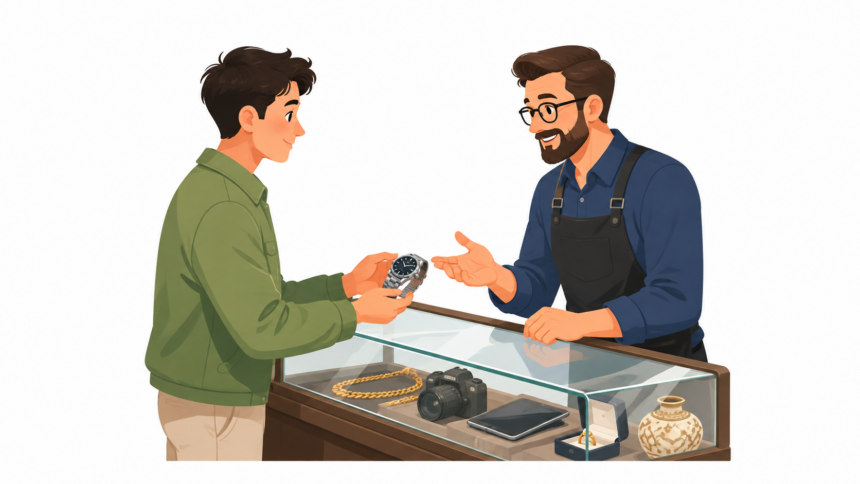
The mechanics are simple by design. You bring in an item, the pawnbroker appraises it and offers a loan amount based on that appraisal, typically a fraction of the item’s resale value, and if you accept, you walk out with cash and a pawn ticket. That ticket sets a redemption period and the total cost to get your item back, principal plus interest and any fees.
No credit check happens because none is needed. The loan isn’t really about your creditworthiness at all. It’s secured entirely by the physical item sitting in the shop’s possession until you either redeem it or don’t. If the redemption period passes without payment, the shop keeps the item and can resell it, and that’s the end of the transaction. There’s no debt collector, no impact on your credit report, and no ongoing obligation, since the item itself was the entire security for the loan.

What Manitoba Actually Regulates, and What It Doesn’t
This is where Manitoba genuinely differs from provinces like Ontario or British Columbia, which each maintain a standalone Pawnbrokers Act setting out licensing, interest rate structures, and record-keeping rules specific to the industry. Manitoba has no equivalent provincial Pawnbrokers Act. Instead, pawnbroking here gets handled through a combination of municipal business licensing and Manitoba’s general Consumer Protection Act.
Manitoba’s Consumer Protection Office does license and regulate specific categories of lenders directly, including payday lenders and what the province defines as high-cost credit grantors, requiring licensing, mandatory disclosure documents, and posted signage about loan terms. Pawnbrokers aren’t named among the categories that office directly licenses, which means the primary oversight for a Winnipeg pawn shop comes not from a dedicated provincial regulator but from the City of Winnipeg’s own business licensing requirements.

Winnipeg’s Own Rule Most Cities Don’t Have
One detail specific to this city rarely shows up in generic guides to pawn shops. Winnipeg requires pawnshops to maintain a minimum separation distance of 1,000 feet, roughly 305 metres, from another pawnshop or cheque-cashing facility, a zoning and licensing requirement documented in a municipal comparison of how Canadian cities manage pawn stores. This isn’t a universal rule; some cities in that same comparison impose no separation distance at all.
The reasoning behind separation distance bylaws generally centers on concentration effects, the idea that clustering pawnshops and cheque-cashing outlets in one area can create conditions that make it easier to offload stolen goods quickly. Whether or not you find that reasoning compelling, it’s a real constraint on where new pawn shops can open in this city, and it’s part of why Winnipeg’s pawn shops tend to be spread across different neighbourhoods rather than clustered in one commercial strip.

The Federal Interest Rate Cap That’s Higher Than You’d Expect
Canada’s Criminal Code generally caps the effective annual interest rate on a loan at 35 percent, following federal amendments that took effect in 2025. Pawnbroking loans get a specific, higher exception. Under federal Criminal Interest Rate Regulations, a pawnbroking loan qualifies for exemption from that general cap, and can legally charge up to 48 percent annual percentage rate, provided the loan is under $1,000, the collateral isn’t a vehicle, and the pawnbroker’s only recourse in the event of default is seizing the pawned item itself, with no ability to pursue the borrower personally for the remaining balance.
The federal government’s own justification for this gap is worth understanding, since it explains the logic rather than leaving it as an arbitrary number. Because a pawnbroker’s only recourse on default is repossessing the item, regulators concluded borrowers face less risk of getting trapped in an escalating debt cycle than they do with unsecured high-interest lending, since the consequence of non-payment is losing the item, not accumulating debt that follows you. That’s a meaningfully different risk profile than a payday loan, where the lender can pursue the outstanding balance directly.

Pawn Loan vs. Payday Loan vs. Selling Outright
These three options get lumped together constantly, but they work in genuinely different ways, and picking the wrong one for your situation costs real money.
A pawn loan risks only the item itself. Miss the redemption deadline and you lose the item, but you owe nothing further and nothing follows you afterward. A payday loan in Winnipeg, by contrast, is unsecured, meaning missing a payment doesn’t cost you a physical item, but it does leave you owing the lender directly, with the debt continuing to accrue and collection consequences attached if it goes unpaid. Selling an item outright to a pawn shop, rather than pawning it, gets you a lump sum immediately with no redemption period and no ongoing relationship at all, but you give up any chance of getting the item back once the sale is done.
The right choice depends entirely on whether you expect to want the item back. If you’re confident you’ll repay within the redemption window, a pawn loan keeps that door open. If you know you won’t want it back, selling outright usually gets you a cleaner transaction without the pressure of a deadline hanging over it.

What Happens If You Don’t Redeem the Item
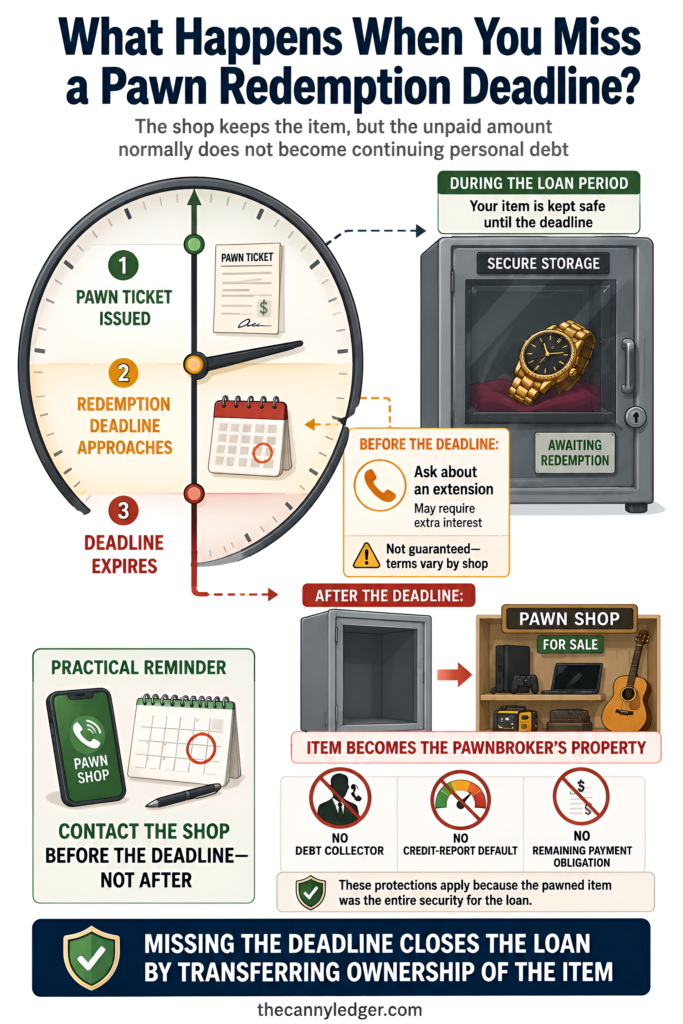
Missing the redemption deadline isn’t automatically a crisis, but it’s worth knowing what actually happens next. Once the period on your pawn ticket expires without repayment, the item legally becomes the pawnbroker’s property, and they’re free to sell it. Some shops offer an extension option if you contact them before the deadline passes, effectively paying additional interest to buy more time, though this isn’t guaranteed and terms vary by shop, so it’s worth asking directly rather than assuming it’s available.
What doesn’t happen is a debt collector showing up or a mark against your credit. The transaction closes with the loss of the item, full stop, which is exactly the tradeoff that justifies the higher interest rate allowed under federal rules in the first place.
Real Winnipeg Pawn Shops to Know
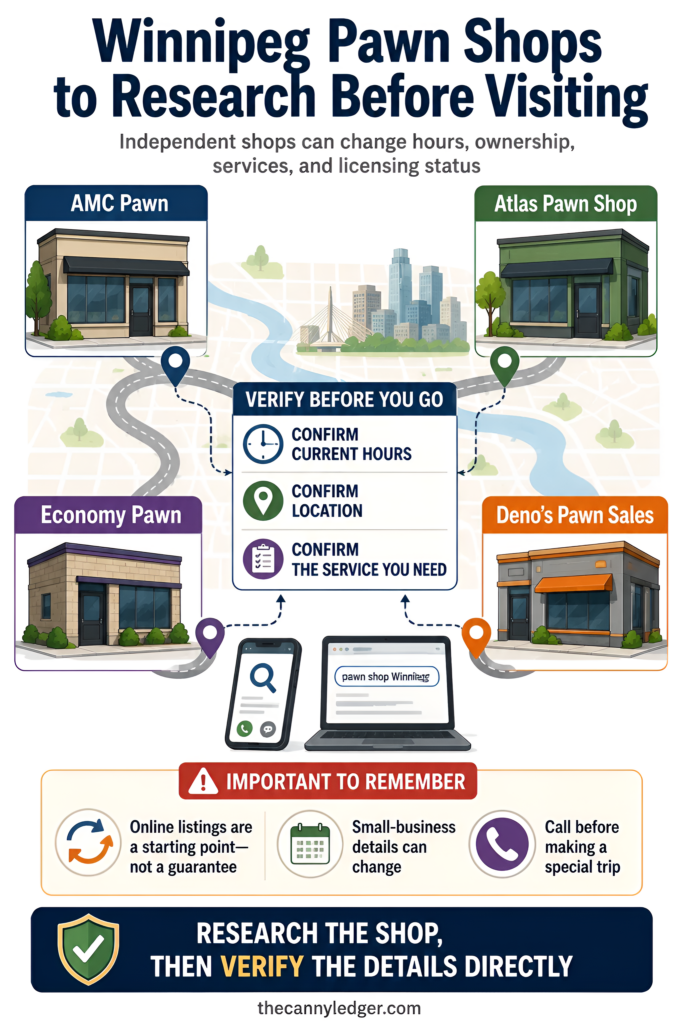
Winnipeg has a genuine mix of independent pawn shops spread across the city, including longer-running names like AMC Pawn, Atlas Pawn Shop, Economy Pawn, and Deno’s Pawn Sales, among others. Given how often hours, ownership, and even licensing status can shift for small independent businesses, treat any specific address or hours you find online as a starting point rather than a guarantee, and confirm directly with the shop before making a special trip.
Questions to Ask Before You Pawn Something
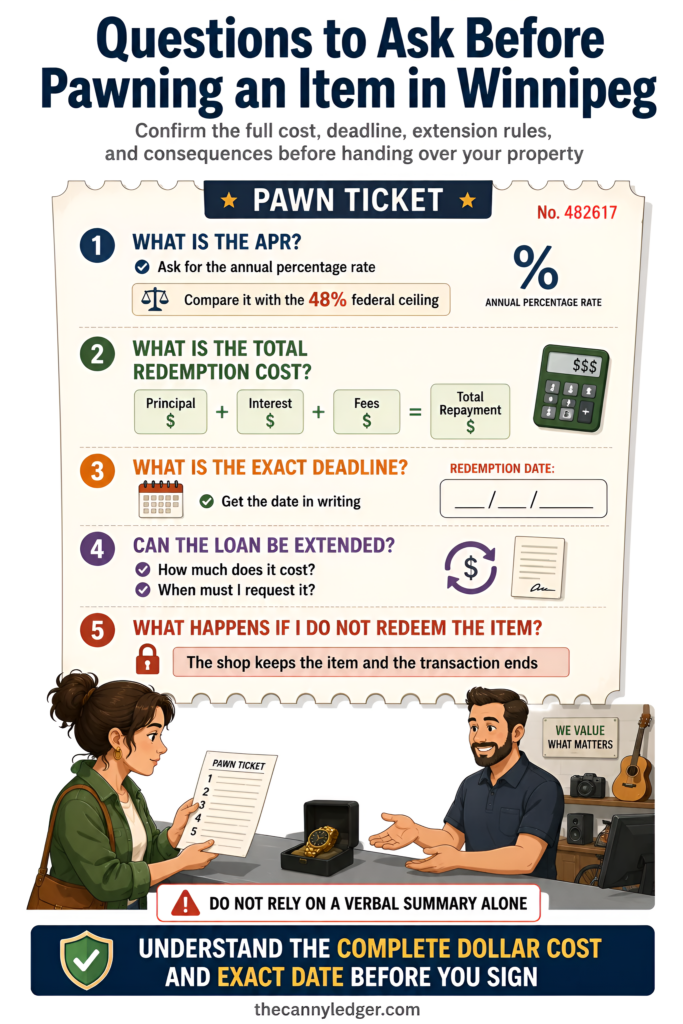
A few direct questions before handing over an item can save real frustration later. Ask exactly what the annual percentage rate works out to on your specific loan, not just a flat interest figure, since that lets you compare against the 48 percent federal ceiling and know whether you’re near it. Ask what the redemption period actually is in days, and whether an extension is available and what it costs if you need one. And ask what happens to the item specifically if you don’t redeem it in time, since confirming there’s no further obligation beyond losing the item is worth hearing directly from the shop rather than assuming.
What to Actually Do Next

If you’re considering a pawn loan, calculate the total cost to redeem your item, principal plus interest, before you commit, and compare that dollar figure against what you’d actually need to borrow through other means, including a personal loan in Winnipeg if your credit supports it. If the item has real value to you beyond its cash worth, confirm the exact redemption date in writing and set a reminder well before it arrives. And if you’re weighing this against ongoing debt pressure rather than a one-time cash need, it’s worth talking to credit counselling services in Winnipeg first, since a pawn loan solves a short-term cash gap but isn’t built to address a larger, recurring shortfall.