



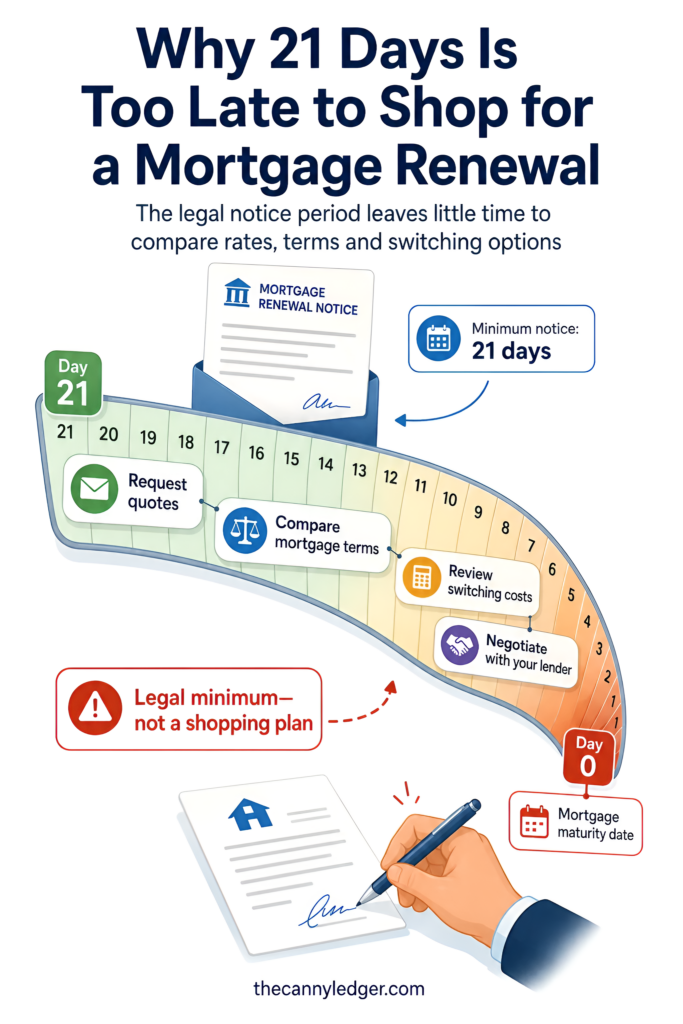
Federal rules only require your lender to send a renewal statement 21 days before your mortgage term ends, which sounds like a courtesy until you realize how little that actually gives you to work with. Twenty-one days is barely enough time to request a single competing quote, let alone properly shop your mortgage against several lenders, and that narrow window is a meaningful part of why most Canadians simply sign whatever their existing bank sends them rather than negotiating at all. The system isn’t designed to help you get the best rate at renewal. It’s designed around the minimum legal requirement, and getting a genuinely competitive rate means acting on your own timeline rather than the one your lender hands you.
- Your Bank’s Renewal Letter Is Not Their Best Offer
- The Legal Minimum Notice Is Only 21 Days, and That’s the Problem
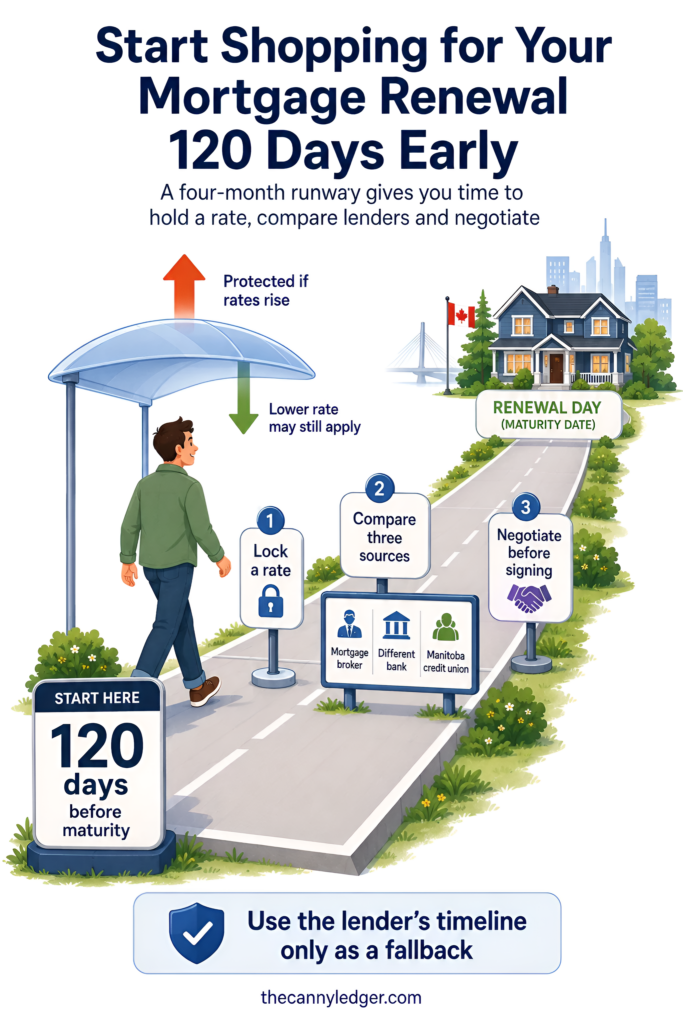
- Start the Clock at 120 Days, Not 21
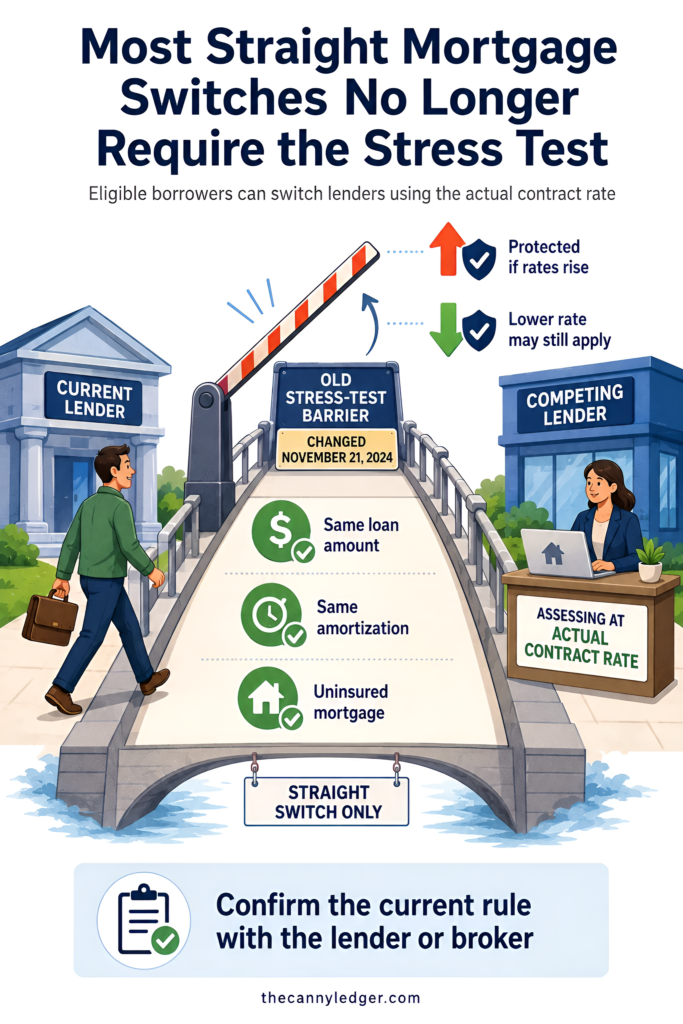
- The Stress Test Barrier Just Disappeared for Most Switchers
- What Switching Actually Costs
- Collateral Charge Mortgages Cost More to Switch
- Renewing Early: When It Helps and When It Backfires
- If You’re Coming Off a Variable Rate Mortgage Specifically
- A Realistic Renewal Timeline
- Common Questions
- Start the Clock Yourself, Don’t Wait for the Letter
Getting the best mortgage renewal rate in Winnipeg means starting the shopping process roughly 120 days before your maturity date, well ahead of the 21-day legal minimum, and treating your bank’s renewal letter as an opening bid rather than a final offer. A significant 2024 regulatory change also removed the stress test requirement for most straight lender switches, making it considerably easier than many homeowners realize to actually act on a better quote if one exists.
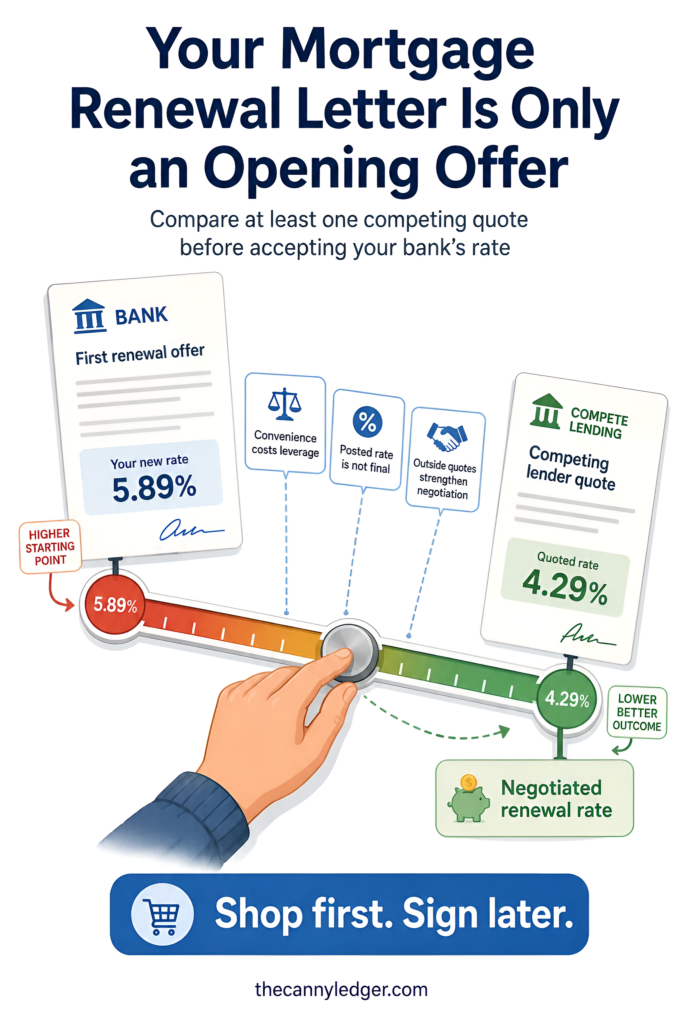
Your Bank’s Renewal Letter Is Not Their Best Offer
Lenders count on inertia. Renewing with your existing bank requires no new application, no requalification, and no paperwork beyond signing what’s already in front of you, and that convenience is precisely why so many Canadians renew without comparing rates at all. The letter your bank sends at renewal is typically priced closer to its posted rate than its genuinely competitive discounted rate, since there’s no incentive for the bank to offer its best number before you’ve shown any sign of shopping elsewhere. Treating that first letter as a starting point rather than a final answer, and getting at least one competing quote before responding, routinely uncovers a meaningfully better rate than what arrived in the mail.
The Legal Minimum Notice Is Only 21 Days, and That’s the Problem
Under Financial Consumer Agency of Canada rules, federally regulated lenders must send you a renewal statement at least 21 days before your term ends, and they’re required to give you that same 21 days of notice if they’ve decided not to renew you at all. That’s a legal floor, not a target, and treating 21 days as your actual shopping window means starting from a genuine disadvantage. A proper comparison, gathering competing quotes, reviewing prepayment and penalty terms, and actually deciding whether to stay or switch, takes considerably longer than three weeks to do without rushing into a decision you haven’t fully evaluated.
Start the Clock at 120 Days, Not 21
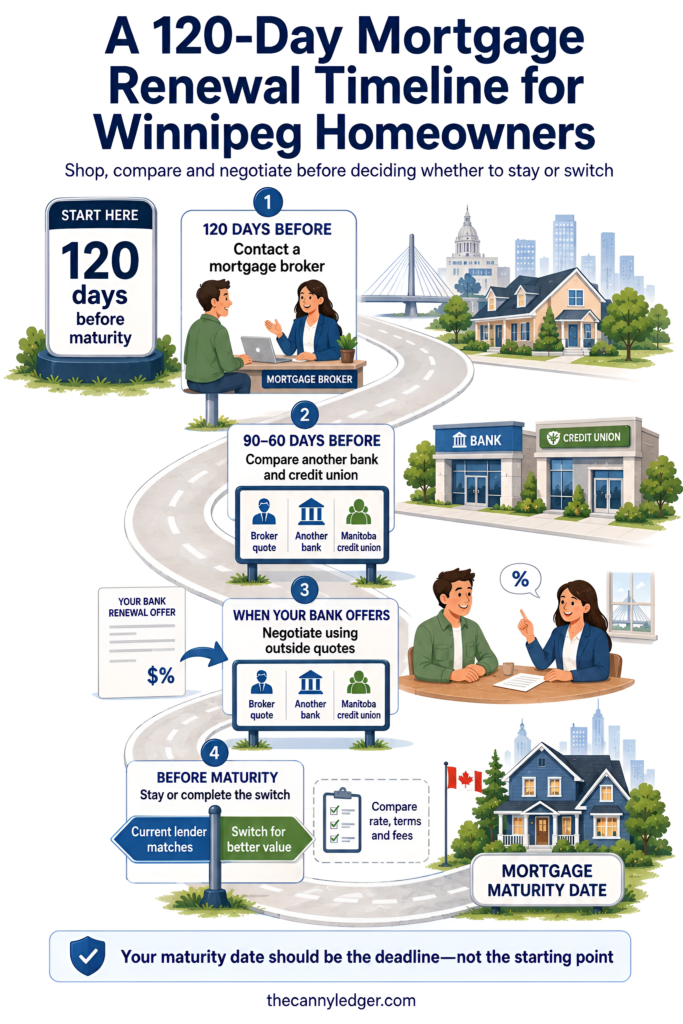
Most lenders, independent of the 21-day legal minimum, will let you lock in a renewal rate or start an application with a different lender up to 120 days before your maturity date, at no cost and with no obligation to follow through. This is the window that actually matters for getting a competitive outcome. Starting the process four months out gives you time to gather quotes from a broker, a different bank, and a Manitoba credit union, compare the actual terms rather than just the headline rate, and still have your existing lender’s renewal offer as a fallback if nothing better materializes. If rates move during that 120-day window, most rate holds protect you against an increase while still letting you take a lower rate if one becomes available before you sign.
The Stress Test Barrier Just Disappeared for Most Switchers
Here’s a genuinely significant change that a lot of Winnipeg homeowners still don’t know about. As of November 21, 2024, Canada’s banking regulator, the Office of the Superintendent of Financial Institutions, eliminated the mortgage stress test requirement specifically for straight switches of uninsured mortgages, meaning mortgages with a down payment of 20 percent or more. Before this change, a borrower switching lenders at renewal without increasing their loan amount or extending their amortization still had to requalify at the higher stress test rate, the Bank of Canada’s benchmark rate or their contract rate plus 2 percent, whichever was higher, even though they’d already been paying their existing mortgage successfully for years. Insured borrowers had already been exempt from this requirement, and this change closed that gap, meaning uninsured borrowers doing a straight switch now qualify based on their actual contract rate instead.

This matters enormously in practice, since the stress test barrier was a genuine reason some borrowers stayed with an uncompetitive renewal offer rather than switching, worried they wouldn’t requalify with a new lender at the higher stress-tested rate even though they could clearly afford their actual payment. If your situation is a straight switch, same loan amount, same amortization, this specific barrier no longer applies, and it’s worth confirming directly with any lender or broker you’re talking to that they’re applying the current rule correctly rather than the outdated stress test standard.
What Switching Actually Costs
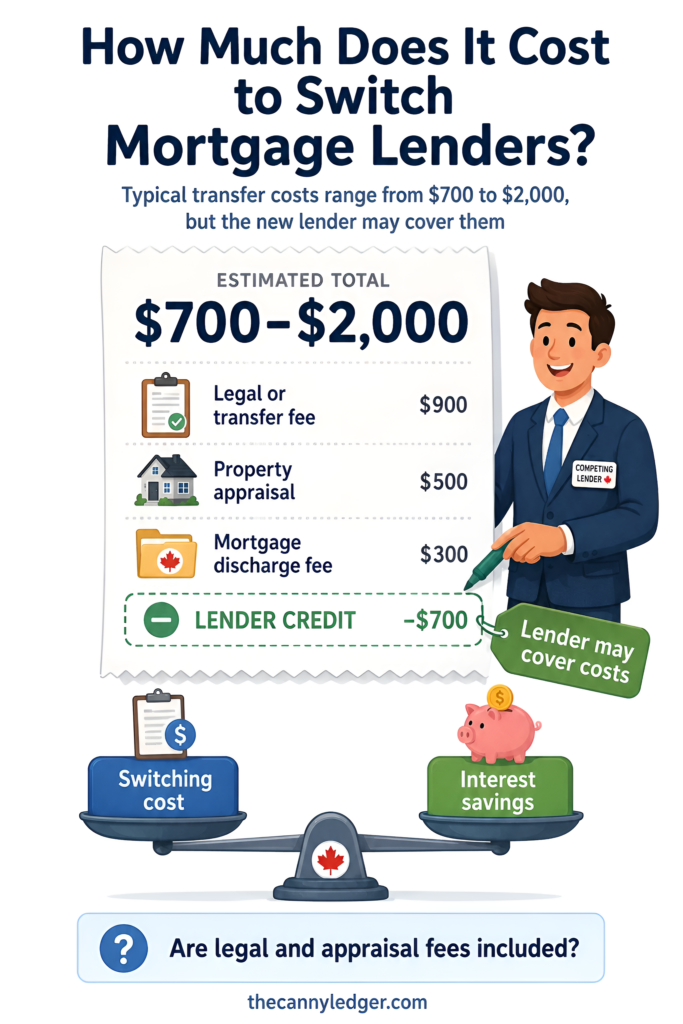
Switching lenders at renewal isn’t free, but the costs are more manageable than most people assume, and many lenders cover them as an incentive to win your business. Total switching costs typically run somewhere between $700 and $2,000, covering legal or transfer fees, an appraisal if required, and a discharge fee charged by your current lender to release the existing mortgage. New lenders competing for straight-switch business frequently cover some or all of these costs directly rather than passing them to you, so asking specifically whether legal fees or the appraisal are covered as part of a competing offer is worth doing before assuming a switch costs you the full amount out of pocket.
Collateral Charge Mortgages Cost More to Switch
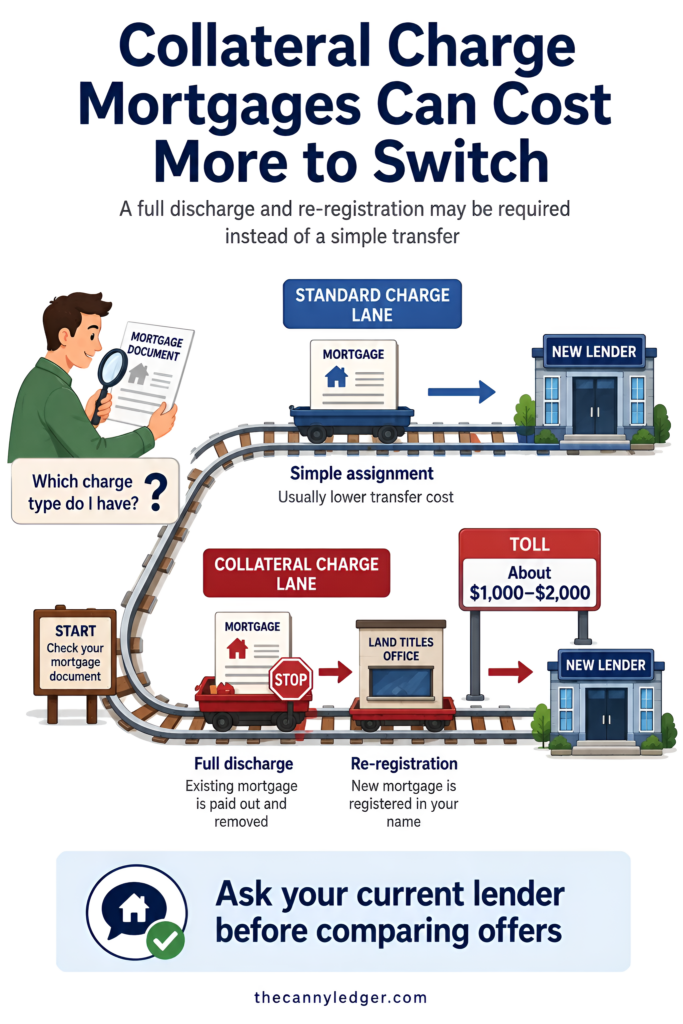
One detail worth checking before assuming your switching costs will land at the lower end of that range: collateral charge mortgages, the default structure at some lenders including TD Bank and common with certain home equity lines of credit, generally can’t simply be assigned to a new lender the way a standard charge mortgage can. Switching away from a collateral charge mortgage typically requires a full discharge and re-registration, running closer to $1,000 to $2,000 rather than the lower end of the standard range. Checking which charge type your current mortgage uses, a question your existing lender can answer directly, tells you which cost range to actually expect before you start comparing offers.
Renewing Early: When It Helps and When It Backfires
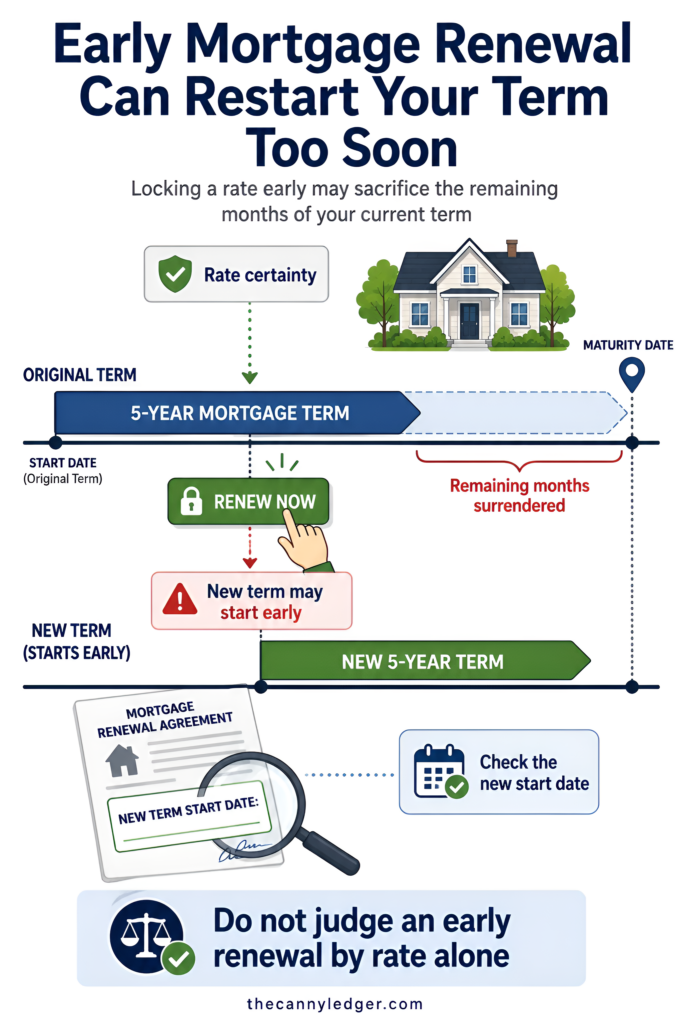
Renewing before your actual maturity date can make sense if rates look likely to rise and you want to lock in current pricing, but it comes with a genuine catch worth understanding first. Some lenders roll your new term’s start date forward to the day you sign the early renewal, rather than to your original maturity date, which means if you had four months remaining on your current term and renew early, you’re now locked into a new full term starting four months sooner than it needed to, and you’ve given up whatever negotiating leverage those remaining months might have provided. Reading the specific terms of any early renewal offer carefully, particularly around when the new term’s clock actually starts, matters before deciding early renewal is worth it just for rate certainty.
If You’re Coming Off a Variable Rate Mortgage Specifically
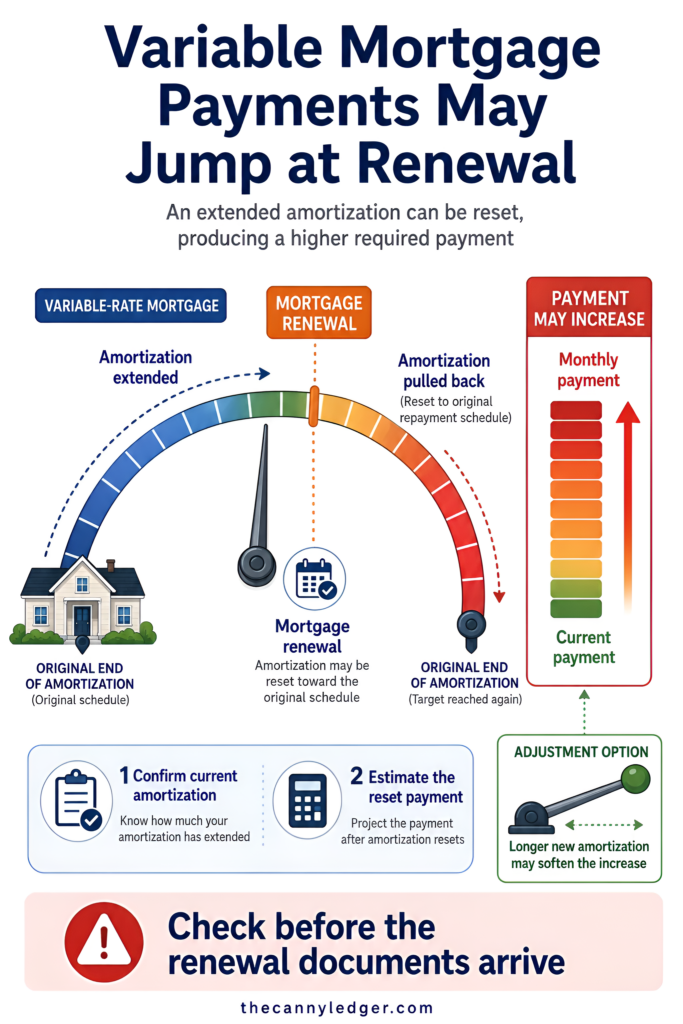
For anyone renewing out of a variable rate mortgage, particularly the static-payment VRM type covered in our guide to fixed vs variable mortgage rates in Winnipeg, renewal is exactly when a trigger rate situation from earlier in the term gets resolved, often through an amortization reset that produces a real payment increase. If your variable mortgage’s amortization extended beyond its original schedule due to rate increases during the term, renewal is when that gets corrected back to something closer to the original timeline, which can mean a payment jump that catches borrowers off guard if they haven’t been tracking their trigger rate status along the way. Confirming your current amortization position with your lender before renewal, rather than discovering the reset at the moment you sign, gives you time to budget for it or explore options like extending the new term’s amortization to soften the payment increase.
A Realistic Renewal Timeline
Mark your actual maturity date the moment you know it, then set a reminder for 120 days out rather than waiting for your lender’s letter to arrive. At that 120-day mark, contact at least one mortgage broker and check rates directly with a Manitoba credit union alongside whatever your existing lender eventually offers, since our guide to banks vs credit unions for Winnipeg mortgages covers exactly how those two categories tend to differ on both rate and terms. Use competing quotes to negotiate directly with your existing lender first, since many banks will match a genuinely competitive outside offer rather than lose the account entirely, and only proceed with an actual switch if your current lender won’t come close.
Common Questions
Does my existing lender have to match a competing rate I found elsewhere? No, there’s no legal obligation to match, but many lenders will when shown a genuine competing offer in writing, specifically because retaining an existing customer costs less than acquiring a new one, so asking directly rather than assuming they won’t budge is worth the conversation.
What happens if I do nothing and let my renewal date pass? Most lenders automatically renew you onto a short closed term, often at a less competitive rate, rather than leaving your mortgage unrenewed, so doing nothing doesn’t protect you from a bad rate, it just means you accepted whatever default terms your lender applied without ever seeing a better option.
Is it worth using a broker specifically for a renewal, not just a first-time purchase? Often yes, since a broker can benchmark your bank’s renewal letter against dozens of other lenders at no cost to you, the same commission structure that applies to a new purchase applies at renewal too. Our guide to shopping for the best mortgage rate in Winnipeg covers how that broker relationship actually works.
Start the Clock Yourself, Don’t Wait for the Letter
The single biggest lever you control in this entire process is timing, and it’s entirely in your hands regardless of what your lender’s minimum legal notice requires. Find your actual maturity date today, mark 120 days before it, and treat that as your real renewal start date rather than whenever a letter happens to arrive. Everything else, comparing offers, negotiating with your existing lender, deciding whether a switch is worth the cost, only works if you’ve given yourself enough runway to actually do it properly. For the current rate figures to bring into that negotiation, our guide to current mortgage rates in Winnipeg covers where fixed and variable pricing sits today.