


A mortgage broker gets paid by the lender, not by you, and that single fact explains why so many Winnipeg buyers walk into their bank branch, accept whatever rate gets quoted, and never find out what else was actually available. There’s a persistent assumption that using a broker costs extra, some kind of finder’s fee tacked onto your mortgage, and it’s simply not how the standard residential mortgage business works in Canada. Understanding who actually pays for what in this process changes the entire calculation on whether shopping around is worth the effort.
- The Myth That Stops People From Shopping Around
- Get More Than One Pre-Approval Before You Fall in Love With a House
- Understanding Rate Holds and Why Timing Them Matters
- Posted Rate vs Discounted Rate: The Number That Actually Matters
- What a Broker Can Access That You Can’t Get Walking Into a Branch
- When Going Directly to a Bank or Credit Union Still Makes Sense
- Improving Your Position Before You Even Start Shopping
- Cashback Mortgages and Other Offers That Aren’t Free Money
- Comparing Offers Apples-to-Apples
- A Realistic Shopping Timeline
- Common Questions
- Compare Before You Commit, Not After
Shopping for the best mortgage rate in Winnipeg means comparing more than one lender’s quote before committing, and that comparison should include at least one broker alongside a direct bank or credit union, since a broker’s access to dozens of lenders and volume-based pricing typically costs you nothing while potentially saving thousands over your mortgage term. The real work isn’t finding a broker or a bank, it’s understanding what actually makes one offer genuinely better than another beyond the headline rate.
The Myth That Stops People From Shopping Around
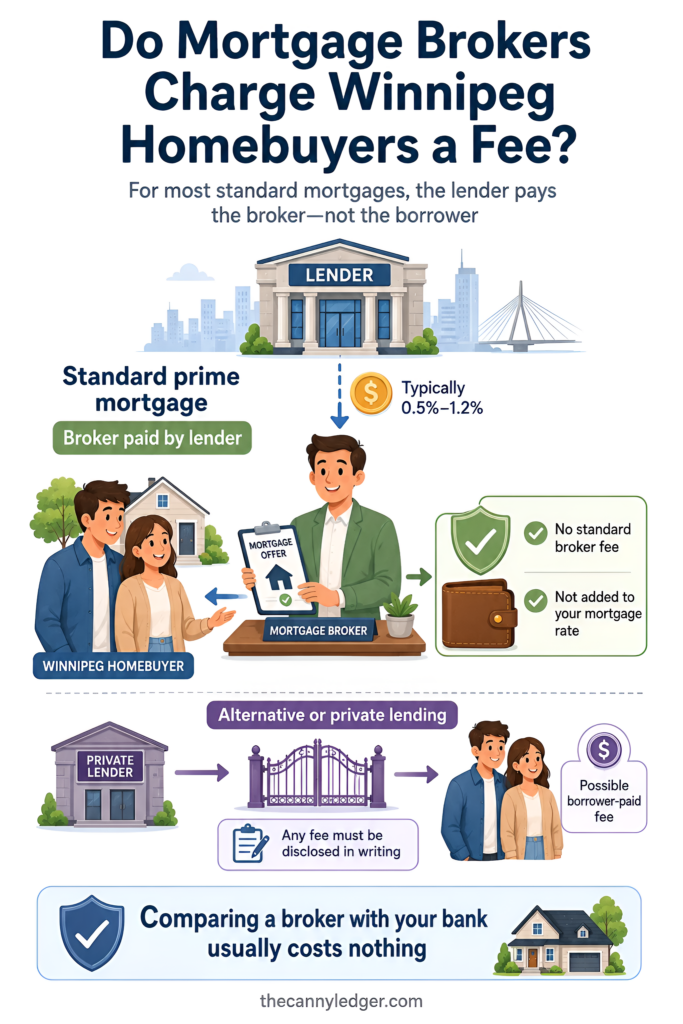
On a standard prime residential mortgage, the lender pays the broker a one-time commission once your mortgage funds, typically somewhere between 0.5 and 1.2 percent of your total mortgage amount. That commission comes out of the lender’s own margin, not out of your rate or your pocket, and it doesn’t get added on top of whatever rate you’re quoted. This structure exists because brokers pre-vet and package serious, qualified clients, which saves lenders the cost of staffing branches to field a much larger volume of casual rate-shoppers who never actually follow through. From the borrower’s side, that means comparing a broker’s rate against your own bank’s rate costs you nothing beyond the time it takes to have the conversation.
Where this shifts is outside standard prime lending. If your situation requires a B-lender or alternative lender, self-employment income that doesn’t fit a standard box, credit challenges, or an unconventional debt ratio, some lenders in that category pay brokers less commission or none at all, and a borrower-paid fee can enter the picture. Private lending works differently again, with the broker’s compensation typically coming directly from the borrower rather than the lender. Any situation where you’d be paying a broker fee has to be disclosed to you in writing before you sign anything, so if a broker mentions a fee, ask directly which category your file falls into and why.
Get More Than One Pre-Approval Before You Fall in Love With a House
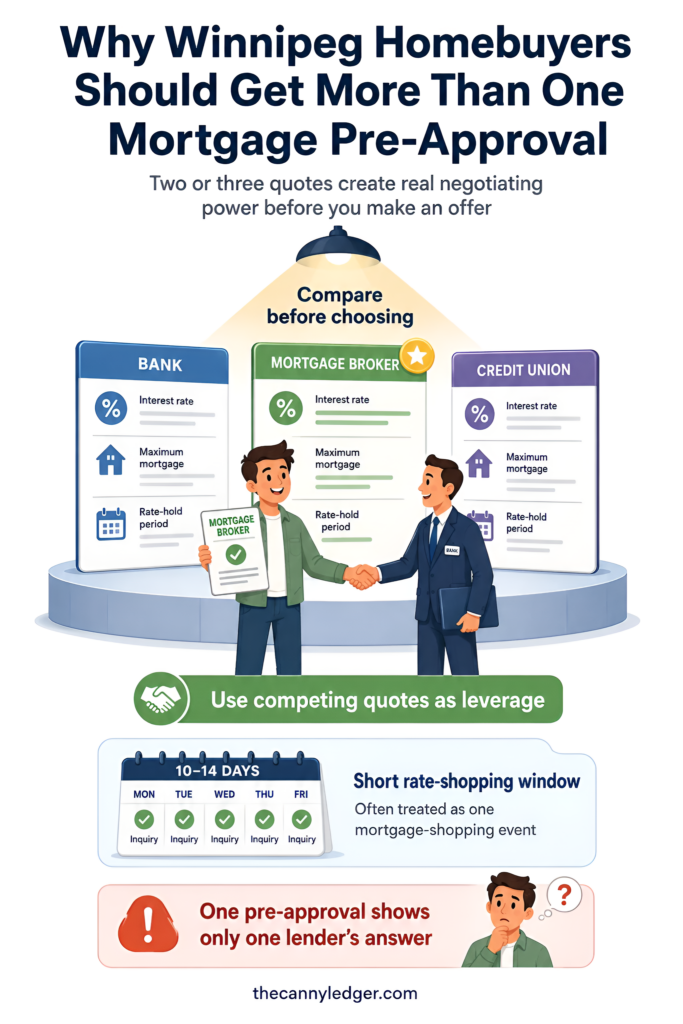
The single biggest structural mistake in mortgage shopping isn’t picking the wrong lender, it’s getting exactly one quote and treating it as the only option available. A pre-approval from a second source, whether that’s a broker, a different bank, or a Manitoba credit union, costs you nothing and typically doesn’t hurt your credit score if done within a reasonable window, since credit bureaus generally treat multiple mortgage inquiries within a short period as a single rate-shopping event rather than several separate hard pulls. Having two or three pre-approvals in hand before you start seriously touring homes means you’re negotiating from a position of actual comparison rather than accepting the first number you heard because you didn’t want to start the process over.
Understanding Rate Holds and Why Timing Them Matters
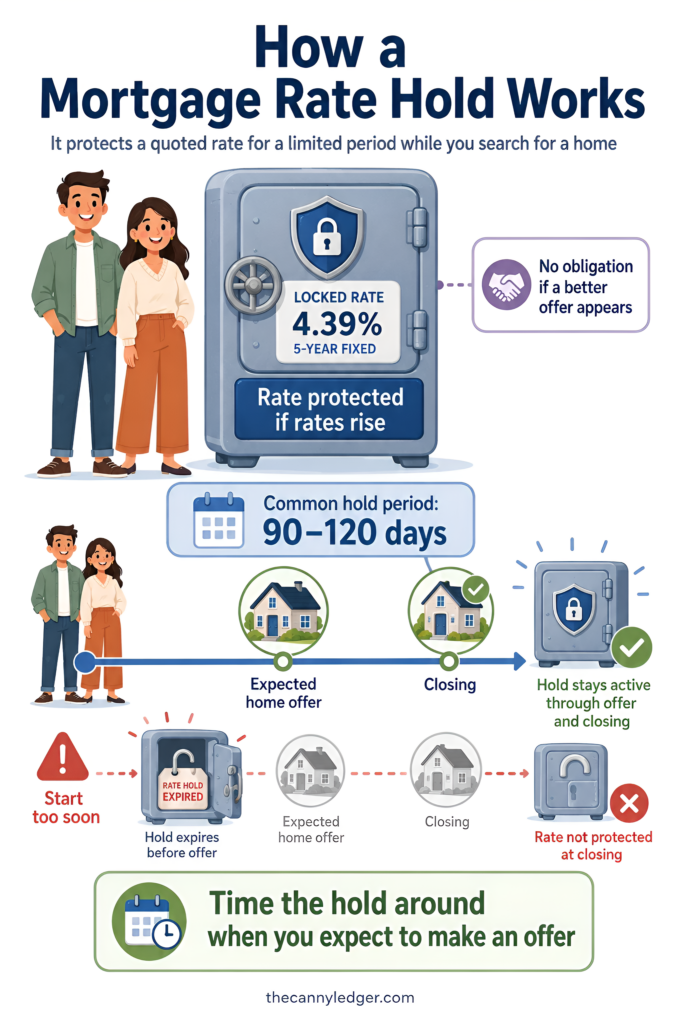
A rate hold locks in a specific interest rate for a set window, commonly 90 to 120 days, protecting you if rates rise while you’re still house hunting without obligating you to that lender if a better offer shows up before you actually close. This matters practically because Winnipeg’s housing market can move faster than a rate environment stays static, and starting your rate hold too early, before you’re genuinely close to making an offer, means it can expire before you actually need it, forcing you to requalify against whatever rates look like by then. Timing your rate hold to roughly when you expect to make an offer, rather than the moment you first start browsing listings, keeps that protection actually useful when you need it.

Posted Rate vs Discounted Rate: The Number That Actually Matters
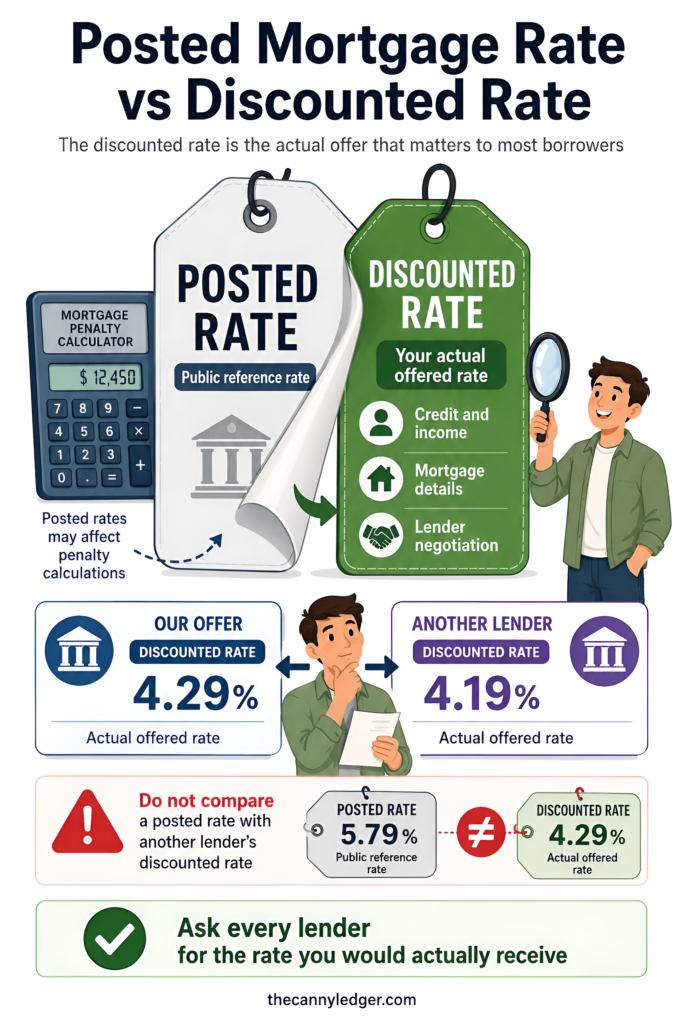
Banks publish a posted rate that’s almost never what an actual qualified borrower pays, it exists mainly as a reference point for calculating mortgage penalties and, historically, for stress test purposes before the current stress test rules took over that function. The rate that matters to you is the discounted rate, the actual number a lender or broker offers based on your specific application, and the gap between posted and discounted can run several percentage points on a standard bank mortgage. If a lender or advertisement ever cites a posted rate as though it’s competitive, that’s a signal to keep shopping rather than a rate worth taking seriously.
What a Broker Can Access That You Can’t Get Walking Into a Branch
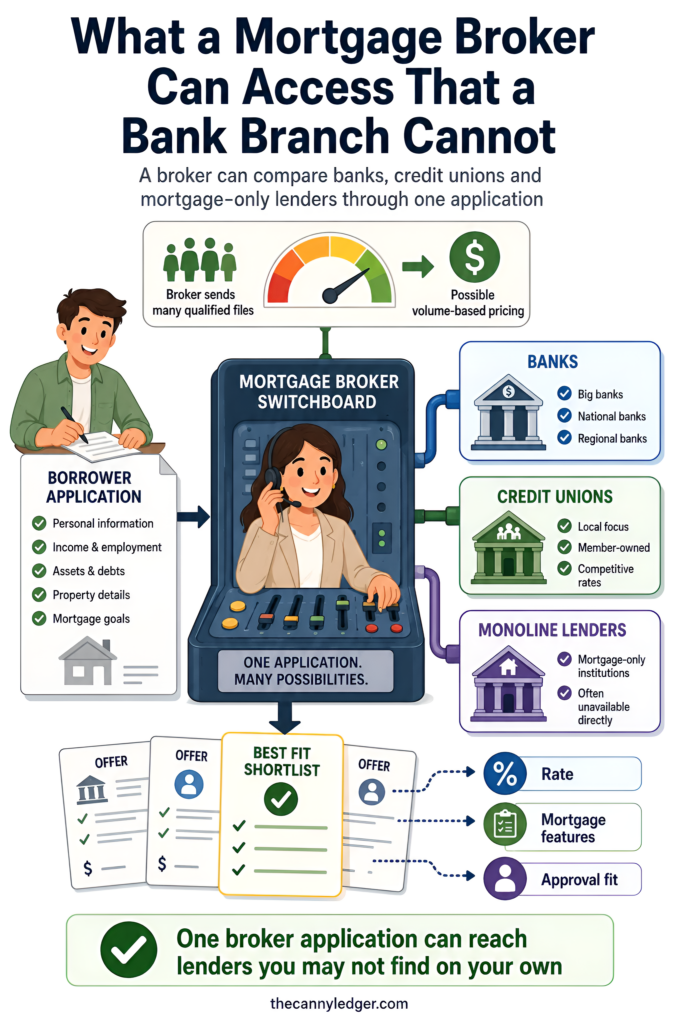
Brokers work with dozens of lenders at once, banks, credit unions, and monoline lenders that only operate through the broker channel and don’t take retail customers directly at all. This access matters for two reasons beyond simple rate comparison. First, brokers can negotiate volume-based pricing with major lenders, since they’re bringing in a steady stream of vetted business rather than a single one-off application, sometimes resulting in a lower rate than what an individual could negotiate walking in cold. Second, monoline lenders, the mortgage-only institutions that don’t offer chequing accounts or credit cards, often price genuinely competitively precisely because they don’t carry a branch network’s overhead, but they’re generally only reachable through a broker rather than a direct application.
When Going Directly to a Bank or Credit Union Still Makes Sense
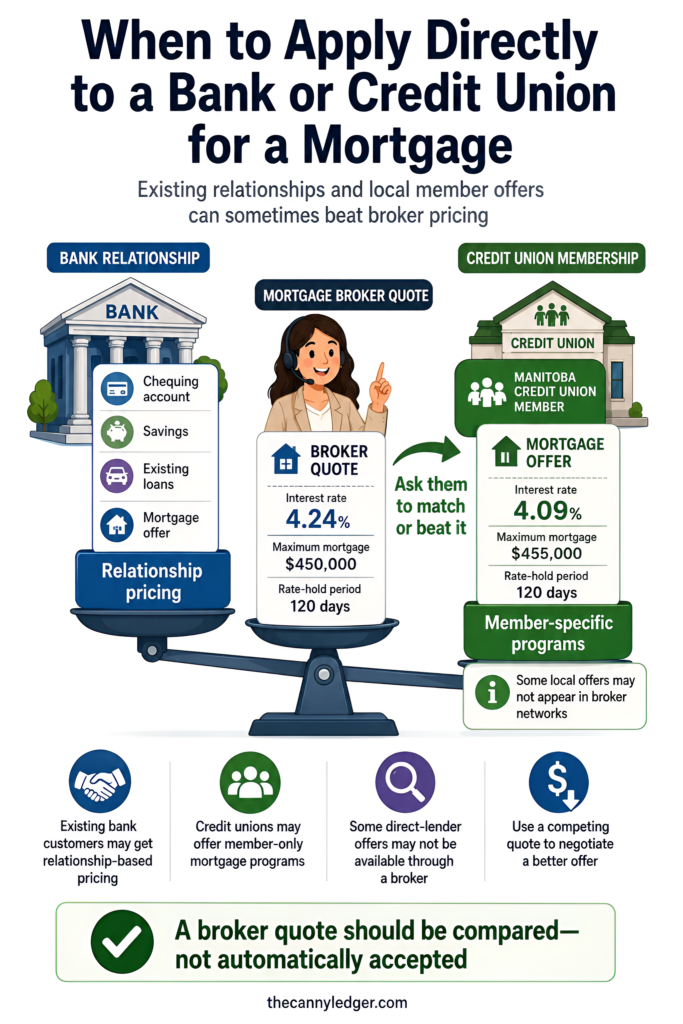
None of this means a broker automatically beats a direct application every time. If you already bank with a specific institution and have an existing relationship, sometimes a mortgage specialist there can match or beat broker pricing specifically to keep your full banking relationship in-house, since retaining a customer across chequing, savings, and lending products is worth more to a bank than winning the mortgage alone. Manitoba’s own credit unions, Assiniboine and Cambrian among them, also deserve a direct conversation rather than assuming a broker automatically covers their pricing, since credit union rates and member-specific programs don’t always flow through the same broker networks that connect to national banks and monolines. Our guide to banks vs credit unions for Winnipeg mortgages covers that comparison in more depth, and our breakdown of fixed vs variable mortgage rates in Winnipeg covers the term-type decision that shapes which lenders even make sense to compare in the first place.
Improving Your Position Before You Even Start Shopping
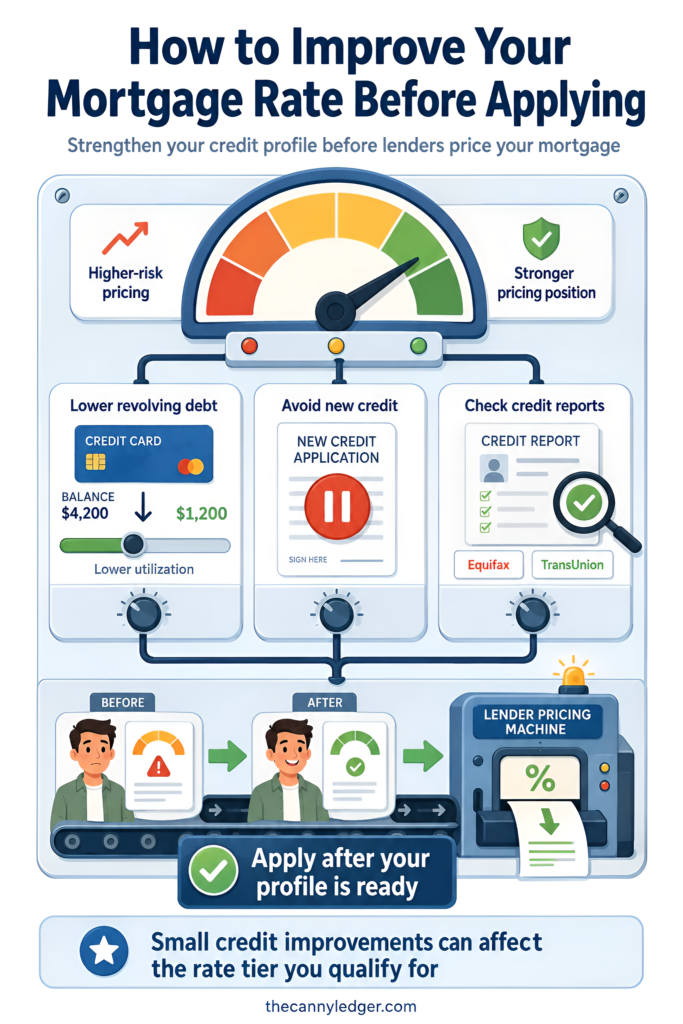
The rate you’re offered depends heavily on factors you can actually influence before you ever submit an application. Paying down revolving debt, avoiding new credit applications in the months before applying, and correcting any errors on your credit report can meaningfully shift your score into a better pricing tier before a lender ever runs a check. Checking your own credit report through Equifax or TransUnion, both of which offer free access to your own report, costs nothing and takes a fraction of the time it takes to discover a rate-limiting error after you’ve already submitted a full mortgage application.
Cashback Mortgages and Other Offers That Aren’t Free Money
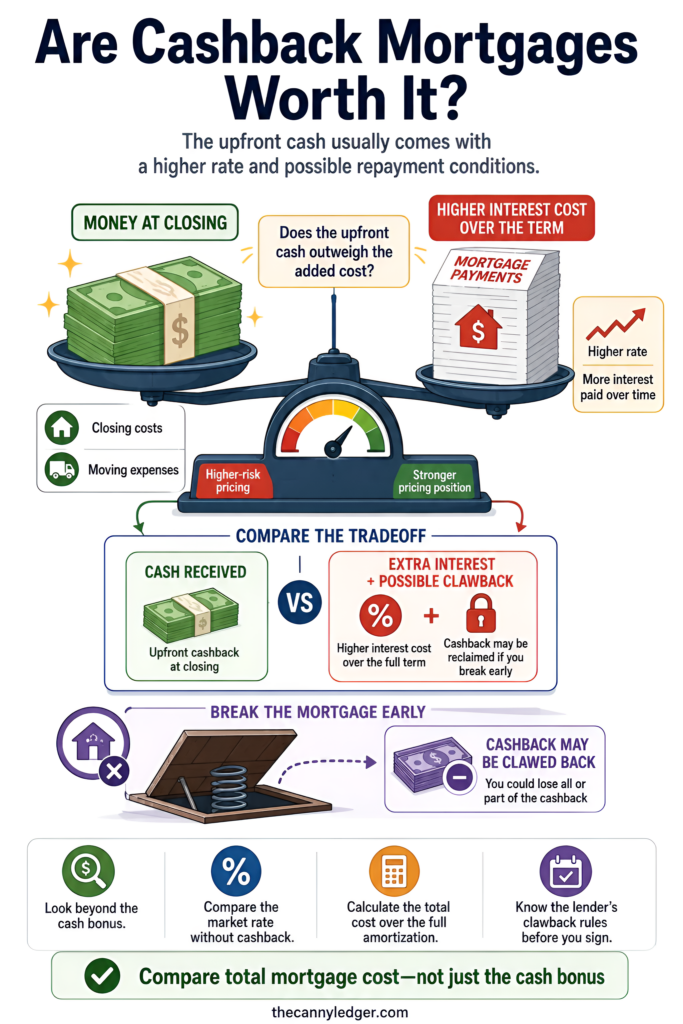
Some lenders advertise cashback mortgages, a lump sum paid to you at closing in exchange for accepting a higher interest rate over the term. The math on these deals genuinely can work in a borrower’s favour for a specific short-term cash need, covering closing costs or immediate moving expenses, but the tradeoff is real. That cashback typically gets baked into a rate that costs more over the full term than what you received upfront, and if you break the mortgage early, many lenders claw back some or all of the cashback as part of the penalty calculation. Treat any cashback offer as a rate decision first and a cash bonus second, running the actual total cost comparison rather than being drawn in by the upfront number alone.
Comparing Offers Apples-to-Apples
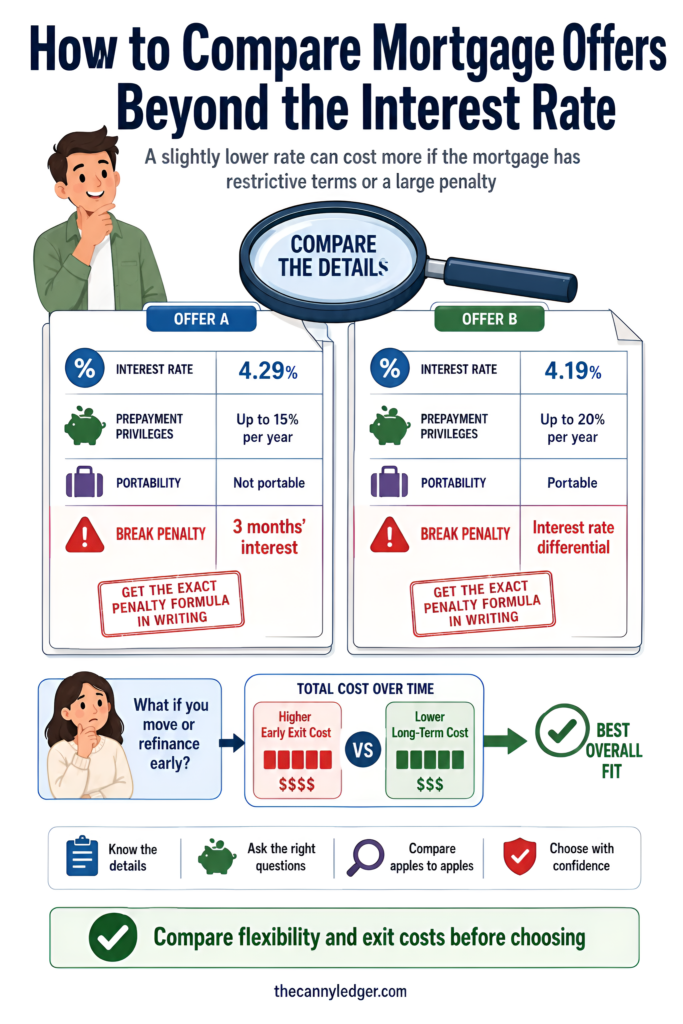
A lower headline rate isn’t automatically the better deal once prepayment privileges, portability, and penalty structures enter the picture. Prepayment privileges determine how much extra you can pay toward your principal each year without penalty, and they vary meaningfully between lenders, some allow 20 percent of the original principal annually, others cap it lower. Portability determines whether you can transfer your existing mortgage to a new property if you move before the term ends without breaking it and paying a penalty. And penalty calculations themselves differ significantly between lenders, some use a simple three-months-interest formula for fixed-rate breaks, while others use an interest rate differential calculation that can run into the thousands of dollars more depending on how rates have moved since you signed. Asking for the specific penalty formula in writing, not just a general description, before comparing two offers is the only way to know which one is actually cheaper if your plans change mid-term.
A Realistic Shopping Timeline
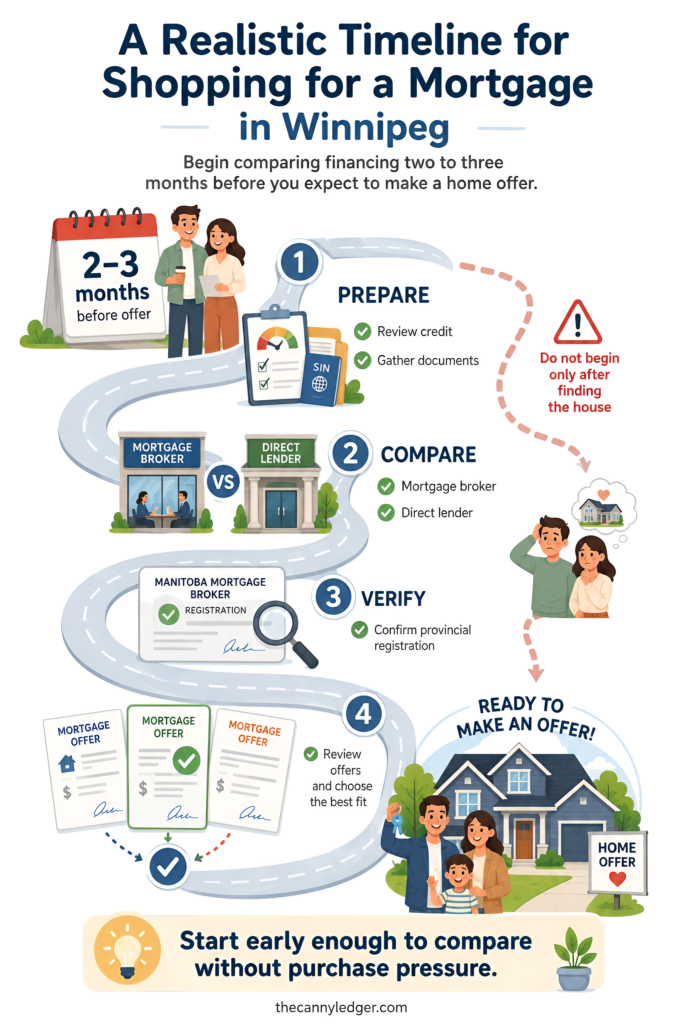
Start gathering pre-approvals roughly two to three months before you expect to make an offer, giving yourself enough runway to compare at least a broker and a direct lender without rushing the decision under pressure from a specific house you’ve already fallen for. If you’re working with a Manitoba-licensed broker, confirming their registration directly through the Manitoba Securities Commission, which administers the province’s Mortgage Brokers Act and licenses every mortgage broker and salesperson in the province, takes a couple of minutes and confirms you’re dealing with someone actually held to provincial regulatory standards rather than someone operating outside them.
Common Questions
Does getting multiple pre-approvals hurt my credit score? Generally no, as long as they happen within a short window, typically 14 to 45 days depending on the credit scoring model, since credit bureaus recognize rate shopping and bundle those inquiries together rather than treating each one as a separate hard hit.
Can I switch lenders after getting a rate hold if I find a better offer? Yes, a rate hold isn’t a binding commitment, it simply protects a specific rate for a window of time. You’re free to proceed with a different lender’s offer if it turns out to be better before you actually close.
Is a broker better than my own bank for a mortgage renewal, not just a new purchase? Often yes, since your existing bank counts on inertia at renewal time and doesn’t always offer its best available rate automatically, while a broker or even a direct conversation with a different lender can reveal what you’d actually qualify for elsewhere. Our guide to mortgage renewal in Winnipeg covers that specific situation in more depth.
Compare Before You Commit, Not After
The rate you end up with depends far more on how many genuine comparisons you actually made than on which single lender you happened to walk into first. Pull at least one broker quote and one direct quote from a bank or Manitoba credit union, request the full prepayment and penalty terms in writing for each, and only then decide, since the several hours this takes upfront routinely saves more money over a mortgage term than almost anything else in the entire home-buying process. For the actual current rate figures to bring into those conversations, our guide to current mortgage rates in Winnipeg covers where fixed and variable pricing sits right now.