“Debt consolidation” gets used as a catch-all phrase in a way that hides how different the actual options are from each other. Someone might mean a personal loan from their credit union. Someone else might mean a formal, government-regulated consumer proposal filed through a licensed trustee. A third person might mean a debt management plan run by a non-profit that isn’t a loan at all. All three get marketed under the same phrase, and mixing them up is exactly how people end up choosing a path that doesn’t fit their actual situation.
- First, what debt consolidation is actually solving for
- Option one: a personal loan or line of credit from a bank or credit union
- Option two: a home equity line of credit, if you own your home
- Option three: a balance transfer credit card
- Option four: a debt management plan through a non-profit credit counselling agency
- Option five: a consumer proposal through a Licensed Insolvency Trustee
- What doesn’t count as consolidation, even when it’s marketed that way
- If collection calls are already part of your daily reality
- Choosing between them without a sales pitch attached
This piece is meant to untangle that. If you’re carrying multiple credit card balances, a couple of loans, and maybe a payday loan or two, and you’ve reached the point of Googling “debt consolidation Winnipeg” at eleven at night, you deserve a clear map of what each option actually does, what it costs, who qualifies, and which one tends to suit which kind of situation. We’ll go roughly in order from the least disruptive option to the most, since that’s usually the order worth considering them in.
First, what debt consolidation is actually solving for
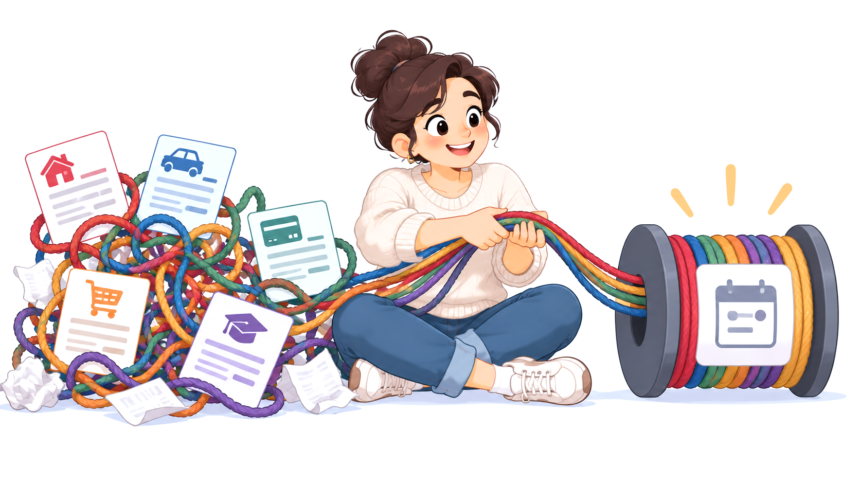
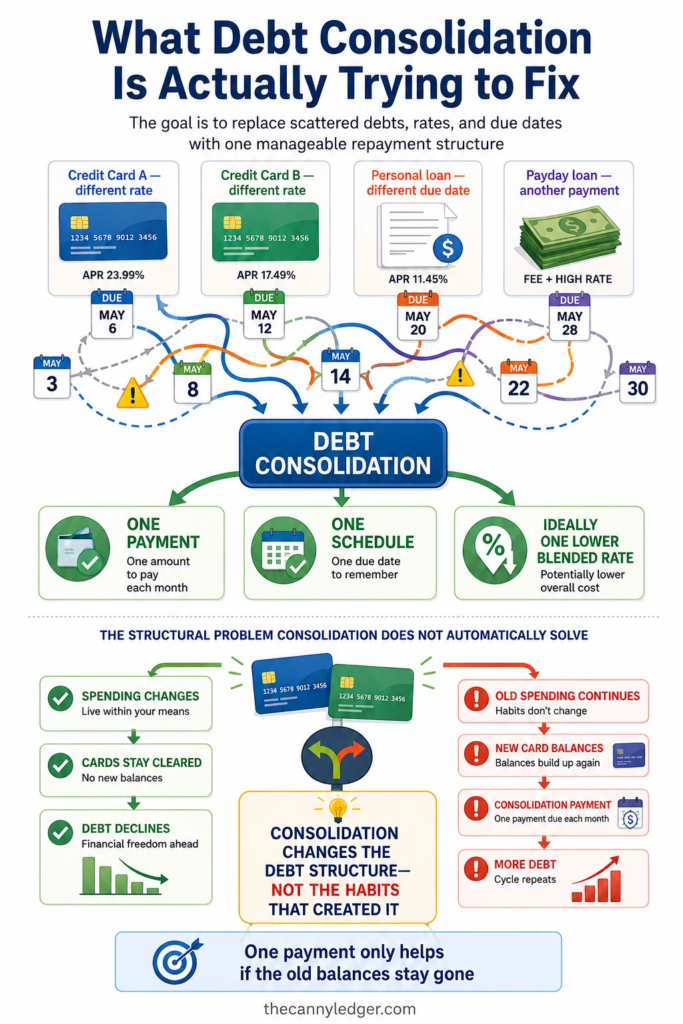
Strip away the marketing, and debt consolidation is solving exactly one structural problem: you’re paying multiple creditors, at multiple interest rates, on multiple due dates, and that arrangement is either costing you more in interest than it needs to or making it hard to keep track of what you owe and when. Consolidation replaces that scattered picture with a single payment, ideally at a lower blended rate, on a single schedule.
What it does not automatically solve is the underlying reason the debt built up in the first place. A consolidation loan that gets paid off while the same spending pattern continues on freshly available credit cards tends to leave someone with both a loan payment and new card balances, which is a well documented failure mode and worth naming honestly before you commit to any option below.
Option one: a personal loan or line of credit from a bank or credit union
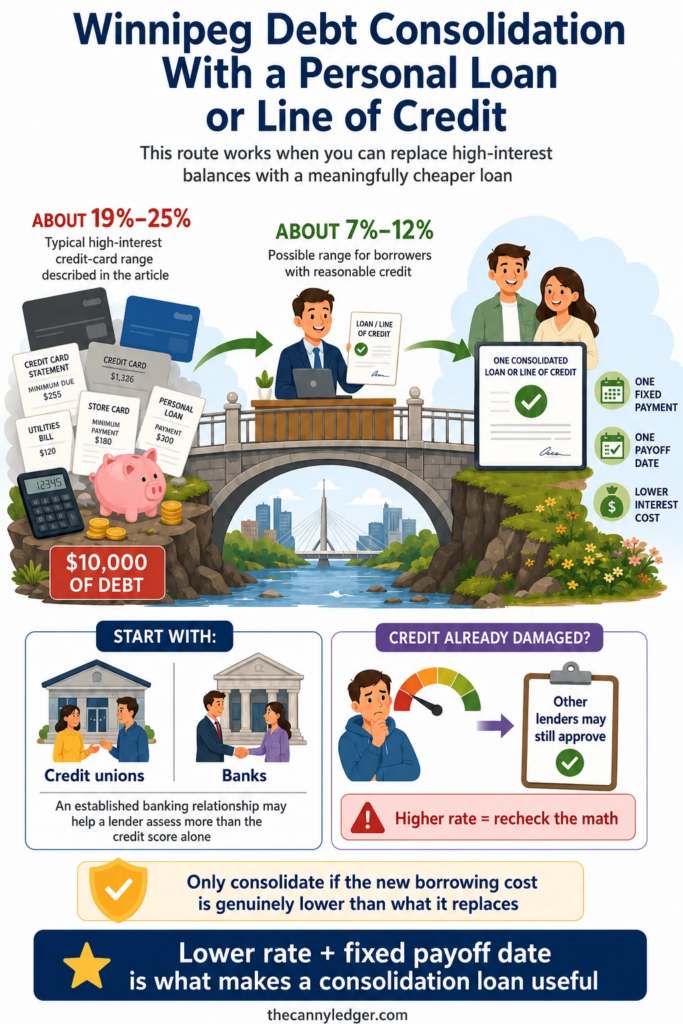
This is what most people picture when they hear “debt consolidation loan,” and for straightforward situations, it’s often the cleanest option. You borrow a lump sum large enough to pay off your existing high-interest balances in full, then make one fixed payment to one lender going forward.
The rate gap is usually the whole reason this works. Canadian credit card interest tends to sit around 19 to 25 percent depending on the card, while a personal loan from a bank or credit union commonly lands somewhere between 7 and 12 percent for borrowers with reasonable credit, sometimes lower for members with an established relationship at their credit union. That difference compounds fast. On a $10,000 balance carried at typical credit card rates with only minimum payments, the interest paid over time can run into the thousands, while the same balance moved to a well-priced consolidation loan can cut that cost substantially and give you a fixed payoff date instead of an open-ended one.
Winnipeg’s credit unions tend to be a strong starting point here specifically because they’re often more willing to work with a member’s full relationship and history rather than a credit score in isolation, particularly if you’ve banked with them for a while. Our Winnipeg credit unions compared guide breaks down how Assiniboine, Cambrian, Access, and Steinbach differ, and our personal loans in Winnipeg page goes deeper into typical terms and qualifying criteria if this is the direction you’re leaning.
If your credit has already taken a hit from missed payments or high utilization, don’t assume this door is closed. Our bad credit loans in Winnipeg guide covers lenders willing to work with a rougher credit history, though the rates there run higher than a prime-rate consolidation loan and the math needs to be checked carefully against what you’re currently paying before it’s worth doing.
Option two: a home equity line of credit, if you own your home
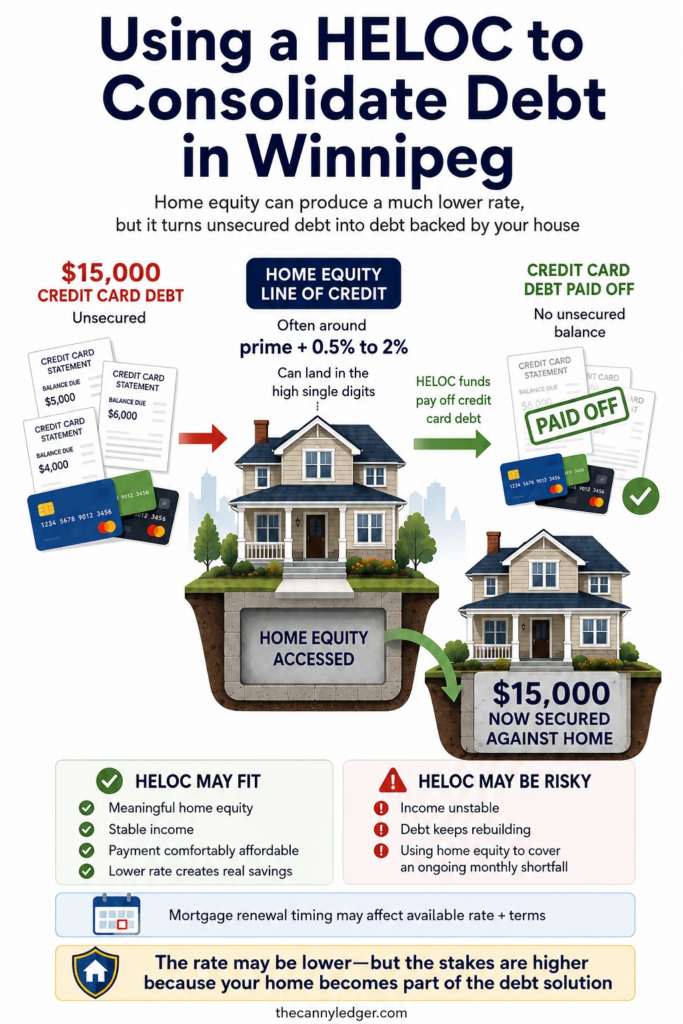
If you own property in Winnipeg with meaningful equity built up, a home equity line of credit is usually the lowest-rate consolidation tool available to you, typically priced somewhere around prime plus half a point to two points, which can land in the high single digits compared to the 20-plus percent most credit cards charge. That gap is the largest one on this list, and it’s why homeowners carrying significant unsecured debt often get pointed toward a HELOC before anything else.
The trade-off is real, though, and worth taking seriously rather than glossing over. A HELOC is secured against your home. Unsecured credit card debt, however unpleasant to deal with, doesn’t put your house at risk if things go sideways. Converting $15,000 of credit card debt into $15,000 secured against your home changes the nature of that debt in a way that matters if your income situation is genuinely unstable, not just tight. It’s a legitimate tool for someone with stable income and equity to draw on, and a riskier one for someone using it to paper over an income problem that a HELOC payment will eventually run into anyway. If you’re weighing this against your mortgage renewal timeline, our mortgage renewal in Winnipeg page is worth reading alongside this decision, since renewal timing can affect what rate and terms you’re offered on a HELOC attached to the same property.
Option three: a balance transfer credit card
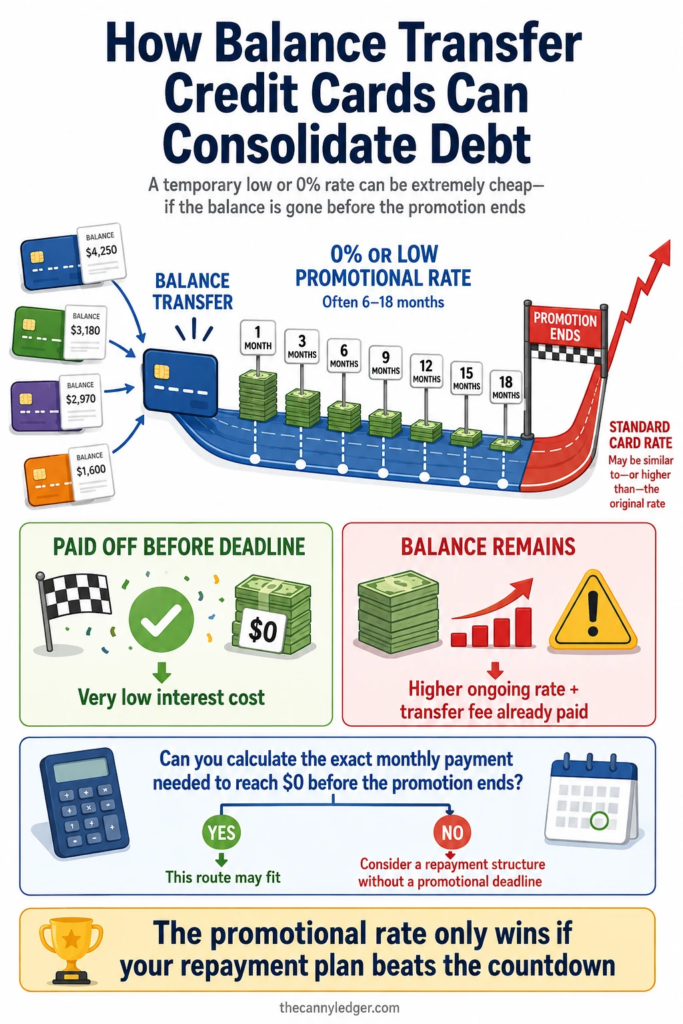
Balance transfer cards work by offering a promotional low or even zero percent rate for a limited window, usually six to eighteen months, on a balance moved over from another card. Done right, with a real plan to pay the balance down before the promotional window closes, this can be the cheapest option on this entire list, since paying zero percent interest for a year beats every loan rate available anywhere.
Done without that plan, it’s one of the more common ways people end up worse off than before. Once the promotional period ends, the rate typically jumps to a standard card rate, sometimes higher than what you started with, and if the balance isn’t cleared by then, you’re back where you started with an extra transfer fee added on top. This option suits someone with a specific, calculable payoff timeline and the discipline to stick to it far more than it suits someone consolidating because the situation already feels unmanageable.
Option four: a debt management plan through a non-profit credit counselling agency
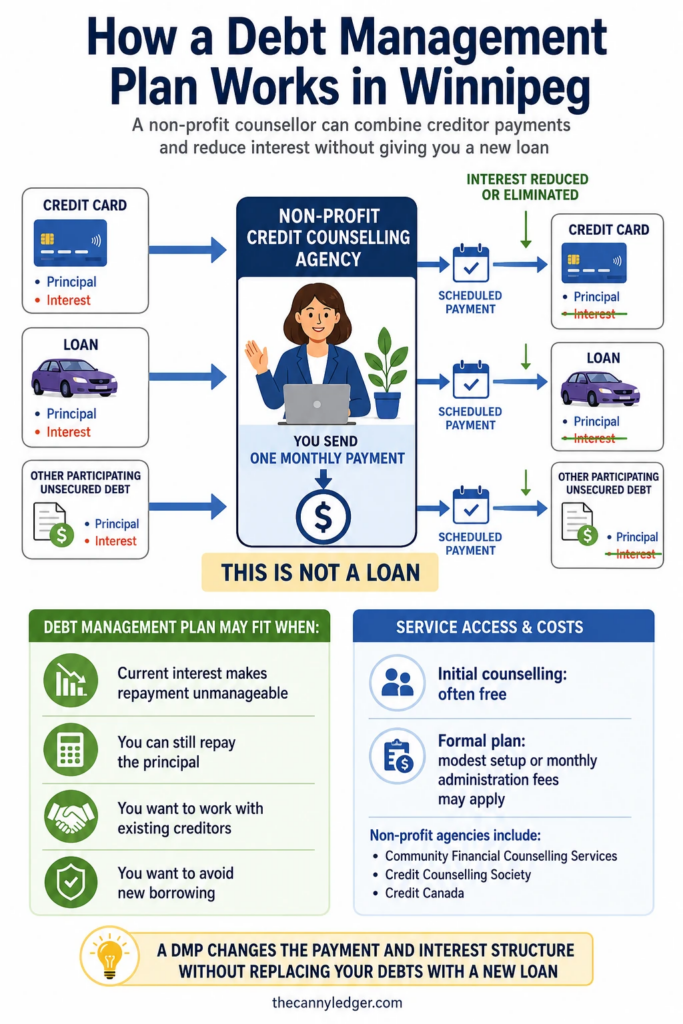
This is where the path shifts from a lending product to a negotiated arrangement, and it’s worth understanding the distinction clearly because the two get confused constantly. A debt management plan isn’t a loan. It’s an agreement, arranged through an accredited non-profit credit counsellor, where your existing creditors agree to reduce or eliminate interest charges and consolidate your payments into one monthly amount paid to the agency, which then distributes it to your creditors on a fixed schedule.
Community Financial Counselling Services, based on Portage Avenue, is a long-standing Manitoba non-profit offering this free of charge, alongside budgeting help and free tax filing that can occasionally surface benefits or credits someone didn’t realize they qualified for. The Credit Counselling Society and Credit Canada both operate comparable non-profit programs with a specific Winnipeg presence, typically charging nothing for the initial counselling session and only a modest setup or monthly administration fee if you enrol in a formal debt management plan. Our credit counselling in Winnipeg page goes into more depth on how these agencies differ and what a first appointment actually looks like.
This route tends to suit people whose debt is unmanageable at current interest rates but who can realistically handle the principal if the interest stops accumulating, and who’d rather work with their existing creditors through a counsellor than take on new debt or a formal legal process. It generally shows up on your credit report differently than a missed payment would, and it’s worth asking your specific counsellor how it will be reported before enrolling, since that detail varies.
Option five: a consumer proposal through a Licensed Insolvency Trustee
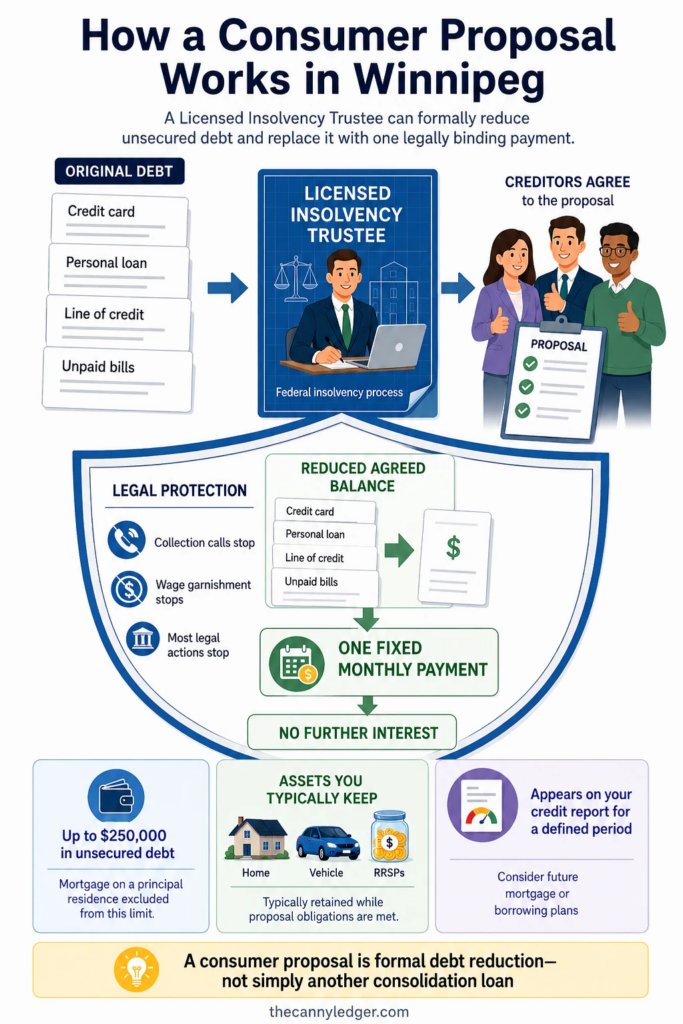
A consumer proposal is a formal, legally binding process governed by federal bankruptcy legislation, administered exclusively by a Licensed Insolvency Trustee. It’s a meaningfully bigger step than the options above, and it’s worth understanding exactly what makes it different rather than treating it as just another flavour of consolidation.
In a consumer proposal, your trustee negotiates directly with your creditors on your behalf to reduce the total amount you owe, sometimes substantially, and consolidates whatever remains into a single fixed monthly payment with no further interest charged. Once filed, it legally stops collection calls, wage garnishments, and most legal actions from creditors immediately. You generally keep your home, vehicle, and RRSPs, which is the main distinction people draw between a proposal and full bankruptcy. Eligibility is capped at $250,000 in unsecured debt, excluding a mortgage on a principal residence, and it does show up on your credit report for a set period after you’ve completed it, which is worth weighing against a mortgage application or renewal you might have coming up down the line.
Manitoba has several Licensed Insolvency Trustee firms with offices in Winnipeg, and a first consultation is free and non-binding at essentially all of them, which makes it a low-risk way to at least find out whether a proposal would actually help your specific numbers before committing to anything. If your situation has reached the point where a debt management plan’s interest-reduction alone wouldn’t cover it, but full bankruptcy feels like more than your situation calls for, this is usually the middle ground worth exploring. Our bankruptcy in Winnipeg and debt relief and debt help in Winnipeg guides both cover how this compares against the more severe option, and where the actual dollar thresholds tend to fall between them.
What doesn’t count as consolidation, even when it’s marketed that way
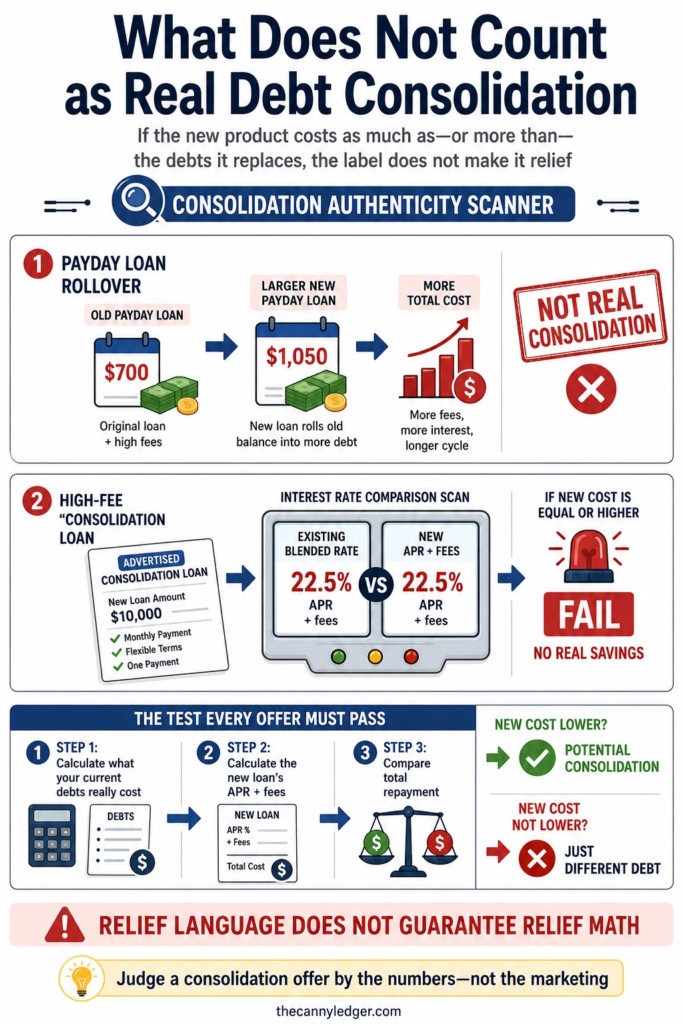
A few products get pitched under the “consolidation” umbrella that don’t actually reduce your cost of borrowing, and it’s worth naming them directly. Rolling a payday loan into a new, larger payday loan isn’t consolidation, it’s a rollover, and it typically costs more overall rather than less. Our payday loans in Winnipeg guide covers exactly why that pattern tends to compound rather than resolve. Similarly, some high-fee finance companies advertise “consolidation loans” at rates well above what a bank, credit union, or even a bad-credit lender would charge, essentially using the language of relief to sell a product that’s more expensive than what it’s replacing. If a consolidation offer doesn’t clearly show you a lower blended rate than what you’re currently paying across your existing debts, it isn’t actually consolidating anything, whatever the paperwork calls it.
If collection calls are already part of your daily reality
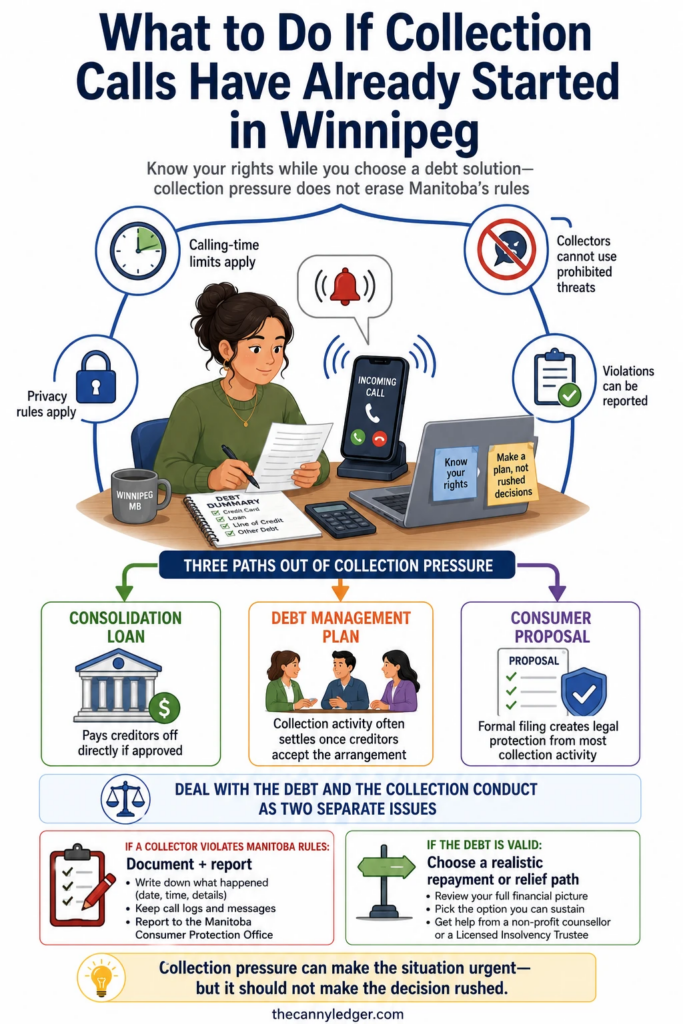
If you’re past the planning stage and creditors or a collections agency are already actively contacting you, it’s worth knowing that Manitoba has real rules around how that contact is allowed to happen, including limits on frequency, timing, and the kind of language collectors can legally use. Our credit and collection agencies in Winnipeg page walks through what’s actually permitted and where to report a company that’s crossed the line, which is worth knowing regardless of which consolidation path you end up choosing, since a formal consumer proposal or debt management plan will typically stop that contact entirely once it’s in place.
Choosing between them without a sales pitch attached
If your debt is high-interest but genuinely manageable at a lower rate, and your credit is decent, a personal loan or line of credit from a credit union is usually the simplest and cheapest fix, with a HELOC beating even that if you own your home and are comfortable securing the debt against it.
If your credit has already taken damage, a debt management plan through a non-profit counsellor tends to offer the most relief without adding a new loan or a mark that behaves like a missed payment, since it works with your existing creditors rather than around them.
If the total owed has grown past what any interest-rate reduction alone could realistically fix, a free consultation with a Licensed Insolvency Trustee costs nothing and will tell you within one meeting whether a consumer proposal changes your math meaningfully, without committing you to anything on the spot.
And if you’re not sure which of these camps you fall into, that uncertainty is itself a good reason to start with a free, non-profit conversation rather than a lending application. Community Financial Counselling Services and the Credit Counselling Society are both built specifically to have that conversation with no cost and no pressure attached, and starting there tends to save people from picking the wrong tool before they’ve even seen what their actual numbers look like side by side.