


Free tax clinics in Winnipeg operate through the Community Volunteer Income Tax Program (CVITP), a partnership between the Canada Revenue Agency and local community organizations, open to anyone with a modest income (roughly $40,000 for a single person, scaling up with family size) and a simple tax situation, no self-employment, rental income, or capital gains. Because individual clinic hours, locations, and intake methods change from year to year and organization to organization, always confirm current details directly before showing up.
- Who Actually Qualifies: The Income Side
- What Counts as a Simple Tax Situation
- Real Winnipeg Clinics Currently Operating
- How to Actually Book an Appointment
- Finding More Options Beyond This List
- If You Don’t Qualify: What’s Actually Left
- Filing Even With No Income Still Matters
- Common Questions About Winnipeg’s Free Tax Clinics
Who Actually Qualifies: The Income Side
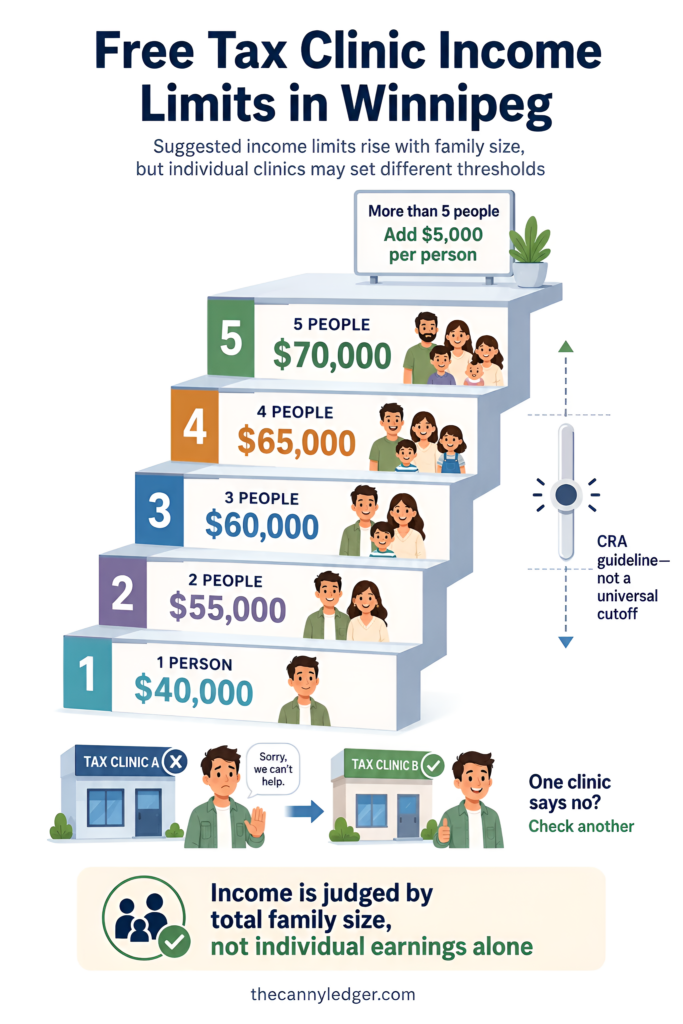
The Canada Revenue Agency’s own suggested income guideline sets these thresholds based on family size, with family defined as an individual or couple plus dependants:
| Family Size | Suggested Maximum Total Family Income |
|---|---|
| 1 person | $40,000 |
| 2 people | $55,000 |
| 3 people | $60,000 |
| 4 people | $65,000 |
| 5 people | $70,000 |
| More than 5 | $70,000, plus $5,000 per additional person |
These figures are a national guideline, not a hard federal rule. Individual Winnipeg organizations can adjust the threshold up or down based on their own capacity and the community they serve, so a specific clinic turning someone away at $42,000 income, or accepting someone above the guideline, isn’t necessarily doing anything wrong, it’s exercising the flexibility the program explicitly allows. If one organization says no, it’s worth checking whether a different Winnipeg clinic sets its threshold differently before assuming you don’t qualify anywhere.
What Counts as a Simple Tax Situation
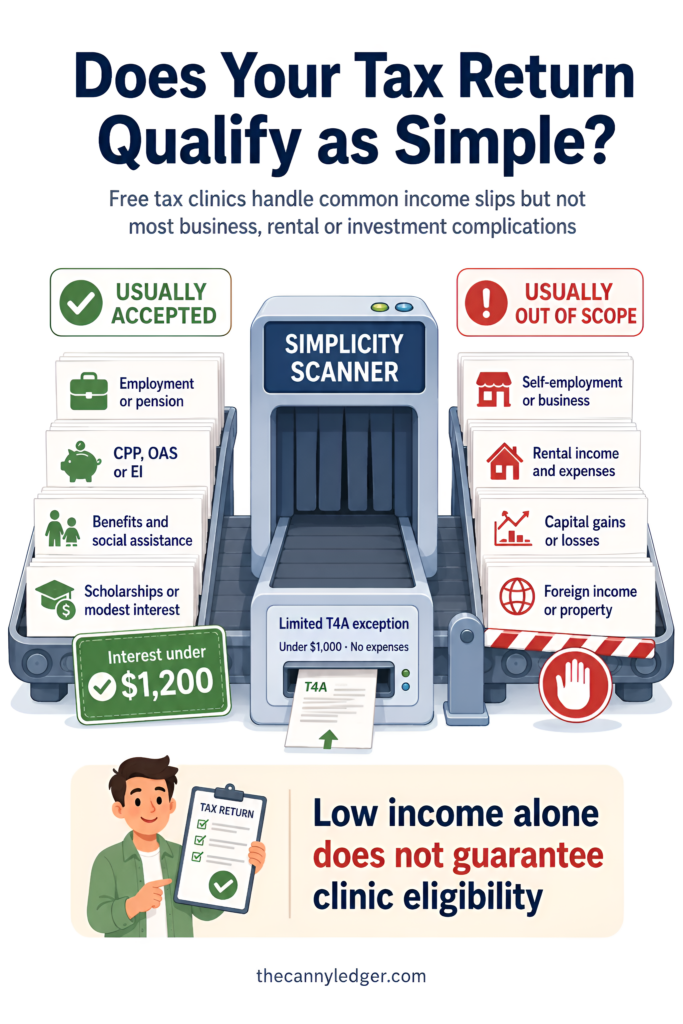
Income level is only half of the eligibility question, and it’s the half most people already understand intuitively. The other half, what counts as “simple,” trips up more people. A simple tax situation generally means income limited to employment, pension, RRSPs, government benefits like CPP, OAS, EI, or social assistance, and scholarships or bursaries, along with interest income under $1,200. Volunteers are specifically instructed not to prepare returns involving self-employment income, business income, rental income and expenses, capital gains or losses, a bankruptcy filed during the tax year, a deceased person’s return, or foreign income and property. A narrow exception exists for T4A slips showing self-employment income under $1,000 with no expenses claimed, and for U.S. Social Security benefits specifically, but any other foreign pension or foreign income disqualifies a return from CVITP help entirely.
This matters because it’s genuinely common for someone to fall just outside these lines without realizing it, a small amount of freelance income reported on a T4A, a modest rental suite, or a parent’s foreign pension can all push an otherwise straightforward return out of scope for a volunteer clinic, even when the income itself is low.
Real Winnipeg Clinics Currently Operating
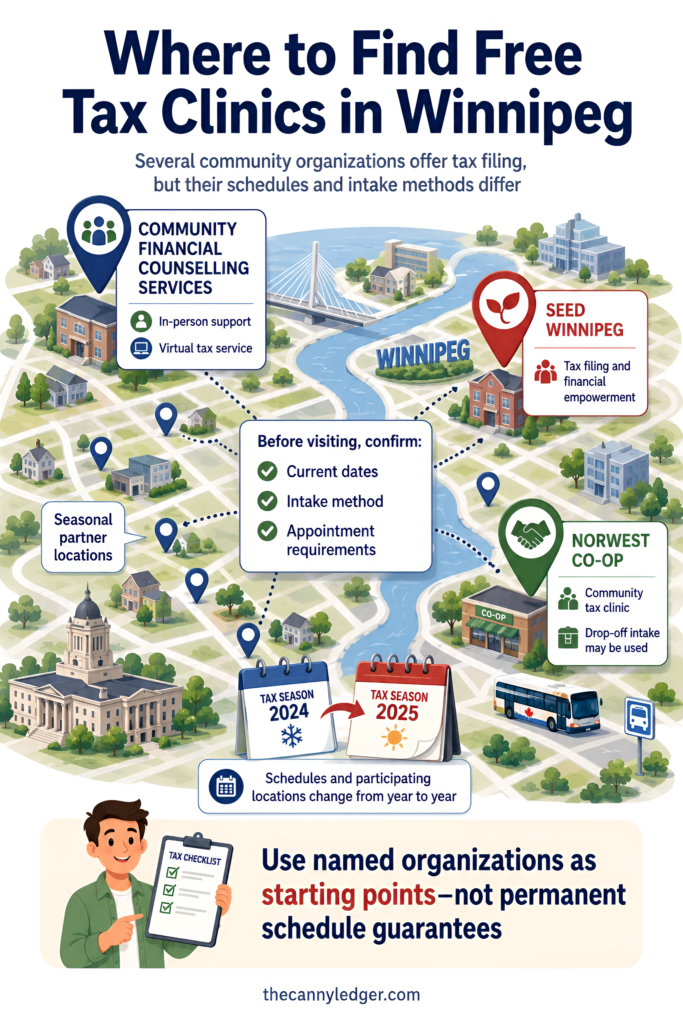
A handful of Winnipeg organizations run this program at meaningful scale, and knowing a few specific starting points beats a blind search. Community Financial Counselling Services, based at 516-294 Portage Avenue, has run free tax filing and benefits access support in Manitoba for more than four decades and offers a dedicated virtual income tax service alongside in-person help, reachable at 204-989-1900 or toll-free at 1-888-573-2383. SEED Winnipeg runs income tax filing help as part of its broader financial empowerment programming aimed at Manitobans on low incomes. NorWest Co-op Community Health operates a community income tax clinic with a published annual schedule and a drop-off intake process rather than same-day walk-ins. Several neighbourhood-level organizations, like the South Winnipeg Family Information Centre, also partner directly with CFCS to run periodic clinic dates at their own locations throughout tax season.

Every one of these details, hours, intake process, specific dates, can and does change year to year, so treat this as a starting point for a phone call or a website check, not a guarantee that a specific time slot is still accurate by the time you’re reading this.
How to Actually Book an Appointment
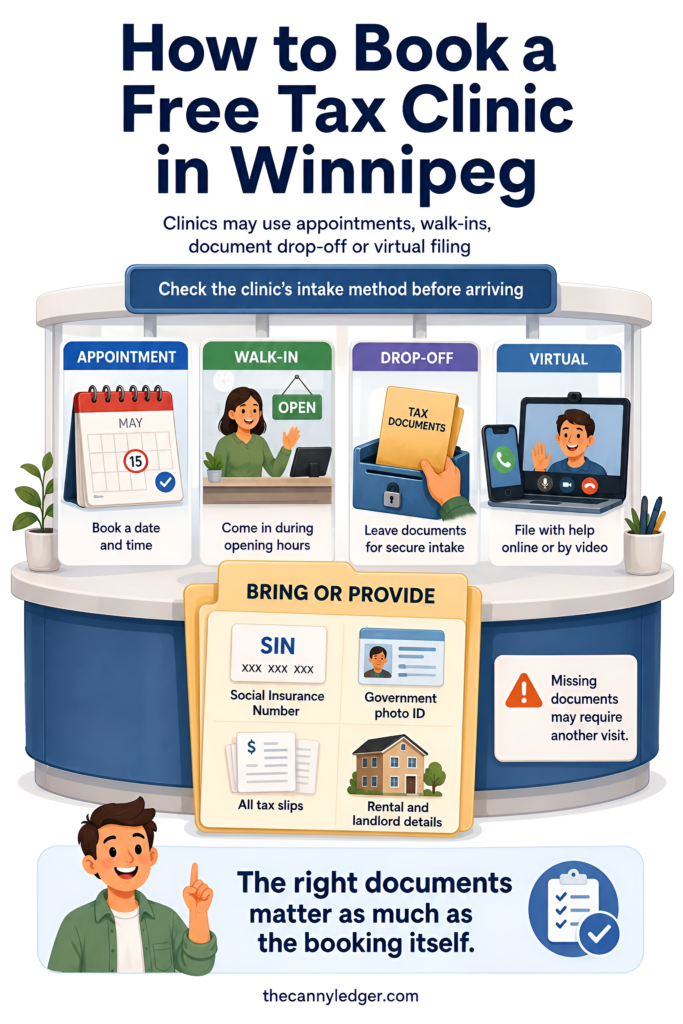
Clinics run their intake differently from each other, and it’s worth knowing the options before assuming only one format exists. Some operate on a walk-in basis during posted hours. Others require booking an appointment in advance, particularly busier operators during peak season. A drop-off model, common at several Winnipeg locations, has you leave your documents and identification with the organization and pick up the completed return later rather than sitting through the preparation in person. Virtual clinics, offered by phone or video call, serve people within the same province, useful for anyone with mobility limitations or scheduling conflicts that make an in-person visit difficult. Whichever format a specific clinic uses, bring your Social Insurance Number, government-issued photo ID, all relevant tax slips, and, if renting, your address history and landlord information for the year, since incomplete documentation is the most common reason an appointment doesn’t get resolved in one visit.
Finding More Options Beyond This List
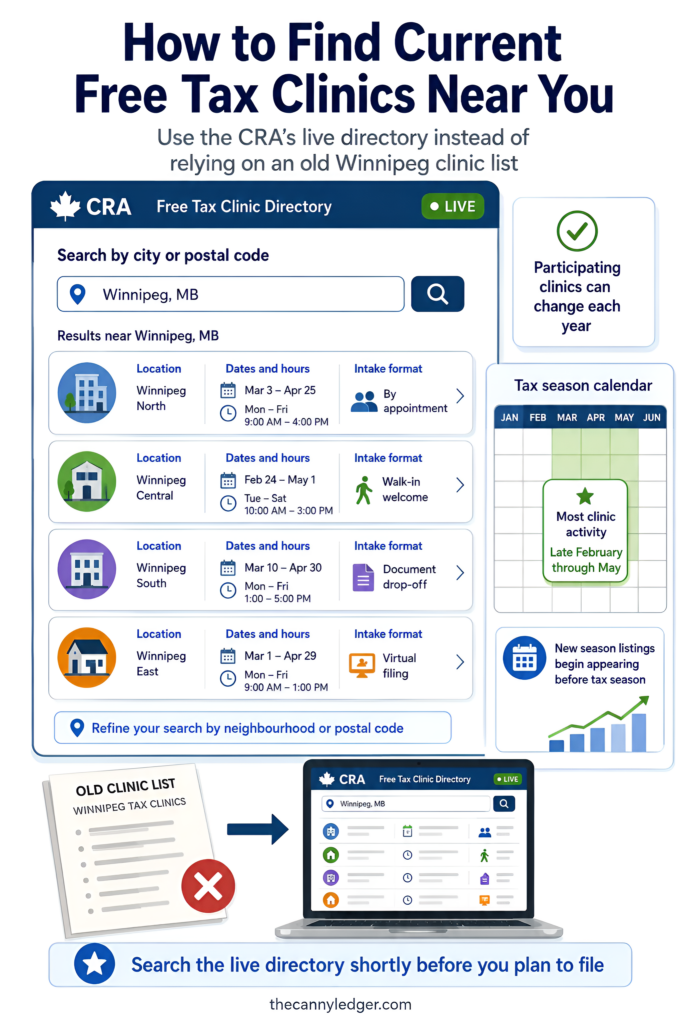
The organizations named here don’t represent every CVITP host in Winnipeg, and new ones register every year while others wind down. The Canada Revenue Agency maintains a live directory of free tax clinics searchable by location, letting anyone check what’s currently active in a specific part of the city rather than relying on a list that inevitably ages. Registration for new host organizations typically opens in late October ahead of the following tax season, so the most complete picture of what’s available tends to firm up by early winter each year, well before the late-February-to-May period when most clinics run their heaviest hours.
If You Don’t Qualify: What’s Actually Left
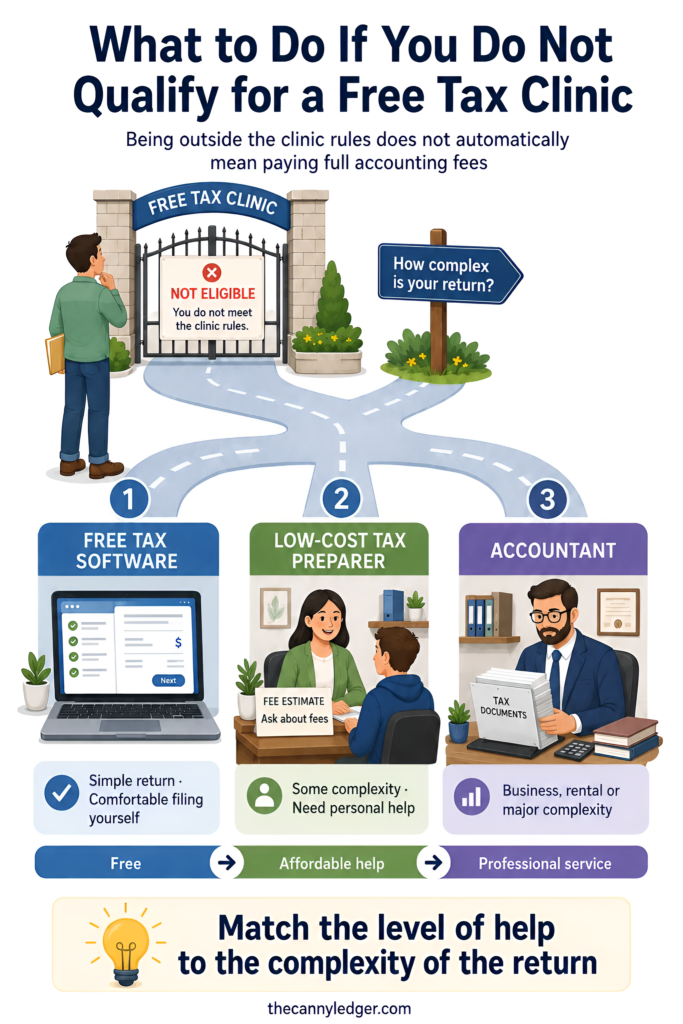
A simple tax situation above the income guideline, or a modest income with a slightly more complex return, doesn’t mean paying full accounting fees is the only remaining option. Several free federal software options exist for anyone comfortable filing their own return regardless of income level, and for situations that need a professional’s help without the cost of a full-service accountant, affordable tax preparation services in Winnipeg covers what’s realistically available locally at a reasonable price. Understanding how Manitoba’s income tax brackets and credits actually work beforehand also helps you evaluate whether a paid preparer caught something a free clinic might have missed, or vice versa.
Filing Even With No Income Still Matters
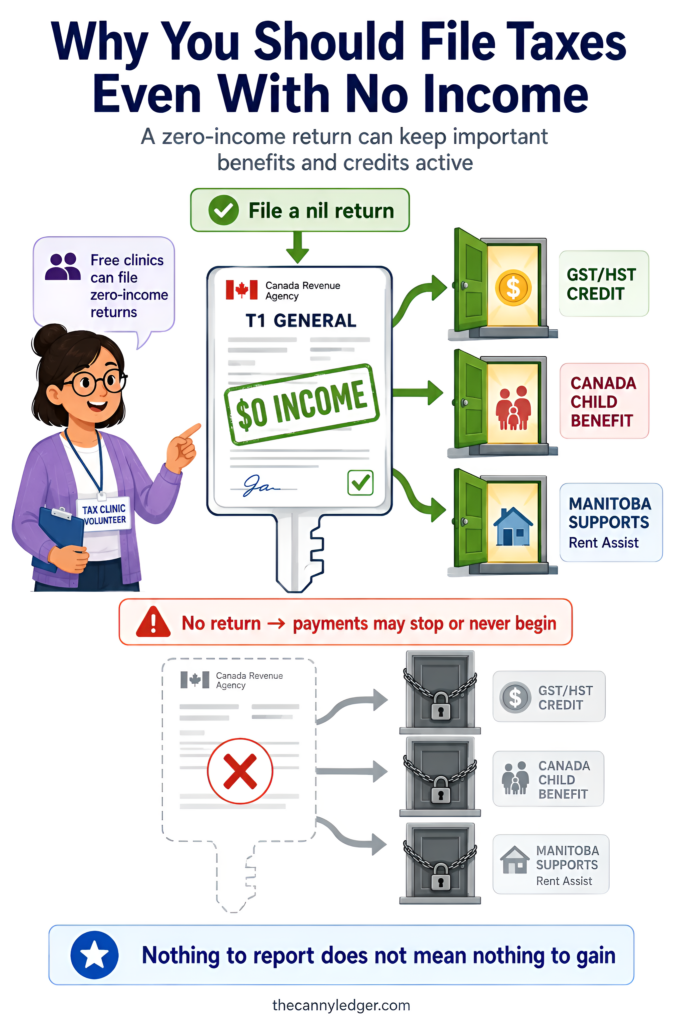
A return showing zero income still needs to be filed to keep benefit and credit payments flowing, and free clinics will prepare a nil return the same as any other. The GST/HST credit, the Canada Child Benefit, and Manitoba-specific programs like Rent Assist all depend on a filed tax return to determine eligibility and calculate payment amounts, even for someone with no taxable income to report that year. Skipping a filing because “there’s nothing to report” is one of the more common ways eligible Manitobans accidentally lose access to benefits they’d otherwise qualify for automatically.
Common Questions About Winnipeg’s Free Tax Clinics
Can a free tax clinic file returns from previous years, not just the current one? Generally yes. CVITP volunteers can typically prepare both current and prior-year returns for someone with a simple, eligible tax situation, useful for anyone who’s fallen behind on filing and wants to catch up rather than deal with each year separately.
Do I need to bring both spouses if we’re filing as a couple? Most clinics expect both partners present, or at minimum documented consent from an absent spouse, since a joint household return typically can’t be completed with only one partner’s information and no confirmation from the other.
Is there an age requirement to use a free tax clinic? No formal minimum age exists in the CVITP eligibility criteria itself, students and youth are explicitly named as an eligible group, though a specific clinic’s practical focus, such as one embedded in a seniors’ centre, may mean it primarily serves a particular age group even without an official cutoff.
Call ahead before visiting any specific location, confirm the current year’s hours and intake method directly, and don’t assume last year’s schedule still applies. Between the organizations named here and the CRA’s own live directory, there’s a real path to free, qualified help for most Winnipeggers with a modest income and a straightforward return, but only if the specific details get confirmed fresh each tax season rather than assumed.