
Buying life insurance isn’t buying a product you’ll ever personally use. It’s buying into a pooled bet against your own mortality, where thousands of policyholders pay premiums into a shared fund, and the insurer uses actuarial math to pay out death benefits to the relatively few families who need one in any given year. That framing sounds cold, but understanding it explains almost everything else about how these policies actually work, from why premiums rise sharply with age to why a healthy 30-year-old pays a fraction of what a 60-year-old does for the same coverage.
- What a Life Insurance Policy Actually Promises
- The Two Fundamentally Different Categories
- What Determines Your Premium
- Medically Underwritten Versus No Medical Policies
- How a Claim Actually Gets Paid
- Is the Payout Taxed
- The Two Year Window Insurers Can Still Investigate
- What Happens if Your Insurer Goes Out of Business
- Who Actually Needs It
- How Much Coverage Is Enough
- Mistakes People Commonly Make
- What to Do Next
- A Few More Questions Worth Answering
Life insurance in Canada is a contract where you pay premiums to an insurer in exchange for a death benefit paid to your named beneficiary if you die while the policy is active. Coverage falls into two broad categories, term (temporary, cheaper) and permanent (lifelong, with a cash value), and the death benefit is generally paid out completely tax-free.
What a Life Insurance Policy Actually Promises
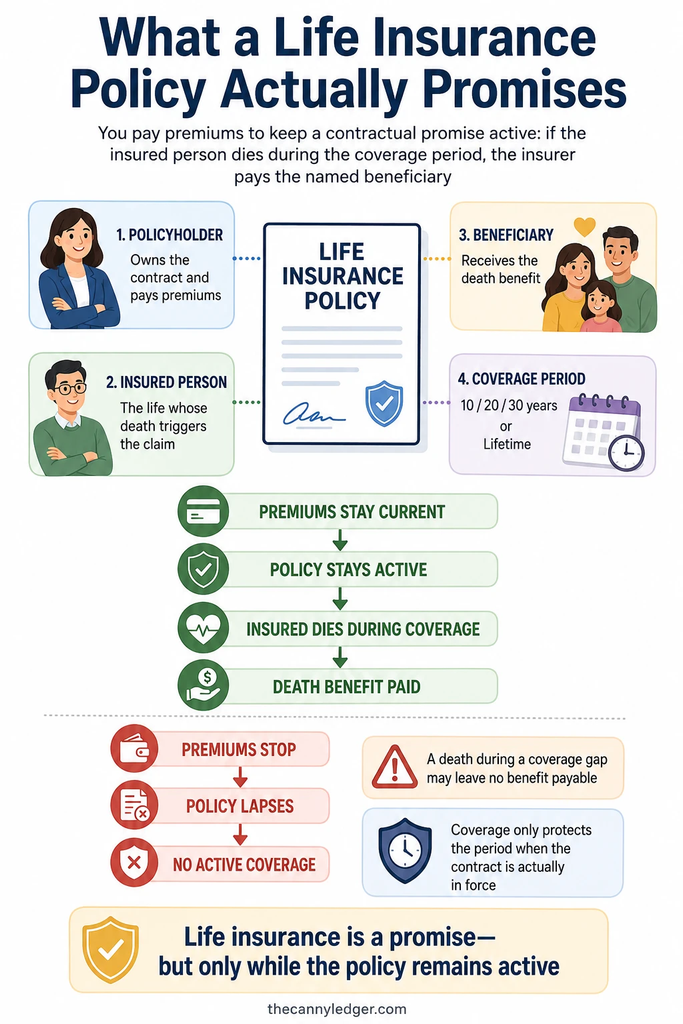
Every policy, regardless of type, rests on the same four elements. The policyholder pays a premium, typically monthly or annually, in exchange for the insurer’s promise to pay a death benefit if the person insured dies while coverage is active. The beneficiary is whoever you name to receive that payout, and you can name more than one, splitting the benefit however you choose, a designation Sun Life’s own guide to beneficiary rules covers in detail. The term is how long that promise lasts, either a fixed number of years for term insurance or your entire lifetime for permanent insurance, provided premiums keep getting paid.
What a policy doesn’t promise matters just as much. Coverage lapses the moment premiums stop, and outside of specific riders, a policy generally won’t pay out for a death that occurred before coverage began or after it ended. This sounds obvious stated plainly, but it’s exactly why letting a policy lapse during a temporary cash crunch, intending to reinstate it later, carries real risk if something happens in the gap.
The Two Fundamentally Different Categories
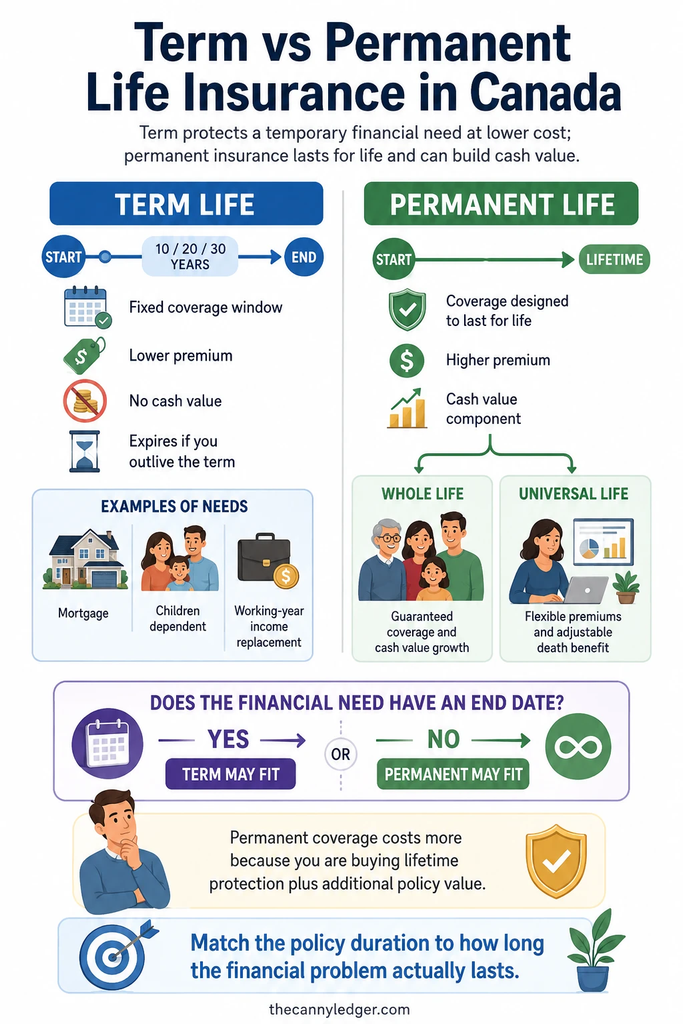
Term life insurance covers you for a fixed period, commonly 10, 20, or 30 years, at a locked-in premium for that term, and it expires with no payout and no refund if you outlive it. It’s built purely for protection during a defined window, a mortgage term, the years your kids are financially dependent, and it’s why term premiums run dramatically lower than permanent coverage for the same death benefit.
Permanent insurance, covering both whole life and universal life policies, lasts your entire life as long as premiums are paid, and it builds a cash value component you can potentially borrow against or draw from while you’re still alive. That lifelong guarantee and cash value come at a real cost, since permanent premiums for the same death benefit typically run several times higher than an equivalent term policy. Choosing between them isn’t a question with one right answer, and our full comparison of term versus whole life walks through the tradeoff in more depth than fits here.
What Determines Your Premium
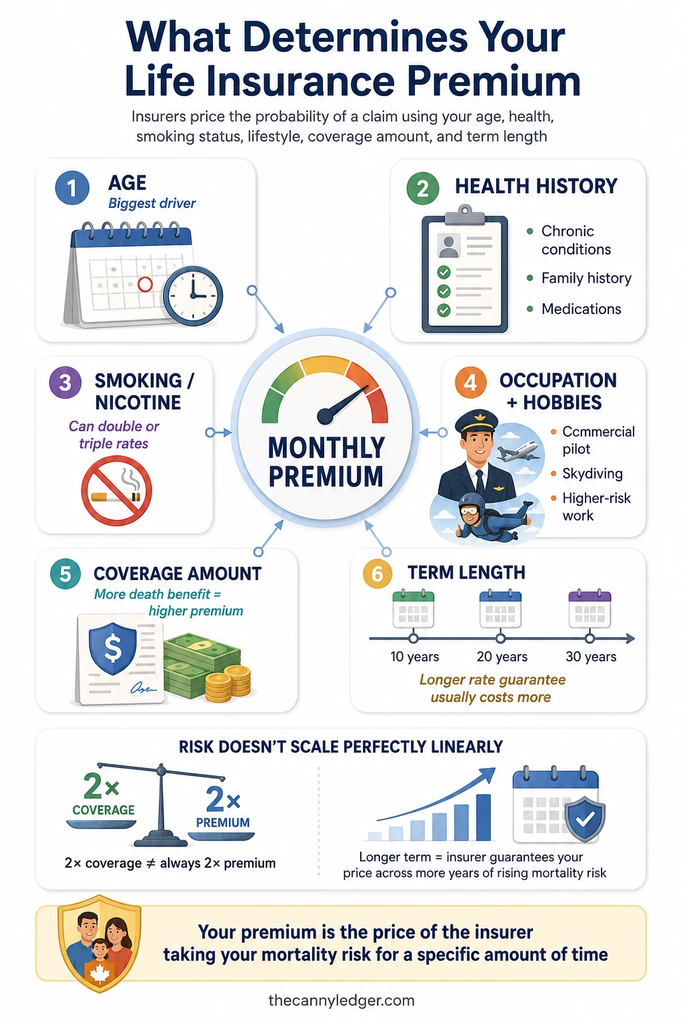
Underwriters price a policy based on how likely you are to die during the coverage period, and several factors feed directly into that calculation. Age is the single biggest driver, since mortality risk compounds every year. Health history, including chronic conditions and family history of conditions like heart disease or certain cancers, plays a major role, as does smoking or nicotine use, which can double or triple premiums compared to a non-smoker at the same age. Occupation and hobbies matter too, since a commercial pilot or a recreational skydiver represents a different risk profile than an office worker with no unusual activities.
Coverage amount and term length obviously scale the premium directly, but the relationship isn’t linear. Doubling your coverage doesn’t necessarily double your premium, and a 30-year term costs meaningfully more per year of coverage than a 10-year term at the same age, since the insurer is locking in a rate over a much longer window of rising risk. Our detailed breakdown of what life insurance actually costs covers real premium ranges by age and coverage amount.
Medically Underwritten Versus No Medical Policies
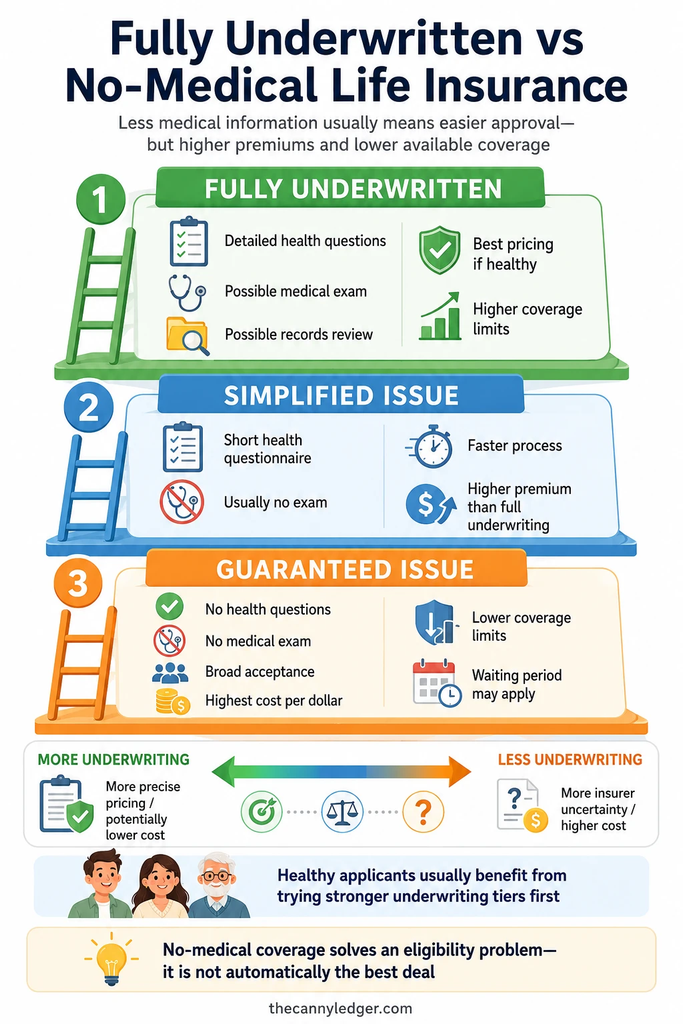
Most life insurance requires some form of health disclosure, ranging from a short questionnaire to a full medical exam with blood work, depending on your age and the coverage amount requested. No medical life insurance skips that process entirely, relying instead on a health questionnaire or, in the case of guaranteed issue policies, no health questions at all. That convenience comes at a real cost, since no-medical policies charge higher premiums for the same coverage and typically cap the available death benefit well below what a fully underwritten policy would offer, making them a fallback for people who can’t qualify for standard coverage rather than a first choice for someone in good health.
How a Claim Actually Gets Paid
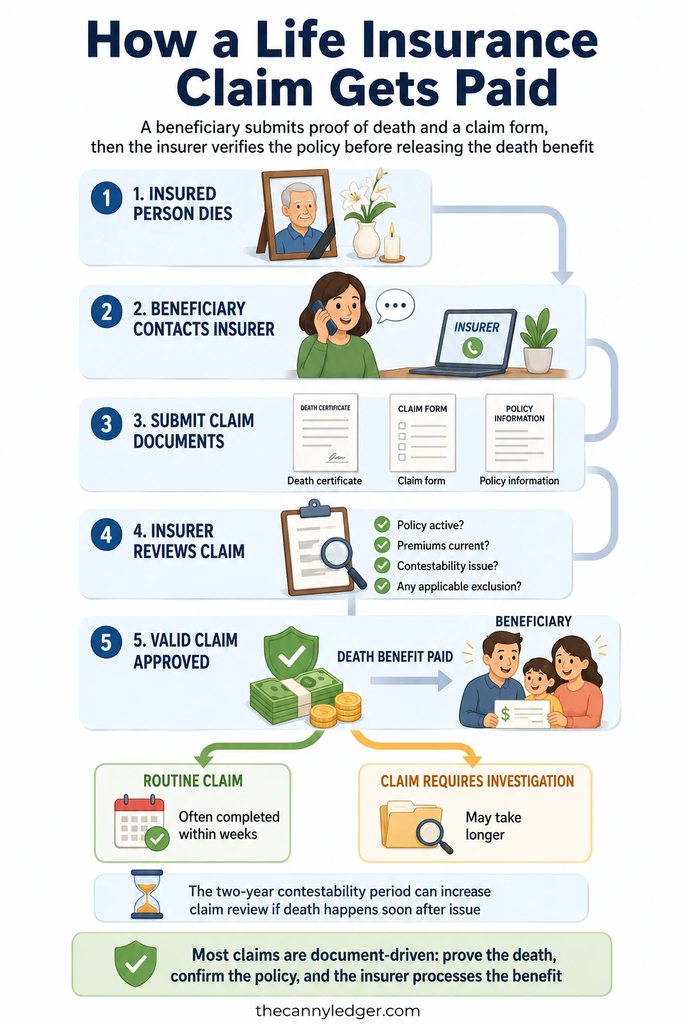
When the insured person dies, the beneficiary or their representative files a claim with the insurer, typically submitting a death certificate and a completed claim form. Assuming the policy was active, premiums were current, and nothing in the two-year window described below complicates the claim, insurers generally process valid claims within a matter of weeks rather than months. Our breakdown of typical payout timelines covers what can speed up or slow down that process in more detail.
Is the Payout Taxed
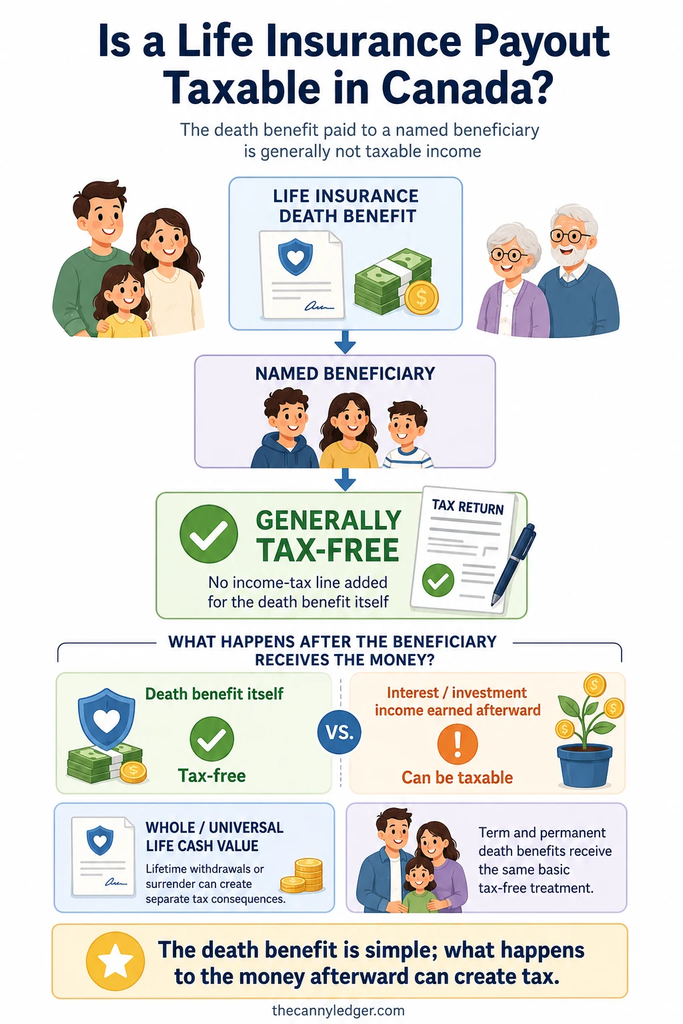
Here’s the direct answer up front. Life insurance death benefits paid to a named beneficiary are not taxed in Canada. Canada.ca’s own list of amounts that don’t need to be reported as income explicitly includes most amounts received from a life insurance policy following someone’s death, a treatment RBC Insurance’s own guidance to policyholders confirms as well, though both note that any income later earned on that money, such as interest if the insurer holds the payout for a period before disbursing it, is taxable.
That’s the short version, and it holds true regardless of whether the policy is term or permanent. Permanent policies add a wrinkle around the cash value component specifically, which our full breakdown of life insurance taxation covers in the depth that specific topic deserves.
The Two Year Window Insurers Can Still Investigate
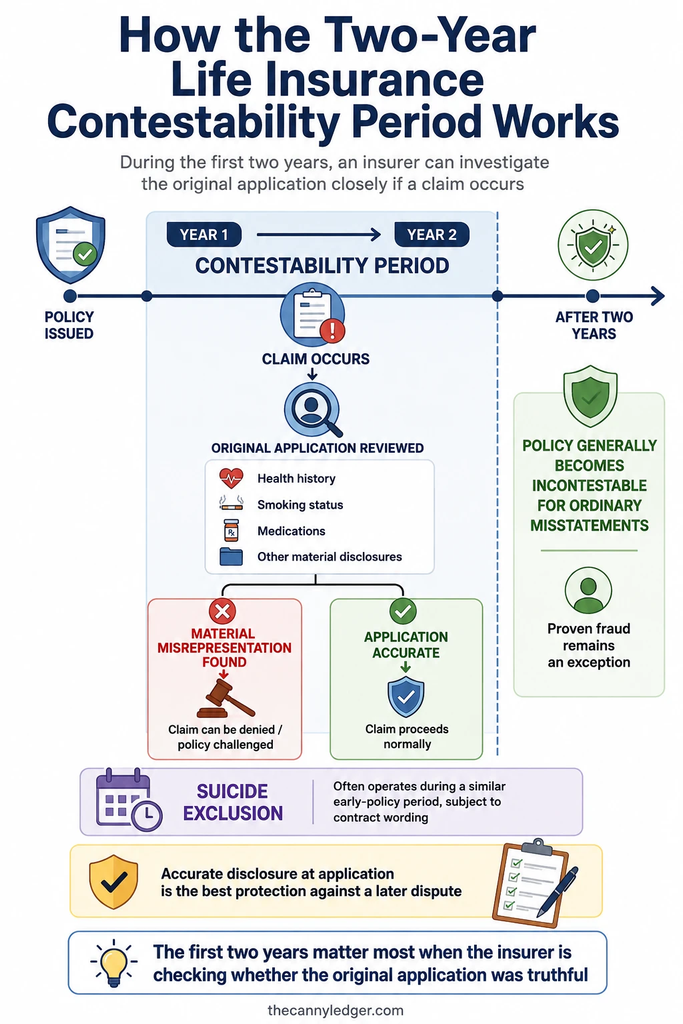
Nearly every Canadian life insurance policy includes a contestability period, generally two years from the date coverage begins, a standard rooted in provincial insurance legislation such as Ontario’s Insurance Act. During that window, if a claim comes in, the insurer can investigate the original application for material misrepresentation, an undisclosed health condition or a false answer about smoking, for example, and deny the claim if it finds one. Once that two-year period passes without a claim, the policy generally becomes incontestable, meaning the insurer can no longer void it over an honest mistake on the original application, though proven fraud remains an exception at any point.
A related but distinct suicide exclusion clause typically runs for that same two-year window from issue. Our dedicated look at how that exclusion actually works covers the specifics without repeating them here.
What Happens if Your Insurer Goes Out of Business
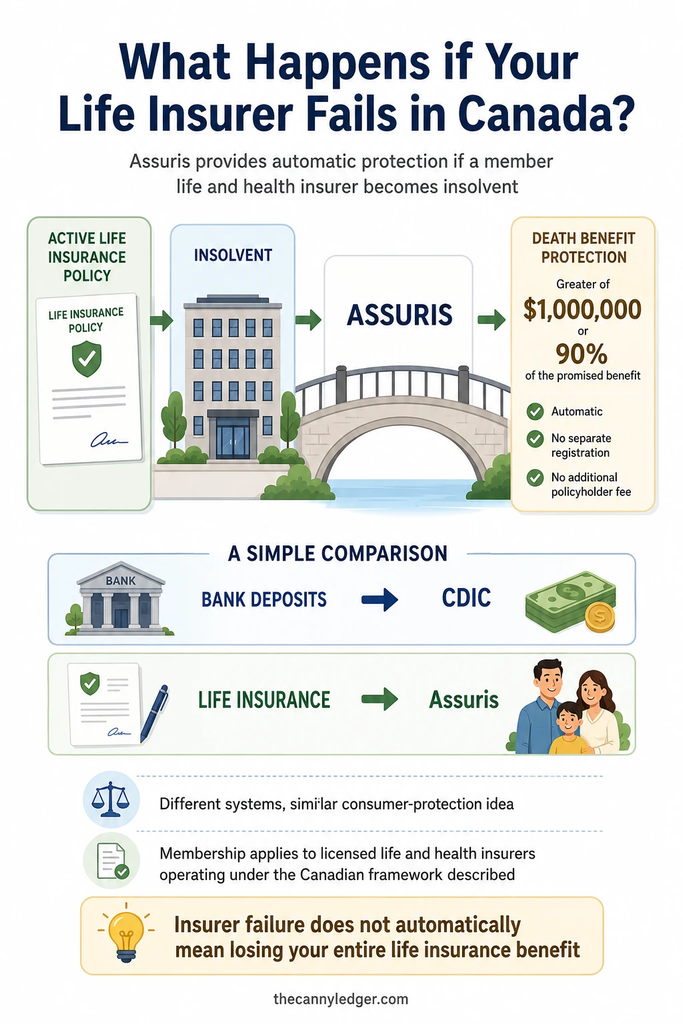
This is a question almost nobody asks before buying a policy, and it has a reassuring answer. Every life and health insurer licensed to operate in Canada must belong to Assuris, a not-for-profit organization that steps in if a member insurer becomes insolvent. For life insurance specifically, Assuris guarantees policyholders retain the greater of $1,000,000 or 90% of their promised death benefit, with membership and coverage automatic and free, requiring no separate registration or fee from the policyholder. It functions similarly to how the Canada Deposit Insurance Corporation protects bank deposits, just for insurance contracts instead.
Who Actually Needs It
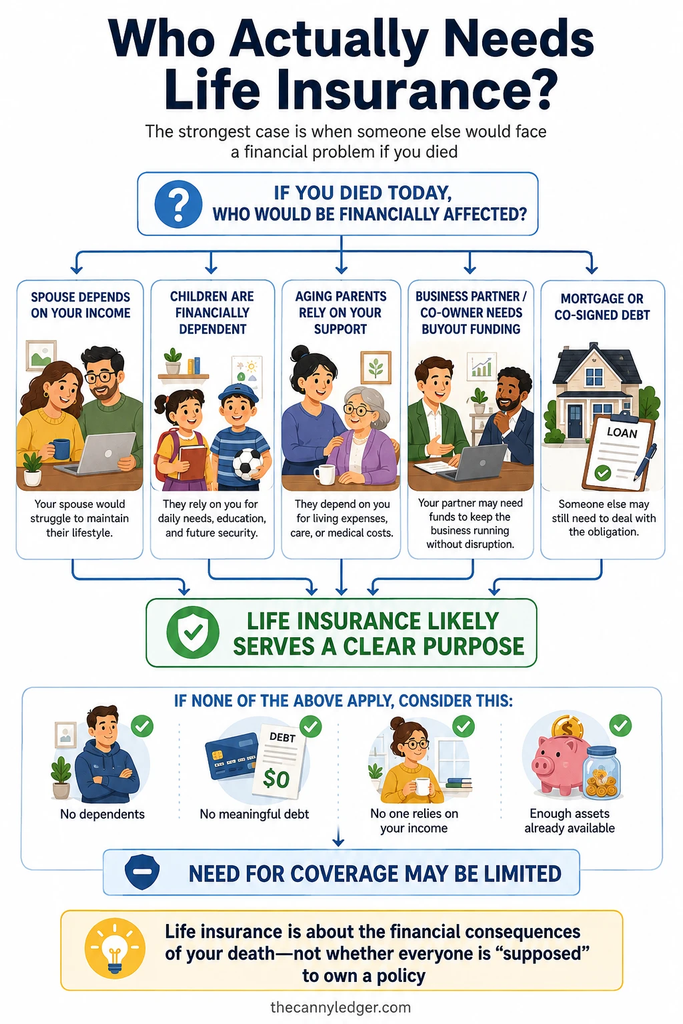
The clearest case for life insurance is anyone with financial dependents, a spouse relying on your income, children who aren’t yet financially independent, or aging parents you support. It also matters for anyone carrying debt that wouldn’t disappear with them, since a mortgage or a co-signed loan doesn’t vanish on death, it becomes someone else’s obligation unless coverage exists to pay it off. Business owners and partners have their own version of this need, often using life insurance to fund a buyout agreement if a co-owner dies unexpectedly.
Someone with no dependents, no significant debt, and no one relying on their income has a clearly weaker case for needing coverage, and our honest look at whether life insurance is worth it doesn’t pretend everyone needs a policy just because it’s widely recommended.
How Much Coverage Is Enough
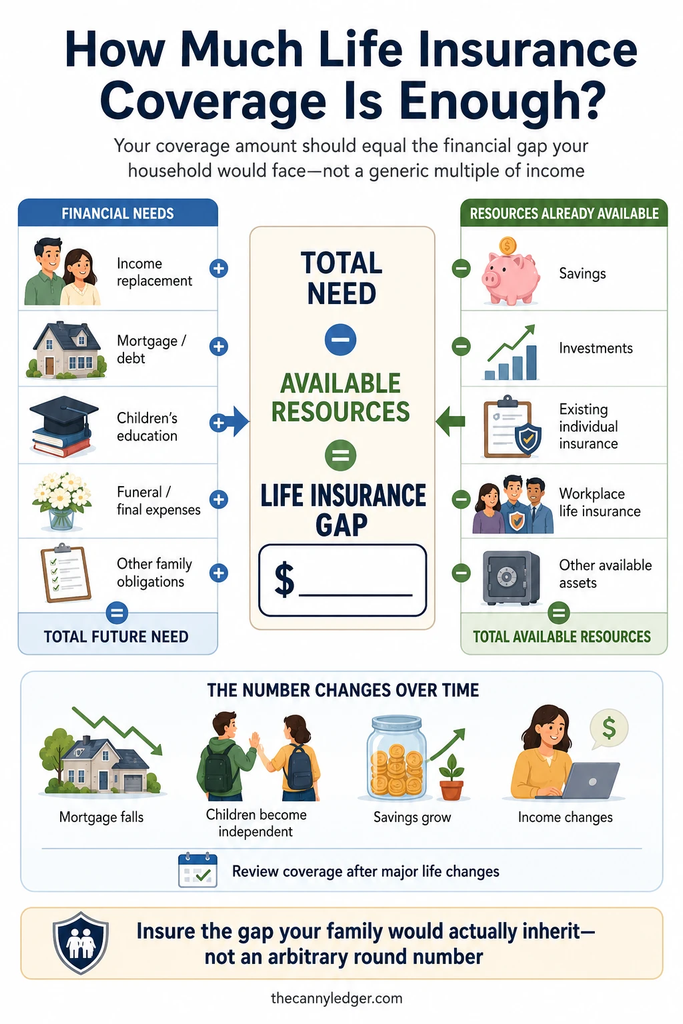
There’s no single formula that fits every household, since the right number depends on income replacement needs, outstanding debt, future costs like a child’s education, and any existing savings or assets that could cover part of the gap. Rather than walk through that math in the middle of a general overview, our dedicated coverage calculator and detailed guide to figuring out your number are built specifically to work through it properly.
Mistakes People Commonly Make
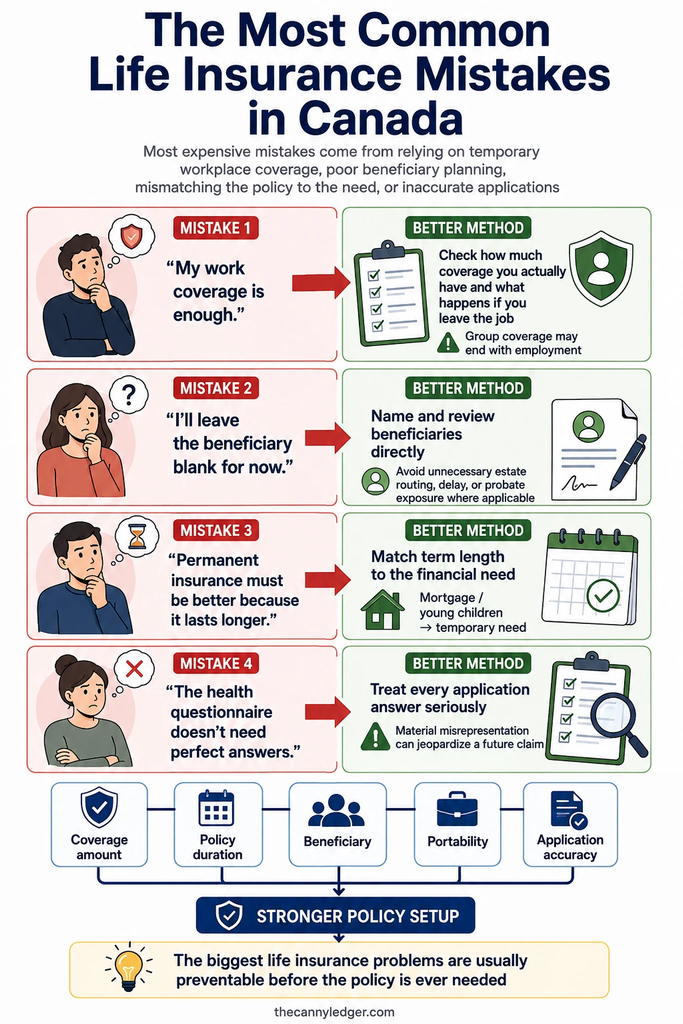
The most common one is relying entirely on group life insurance through an employer, without realizing that coverage typically ends the day you leave that job, at exactly the moment your health and age might make replacing it more expensive or harder to qualify for. The second is not naming a specific beneficiary at all, which routes the payout through your estate instead, adding probate costs and delay that a five-minute beneficiary designation would have avoided entirely.
The third is buying permanent insurance to solve a problem that only exists for a defined period, a mortgage term or the years until kids are grown, paying several times the premium for lifelong coverage when a term policy matched to that specific window would have served the same purpose for less. And the fourth is treating the medical questionnaire casually, since an inaccurate answer discovered during the two-year contestability window can cost a family the entire death benefit at the worst possible moment.
What to Do Next
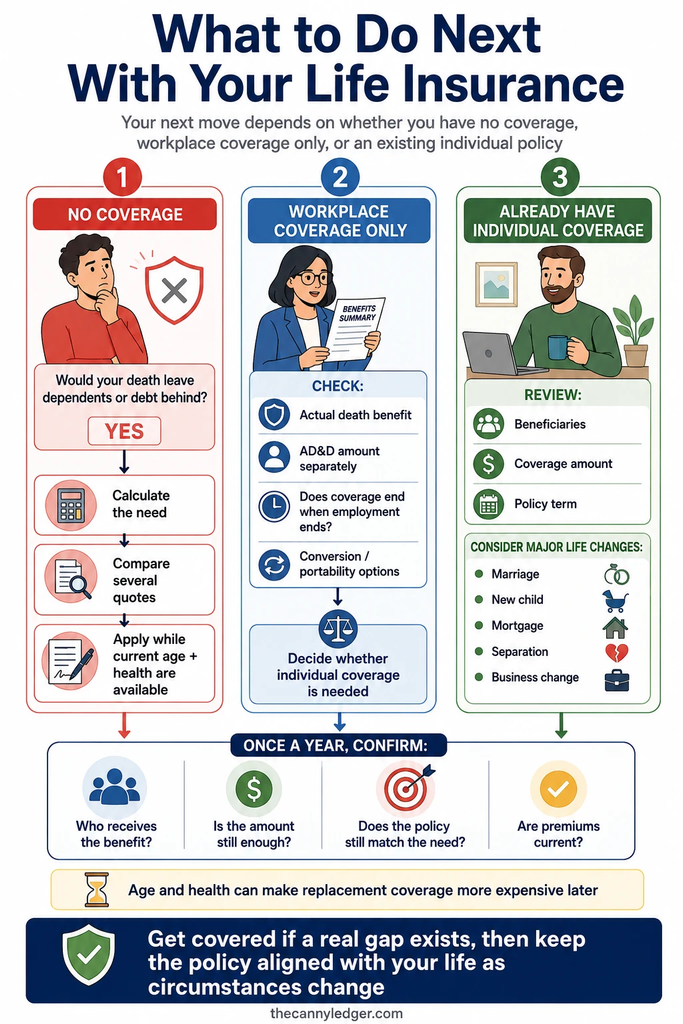
If you don’t currently have any coverage and have dependents or debt that would burden someone else, getting quotes from a few insurers is worth doing this month rather than treating it as a someday task, since premiums only get more expensive with age and any new health issue that develops in the meantime. If you already have coverage through work, check specifically whether it’s portable if you change jobs, since most group policies aren’t. And if it’s been several years since you reviewed your beneficiary designations, confirming they still reflect your current wishes takes a phone call and closes off a common and avoidable problem.
A Few More Questions Worth Answering
Do I need a medical exam for every policy? No. Coverage amount, age, and the specific insurer all affect whether a full exam, a simplified questionnaire, or no health disclosure at all applies, and no-medical options exist specifically for people who want to skip that step.
Can I have more than one life insurance policy at once? Yes. There’s no rule against holding multiple policies from different insurers, and some people intentionally layer a large term policy with a smaller permanent one to cover different needs over different timeframes.
Does my life insurance premium count as a tax deduction? No, not for a personal policy. Personal life insurance premiums generally aren’t deductible on an individual tax return, though specific business-owned policy structures can have different treatment, which is a separate question from the tax-free treatment of the death benefit itself.