
Most people picture a life insurance claim as a slow, bureaucratic grind that drags on for months while a grieving family waits. The reality, once every required document is actually in the insurer’s hands, is faster than that reputation suggests. Sun Life’s own claims processing documentation states that most death claims are paid within 5 business days of receiving the last required piece of paperwork, which means the real bottleneck for most families isn’t the insurer dragging its feet, it’s how quickly the paperwork gets assembled and submitted in the first place.
- What Actually Has to Happen Before a Claim Gets Paid
- Why Larger Payouts Sometimes Need More Paperwork
- What Actually Slows a Claim Down
- The Two-Year Window Almost Every Policy Includes
- What to Do if a Claim Is Taking Longer Than It Should
- Mistakes That Slow Down a Claim Unnecessarily
- Common Questions About Life Insurance Payout Timing
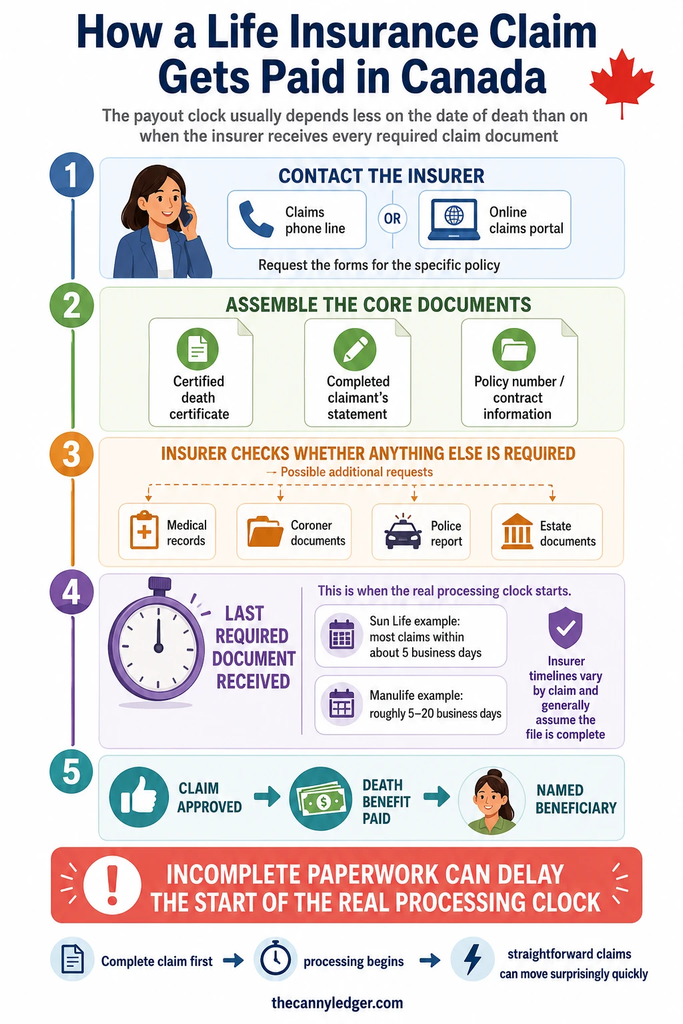
Most Canadian life insurance claims pay out within a few weeks once a beneficiary submits a complete claim, with major insurers reporting turnaround times ranging from about 5 to 20 business days after receiving the final required document. Larger estate-payable amounts, deaths outside Canada, and policies still within their first two years can extend that timeline considerably.
What Actually Has to Happen Before a Claim Gets Paid
Filing a claim starts with contacting the insurer directly, usually through a dedicated claims phone line or an online claims portal, and requesting the claim forms specific to that policy. The core documents almost every insurer requires include a certified copy of the death certificate, a completed claimant’s statement identifying the beneficiary, and the original policy number or documentation identifying which contract is being claimed against.
Beyond these basics, the specific requirements can expand depending on how the death occurred and how large the payout is. Manulife’s own individual insurance FAQ page confirms most claims take 5 to 20 business days to process once submitted, a range wide enough to reflect how much the specific circumstances of a claim actually matter to processing speed.
Why Larger Payouts Sometimes Need More Paperwork
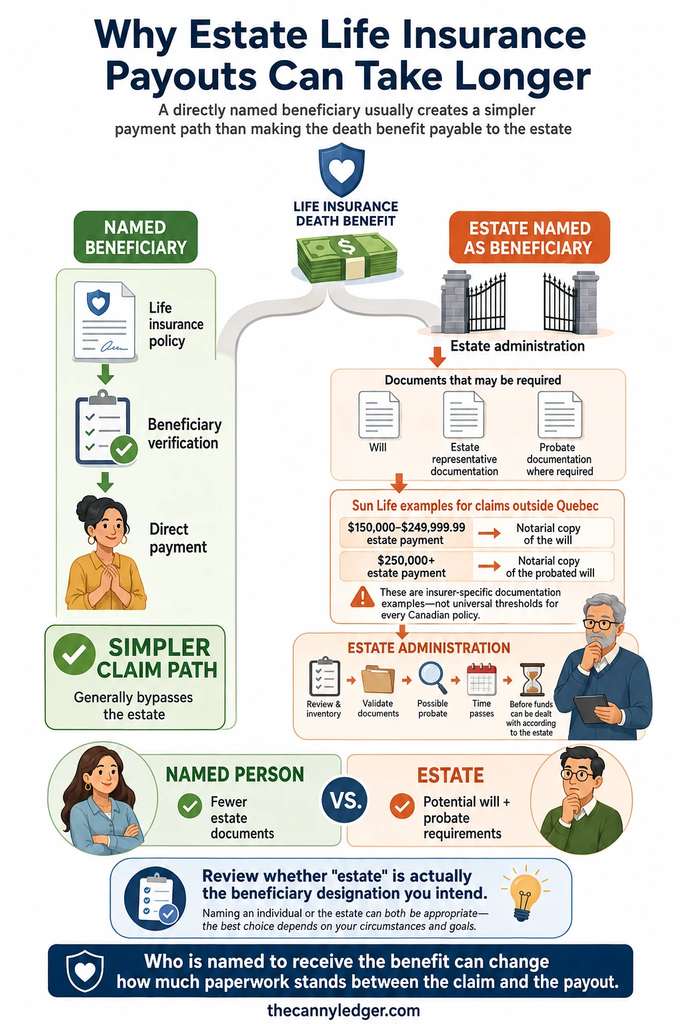
When a death benefit is payable directly to a named beneficiary, the process is usually the simplest version of a claim, since the money bypasses the estate entirely and goes straight to the person named on the policy. Payouts made to an estate rather than a named individual work differently, and the documentation requirements scale up with the size of the payment.
Sun Life’s own claims documentation lays out concrete thresholds for this outside Quebec, requiring a notarial copy of the will for estate payments between $150,000 and $249,999.99, and a notarial copy of the probated will once the estate-payable amount reaches $250,000 or more. This is exactly why naming a specific person as beneficiary rather than defaulting to “my estate” tends to produce a faster, simpler claim, since it avoids the additional will and probate documentation that estate-payable claims require once the amount crosses these thresholds.
What Actually Slows a Claim Down
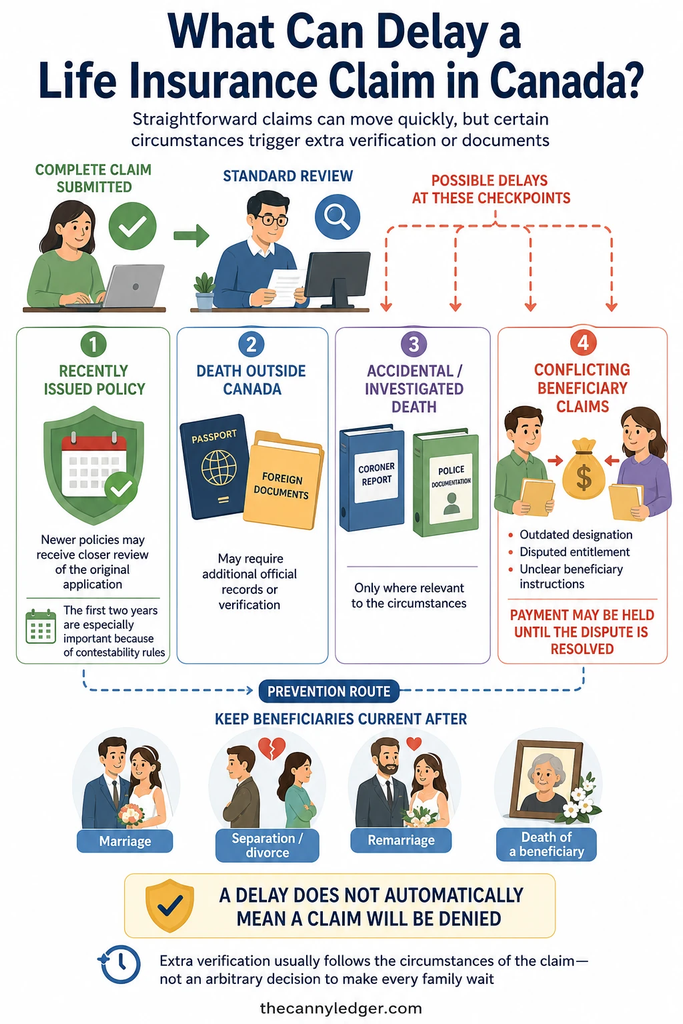
A handful of specific circumstances reliably extend how long a claim takes beyond the standard turnaround. Policies underwritten within roughly the last five years draw closer scrutiny, since insurers review recently issued policies more carefully to confirm the original application was accurate. Deaths occurring outside Canada and accidental death claims both tend to require additional documentation, such as coroner or police reports, before an insurer will finalize payment.
Conflicting claimants represent another common source of delay, and this one has nothing to do with paperwork completeness. If more than one party claims entitlement to a death benefit, whether through a beneficiary dispute, an outdated beneficiary designation, or unclear beneficiary rules on the policy itself, the insurer generally holds the funds until the conflict resolves, sometimes requiring a court process to determine the rightful recipient. This is a real, avoidable delay, since keeping a policy’s beneficiary designation current after major life events like divorce or remarriage prevents exactly this kind of holdup.
The Two-Year Window Almost Every Policy Includes
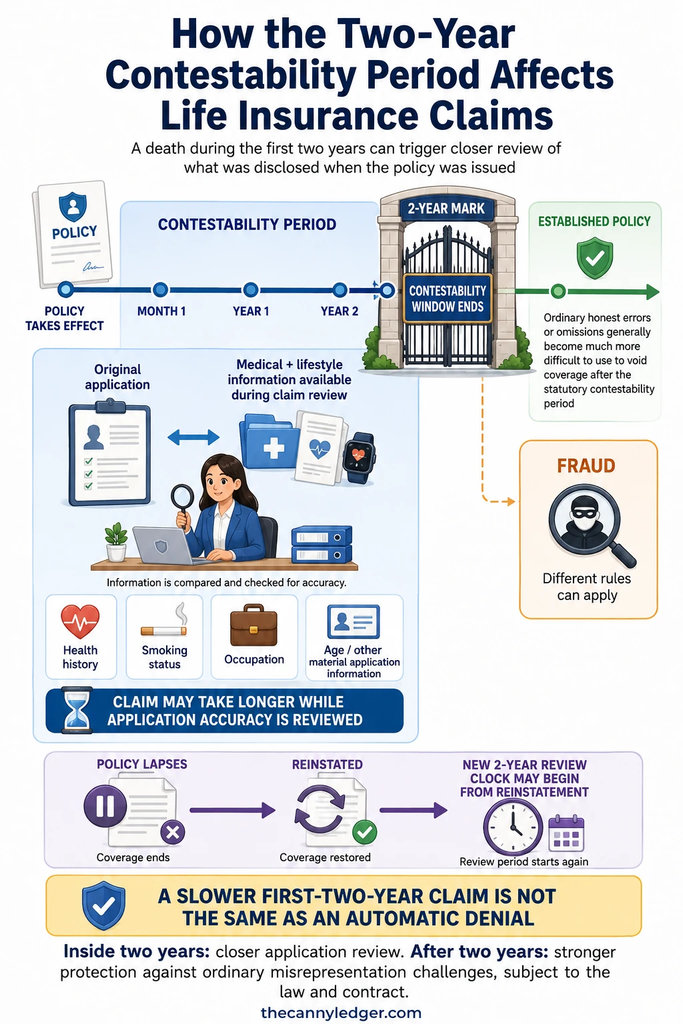
Nearly every Canadian life insurance policy includes what’s known as a contestability period, typically the first two years after the policy takes effect, during which an insurer retains the right to investigate a death claim more closely for misrepresentation on the original application. Ontario’s own Insurance Act governs this framework provincially, and the consistent legal position across multiple sources is that once this two-year window closes, a policy generally becomes incontestable, meaning the insurer can no longer deny a claim over an honest mistake or omission on the application, only outright fraud.
This explains why a death occurring within a policy’s first two years, even one with no suspicious circumstances at all, can take longer to process than an identical claim on an older policy. The insurer isn’t necessarily suspicious of anything specific, it’s simply exercising the standard review this window exists to provide, confirming that what was disclosed at application matches the medical and lifestyle facts on record. A policy that lapsed and was later reinstated typically restarts this two-year clock from the reinstatement date, which is worth knowing if you’ve ever let coverage lapse and brought it back into force.
What to Do if a Claim Is Taking Longer Than It Should
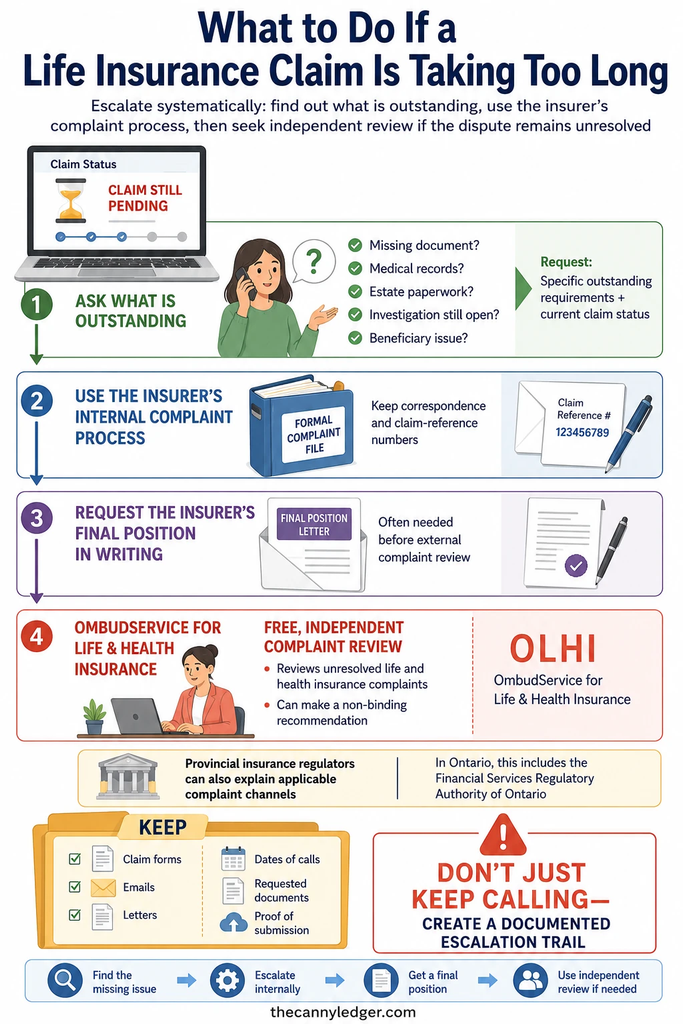
If a claim has stalled well beyond the timelines an insurer normally quotes, the first step is going through that insurer’s own internal complaint process and requesting a final position in writing, which most insurers are required to provide before any external review can begin. The Financial Services Regulatory Authority of Ontario outlines this path clearly, directing consumers to first request a final position letter from their insurer before escalating further.
Once that final position letter is in hand, the OmbudService for Life and Health Insurance offers a free, independent dispute resolution service for exactly this kind of unresolved complaint, reviewing whether an insurer followed the actual terms of the policy and making a non-binding settlement recommendation if it finds the complaint has merit. This resource exists specifically because most Canadians have never heard of it until they need it, and knowing it’s available before a dispute drags on for months is worth far more than discovering it partway through a frustrating claim.
Mistakes That Slow Down a Claim Unnecessarily
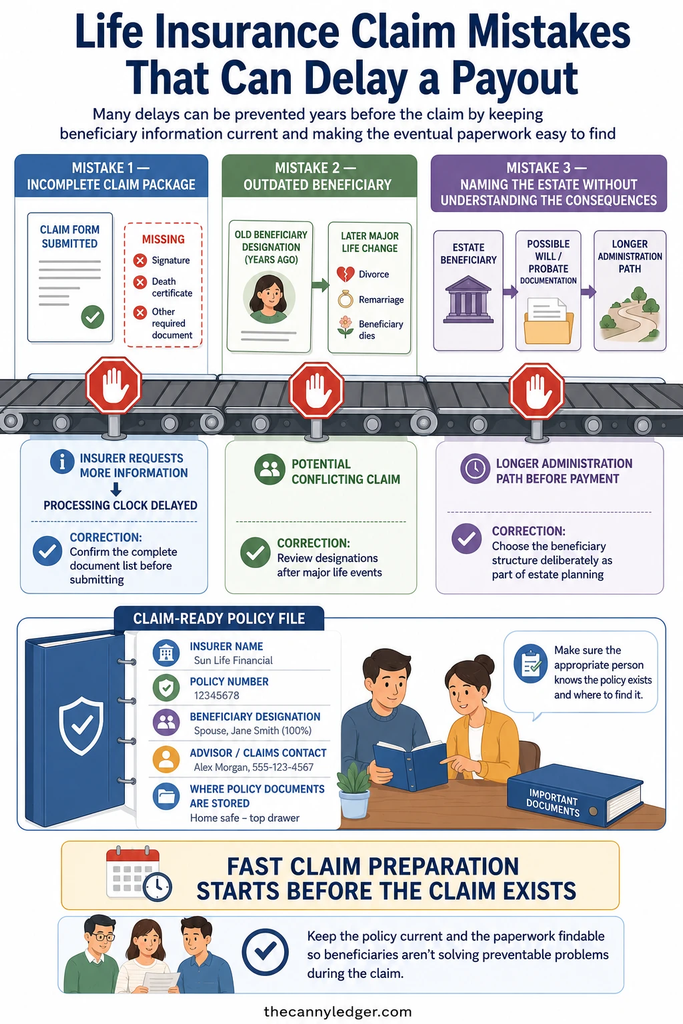
The most common mistake is submitting an incomplete claim form and waiting for the insurer to flag what’s missing rather than confirming every required field and document before sending anything in. Given that most insurers measure their turnaround time from the date the last requirement is received rather than the date of death, an incomplete initial submission effectively resets that clock every time something has to be requested and resubmitted.
A second mistake is leaving a policy’s beneficiary designation outdated for years after a major life change, creating exactly the kind of conflicting claim scenario that can tie up a payout regardless of how straightforward the death itself was. A third mistake is defaulting a policy’s beneficiary to the estate without understanding that this pushes the claim into probate and will-documentation requirements that a directly named beneficiary would have avoided entirely. If you’re unsure whether your current beneficiary designation still reflects your actual wishes, reviewing the beneficiary rules that apply to your specific policy and updating it directly with your insurer takes far less time than untangling a dispute after the fact.
Common Questions About Life Insurance Payout Timing
Does the type of policy, term versus whole life, affect how fast a claim pays out? No. Claims processing timelines depend on documentation completeness, the circumstances of the death, and whether the policy is still within its contestability period, not on whether the underlying coverage was term or permanent.
Can a beneficiary receive a partial payment while a claim is still being finalized? Sometimes. Some insurers offer partial advance payments in situations where the full claim requires additional time to resolve, though this isn’t universal and depends on the specific insurer and circumstances.
Does a suicide within the first two years of a policy affect the payout timeline? This falls under a separate policy provision from the general contestability review, and how life insurance treats suicide specifically is worth understanding on its own terms rather than assuming it works identically to a standard contestability investigation.