

A $400,000 Winnipeg home and a $400,000 rebuild cost aren’t the same number, and confusing them is one of the most common misunderstandings homeowners bring into an insurance conversation. Insurance doesn’t price against what your home would sell for on the real estate market, it prices against what it would actually cost to rebuild that exact structure from scratch today, materials, labour, permits, and all. That distinction matters enormously in a province where the 2011 Red River flood alone caused more than $1 billion in damages, and where building material and labour costs have climbed sharply enough in recent years that even homeowners with a spotless claims history are seeing real premium increases at renewal.
- Why Insurers Price Based on Rebuild Cost, Not What Your Home Is Worth
- Why Manitoba Costs More Than Some Other Provinces
- The Age of Your Home Can Change Everything
- How Close You Live to a Fire Hydrant Actually Matters
- Your Neighbours’ Claims Can Raise Your Rate Too
- Water Damage Claims Cost More For Longer
- What Renovations Do to Your Premium
- Realistic Cost Ranges for Different Winnipeg Homes
- Common Questions About Winnipeg Home Insurance Costs
Winnipeg home insurance costs depend primarily on your home’s rebuild cost, not its market value, layered with its age and construction, its distance from fire services, your neighbourhood’s claims history, and Manitoba’s genuine exposure to flood and severe weather risk. Most detached Winnipeg homes land somewhere between the high hundreds and low thousands of dollars annually, though the specific number for any given property can vary considerably based on these factors.
Why Insurers Price Based on Rebuild Cost, Not What Your Home Is Worth
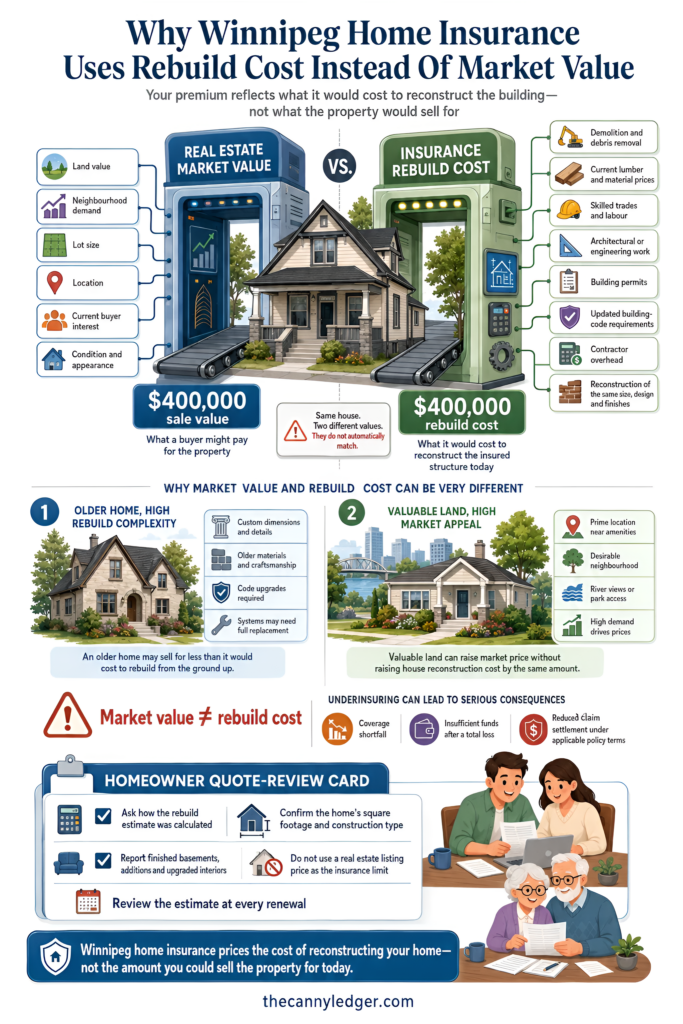
This is worth understanding before anything else, since it explains a lot of the sticker shock homeowners feel when a quote doesn’t match their intuition. Replacement cost coverage is built around what it would actually cost to rebuild your specific home today, current labour rates, current material costs, current building code requirements, not the price a buyer would pay for it on the open market. A home that would sell for less than its true rebuild cost, common in older Winnipeg neighbourhoods where land value makes up a larger share of the sale price than the structure itself, can still carry a genuinely high insurance premium, because the insurer is pricing against what a full rebuild actually requires, not what the market says the property is worth today.
Why Manitoba Costs More Than Some Other Provinces
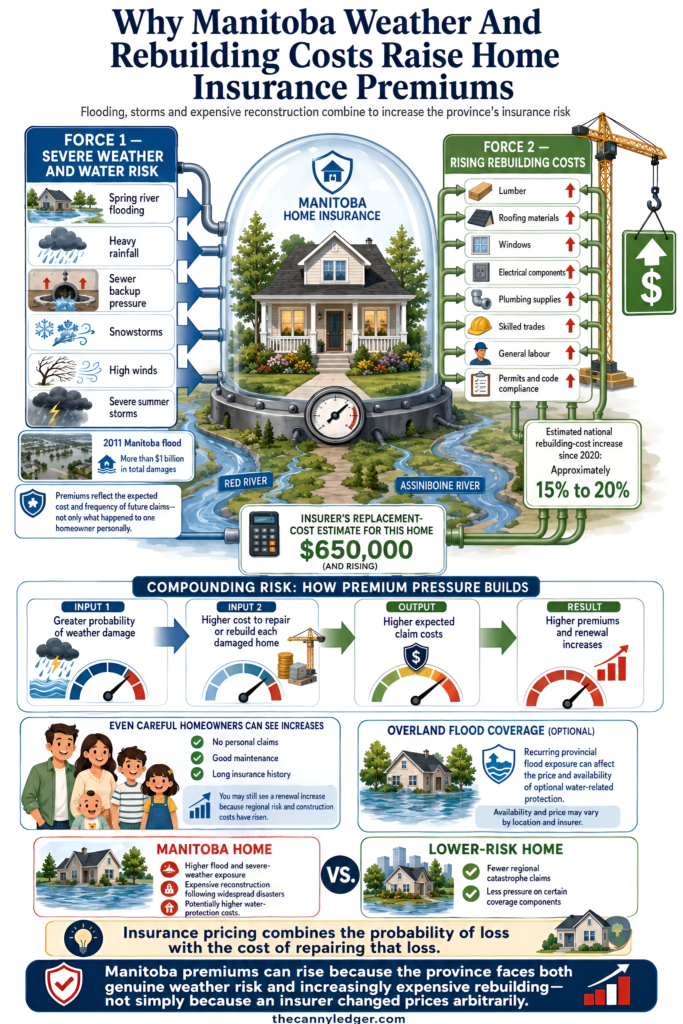
Manitoba carries a few structural disadvantages that show up directly in home insurance pricing compared to some other parts of Canada. The province faces real, recurring exposure to severe weather, heavy rainfall, snowstorms, and high winds, all of which translate into real claims volume over time. Flood risk specifically runs deep here: the Red River and Assiniboine River systems create genuine recurring spring flooding risk, and the 2011 flood alone caused more than $1 billion in total damages across the province, a scale of loss that insurers price into ongoing overland flood coverage costs even in years without a major event. On top of the weather risk itself, the cost of building materials and skilled labour in Manitoba runs relatively high, which directly raises what it costs to rebuild a home after a covered loss, and that rebuild cost is exactly what your premium is priced against. This isn’t unique to Manitoba, national average rebuilding costs have climbed an estimated 15 to 20 percent since 2020 due to labour shortages and material inflation across Canada, but it compounds on top of the province’s own weather-driven risk rather than replacing it.
The Age of Your Home Can Change Everything
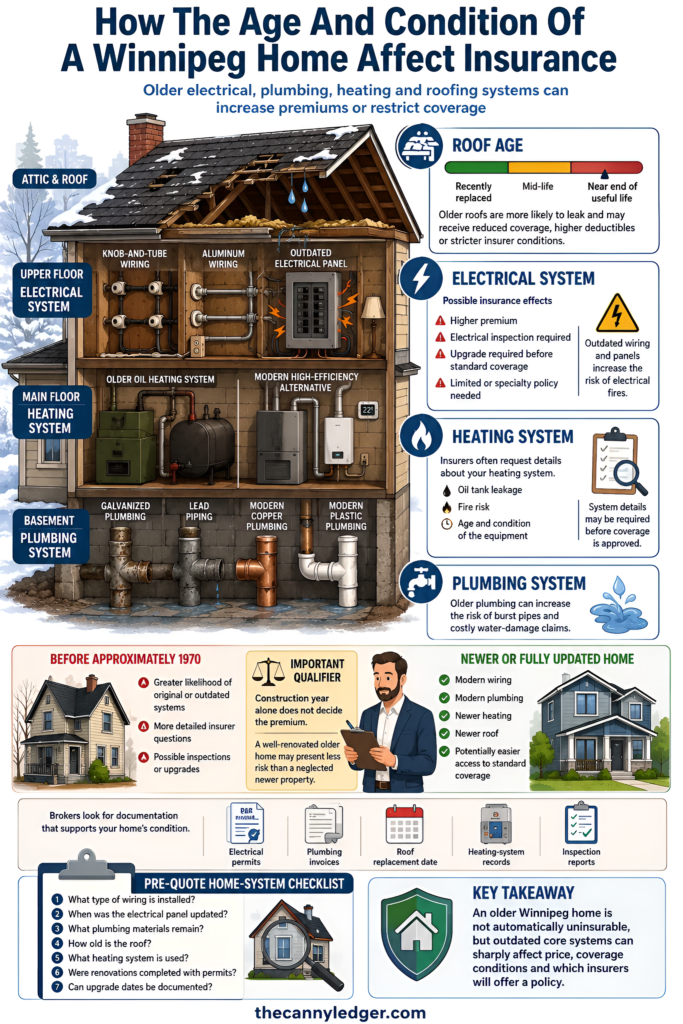
Older homes carry real, specific risk factors that go well beyond a vague sense of “older equals riskier.” Homes built before roughly 1970 often still have outdated systems, knob-and-tube electrical wiring, galvanized plumbing, oil heating, each of which meaningfully raises fire or water damage risk on its own. This isn’t always just a pricing adjustment either, some insurers won’t offer standard coverage at all for a home with knob-and-tube or aluminum wiring still in place, pushing a homeowner toward a more limited, more expensive policy type until the wiring is updated. The same logic applies to plumbing material, insurers generally prefer modern plastic or copper piping over older lead pipes, and to roof age, since an older roof carries a higher likelihood of leaks and related water damage claims. None of this means an older Winnipeg home is uninsurable, but it does mean the specific age and condition of a home’s core systems deserves an honest conversation with a broker before assuming a quote will land anywhere close to a newer, similarly sized property.
How Close You Live to a Fire Hydrant Actually Matters
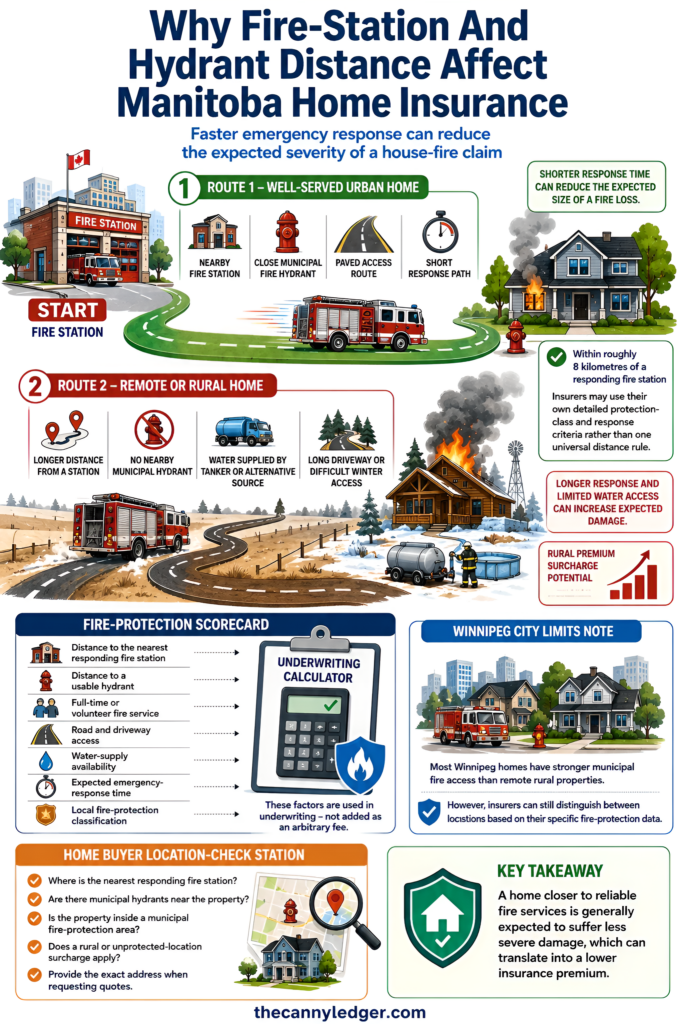
This factor surprises a lot of first-time homebuyers, but it’s a genuine, consistent pricing input across Manitoba insurers. Homes within roughly 8 kilometres of a fire station, with reasonably close hydrant access, tend to see lower premiums, since a fire has a real chance of being contained faster with nearby emergency response. Homes further out, more common in rural parts of Manitoba than within Winnipeg proper, often carry a rural surcharge specifically tied to that longer expected response time. Within Winnipeg’s own city limits this factor matters less than it would in a genuinely remote area, but it’s still worth knowing as a real, quantifiable input rather than an arbitrary line item on a quote.
Your Neighbours’ Claims Can Raise Your Rate Too

Here’s a detail that catches people off guard: insurance pricing doesn’t only look at your own personal claims history, it also factors in the claims pattern of the broader area you live in. A neighbourhood that’s seen a high volume of recent claims, repeated sewer backup incidents during a heavy storm season, for instance, can see elevated rates applied across the board to homes in that area, not just to the specific households that actually filed claims. This is part of why two nearly identical homes in different Winnipeg neighbourhoods can carry noticeably different premiums even with identical personal claims histories, the area itself carries its own accumulated risk profile independent of any individual homeowner’s record.
Water Damage Claims Cost More For Longer
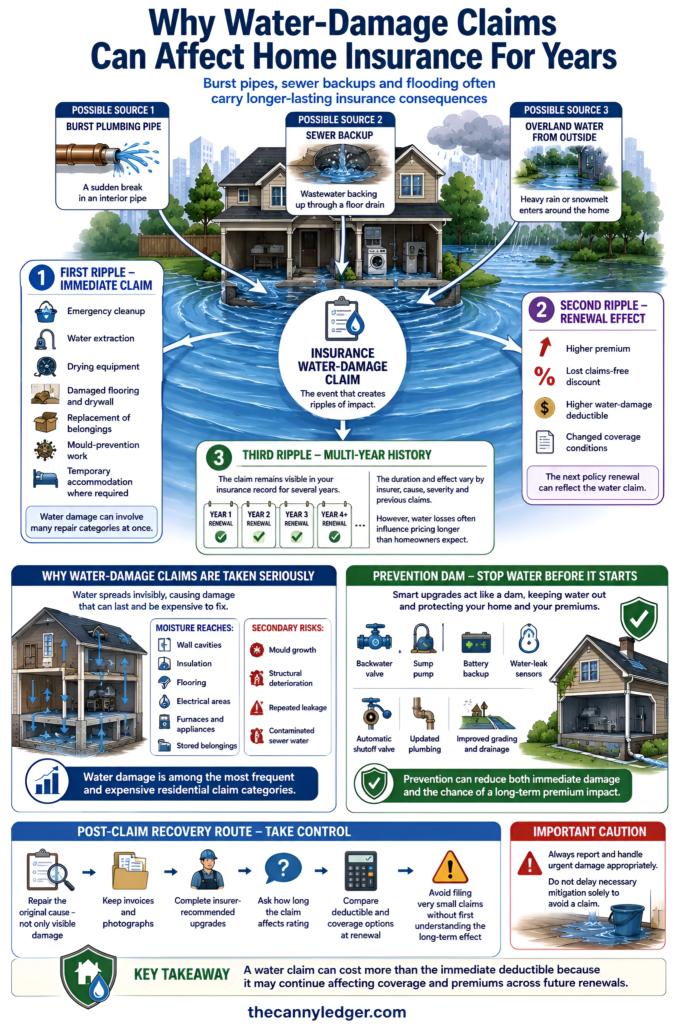
Not every type of claim affects future premiums equally, and water damage specifically tends to leave a longer mark than most other claim types. A water-related claim, whether from a burst pipe, sewer backup, or overland flooding, often continues affecting a homeowner’s premium for a longer stretch than a comparable claim from a different cause, reflecting insurers’ broader data showing water damage as both the most common and most expensive category of residential claim in Canada generally. This is part of why the preventive upgrades covered separately, a backwater valve, an upgraded sump pump, matter beyond just the immediate discount they unlock, they genuinely reduce the odds of triggering the specific claim type most likely to affect your rates well into the future.
What Renovations Do to Your Premium
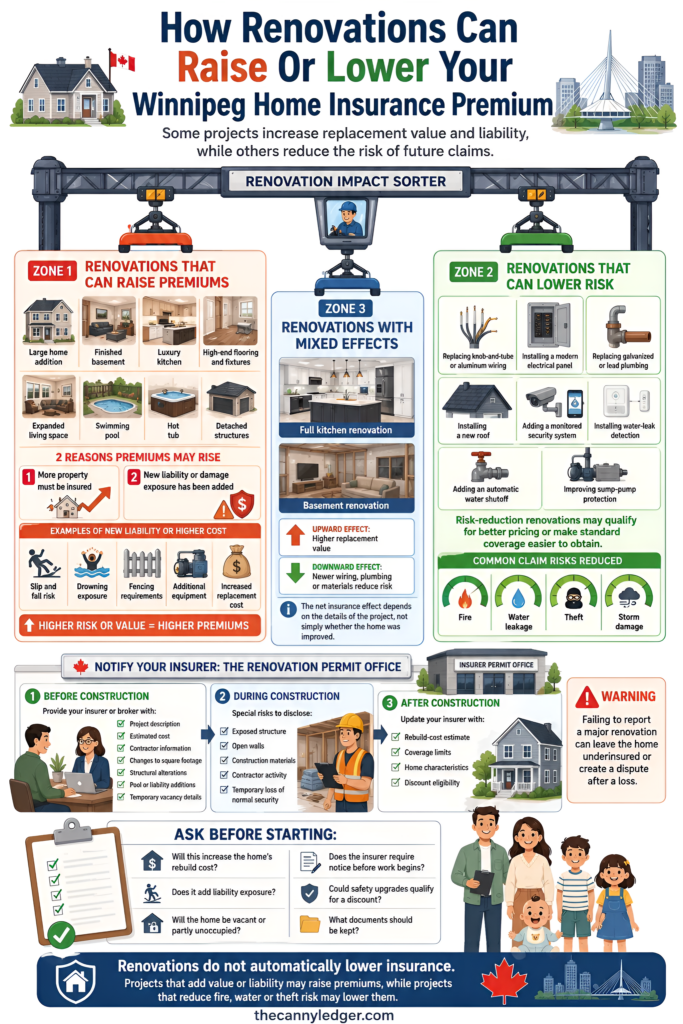
Not every home improvement affects insurance the same way, and the direction can genuinely surprise homeowners expecting any upgrade to help. Renovations that increase a home’s overall value or add risk, a swimming pool being the clearest example, tend to raise premiums, since the policy now has to account for both a higher-value asset and genuinely new liability exposure. Renovations that specifically improve safety, replacing old pipes, upgrading outdated wiring, adding a monitored security system, tend to lower premiums instead, since they directly reduce the likelihood of the claim types insurers price most heavily against. Before assuming any major renovation is a straightforward win for your insurance costs, it’s worth checking directly which category a specific project falls into.
Realistic Cost Ranges for Different Winnipeg Homes
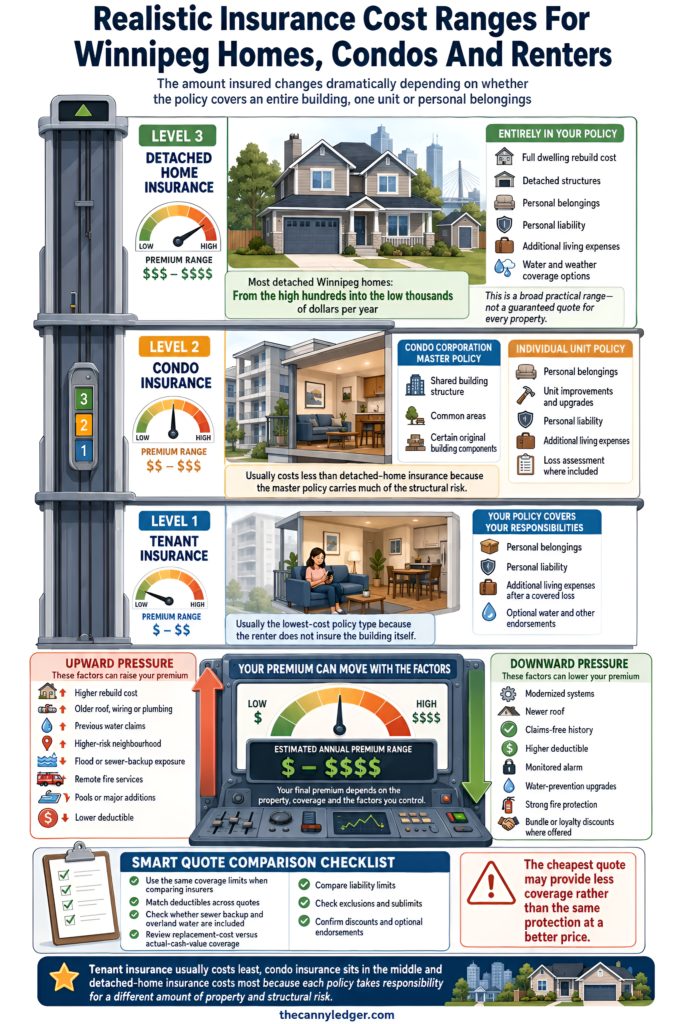
Pulling this together into practical numbers, most detached Winnipeg homes land somewhere between the high hundreds and low thousands of dollars annually, a wide range precisely because every factor covered above, rebuild cost, age, location, and claims history, both personal and neighbourhood-level, pushes a specific property up or down within it. Condo insurance tends to run meaningfully lower than a comparable detached home policy, since a condo corporation’s master policy already covers the building’s shared structure, leaving an individual owner responsible only for their unit’s interior, belongings, and liability. Tenant insurance sits lowest of all three, covering only belongings and personal liability rather than any structure at all. For a broader look at what these different policy types each actually include, Winnipeg’s home insurance buyer’s guide covers the full coverage breakdown behind each of these categories.
Common Questions About Winnipeg Home Insurance Costs
Will my premium go up every year even if I never file a claim? It’s genuinely possible, since rebuild costs, local claims patterns, and Manitoba’s broader weather risk all factor into pricing independent of your own personal claims history. A completely claims-free household can still see a real increase at renewal driven by these outside factors alone.
Does the assessed value on my property tax notice have anything to do with my insurance rebuild cost? No, these are two entirely separate calculations serving different purposes. Your property’s assessed value for tax purposes reflects an estimate of market value on a specific reference date, while your insurance rebuild cost reflects current construction costs for that specific structure, the two numbers can differ substantially and neither one should be used to estimate the other.
If my home has knob-and-tube wiring, is my only option a more expensive policy? Not necessarily the only option, but it’s worth having a direct conversation with a broker about what’s actually available, some insurers decline coverage entirely for active knob-and-tube wiring, while others offer coverage at a higher rate, and updating the wiring itself is often the more cost-effective long-term fix compared to paying an ongoing premium surcharge indefinitely.
Understanding what actually drives your specific premium, rebuild cost rather than market value, your home’s age and systems, and factors well outside your own control like neighbourhood claims history, makes a quote considerably easier to evaluate honestly. For the specific discounts and shopping strategies that can meaningfully offset these cost drivers, comparing home insurance quotes in Winnipeg covers exactly where the real savings actually come from.