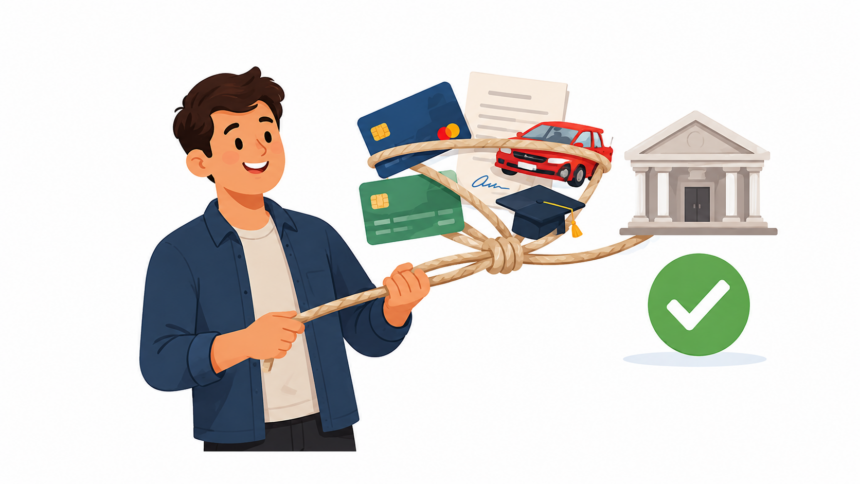
A consolidation loan quoted at 28 percent doesn’t consolidate anything meaningful. It just moves your debt from one expensive product to a slightly cheaper-sounding one, and the interest keeps compounding the same way it always did. Whether a consolidation loan actually helps you comes down almost entirely to one number most people don’t think to check before applying, your credit score, since it’s the single biggest factor separating a loan that genuinely saves money from one that quietly costs more than the debt it was supposed to fix.
This piece goes deep on the loan product specifically, what rate tier your credit score actually puts you in, what lenders require before approving anything, how secured options like a HELOC change the math, and where the line sits between a loan worth taking and one worth walking away from entirely. If you haven’t already, our companion piece on how debt consolidation works as a whole and our comparison of established providers fill in the broader context this article builds on.
Your Credit Score Decides Which Tier You’re In
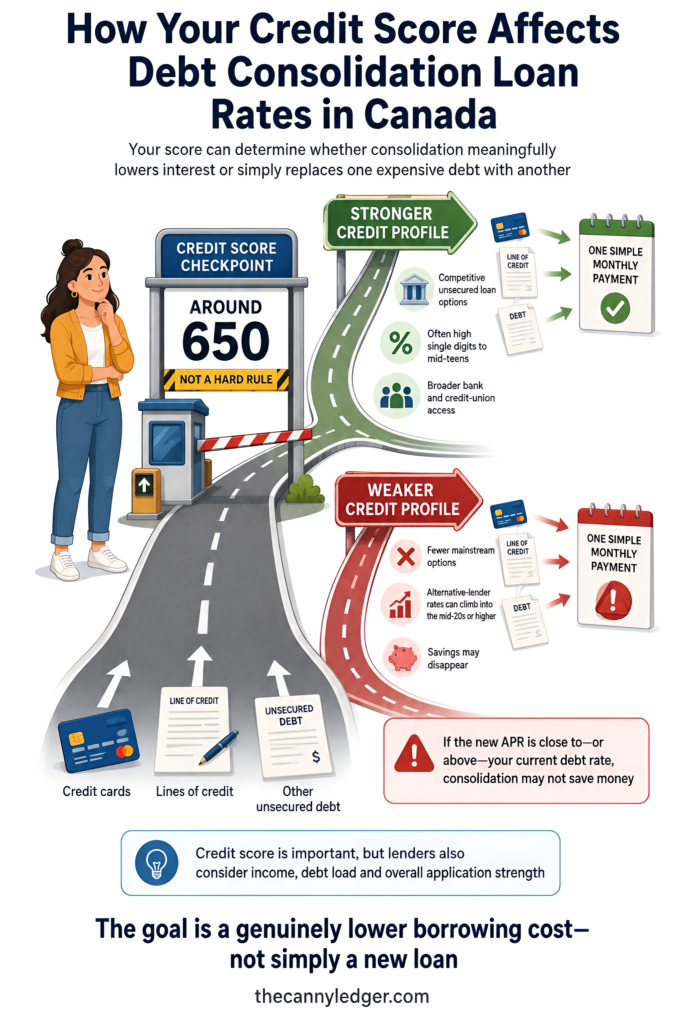
The pattern here is consistent enough across banks, credit unions, and alternative lenders that it’s worth treating as a genuine rule of thumb rather than a loose guideline. A credit score at or above 650 generally puts you in range for competitive unsecured consolidation loan rates, typically landing somewhere in the high single digits to mid-teens depending on the lender and your broader financial picture. Fall below that 650 line and the picture changes sharply, with rates from alternative lenders and finance companies commonly climbing into the mid-20s to the legal ceiling itself, a range where the loan stops functioning as consolidation in any meaningful sense and starts costing more than the credit card debt it was meant to replace.
That threshold creates a genuine catch. The people whose credit has already been damaged by high balances or missed payments are exactly the people a low-rate consolidation loan would help most, and they’re also the people least likely to qualify for one. Canada’s major banks and credit unions typically require a credit score comfortably above 650 for their best unsecured personal loan pricing, which is worth confirming for your own file before assuming a bank loan is realistically on the table.
What Secured Options Change About The Math
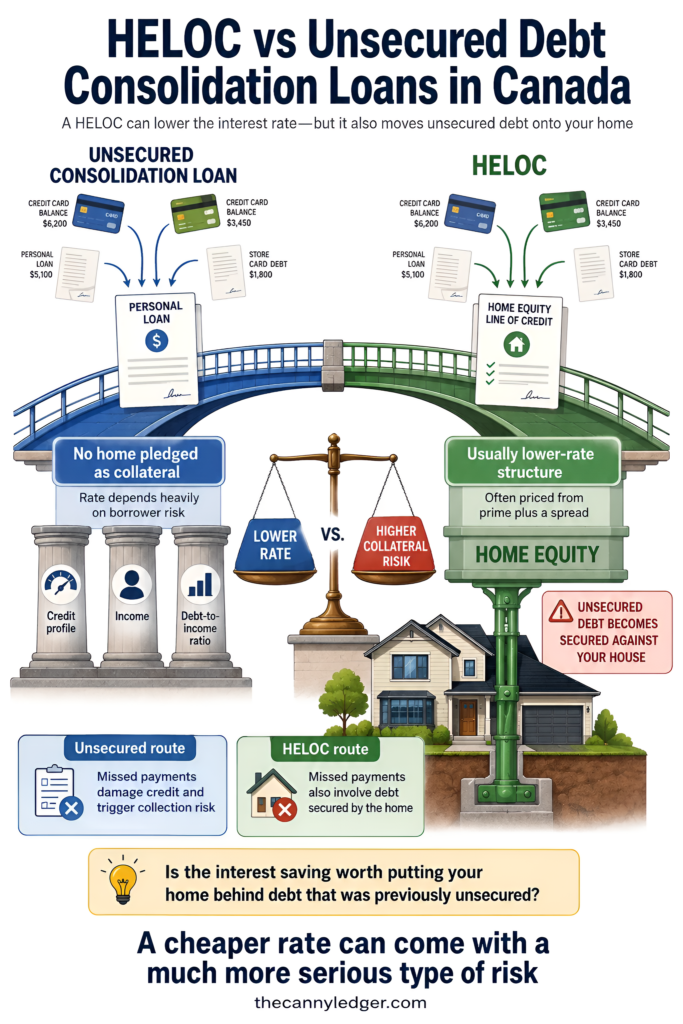
A home equity line of credit works on a genuinely different pricing structure, since your home backs the loan rather than your credit history alone. HELOC rates in Canada typically track the prime rate plus a modest spread, putting the effective rate well below what an unsecured consolidation loan charges even at a strong credit score, and meaningfully below what a weaker-credit borrower would pay on an unsecured product. The tradeoff is real and worth stating plainly rather than glossing over. Converting unsecured credit card debt into a HELOC secured against your house means a missed payment now carries a consequence that reaches your home, not just your credit file, a materially different risk than defaulting on an unsecured card ever carried.
What Lenders Actually Require Before Approving Anything
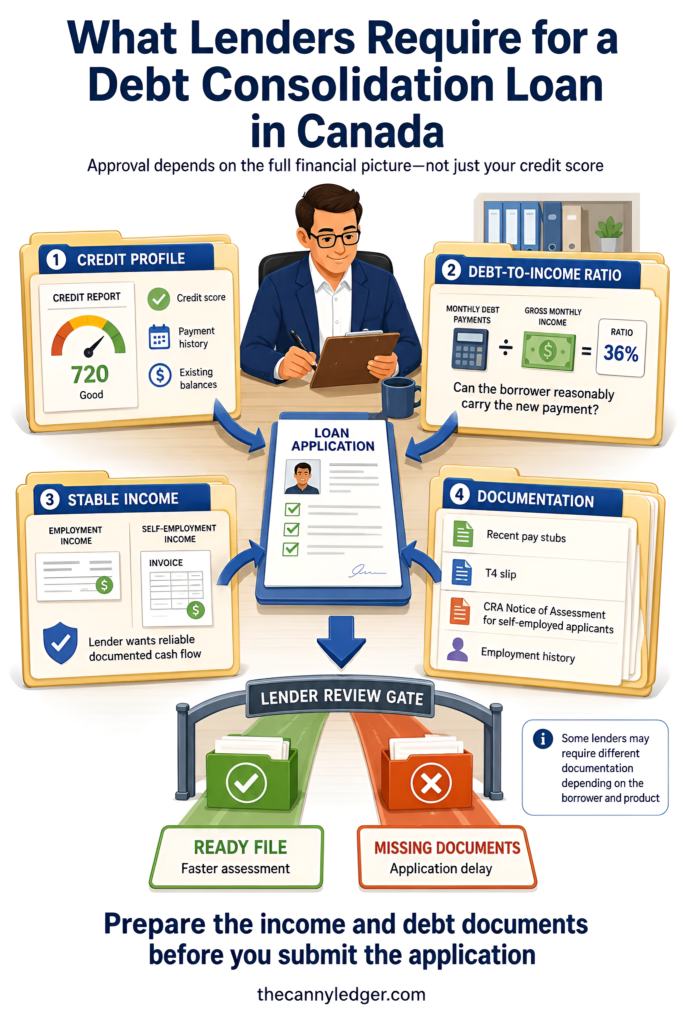
Beyond the credit score threshold, lenders evaluate the application as a whole rather than a single number in isolation. Your debt to income ratio matters as much as your score does, since a lender needs to see that your total monthly debt obligations, including the new consolidation payment, stay within a reasonable share of your gross income before approving anything. Stable, documented income is the other pillar, and most lenders want to see at least a couple of years of consistent employment history in the same general field rather than a recent job change, backed up by recent pay stubs, a T4 slip, or a CRA Notice of Assessment if you’re self-employed. None of this documentation is optional or negotiable at a mainstream lender, and showing up to an application without it typically means a delay rather than an outright decline, but it’s worth having ready before you apply rather than scrambling afterward.
Loan Amounts And Terms Worth Knowing
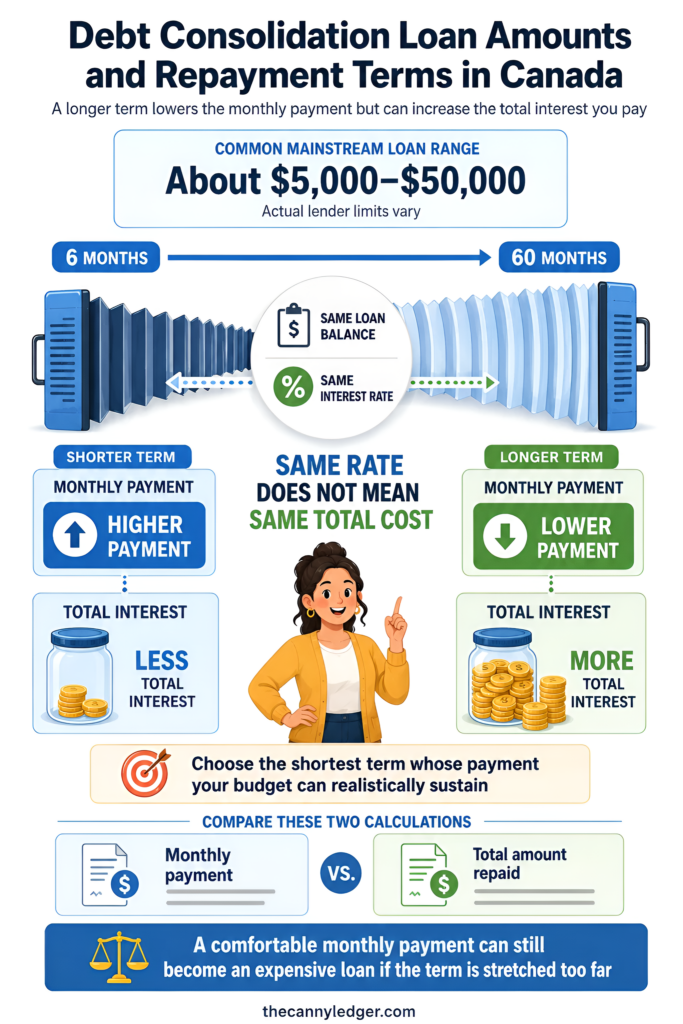
Consolidation loans through a mainstream lender generally work best for debt loads somewhere between $5,000 and $50,000, a range wide enough to cover a genuine multi-card debt problem without exceeding what an unsecured personal loan typically offers. Most personal loans in Canada run six to sixty months in term, and the term length itself is a real lever worth thinking through deliberately rather than automatically choosing the longest option offered. A shorter term means a higher monthly payment but less total interest paid over the life of the loan, while stretching the term lowers the monthly obligation at the cost of paying more in total interest by the time the loan is fully repaid, even at an identical rate.
When A Consolidation Loan Genuinely Isn’t The Right Tool
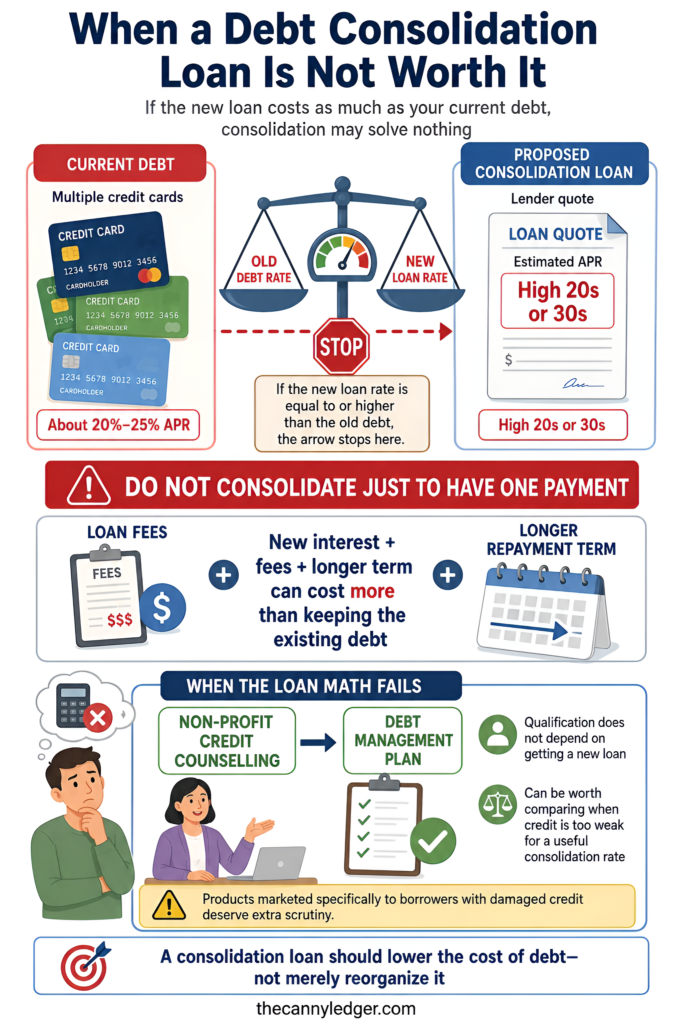
If your credit sits meaningfully below 650, run the actual numbers before applying anywhere, since a rate in the high 20s or 30s against existing credit card debt at 20 to 25 percent isn’t a genuine improvement, it’s a lateral move at best and a step backward once fees and a longer repayment term get factored in. This is exactly the situation where a debt management plan through a non-profit credit counsellor tends to outperform a loan application, since qualification for a DMP doesn’t hinge on your credit score the way a lender’s approval does. Our dedicated breakdown of consolidation loans specifically for damaged credit covers that narrower situation in more depth, including why the loan products marketed to that specific credit band deserve extra scrutiny before signing.
Comparing Your Own Situation Before You Apply
Pull your actual credit score from both bureaus before assuming which rate tier you’d land in, since the difference between a 645 and a 655 can be the difference between a genuinely useful loan and one that isn’t worth taking. Compare offers from Winnipeg’s own credit unions against what the major banks quote, since smaller institutions sometimes price more competitively for members with an existing relationship. If a HELOC is realistically on the table given your home equity, weigh the lower rate honestly against the fact that you’d be securing previously unsecured debt against your house, not just chasing the smallest number on the page. And if the math genuinely doesn’t work in your favour at your current score, that’s useful information in itself, since it points toward a debt relief conversation rather than a loan that would leave you worse off than where you started.

