

Comparing a TFSA against a GIC is a bit like comparing a wallet against a dollar bill. One is a container, the other is something you can put inside it, and asking which one is better misses that a GIC can sit directly inside a TFSA at the same time, earning the exact rate a standalone GIC would while paying zero tax on the interest along the way. The confusion is common enough that it’s worth clearing up properly before comparing anything else.
What A TFSA Actually Is
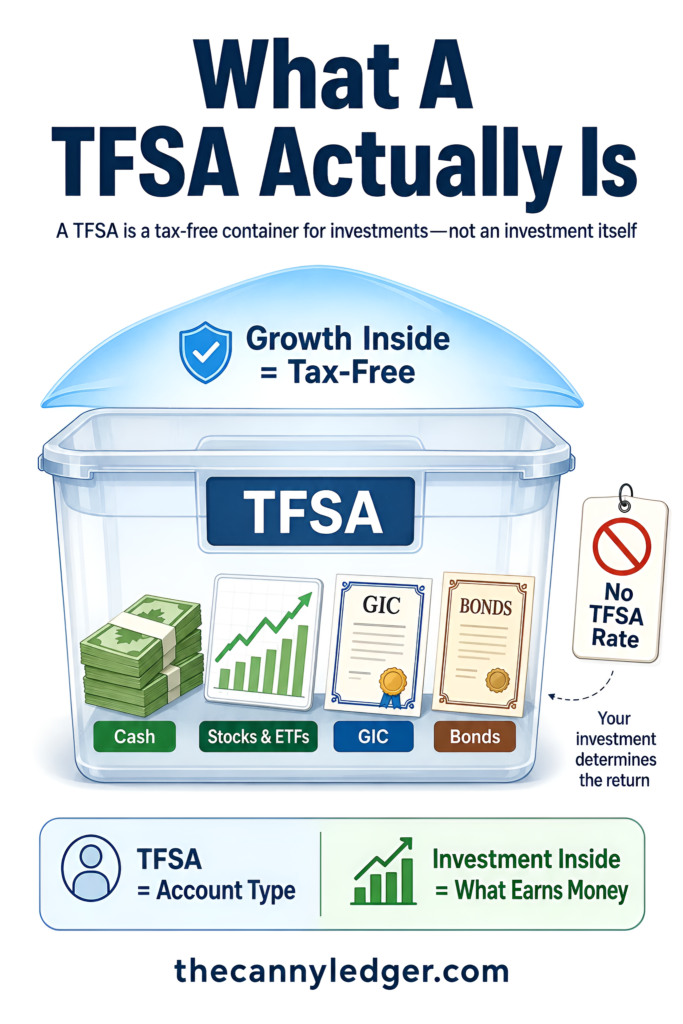
A Tax-Free Savings Account is a registered account type, a wrapper the government lets you hold various investments inside, cash, stocks, ETFs, bonds, and GICs among them, with every dollar of growth inside the account shielded from tax permanently. The TFSA itself pays no interest and offers no fixed rate on its own, since it’s not an investment product at all, it’s the tax status applied to whatever you actually choose to hold within it, a distinction our broader introduction to how a TFSA works covers from the ground up if any of this feels unfamiliar.
What A GIC Actually Is
A Guaranteed Investment Certificate is a specific investment product, a locked-in deposit that pays a fixed, guaranteed interest rate for a set term, typically ranging from a few months to five years. The principal is protected, the rate is known in advance, and CDIC insurance covers the deposit up to $100,000 per institution in most cases. A GIC exists independently of any account type, and you can hold one in a non-registered account, an RRSP, an RRIF, or a TFSA, with the underlying product and its rate staying identical regardless of which wrapper it sits inside.

The Tax Difference That Actually Changes What You Keep
This is where the comparison stops being conceptual and starts mattering in real dollars. Take a $10,000 GIC earning 4 percent over one year, a $400 interest payment. Held in a non-registered account, that $400 gets reported on a T5 slip and taxed as ordinary income at your full marginal rate, so a saver in a 30 percent bracket keeps roughly $280 after tax. The identical $10,000 GIC at the identical 4 percent rate held inside a TFSA keeps the full $400, since a TFSA doesn’t generate any tax liability on interest earned within it regardless of the amount. The GIC itself never changes, only what happens to the interest once it’s earned, and that gap grows directly with both your balance and your marginal tax rate.

The Liquidity Tradeoff Doesn’t Disappear Just Because It’s In A TFSA
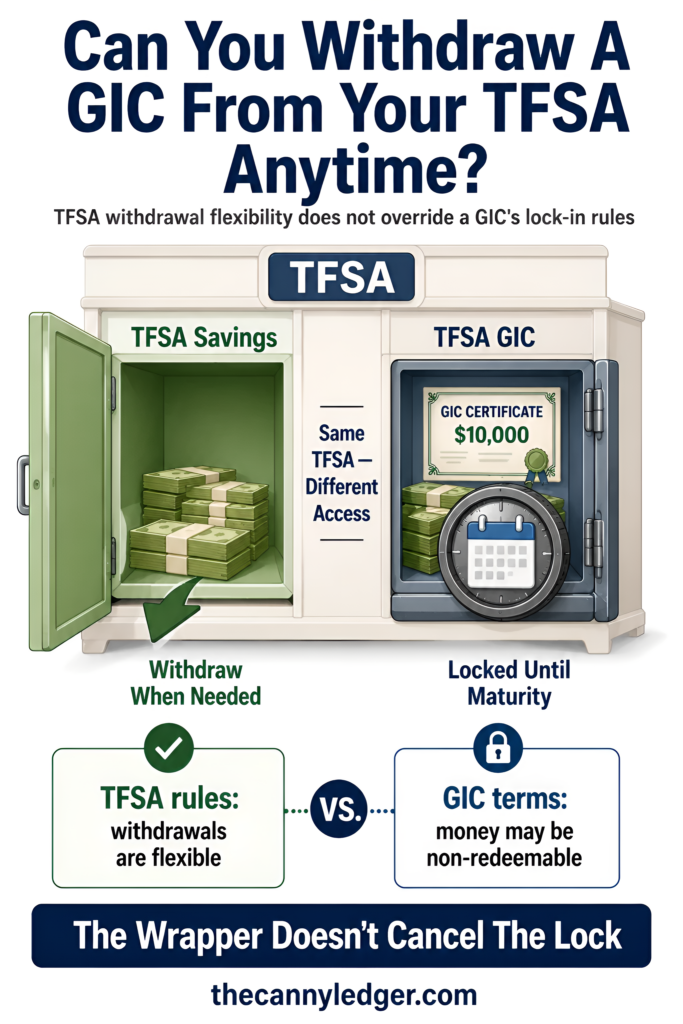
Putting a GIC inside a TFSA shelters the interest from tax, but it doesn’t change the GIC’s own terms. Most GICs are non-redeemable, meaning the money is genuinely locked until maturity regardless of which account wrapper holds it, and a TFSA’s own flexible withdrawal rules don’t override that. A TFSA savings account lets you pull money out whenever you want, but a TFSA GIC locks that same portion of your TFSA balance for the GIC’s full term, exactly as a non-registered GIC would. Confusing the account’s flexibility with the product’s own lock-in terms is a genuinely common mistake, and it’s worth being clear that choosing a GIC inside a TFSA still means committing that money for the term you select.
When Each Combination Actually Makes Sense
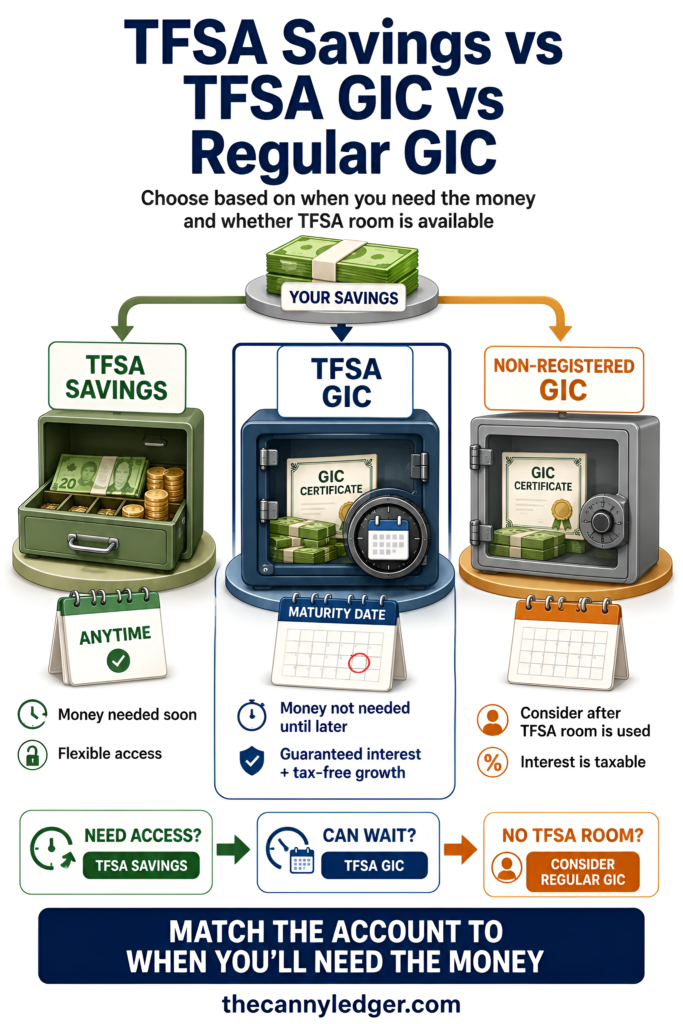
A TFSA holding cash or a savings-style product suits money you might need on short notice, since nothing inside it locks you in, and our comparison of TFSA against a plain savings account covers that specific pairing in more depth. A TFSA holding a GIC suits money you’re confident you won’t need until a specific date, letting you capture a GIC’s typically higher rate compared to a savings account while keeping every dollar of interest tax-free. A non-registered GIC only really makes sense once your available TFSA room is already used up elsewhere, since choosing a taxable account for guaranteed interest income when tax-free room still exists is leaving money on the table for no real benefit. Current GIC rates in Canada span roughly 2.25 percent to 3.85 percent depending on term and institution, with online banks and credit unions typically outpricing the major chartered banks by a meaningful margin, though rates shift often enough that confirming the current number directly with whichever institution you’re considering matters more than any figure quoted here.
Building The Actual Decision
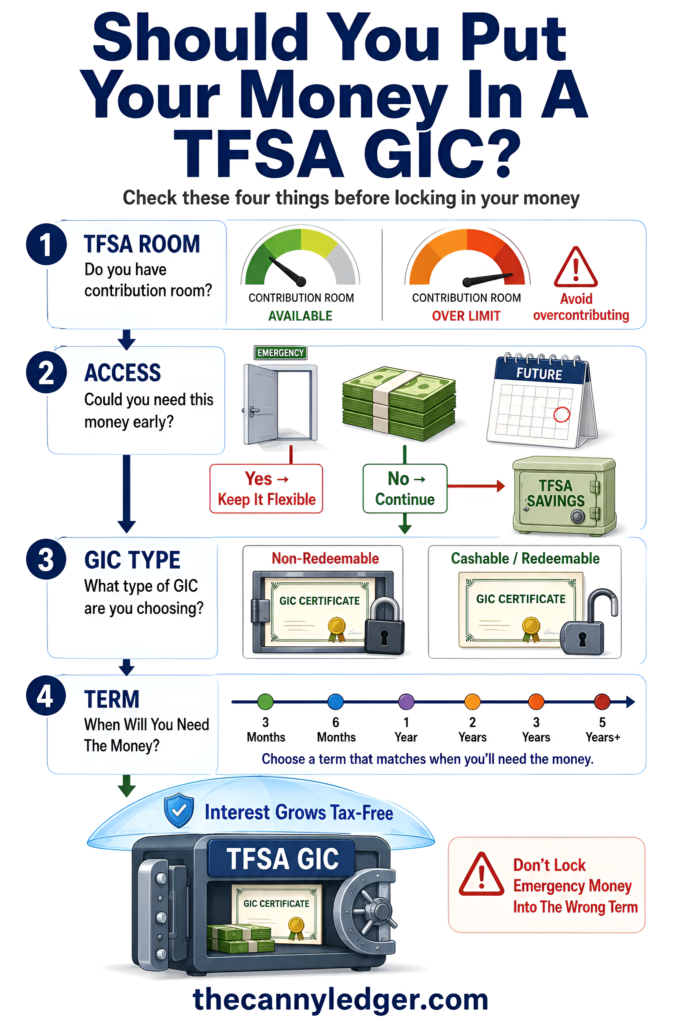
Confirm your available TFSA contribution room before locking money into a GIC inside the account, since a GIC purchased with an overcontribution carries the same penalty as any other overcontribution would, just harder to unwind once the funds are locked. If you’re weighing a GIC against other TFSA holdings entirely, our dedicated look at TFSA GICs specifically goes deeper into laddering strategies and term selection than fits here. And if a portion of your GIC money genuinely might be needed before maturity, a cashable or redeemable GIC, or simply keeping that portion in a flexible TFSA savings account instead, avoids the lock-in mismatch that catches people who treat every TFSA dollar as equally accessible regardless of what’s actually holding it.
Clearing Up The Comparison For Good
Can you lose money holding a GIC inside a TFSA? No, the GIC’s principal guarantee and the TFSA’s tax shelter both remain fully intact together, and the only real risk is opportunity cost if a better rate becomes available elsewhere while your money is locked into the current term.
Does a TFSA GIC pay a different rate than the same GIC held outside a TFSA? No, the rate is set by the GIC product itself, not by which account wraps around it, so an identical term and institution pays an identical rate whether the GIC sits in a TFSA, an RRSP, or a non-registered account.
If I already have a non-registered GIC, is it worth breaking it early to move the money into a TFSA? Generally no, since most non-redeemable GICs impose a real penalty or forfeit interest for early withdrawal, and that cost usually outweighs the tax savings from moving the same money into a TFSA before the term naturally ends.