


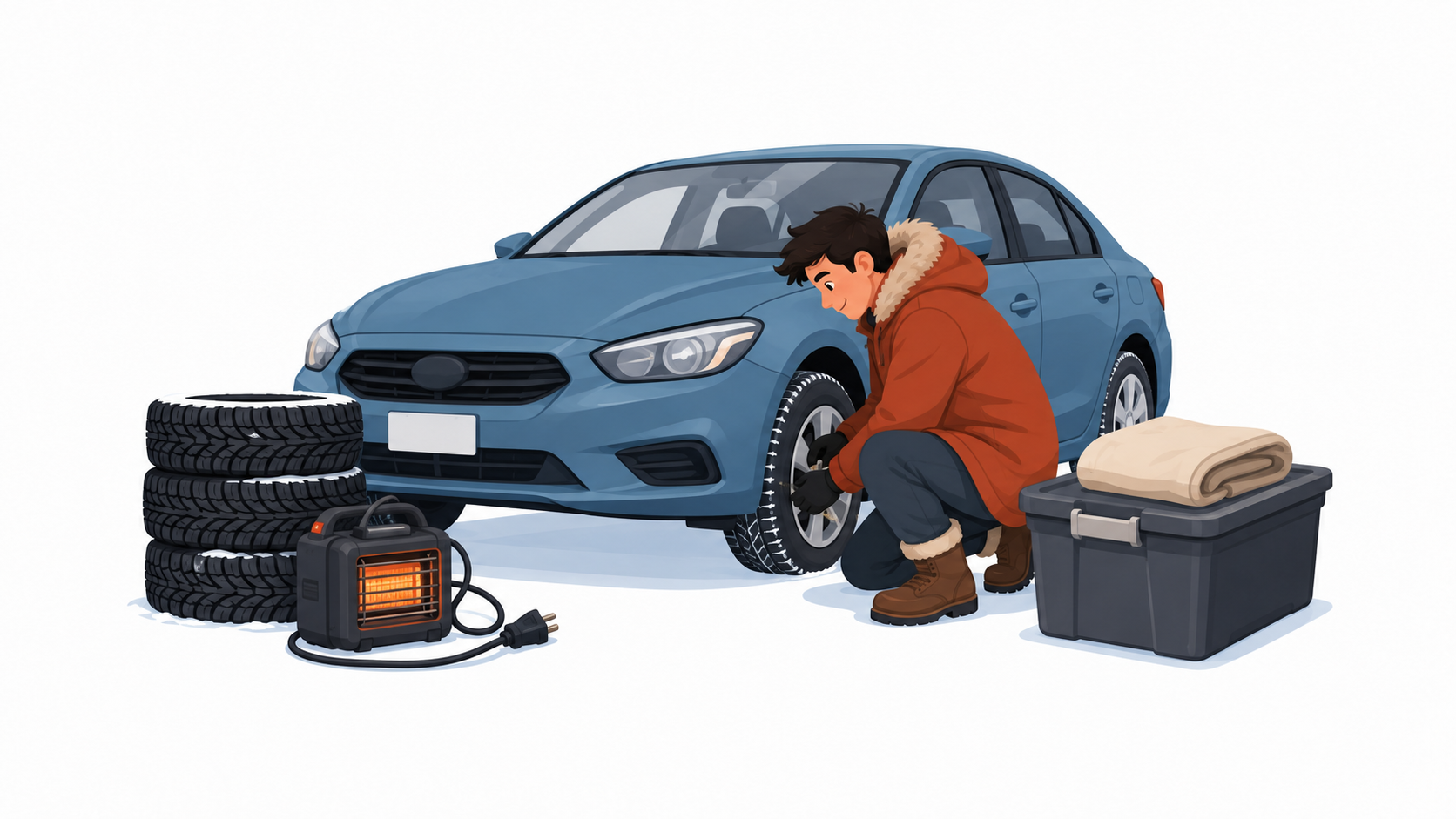
A block heater is an electric heating element that warms your engine’s coolant while the vehicle sits parked, making cold starts easier and reducing the wear a genuinely cold engine puts on internal components during startup. Manitoba Public Insurance recommends plugging in at -15°C or colder, a specific threshold worth knowing rather than guessing at based on how cold a morning simply feels. Diesel engines generally need to be plugged in sooner than gas engines given their different cold-start characteristics. The common practice is running the block heater on a timer for a few hours before departure, not overnight continuously, since a timer delivers the warming benefit without wasting electricity on hours you don’t actually need it. It’s also worth periodically checking the cord itself for cracks, wear, or corrosion, since a damaged block heater cord left plugged in through a full winter carries a real fire risk.
- What Running a Block Heater Actually Costs You
- Getting a Block Heater Installed If Your Car Doesn’t Have One
- Why Winnipeg Parking Lots Have Plug-In Posts Everywhere
- Winter Tires Are Their Own Line Item
- Heated and Indoor Parking as a Winter Cost
- Your Battery Works Harder in the Cold
- Small Costs That Add Up
- Common Questions About Winter Car Costs in Winnipeg
What Running a Block Heater Actually Costs You
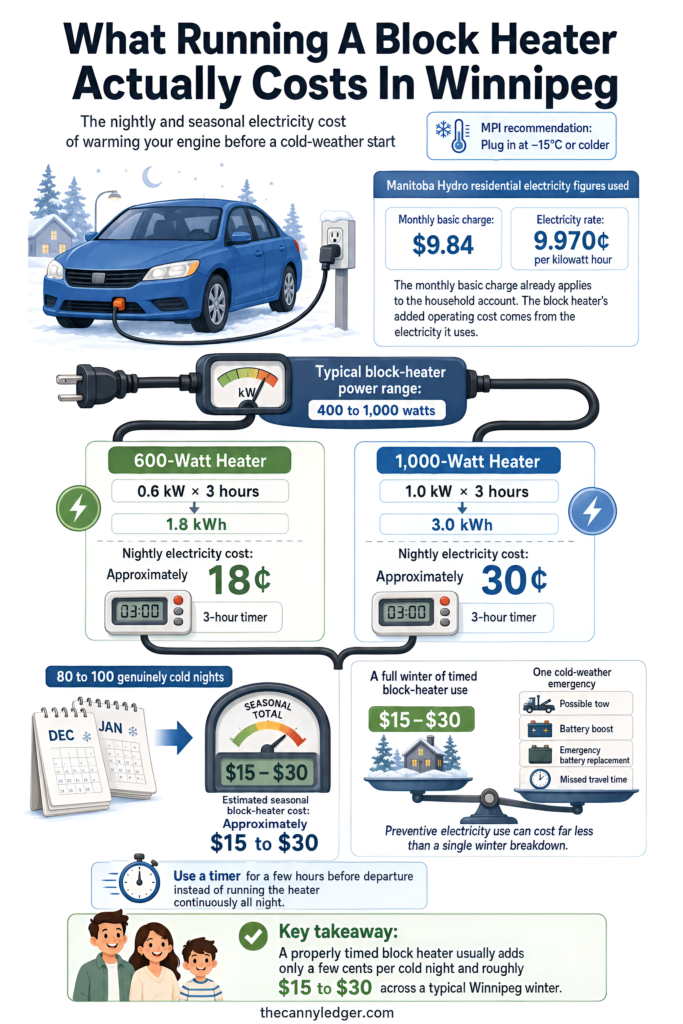
Here’s the real math, calculated directly from Manitoba Hydro’s own current residential rate of a $9.84 monthly basic charge plus 9.970 cents per kilowatt hour. A typical block heater runs somewhere between 400 and 1,000 watts depending on the vehicle. Running a 600-watt heater for three hours a night, a reasonable timer setting, uses 1.8 kilowatt hours, working out to about 18 cents for that single night. A larger 1,000-watt heater over the same three hours uses 3 kilowatt hours, closer to 30 cents a night. Multiply either figure across a genuinely cold Manitoba winter, roughly 80 to 100 nights where plugging in actually makes sense, and the seasonal cost lands somewhere between $15 and $30 total, a small fraction of what a single cold-weather breakdown typically costs once you factor in a tow, a boost call, or an emergency battery replacement.
Getting a Block Heater Installed If Your Car Doesn’t Have One
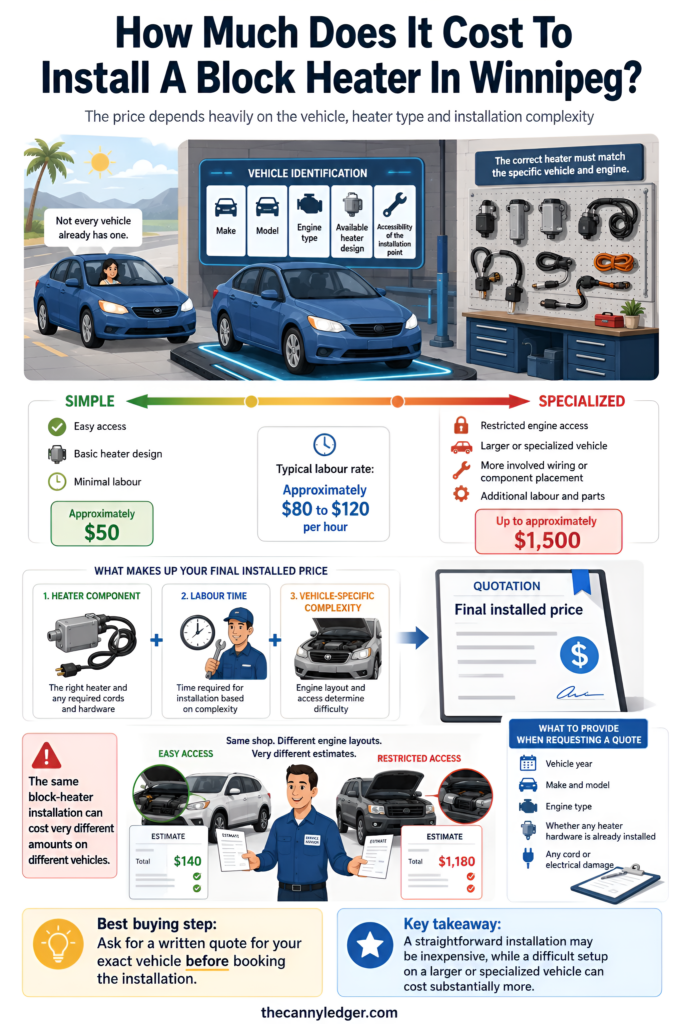
Not every vehicle comes from the factory with a block heater already installed, particularly vehicles previously owned in a warmer climate before arriving in Manitoba. Local Winnipeg installers offer this as a standard service for vehicles that need one added. Overall installation cost varies considerably based on the specific heater type and how complex the installation is for a given engine, with labour typically billed around $80 to $120 an hour, and the full job, including the heater itself, ranging anywhere from roughly $50 for a straightforward, inexpensive installation up to $1,500 for a complex setup on a larger or specialized vehicle. Getting a specific quote for your exact make and model before assuming a cost is worth doing, given how wide that range actually is.
Why Winnipeg Parking Lots Have Plug-In Posts Everywhere

Anyone new to Winnipeg quickly notices the rows of electrical outlet posts scattered through parking lots at workplaces, apartment buildings, and shopping centres, a detail that looks unusual to newcomers from milder climates. These outlets exist specifically to power block heaters while a vehicle sits parked for an extended period, at work, running errands, or overnight at home, letting drivers plug in without needing a personal garage. For renters or anyone without home garage access, checking whether a specific apartment building or workplace parking lot actually offers this infrastructure is worth doing directly, since not every lot has outlets installed, and a vehicle with no access to a plug-in during a deep cold snap faces a real, elevated risk of a difficult morning start.
Winter Tires Are Their Own Line Item

Beyond electricity costs, winter tires represent the single largest recurring winter expense for most Winnipeg vehicle owners, and it’s a cost worth planning for directly rather than treating as an afterthought each fall. For anyone who doesn’t want to pay the full cost upfront, MPI’s Winter Tire Program finances up to $2,000 per vehicle at prime plus 2 percent interest, with no credit check involved, specifically for tires carrying the official peaked mountain and snowflake certification. Whether financed or purchased outright, budgeting for winter tires as a predictable seasonal cost rather than a surprise expense each October makes the rest of a winter driving budget considerably easier to plan around.
Heated and Indoor Parking as a Winter Cost

For anyone working or living downtown, heated indoor parking is a real option worth factoring into a winter budget, even though it adds a genuine monthly cost most suburban drivers don’t face. Winnipeg Square’s downtown parkade, for instance, offers weather-protected, heated underground parking for hundreds of vehicles, along with free electric vehicle charging and complimentary windshield washer fluid top-ups, the kind of amenity that meaningfully changes the winter ownership experience for anyone who works nearby. Pricing for heated and indoor parking varies considerably by specific location and demand, so getting a direct quote for wherever you’d actually park is worth doing before assuming it fits, or doesn’t fit, a specific budget.
Your Battery Works Harder in the Cold
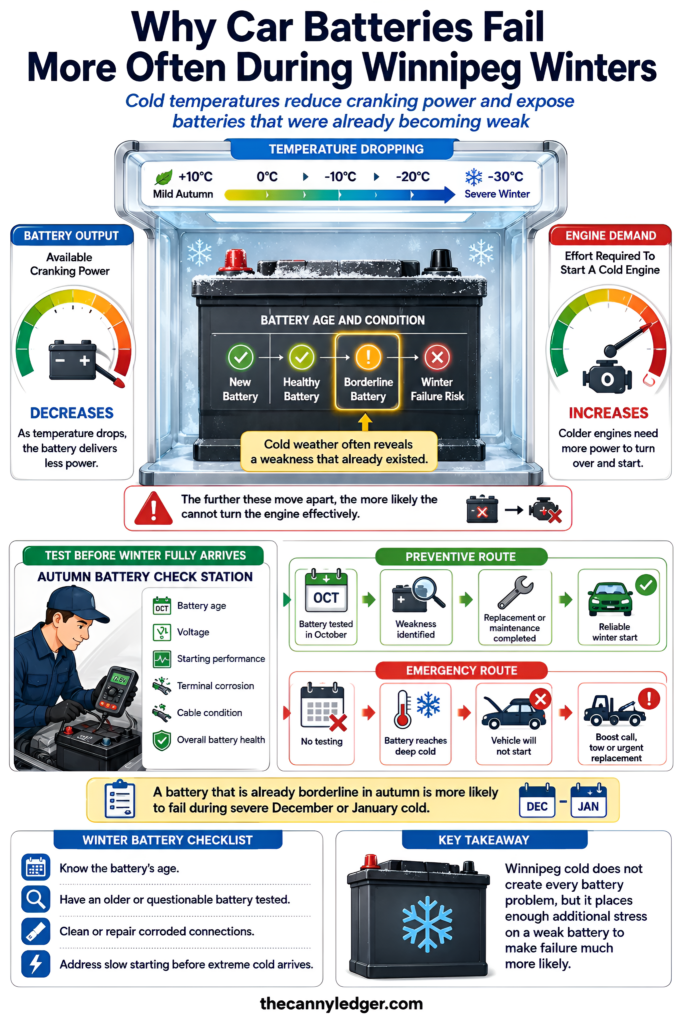
Cold weather genuinely reduces a battery’s cranking power, the exact reason cold mornings are when a marginal or aging battery is most likely to fail outright rather than simply struggle. This isn’t unique to Winnipeg, it’s basic battery chemistry, but Manitoba’s specific combination of extreme cold and long winters means batteries here face more genuine stress-testing than in milder parts of the country. Keeping an eye on a battery’s age and having it tested before winter fully sets in, rather than waiting to discover a problem on the coldest morning of the year, is a genuinely useful preventive habit, since a battery that’s already borderline in October is far more likely to fail outright once temperatures drop hard in December or January.
Small Costs That Add Up
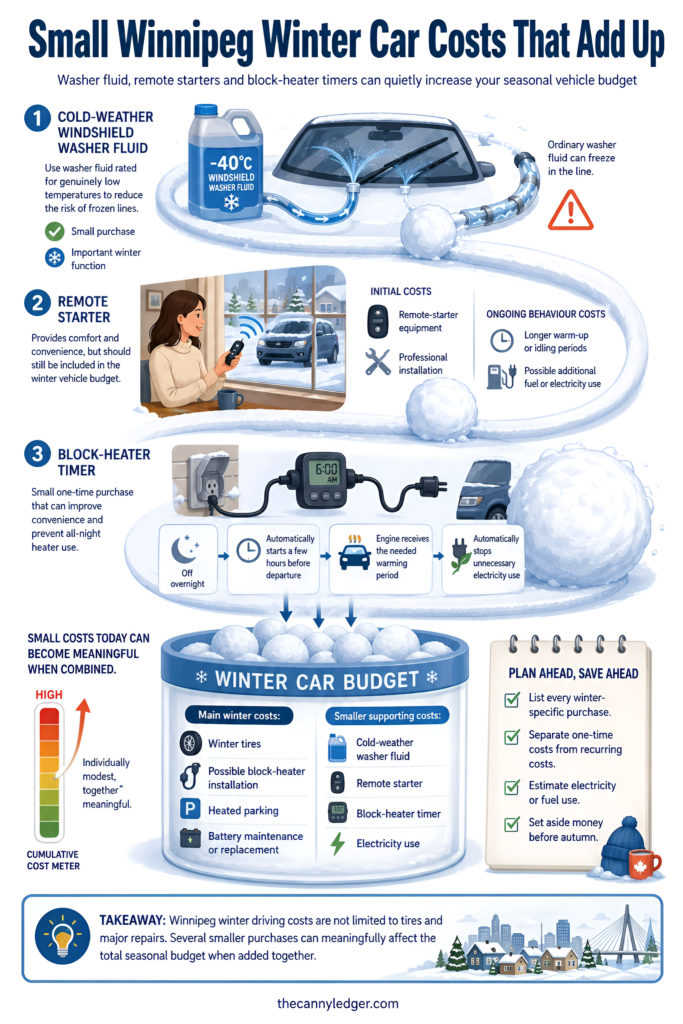
A handful of smaller winter-specific costs round out the full picture. Windshield washer fluid rated for genuinely cold temperatures, rather than a standard all-season formula, prevents fluid lines from freezing solid on the coldest days, a small cost that avoids a real inconvenience. Remote starters, letting a vehicle warm up from inside before you head out, are a common accessory purchase for Winnipeg drivers, adding both an upfront installation cost and, in some cases, extra fuel or electricity use from longer idle warm-up periods. A dedicated timer for a block heater cord, rather than relying on manually plugging and unplugging, is a small one-time purchase that pays for itself in both convenience and avoiding the temptation to just leave the heater running all night unnecessarily.
Common Questions About Winter Car Costs in Winnipeg
Is it actually necessary to plug in a block heater every single cold night, or only during extreme cold snaps? MPI’s specific guidance points to -15°C as the threshold worth plugging in at, so a night that doesn’t reach that temperature generally doesn’t require it, while consistently cold stretches at or below that mark are exactly when the practice matters most for reliable starts.
Does a newer vehicle still need a block heater in Winnipeg winters? Generally yes, though modern vehicles and synthetic oil handle cold starts somewhat better than older vehicles did, most people who drive regularly through a full Manitoba winter still find plugging in worthwhile for easier starts and reduced engine strain, particularly during extended deep cold periods.
Are there cheaper alternatives to a block heater for a vehicle with no access to an electrical outlet? Fuel-fired coolant heaters exist as an alternative for vehicles without electrical access, running on the vehicle’s own fuel rather than requiring a plug, though these come with their own separate installation cost and aren’t as universally available or straightforward as a standard electric block heater.
Budget for winter tires and block heater electricity as predictable, modest seasonal costs, and treat battery health and parking access as the two factors most likely to turn a normal Winnipeg winter morning into an expensive one if ignored. For the broader picture of vehicle costs across the full year, Manitoba’s Autopac insurance system and comparing your actual insurance rates cover the other major recurring cost every Winnipeg vehicle owner budgets around.
