

The cheapest home insurance in Winnipeg comes from combining a genuinely competitive shopping process, getting quotes from multiple brokers or insurers rather than accepting a single renewal, with the specific discounts insurers actually offer: a higher deductible, a backwater valve or sump pump, a monitored security system, a clean claims history, and bundling with other policies. An average Winnipeg home insurance policy runs around $1,000 a year, though the real number for any specific property depends heavily on which of these discounts actually apply.
- What Winnipeg Homeowners Actually Pay
- The Deductible Trade-off
- The Backwater Valve Discount
- Security System and Monitoring Discounts
- The Credit Check Most People Don’t Know About
- Claims-Free and Loyalty Discounts
- Bundling: The Easiest Discount to Miss
- How to Actually Compare Two Quotes Fairly
- Common Questions About Winnipeg Home Insurance Costs
What Winnipeg Homeowners Actually Pay
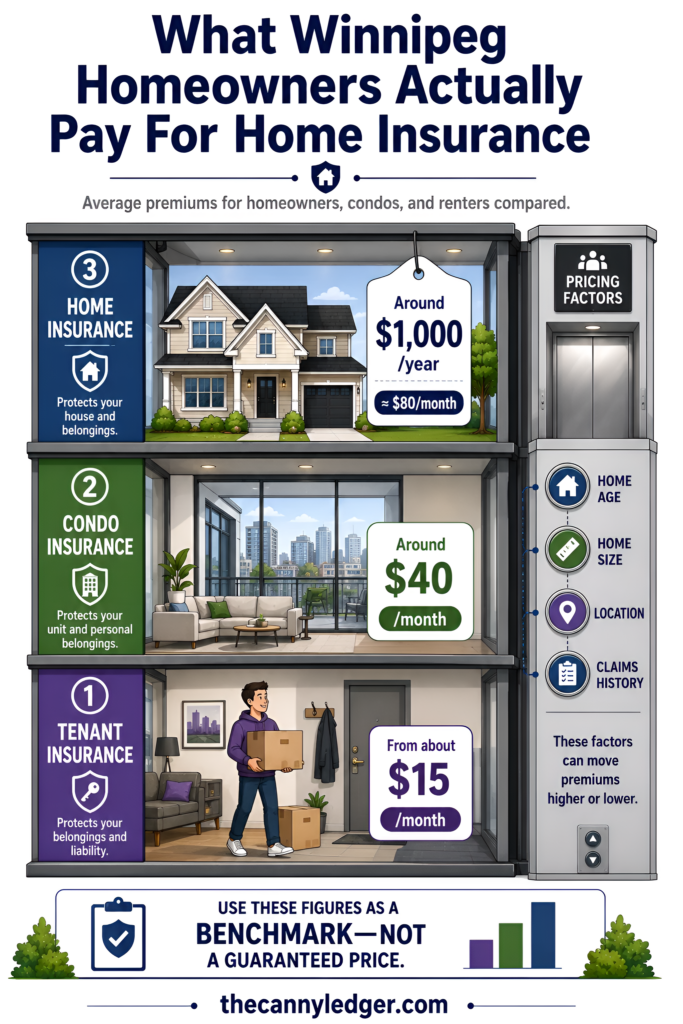
Before comparing discounts, it helps to know roughly what you’re comparing against. Ratehub’s own Manitoba insurance data puts an average Winnipeg home insurance policy at roughly $1,000 a year, close to $80 a month, with condo insurance running closer to $40 a month and tenant insurance as low as $15 a month for a modest coverage level. Treat this as a rough benchmark from one rate-comparison service rather than a guarantee, actual pricing varies considerably based on a specific home’s age, size, location, and claims history, but it’s a useful anchor for judging whether a specific quote you’ve received looks reasonable or genuinely out of line with what similar Winnipeg properties typically pay.
The Deductible Trade-off
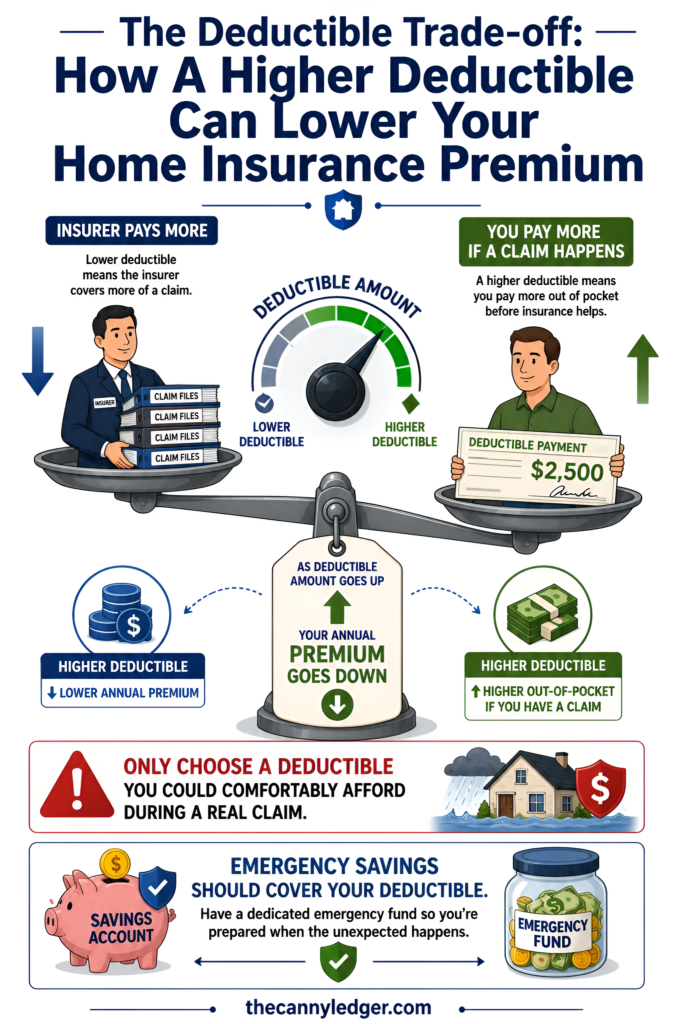
Raising your deductible, the amount you pay out of pocket before insurance coverage kicks in, is consistently one of the most direct ways to lower an annual premium. The mechanic is straightforward: agreeing to cover more of a future claim yourself shifts risk away from the insurer, and insurers price that shifted risk into a lower ongoing premium. The tradeoff is just as straightforward and worth taking seriously: a higher deductible only saves money if you can genuinely afford to pay it out of pocket when a claim actually happens, choosing a deductible you can’t realistically cover defeats the purpose of having insurance at all for smaller claims. A broker can walk through realistic deductible levels against your own household’s actual savings cushion rather than picking a number based on the premium discount alone.
The Backwater Valve Discount
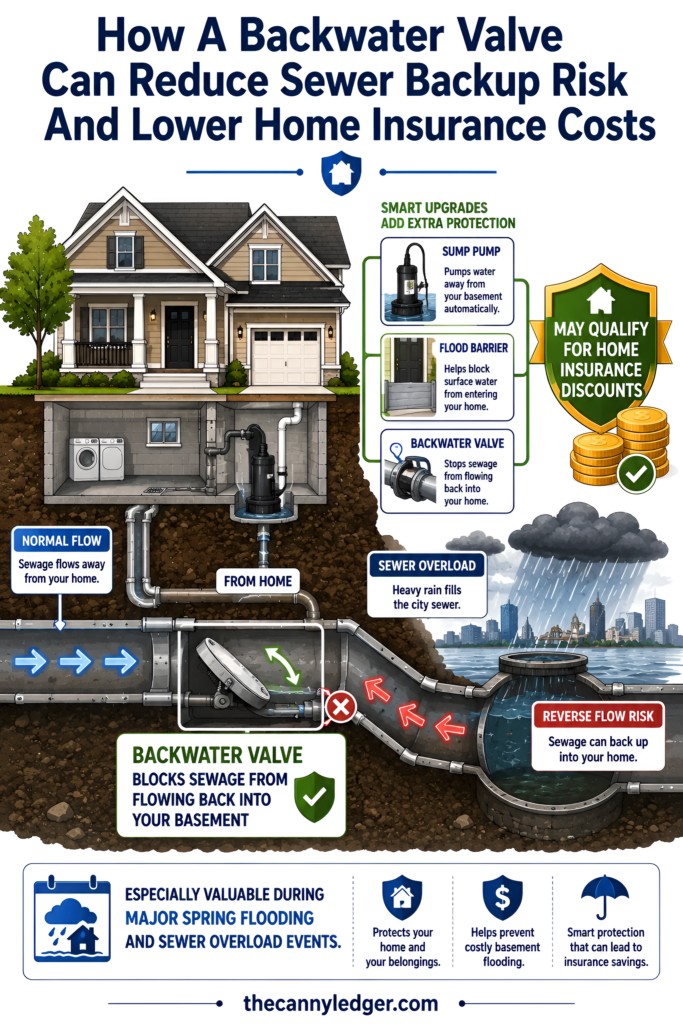
Given how directly relevant this is to Winnipeg specifically, it deserves its own dedicated mention beyond a general discount list. Installing a backwater valve, sump pump, or flood barrier reduces your actual risk of water damage and can qualify a property for a real discount, since these upgrades demonstrably lower the likelihood of exactly the kind of sewer backup and overland flood claims covered in Winnipeg’s home insurance buyer’s guide. A backwater valve specifically works as a gate mechanism on your wastewater outflow pipe, physically preventing city sewage from flowing backward into your home during a system overload, precisely the scenario that overwhelmed hundreds of Winnipeg basements during the April 2022 storm. Asking your insurer or broker directly whether your home currently qualifies for this discount, and what specific upgrade would newly qualify it if not, is worth doing before assuming it isn’t relevant to your situation.
Security System and Monitoring Discounts
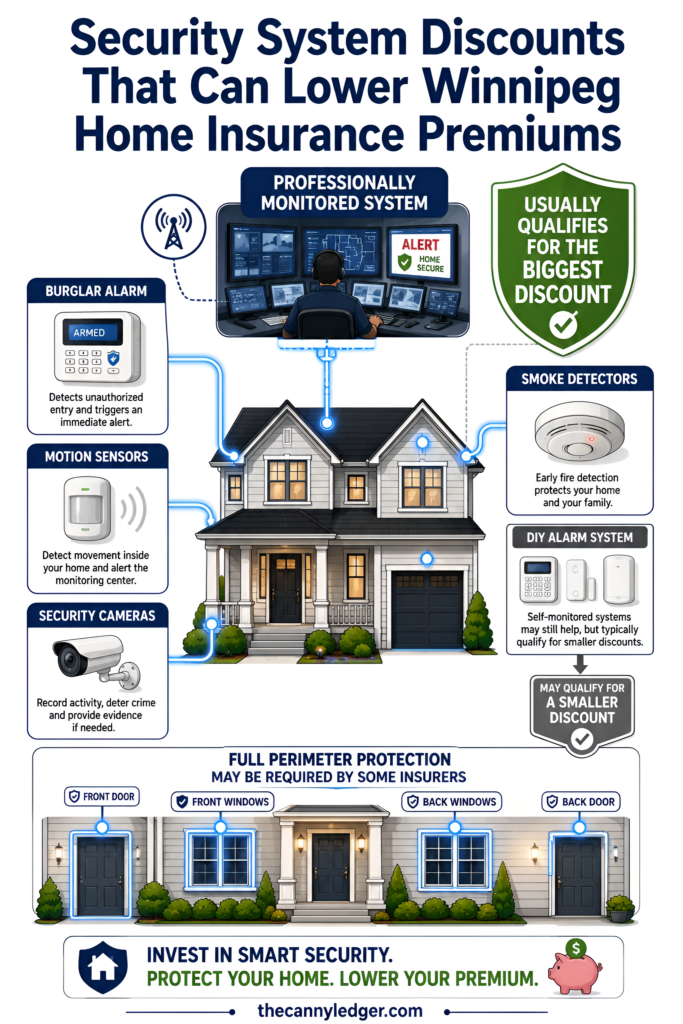
Beyond water-related upgrades, home security investments carry their own discount category. Burglar alarms, motion sensors, surveillance cameras, and smoke detectors can all reduce theft, vandalism, and fire risk enough to earn a premium reduction, and professionally monitored systems typically qualify for a larger discount than a DIY setup without central monitoring. Some insurers specifically require full perimeter protection, sensors covering every entry point rather than a partial setup, to unlock their maximum security discount tier, a detail worth confirming directly rather than assuming any alarm system automatically qualifies for the top rate.
The Credit Check Most People Don’t Know About
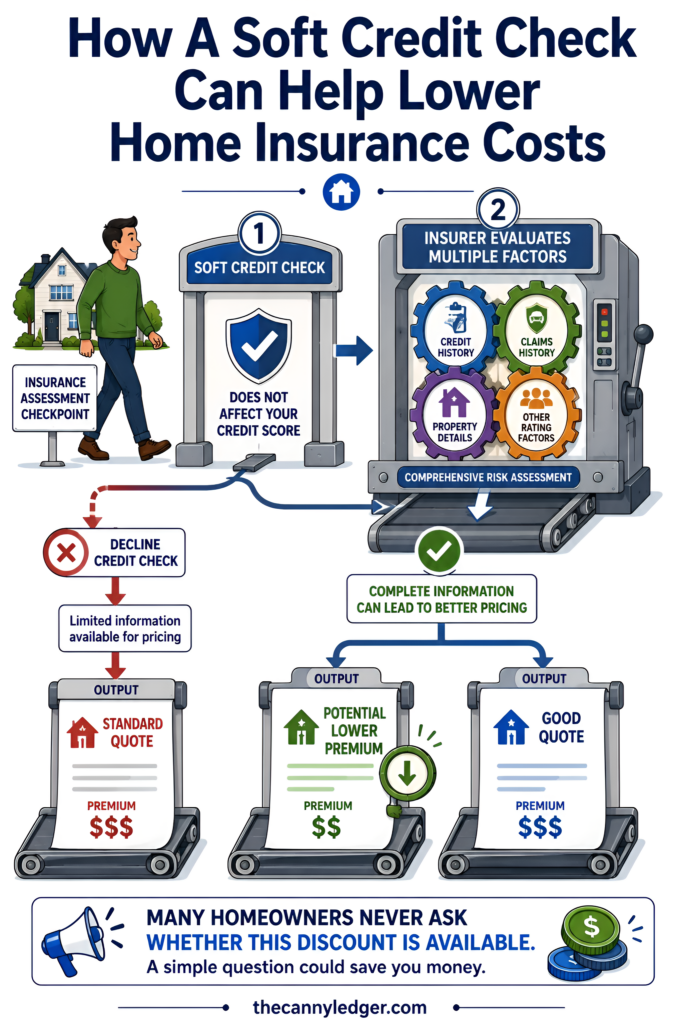
This is a genuinely underused lever. Many Manitoba home insurers factor a soft credit check into pricing, using it as one signal among several for assessing risk, and opting into that soft check, one that doesn’t affect your credit score the way a hard inquiry would, can lead to a meaningfully cheaper rate for anyone with a solid credit history. Declining the credit check isn’t a red flag on its own, but it does mean missing out on a discount that a lot of otherwise-qualified homeowners simply never ask their broker about, since it isn’t always volunteered upfront during an initial quote conversation.
Claims-Free and Loyalty Discounts
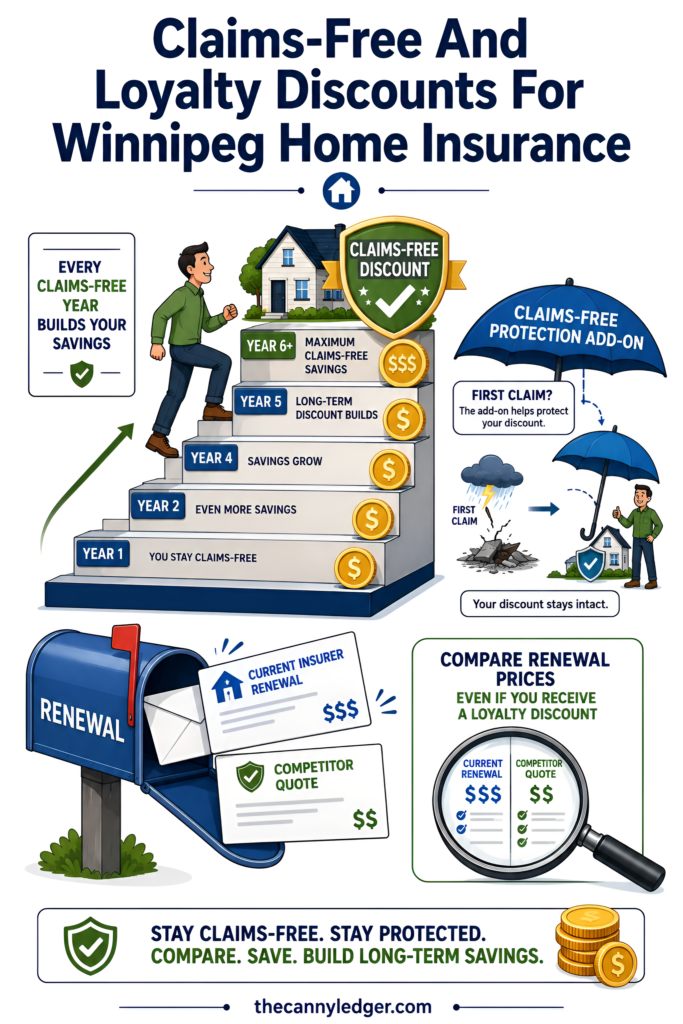
A clean claims history is worth real money over time, not just a vague sense of being a “good customer.” Insurers commonly offer a discount to policyholders who haven’t filed a claim in a set number of years, and some also offer an optional add-on specifically protecting that claims-free discount, meaning your very first claim doesn’t automatically wipe out years of accumulated savings the way it might without that protection. Loyalty discounts for staying with the same insurer at renewal exist too, though it’s worth checking these against a fresh quote from a competitor periodically, since a loyalty discount on an already-inflated renewal price isn’t necessarily cheaper than a new customer rate from a different insurer.
Bundling: The Easiest Discount to Miss
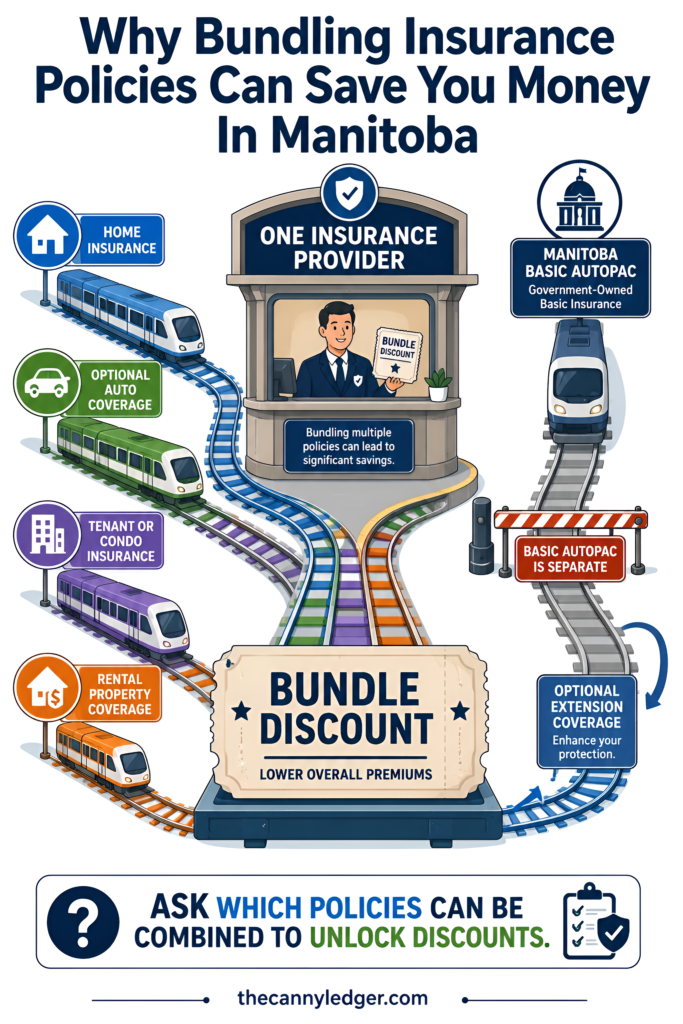
Combining home insurance with other policies from the same insurer, most commonly auto coverage, is one of the most consistently available discounts across Manitoba insurers, and it’s also one of the easiest to overlook if you’re shopping for home and vehicle coverage as two completely separate errands. Since MPI holds the monopoly on Basic Autopac coverage but the optional extension coverage layered on top is sold competitively, bundling that extension coverage with a home policy from the same private insurer can unlock real savings on both sides. Some insurers extend bundling discounts to other product types too, tenant or condo coverage alongside a separate rental property, for instance, so it’s worth asking specifically which of your own insurance needs could realistically be combined under one provider rather than assuming bundling only applies to home-plus-auto.
How to Actually Compare Two Quotes Fairly
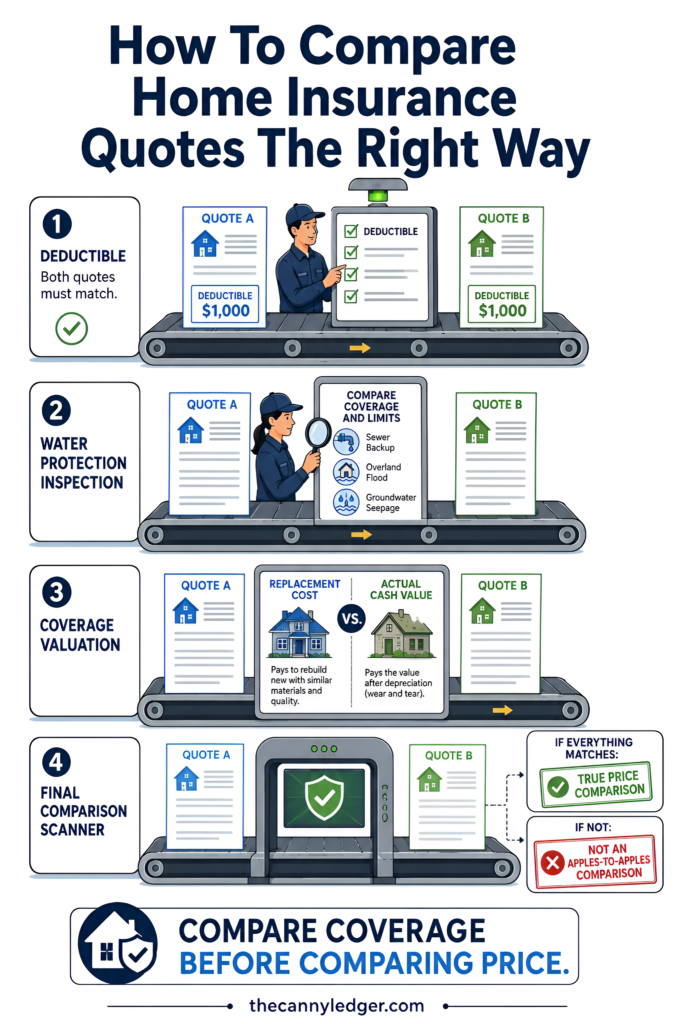
The cheapest-looking quote on paper isn’t always the cheapest real option once the actual coverage is compared apples-to-apples. Before comparing price alone, confirm both quotes use the same deductible level, since a lower quote built around a much higher deductible isn’t a genuine discount, it’s a different risk tradeoff entirely. Confirm both quotes include the same water-damage coverage, sewer backup, overland flood, and groundwater seepage, with matching dollar limits, since a cheaper quote missing this coverage entirely isn’t actually comparable to one that includes it. And confirm whether each quote pays replacement cost or actual cash value, since a policy priced lower partly because it pays depreciated value rather than full replacement cost can end up costing considerably more at actual claim time, even though the premium looked like the better deal upfront.
Common Questions About Winnipeg Home Insurance Costs
Is it worth getting quotes from multiple brokers, or does one broker see the whole market? An independent broker typically represents several insurers, but not every insurer in the Manitoba market works with every broker, so checking with more than one broker, or comparing a broker quote against a direct insurer quote, genuinely can turn up options a single broker relationship wouldn’t show you.
Do discounts stack, or does an insurer cap how much total discount I can receive? This varies by insurer, some allow multiple discounts to combine relatively freely, while others cap the total discount percentage regardless of how many individual qualifying factors apply, worth asking directly when comparing quotes rather than assuming every discount adds cleanly on top of the last.
Does raising my deductible actually save enough to be worth the added risk? It depends on the specific dollar gap between deductible levels and how much premium reduction that gap actually buys, running the numbers on your specific quote rather than assuming a higher deductible always saves a meaningful amount is worth doing before committing to it.
Ask directly about every discount covered here rather than assuming your quote already reflects all of them, since brokers don’t always volunteer every applicable discount without being asked specifically. Between a genuinely competitive shopping process and stacking the discounts that actually apply to your property, the gap between the first quote you receive and the cheapest real option available is often larger than most Winnipeg homeowners assume.