A qualifying FHSA withdrawal only happens once in your entire life. Not once per home purchase, not once every few years the way the RRSP Home Buyers’ Plan resets after repayment, once, full stop, for as long as this account exists. That single fact changes how seriously worth planning the actual withdrawal deserves, since getting the timing or the paperwork wrong on the one shot you get carries real consequences.
- Every Condition That Has To Be Met At Once
- The 30 Day Window Runs In Both Directions
- Your Spouse’s Home Doesn’t Count Against You
- What Happens When A Withdrawal Doesn’t Qualify
- The Paperwork And Who’s Actually Responsible For Getting It Right
- Getting Your Own Withdrawal Right The First Time
- What People Get Wrong About FHSA Withdrawals Most Often
Understanding exactly what makes a withdrawal qualify, where the genuine gray areas sit, and what happens if something doesn’t line up the way you expected is worth working through before you’re actually standing at closing with money that needs to move.
Every Condition That Has To Be Met At Once
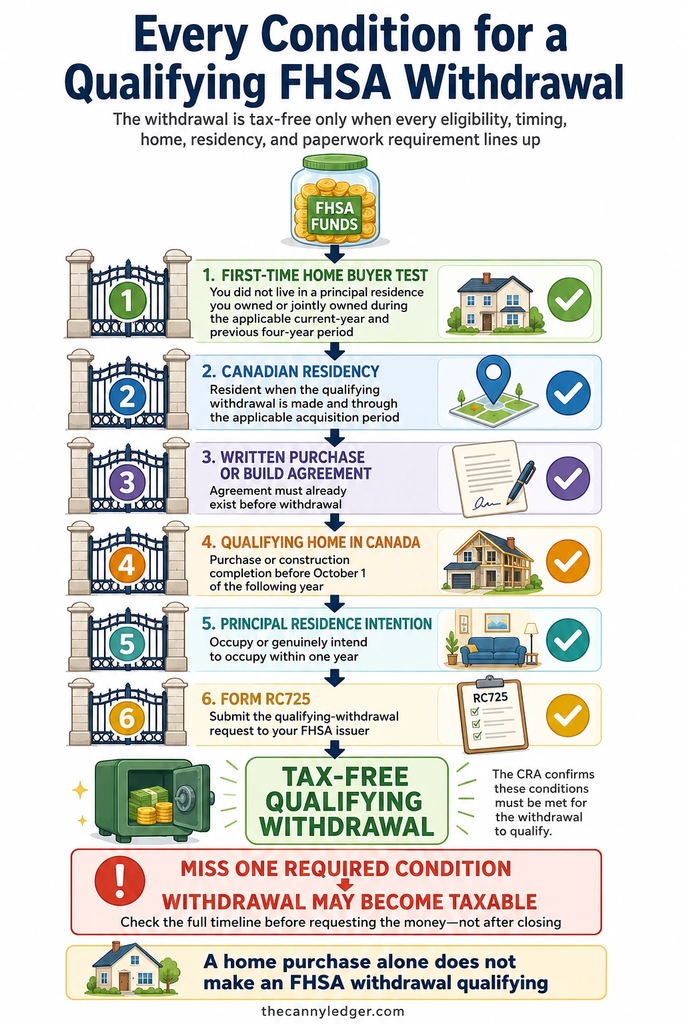
A qualifying withdrawal requires meeting several separate conditions simultaneously, not just one or two of them. You need to be a Canadian resident for tax purposes at the time of the withdrawal, and that residency status stays relevant through to when the home is actually acquired. You need to meet the first-time home buyer test specifically at the moment of withdrawal, which means not having owned or jointly owned a principal residence during the current year or the four preceding calendar years, with one specific exception covered below.
You also need a written agreement in place to buy or build a qualifying home, with the acquisition or construction completion happening before October 1 of the year following the year you actually withdrew the funds. The home itself has to be located in Canada, and you need to occupy it, or genuinely intend to occupy it, as your principal residence within one year of acquiring it. Miss any single one of these and the withdrawal doesn’t qualify, regardless of how many of the others you satisfied.
The 30 Day Window Runs In Both Directions
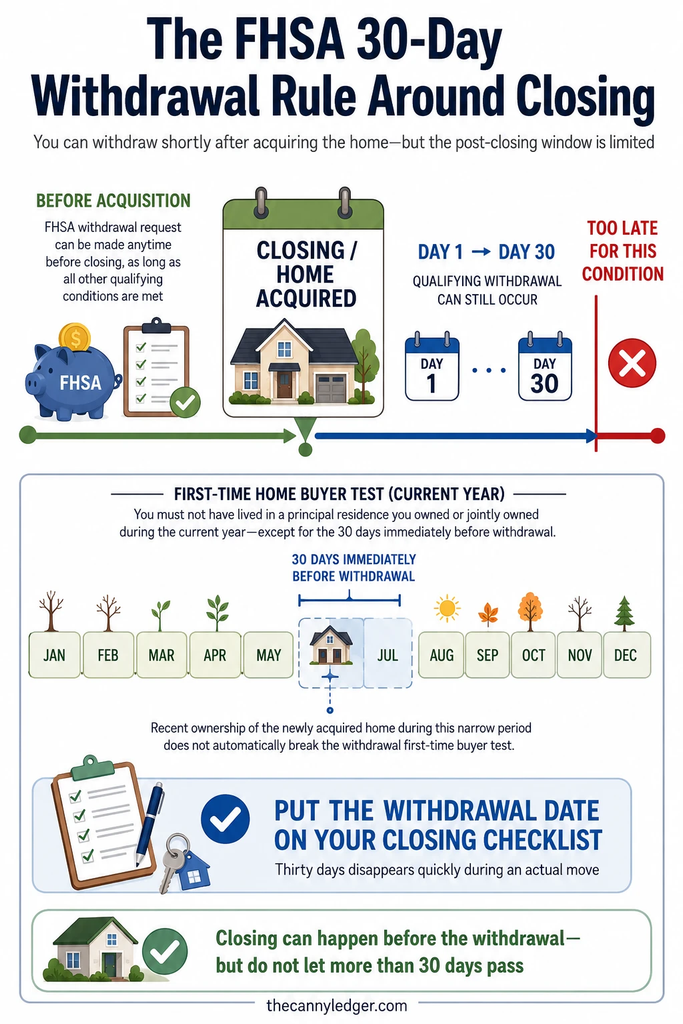
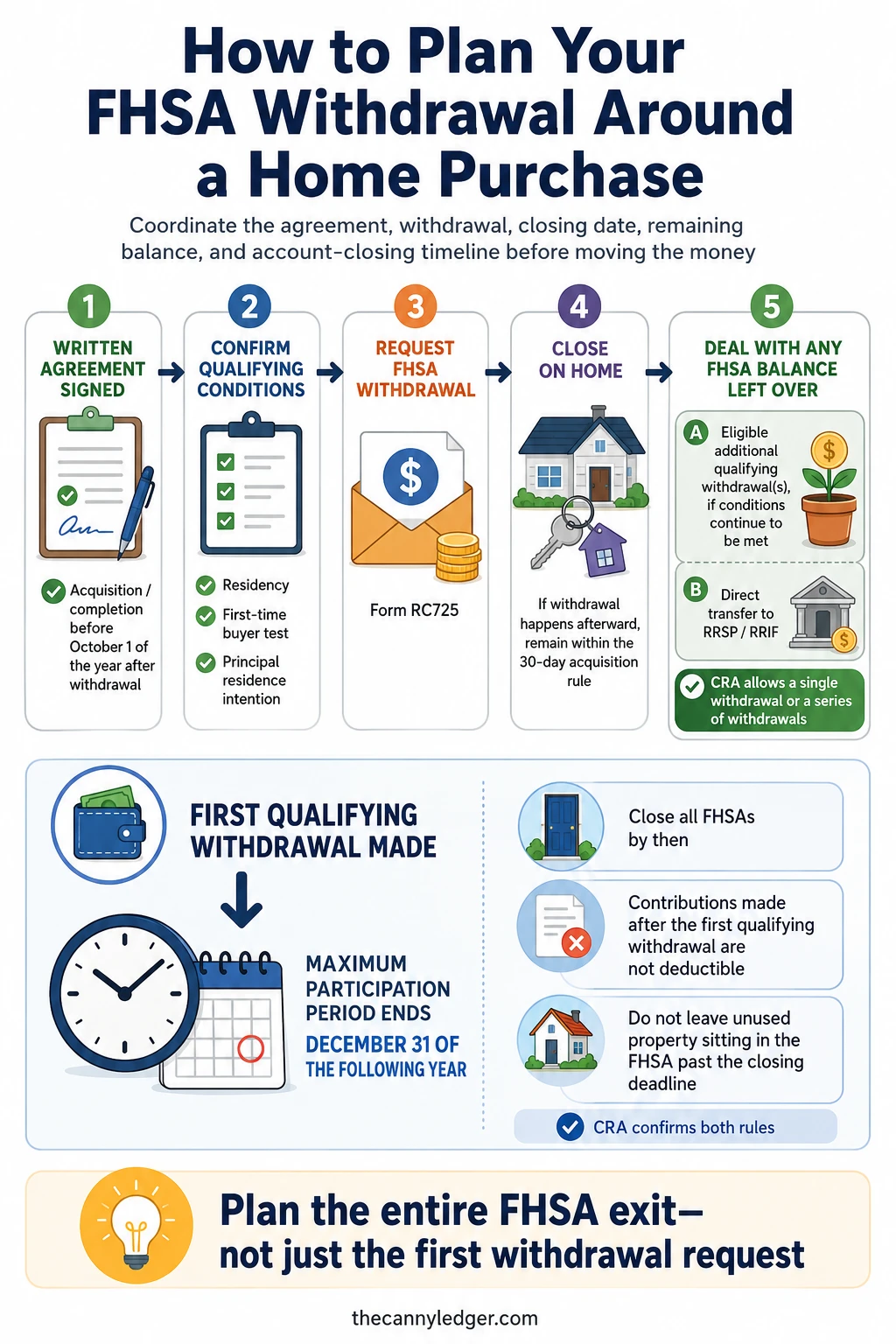
This is the detail advisors flag as the one most likely to trip someone up, precisely because thirty days moves fast during an actual move. The withdrawal itself can’t happen more than 30 days after you’ve already acquired the qualifying home, meaning if you close on a purchase and move in, the clock is already running on getting that withdrawal request submitted before that window closes.
The same 30 day allowance also works the other direction for the first-time buyer test itself. Normally, owning or jointly owning a principal residence in the current year would disqualify you from the first-time buyer requirement, but the rules specifically carve out the 30 days immediately before the withdrawal, letting someone move into their new home and then make the qualifying withdrawal shortly after, rather than requiring the withdrawal to happen before they’ve technically taken possession. Anyone timing a withdrawal around a closing date should treat this 30 day window as a firm deadline rather than a loose guideline, since missing it converts the entire withdrawal into a taxable one.
Your Spouse’s Home Doesn’t Count Against You
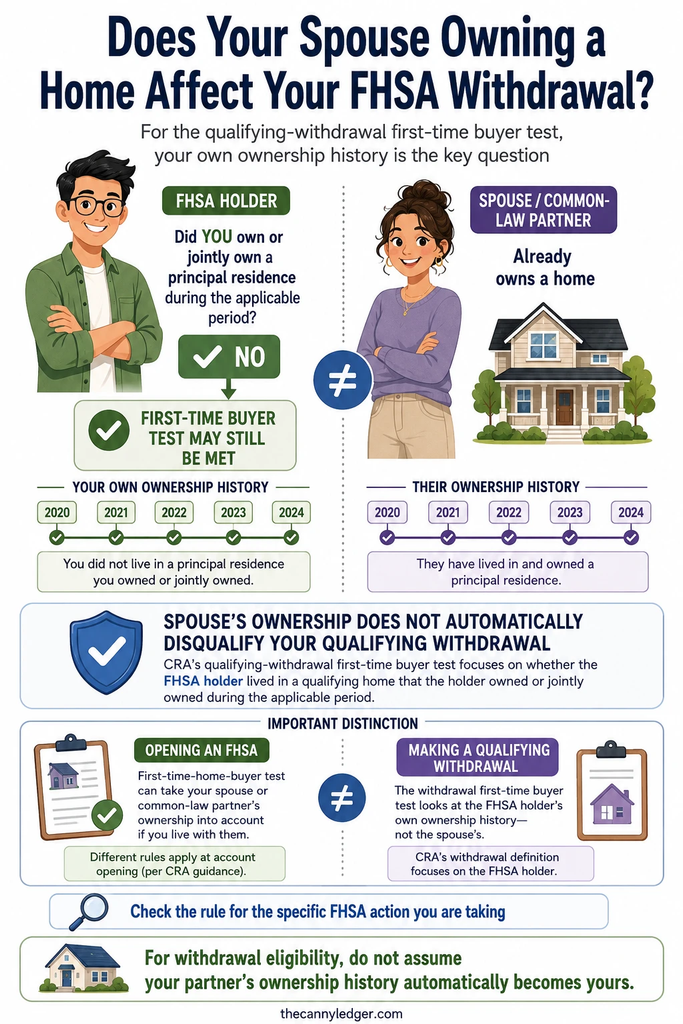
A detail worth knowing specifically if your partner already owns property, whether your spouse or common-law partner owns or jointly owns a home has no bearing on whether you personally qualify as a first-time buyer for your own FHSA withdrawal. The first-time buyer test looks specifically at your own ownership history, not your partner’s, which means a couple where one partner already owns a home can still have the other partner open and use an FHSA toward what genuinely is a first purchase for them individually.
This matters directly for couples navigating a purchase together where only one partner has an FHSA, since assuming the other partner’s existing homeownership automatically disqualifies the FHSA holder is a common but incorrect assumption. Confirming your own individual eligibility, independent of what your spouse already owns, is worth doing directly rather than assuming their situation determines yours.
What Happens When A Withdrawal Doesn’t Qualify
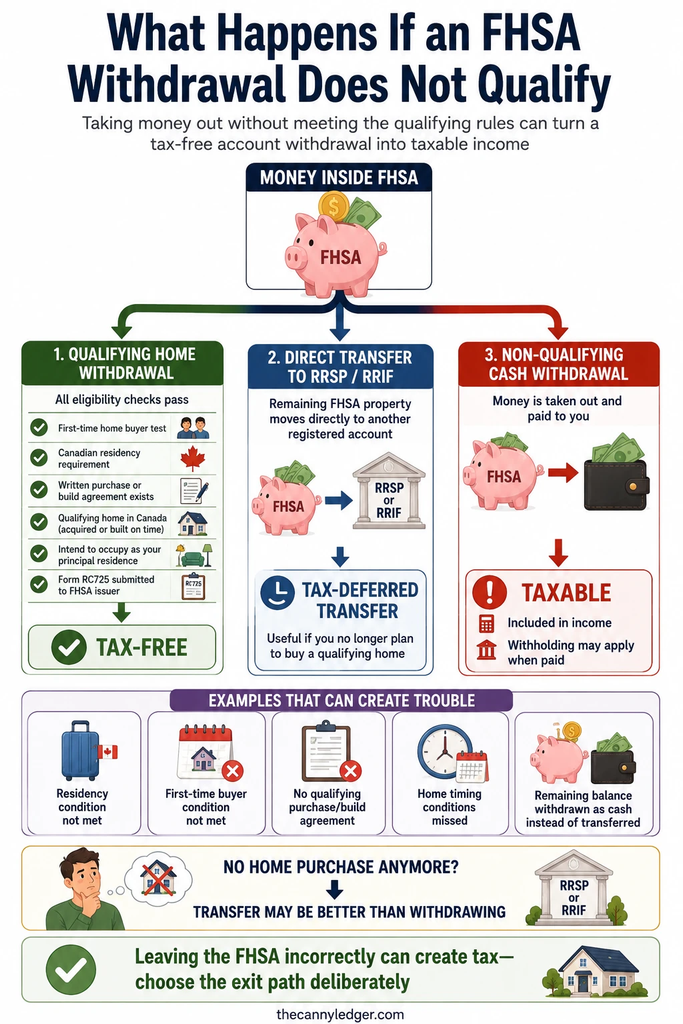
A non-qualifying withdrawal gets treated essentially like an ordinary RRSP withdrawal, subject to withholding tax at the time of payment and included in full as taxable income for that year. This can happen for several specific reasons, no longer being a Canadian resident either at the time of withdrawal or when the home is bought or built, no longer meeting the first-time buyer test, the withdrawn money genuinely not going toward a qualifying home purchase, or closing the FHSA entirely and withdrawing the balance without transferring it tax-free into an RRSP or RRIF instead.
That last scenario is worth flagging specifically, since someone who decides not to buy a home at all still has a tax-free path available, transferring the remaining balance into an RRSP or RRIF rather than withdrawing it directly, avoiding the taxable outcome entirely. Choosing to withdraw the money outright instead of using that transfer option is what actually triggers the non-qualifying tax treatment, not simply the decision to abandon the home purchase itself.
The Paperwork And Who’s Actually Responsible For Getting It Right
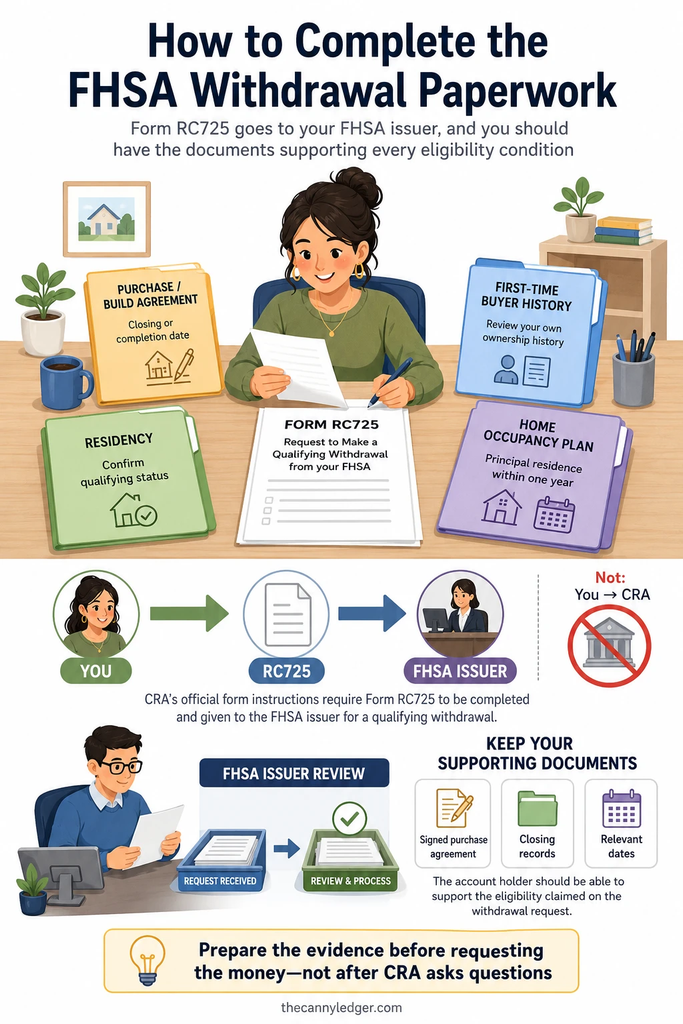
Making a qualifying withdrawal requires completing Form RC725, Request to Make a Qualifying Withdrawal from your FHSA, submitted directly to your FHSA issuer rather than to the CRA itself. The form makes something explicit that surprises a lot of account holders, responsibility for actually confirming that every qualifying condition has genuinely been met sits with the FHSA holder, not the financial institution processing the request.
That distinction matters because your issuer generally won’t independently verify your residency status, your first-time buyer eligibility, or whether your written home purchase agreement genuinely satisfies the October 1 deadline, they process the form based on your own submitted confirmation. Keeping your purchase agreement, closing documents, and any relevant dates organized before submitting the form is worth doing specifically because the burden of proof, if the CRA ever questions the withdrawal later, falls on you rather than the institution that processed it.
Getting Your Own Withdrawal Right The First Time
Confirm your written purchase agreement’s completion date falls before October 1 of the year following your planned withdrawal year, well before you actually submit Form RC725, since this specific deadline is exactly the kind of detail easy to miscalculate when a closing date shifts. If your remaining FHSA balance won’t be needed for the purchase itself, transfer it into an RRSP or RRIF rather than withdrawing it directly, preserving the tax-free treatment rather than triggering an unnecessary taxable withdrawal.
And since this qualifying withdrawal only happens once in your lifetime, our broader look at FHSA contribution limits is worth reviewing before your purchase timeline firms up, since maximizing what’s actually in the account before that single qualifying withdrawal happens matters more here than it would for an account you could tap repeatedly.
What People Get Wrong About FHSA Withdrawals Most Often
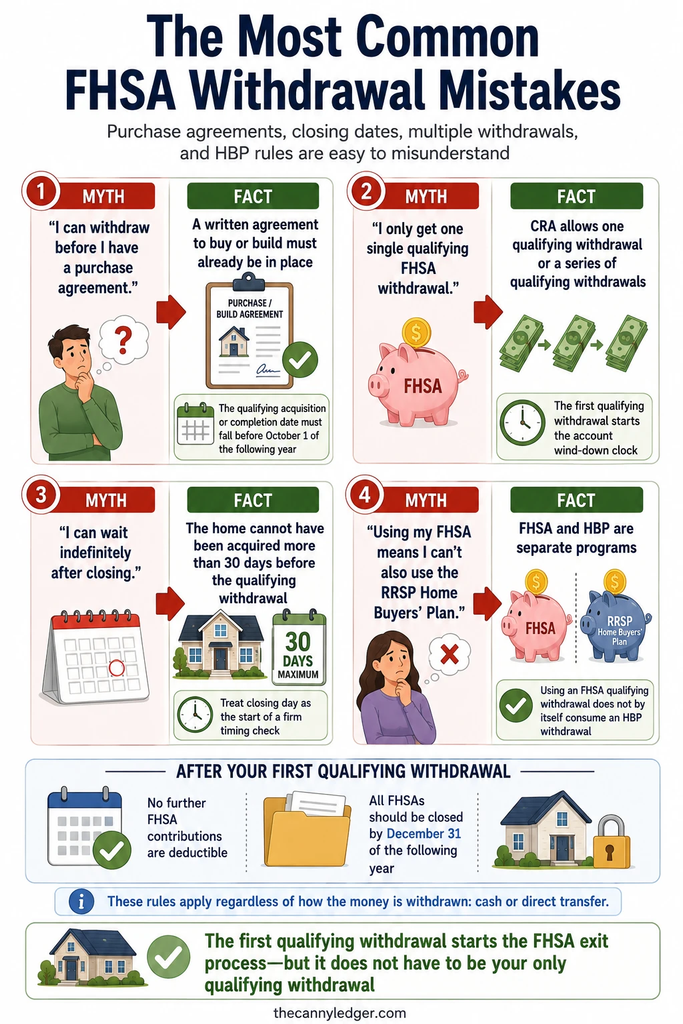
Can I make a qualifying withdrawal before I’ve actually signed a purchase agreement? No, a written agreement to buy or build the qualifying home has to already be in place before the withdrawal happens, with the completion deadline falling before October 1 of the following year, rather than withdrawing first and finalizing the agreement afterward.
If my qualifying withdrawal doesn’t cover my full FHSA balance, can I make a second qualifying withdrawal later for the same purchase? Generally no, since the qualifying withdrawal is a one-time event tied to a single home purchase, which is exactly why confirming the full amount you need is included in that single withdrawal request matters before submitting it.
Does a qualifying withdrawal use up any of my RRSP Home Buyers’ Plan eligibility? No, the FHSA qualifying withdrawal and the RRSP Home Buyers’ Plan are assessed entirely independently, and using one doesn’t reduce or affect your eligibility to also use the other toward the same home purchase.