
Two people with identical credit scores can walk away with completely different consolidation loan offers, and the gap usually comes down to whether either one has a cosigner or something to put up as collateral. Bad credit doesn’t mean no options exist. It means the options that exist depend on levers most people don’t realize they’re holding, and understanding those levers before you apply changes what’s actually available to you.
- Where Bad Credit Actually Starts For Lenders
- What A Cosigner Actually Changes
- What Collateral Changes If You Don’t Have A Cosigner
- Where Alternative Lenders Fit Into This Specific Market
- The Honest Math On When This Stops Making Sense
- What Tends To Work Better In This Exact Situation
- Getting A Clear Picture Before You Apply
Where Bad Credit Actually Starts For Lenders
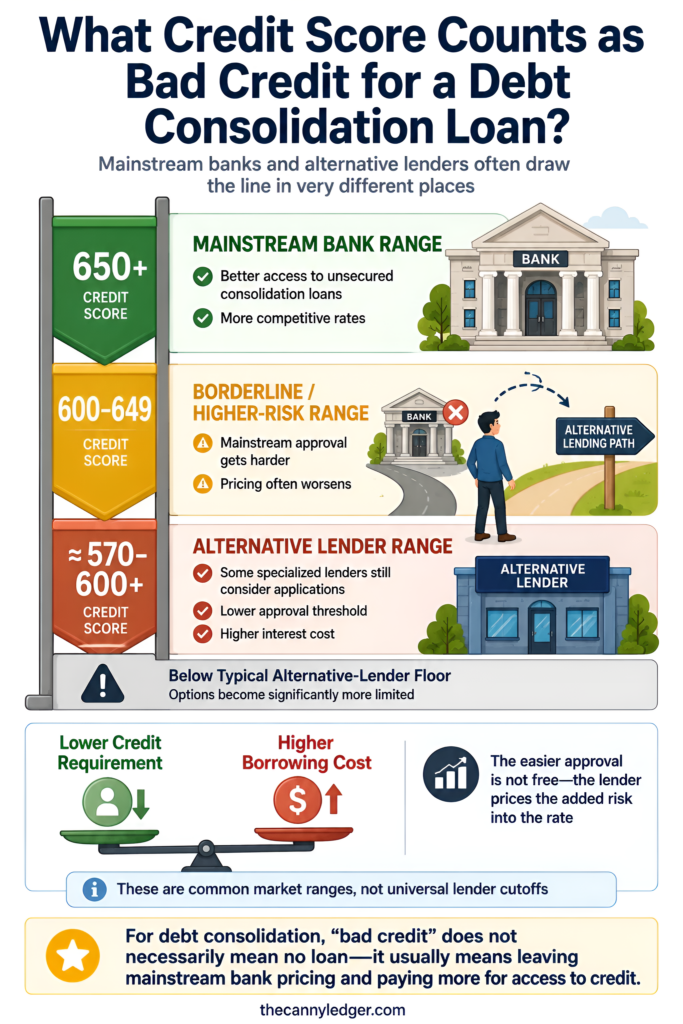
Mainstream banks generally draw their line around 650 for competitive unsecured pricing, a threshold covered in more depth in our piece on debt consolidation loan rates and requirements. Below that line, a different set of lenders takes over, and their own threshold sits lower still. Alternative and specialized lenders serving this segment typically look for a credit score somewhere above 570 to 600 before offering anything at all, a meaningfully lower bar than a bank’s, though the tradeoff for that lower bar is a rate structure built around higher perceived risk from the start.
What A Cosigner Actually Changes
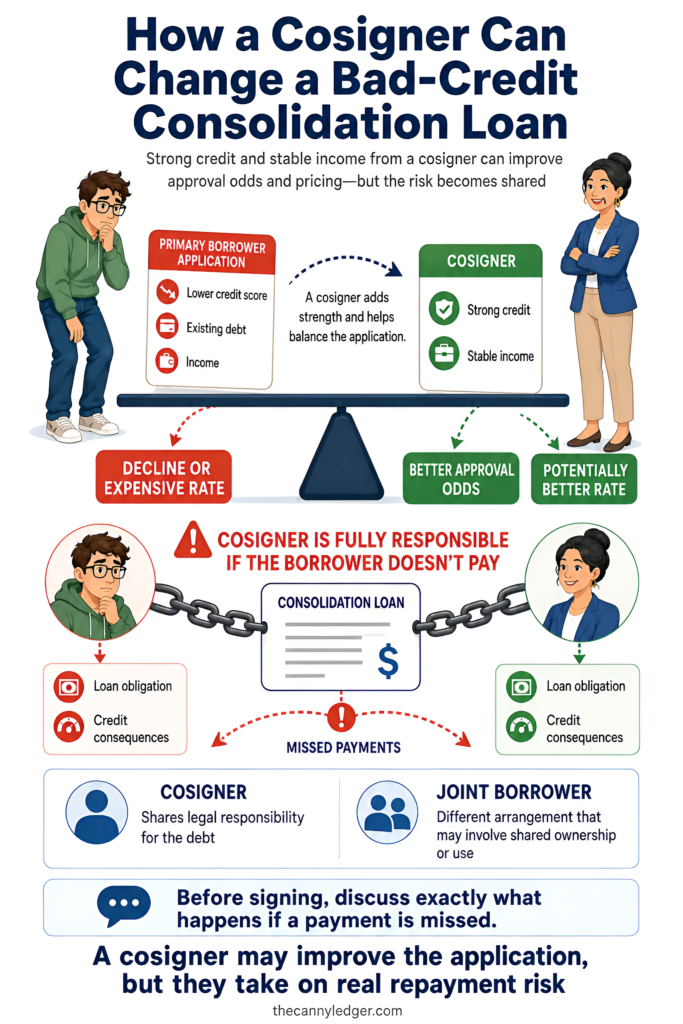
Adding a cosigner to your application is the single most direct lever available if your own credit alone won’t clear a lender’s threshold, an option worth weighing alongside a straightforward personal loan through a local lender before assuming an alternative lender is your only path forward. A cosigner with strong credit and stable income effectively lends their financial reputation to your application, and lenders respond to that by approving files they’d otherwise decline and pricing them closer to what the cosigner’s own credit would earn rather than your own. It’s worth being precise about what this arrangement actually means, since the terminology gets used loosely. A cosigner takes on full legal responsibility for repayment if you default, without gaining any ownership stake in whatever the loan paid for, a meaningfully different arrangement from a joint loan, where both parties share both the debt and the ownership. Asking someone to cosign is asking them to accept real risk on your behalf, and that’s worth being direct about with them rather than treating it as a minor formality.
What Collateral Changes If You Don’t Have A Cosigner
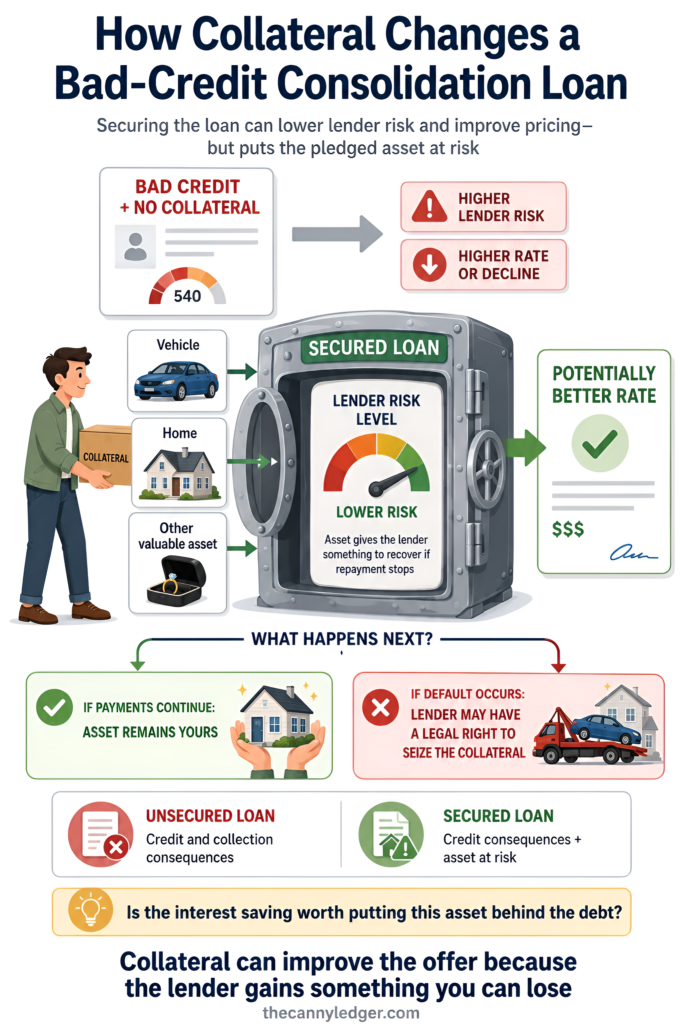
Securing the loan against an asset works through a different mechanic entirely, but it lands in a similar place. A vehicle, a house, or another asset of real value gives the lender something to recover if repayment stops, which lowers their risk regardless of your credit history and typically earns a meaningfully better rate than an unsecured offer at the same credit score would. The cost of that better rate is real and specific. Default on a secured loan and the lender has a legal path to seize the actual asset, not just a damaged credit file to show for it, a genuinely higher-stakes trade than an unsecured loan carries even at a worse interest rate.
Where Alternative Lenders Fit Into This Specific Market
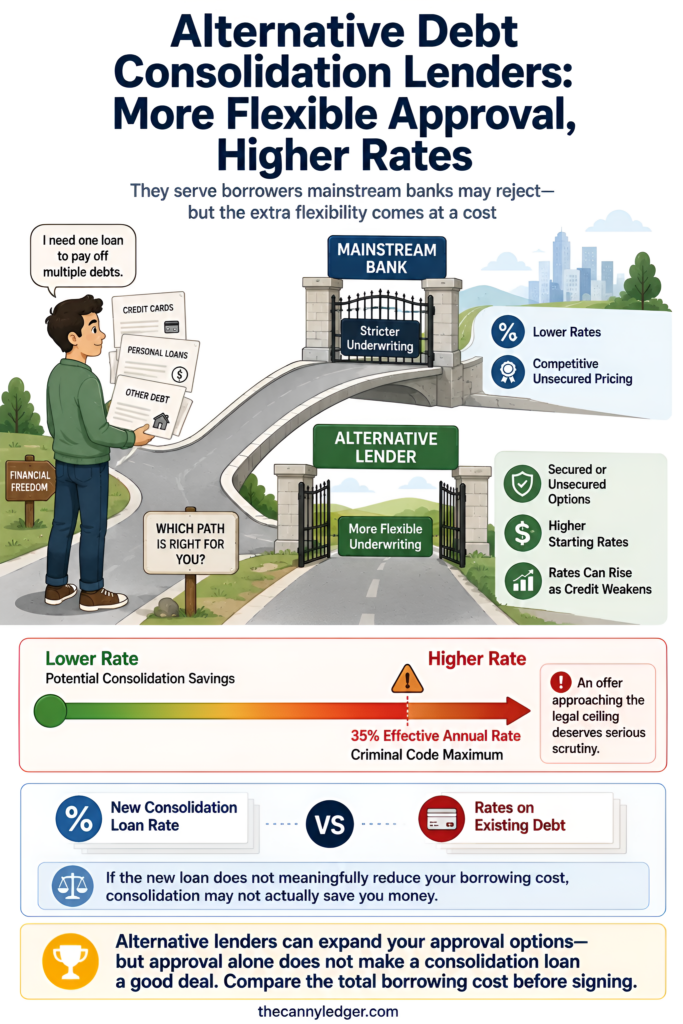
A handful of established alternative lenders in Canada specifically serve borrowers who don’t qualify at a mainstream bank, offering both secured and unsecured products with more flexible underwriting than a bank applies. Alternative lenders in this space typically start unsecured rates well above what a bank charges, and the range climbs considerably higher than a bank’s ceiling as a borrower’s credit weakens, a pattern reflecting the underlying risk these lenders are pricing for rather than any single company’s decision to charge more than it needs to. Canadian law still applies a hard ceiling regardless of which lender you’re dealing with, and any offer approaching the Criminal Code’s effective 35 percent annual rate cap deserves the same scrutiny here as it would from any other lender, since a rate near the ceiling rarely represents genuine savings over whatever debt it’s replacing.
The Honest Math On When This Stops Making Sense
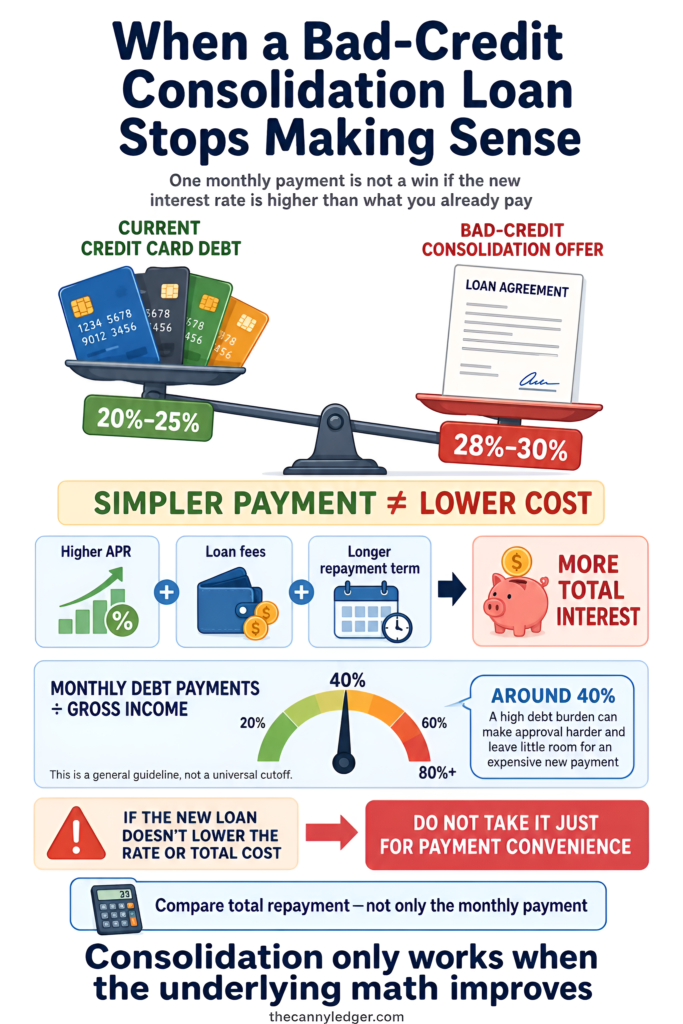
Run the actual comparison before signing anything, since the entire point of consolidation collapses the moment the new rate lands anywhere close to what you’re already paying on existing credit card debt. A borrower carrying cards at 20 to 25 percent interest who consolidates into a loan at 28 to 30 percent hasn’t improved their situation in any real sense, regardless of how much simpler the single monthly payment feels. Lenders themselves acknowledge that combined debt payments exceeding roughly 40 percent of income is a common reason applications get declined in the first place, which means the borrowers most likely to be approved in this credit band are already close to that threshold, leaving little room for a rate that doesn’t genuinely help.
What Tends To Work Better In This Exact Situation
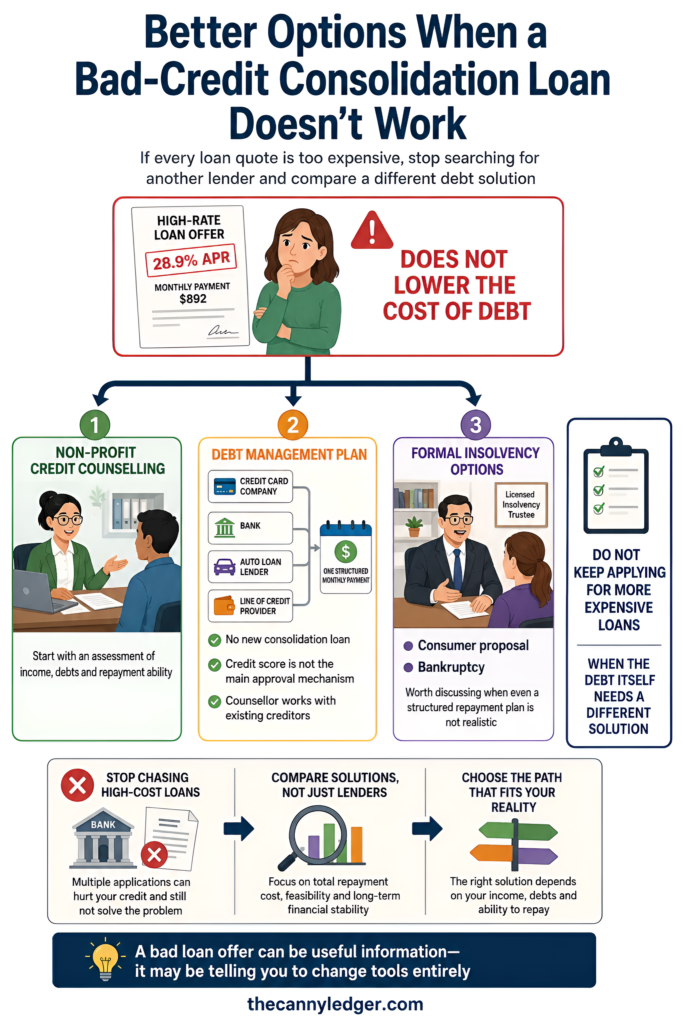
If the loan math doesn’t genuinely improve your rate, the honest next step isn’t a different lender, it’s a different tool entirely. A debt management plan through a non-profit credit counsellor doesn’t hinge on your credit score the way any loan application does, since the counsellor negotiates directly with your existing creditors rather than pricing risk the way a lender does. Our comparison of debt management plans against formal debt settlement covers that distinction if a DMP is genuinely on the table for your situation. If the debt load is severe enough that even a well-structured DMP won’t realistically resolve it, that’s worth raising directly rather than continuing to search for a lender willing to say yes, since a conversation about bankruptcy or a formal consumer proposal at that point is a more honest use of your time than another round of applications.
Getting A Clear Picture Before You Apply
Check your actual score against both bureaus before assuming which lender tier you’d realistically qualify for, since the gap between a 590 and a 620 can be the difference between a genuinely usable offer and one that isn’t worth taking. If you’re weighing whether to ask someone to cosign, have the honest conversation about what happens if you can’t make a payment before either of you sign anything, since that risk is real regardless of how confident the plan feels today. Compare any alternative lender’s actual quoted rate directly against your existing debt to income ratio and your current card rates rather than against the relief of a single monthly payment alone, since that relief means nothing if the underlying math has gotten worse. And if every route through a loan keeps landing on a rate that doesn’t actually help, treat that as useful information rather than a reason to keep applying, since it’s pointing you toward a structured non-loan option that was probably the better fit from the start.