The first thing debt consolidation does to your credit score is knock it down slightly, the opposite of what most people expect from a move that’s supposed to fix their finances. A new loan application means a hard inquiry, and depending on the route you take, an older account might close while a new one opens, both of which nudge the number down before anything improves. That short-term dip isn’t a reason to avoid consolidation. It’s a reason to understand what the process actually does before assuming the mechanics work the way the name implies.
What Consolidation Actually Does, And What It Doesn’t
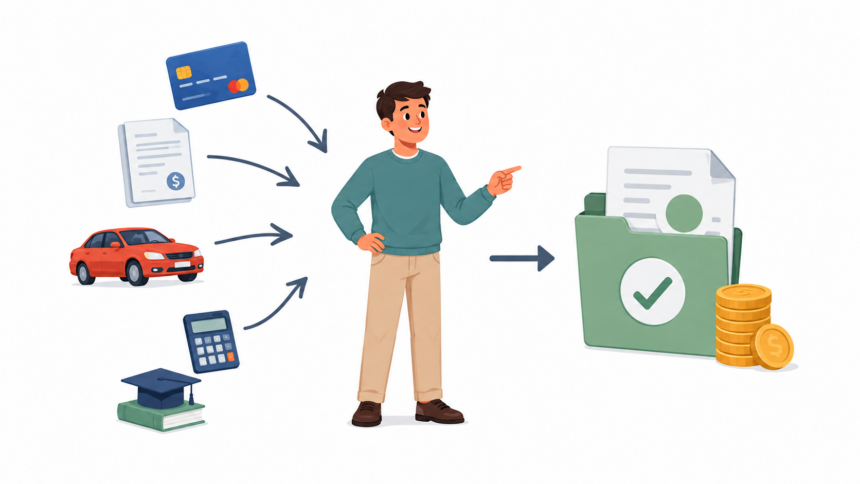
Debt consolidation combines several debts into one, typically at a single interest rate and a single monthly payment, replacing the juggling act of multiple due dates, multiple creditors, and often multiple interest rates with one predictable obligation. Debt consolidation doesn’t reduce what you actually owe, it restructures it, and whether that restructuring actually saves you money depends entirely on whether the new arrangement carries a genuinely lower rate than the average of what it replaces. Understanding your starting point matters here too, since your debt to income ratio is often what a lender actually looks at first when deciding whether you qualify for a better rate at all. A consolidation loan taken at a higher effective rate than your existing debts isn’t consolidation in any meaningful sense, it’s just a longer, more expensive loan wearing a helpful-sounding name.

The Real Options Available In Canada
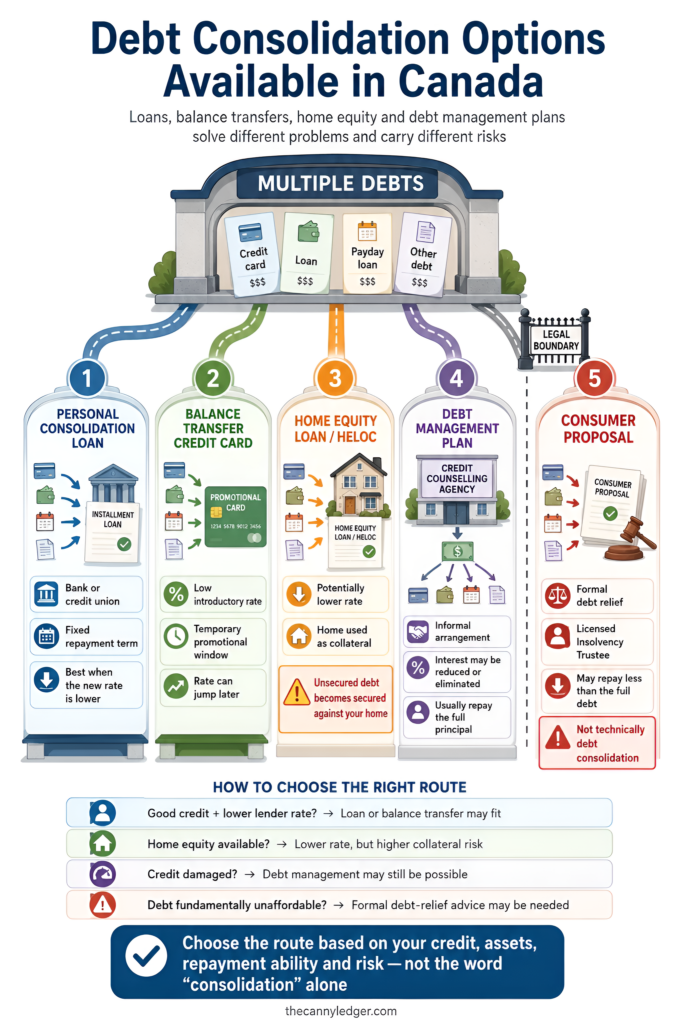
Several genuinely different products fall under the consolidation umbrella, and they aren’t interchangeable. A personal loan from a bank or credit union is the most straightforward route, used specifically to pay off higher-interest balances like credit cards or payday loans, with most personal loans in Canada ranging from $100 to $50,000 over terms of six to sixty months. A balance transfer credit card works similarly for card debt specifically, offering a promotional low rate for a limited window, though the rate typically jumps sharply once that window closes. A home equity line of credit or home equity loan uses your house as collateral to secure a meaningfully lower rate than unsecured borrowing, a genuinely powerful tool for the right situation but one that converts unsecured debt into secured debt against your home, raising the stakes if repayment goes sideways.
Outside these lender-based products sits a completely different category. A debt management plan, arranged through a credit counsellor, is an informal proposal made to your creditors on your behalf, consolidating your debts into one affordable monthly payment, sometimes with interest reduced or eliminated entirely, though you’ll usually still repay the full amount you originally owed. A consumer proposal goes further still, a formal, legally binding agreement filed through a Licensed Insolvency Trustee under the Bankruptcy and Insolvency Act, where creditors agree to accept less than the full amount owed. This last option isn’t technically consolidation at all, it’s a form of debt relief with its own separate legal framework, but it gets mentioned in the same breath constantly enough that the distinction is worth being explicit about.
What Interest Rates Actually Look Like
Rates vary enormously depending on which route and which lender you’re comparing. Canada’s major banks typically price personal loans somewhere between 6 and 24 percent, with your specific offer depending heavily on your credit score, income, and existing relationship with the lender. Finance companies and lenders serving weaker credit profiles charge meaningfully more, and Canadian law sets a hard ceiling regardless of lender type, the Criminal Code caps the effective annual interest rate on any loan at 35 percent, a legal maximum rather than a typical rate, and any offer approaching that ceiling deserves real scrutiny before signing anything.

Who Actually Qualifies For What
This is where the different options split apart most sharply. A bank consolidation loan or a balance transfer card generally requires reasonably good credit to begin with, which creates a frustrating catch for exactly the people who’d benefit most, since a credit score already damaged by missed payments or high utilization often disqualifies someone from the very product designed to fix that situation. A debt management plan through a non-profit credit counselling agency works differently, since qualification typically doesn’t hinge on your credit score at all, the counsellor negotiates directly with your existing creditors regardless of what your file currently looks like. That distinction alone is worth knowing before assuming a damaged credit score rules out every consolidation path.

Where Consolidation Actually Fails
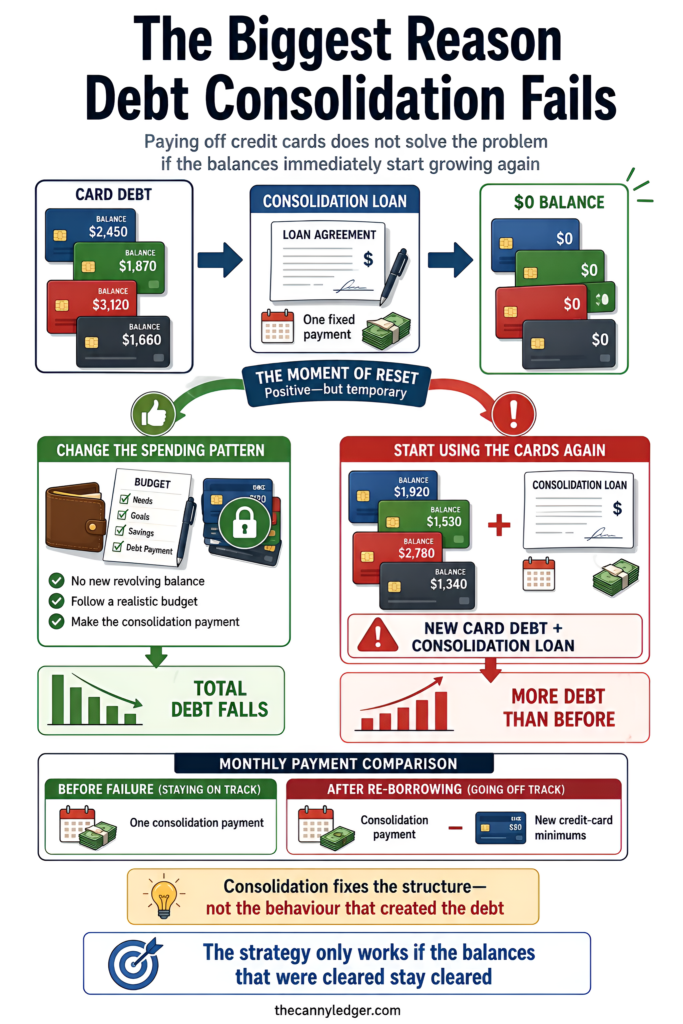
The single most common way this strategy falls apart has nothing to do with interest rates or loan terms. It’s what happens to the credit cards after they’re paid off. Consolidating credit card debt into a single loan clears those balances back to zero, and the temptation to start using those newly available limits again is exactly how someone ends up carrying both the new consolidation loan and a fresh round of card debt simultaneously, in a worse position than before they started. The strategy only works if the underlying spending pattern actually changes alongside the paperwork, and treating consolidation as a fix for the debt without addressing why it accumulated in the first place is the most predictable way to end up back where you started, just with an extra monthly payment added on top.
Getting Started The Right Way
Add up every debt you’re currently carrying along with its actual interest rate before comparing any consolidation option, since you can’t tell whether a new rate genuinely helps without knowing precisely what it’s replacing. If your credit is strong enough to qualify for a bank loan or a personal loan through a local lender, compare that offer directly against what Winnipeg’s own credit unions or banks are quoting, since rates and terms genuinely differ between institutions. If your credit is too damaged to qualify for a loan, a free consultation with a credit counsellor is worth pursuing before assuming you’re out of options entirely, and if the debt load is severe enough that even a debt management plan won’t realistically resolve it, understanding how that compares to a formal debt settlement or to bankruptcy specifically matters more than picking a starting point at random. Whatever direction you take, the plan only holds if the accounts that got cleared stay cleared, which is a habit question every bit as much as a financial one, and our broader guide to getting out of debt in Canada covers that behavioural side in more depth than a single article on consolidation alone can.