

Canada’s largest pet insurance provider isn’t based in Toronto. Petsecure, the company insuring more cats and dogs than any other in the country, runs its head office out of a building on Empress Street in Winnipeg, and has since 1989. It’s not the only local secret either. Several insurance products that look like separate companies, OVMA Pet Health Insurance, the Desjardins pet program, CAA’s pet coverage, are all actually underwritten by that same Winnipeg-based company operating under different brand names. Knowing that matters less for bragging rights and more because it means a genuinely major national player, not a small regional outfit, is headquartered in this city.
- Petsecure Is Actually a Winnipeg Company
- Trupanion Trades Flexibility for Unlimited Coverage
- Fetch Brings a No-Breed-Exclusion Policy North
- What’s Not Actually Available Here
- Real Cost Ranges for Winnipeg Cat and Dog Owners
- Comparing the Three Main Options
- Cats vs Dogs: Why Coverage Differs So Much
- Is Pet Insurance Even Worth It, or Should You Self-Insure?
- Good Stuff and Bad Stuff by Provider
- Common Questions
- Getting the Actual Quote Beats Any General Comparison
For Winnipeg pet owners, the strongest options are Petsecure, a Winnipeg-founded company offering four coverage tiers with dental included on every plan, Trupanion, which offers unlimited lifetime payouts with a per-condition deductible, and Fetch, a no-breed-exclusion policy popular with owners of breeds other insurers charge more to cover. Monthly premiums generally run $30 to $90 for dogs and $20 to $55 for cats, depending on the plan and the pet’s age.
Petsecure Is Actually a Winnipeg Company
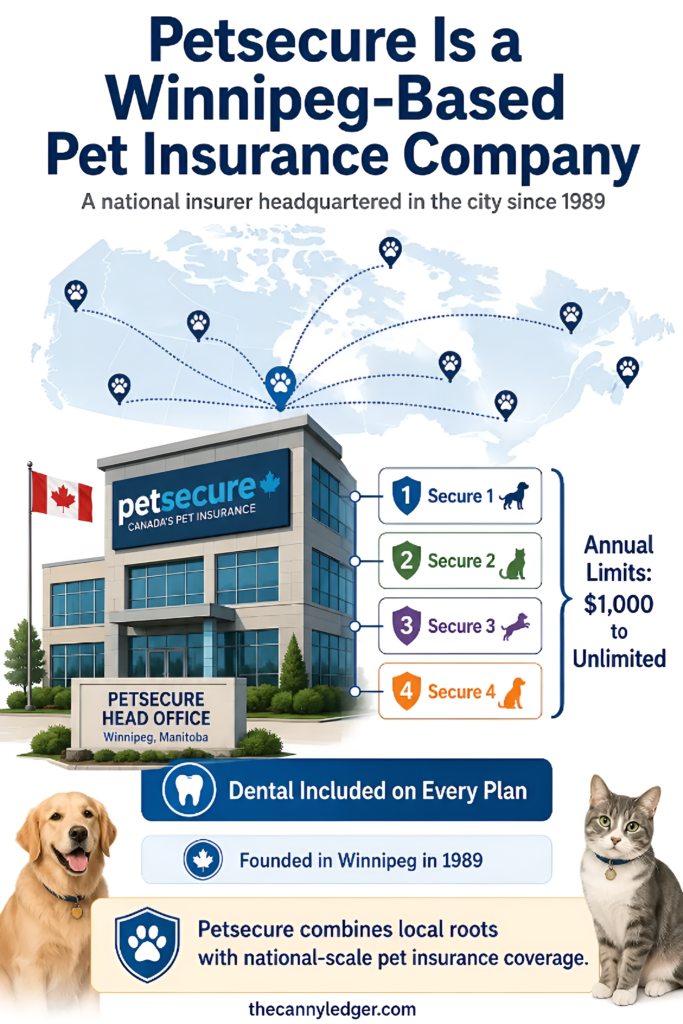
Petsecure was founded in Winnipeg in 1989 as Canada’s first insurance company built exclusively around pet health coverage, and its head office has stayed in this city through several corporate name changes since, from SecuriCan to Western Financial Insurance to its current operation as Petline Insurance Company’s flagship brand. That history matters less than what it offers today: four coverage tiers, Secure 1 through Secure 4, with annual limits ranging from $1,000 on the most basic plan up to unlimited on the top tier, and dental coverage included on every single plan rather than sold as a pricier add-on the way most competitors structure it.
Local veterinary organizations across Manitoba endorse Petsecure specifically, including the Winnipeg Humane Society, which is worth knowing if you adopted a pet through a Winnipeg shelter and want a provider your adoption organization already has a working relationship with. The tradeoff worth naming plainly: Petsecure’s claims processing has a reputation for running slower than some competitors, and coverage caps on the lower tiers can feel restrictive if your pet ends up needing an expensive, ongoing treatment, which makes the tier you pick at signup matter more here than with an unlimited-payout competitor like Trupanion.
Trupanion Trades Flexibility for Unlimited Coverage
Trupanion takes a fundamentally different structural approach from Petsecure’s tiered system. There’s a single policy design rather than multiple tiers, covering 90 percent of eligible veterinary costs with no cap on total lifetime payout, which matters enormously for pets that develop a chronic or hereditary condition requiring years of ongoing treatment. Trupanion uses a per-condition deductible rather than an annual one, meaning once you’ve met the deductible for a specific condition, that condition stays covered without resetting the deductible again each year, a structure that can save real money on something like chronic allergies or a lifelong joint issue.
Trupanion’s other distinguishing feature is Vet Direct Pay, where the company can pay your veterinarian directly at checkout rather than requiring you to pay the full bill upfront and wait for reimbursement, which matters most in a genuine emergency when coming up with several thousand dollars on the spot isn’t realistic for every household. The real cost of this flexibility and unlimited coverage is premium price. Trupanion consistently runs more expensive than Petsecure or Fetch for comparable pets, and it doesn’t cover exam fees, routine care, or pre-existing conditions, so it’s built specifically for unexpected illness and injury protection rather than a wellness plan.

Fetch Brings a No-Breed-Exclusion Policy North
Fetch, formerly known as Fetch by The Dodo, operates in Manitoba and specifically serves Winnipeg pet owners directly through its own dedicated coverage page for the city. Its standout feature for certain owners is a no-breed-exclusion policy, meaning breeds that other insurers charge significantly more to cover, or exclude certain conditions for outright, like French Bulldogs prone to respiratory issues or large breeds prone to hip dysplasia, get standard treatment under Fetch’s underwriting rather than a breed-specific penalty. Reimbursement runs up to 90 percent, and Fetch covers pets of any age at enrollment, which matters for anyone who adopted an older rescue rather than a puppy or kitten and got turned away or quoted a much higher rate elsewhere because of it.
Fetch’s tradeoff compared to Trupanion is a lower maximum annual coverage limit rather than an unlimited payout, and compared to Petsecure, dental coverage isn’t automatically bundled into the base plan the same way. For a Winnipeg household with a breed that tends to get penalized by other insurers, though, Fetch is worth quoting specifically for that reason alone.

What’s Not Actually Available Here
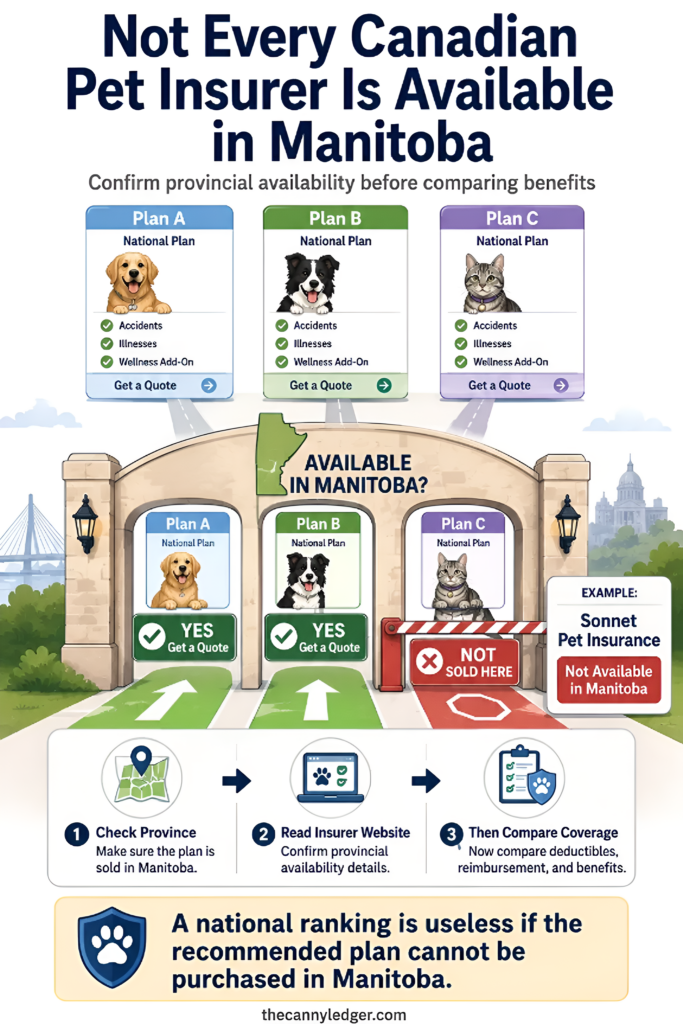
Not every pet insurance brand you’ll see advertised online is actually purchasable in Manitoba, and this trips people up more than it should given how much national pet insurance marketing treats Canada as one uniform market. Sonnet Pet Insurance, a digital-first brand backed by Intact Financial, explicitly excludes Saskatchewan, Manitoba, and Newfoundland from its coverage area, so it isn’t an option here regardless of how it ranks in a national comparison article written for a broader Canadian audience. Before getting attached to a specific provider based on a general “best pet insurance in Canada” ranking, confirming Manitoba availability directly on that insurer’s own site saves the disappointment of falling in love with a plan you can’t actually buy.
Real Cost Ranges for Winnipeg Cat and Dog Owners
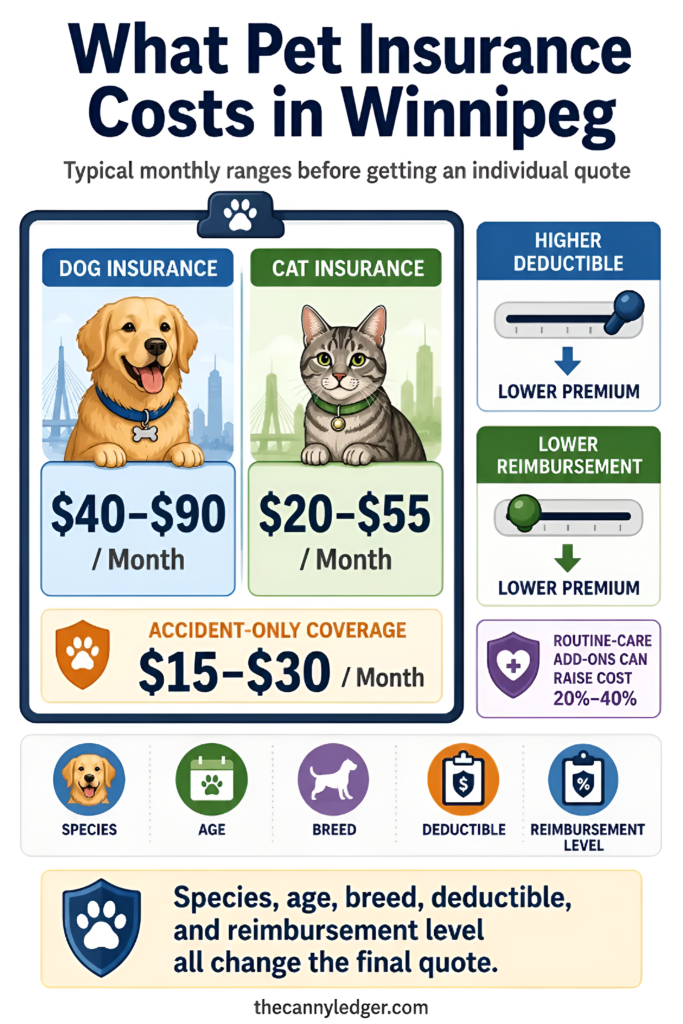
Pricing depends heavily on species, breed, age, and the specific plan tier, but general Canadian benchmarks give a useful starting point before getting an actual quote. Dogs typically run $40 to $90 a month for a standard accident and illness plan, while cats run meaningfully less, typically $20 to $55 a month for the same style of coverage, reflecting that cats statistically generate lower claims than dogs. Accident-only plans, which skip illness coverage entirely and only pay out for injuries like a car accident or a swallowed foreign object, run cheaper still, generally $15 to $30 a month for either species, though the tradeoff is obvious: a chronic illness diagnosis wouldn’t be covered at all under an accident-only policy.
These figures assume a standard $500 annual deductible with roughly 80 percent reimbursement. Choosing a higher deductible or a lower reimbursement percentage can bring the monthly premium down by 15 to 25 percent, while adding wellness coverage for routine exams, vaccinations, and preventive care on top of a base accident and illness plan typically adds 20 to 40 percent to the monthly cost.
Comparing the Three Main Options
| Title | Petsecure | Trupanion | Fetch |
|---|---|---|---|
| Headquartered | Winnipeg, MB | Vancouver, BC | United States |
| Plan structure | Four tiers (Secure 1-4) | Single comprehensive plan | Single comprehensive plan |
| Dental coverage | Included on every plan | Not included | Add-on |
| Deductible type | Annual | Per-condition | Annual |
| Payout cap | $1,000 to unlimited by tier | Unlimited | Set annual maximum |
| Breed exclusions | Some, by tier | Limited | None |
| Payment method | Reimbursement | Direct vet pay available | Reimbursement |

Cats vs Dogs: Why Coverage Differs So Much
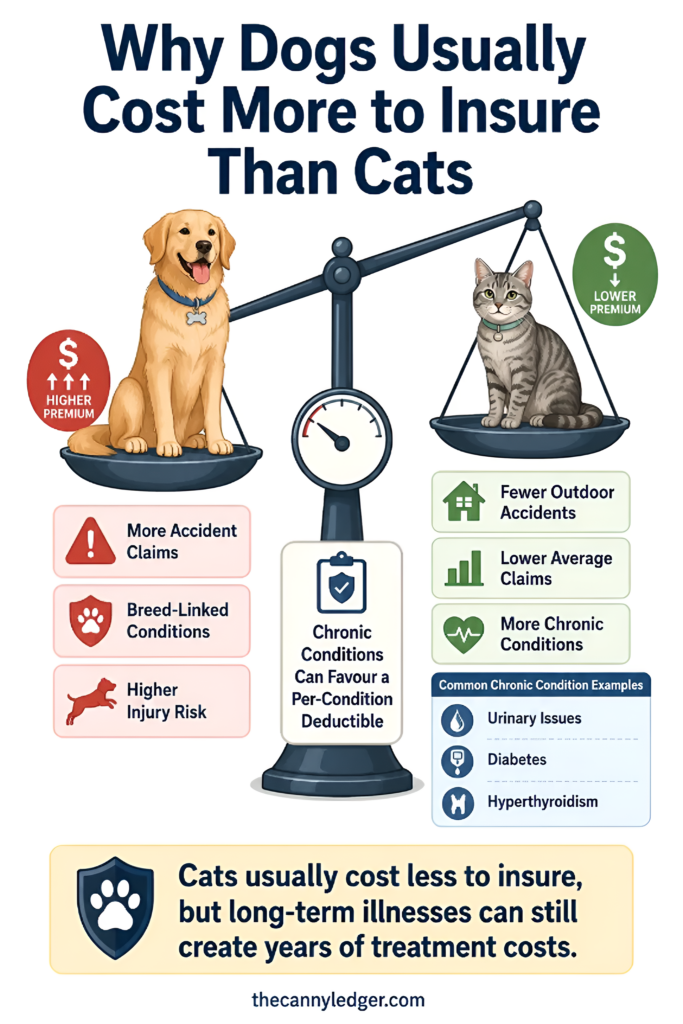
The gap between what cats and dogs cost to insure isn’t arbitrary pricing, it reflects genuinely different risk profiles insurers have tracked across millions of claims. Dogs are more prone to accidents and injuries, chase things into traffic, get into things they shouldn’t, and certain breeds carry elevated risk for expensive conditions like hip dysplasia or specific cancers. Cats, particularly indoor cats, face fewer accident risks but are prone to their own set of chronic conditions, urinary blockages, diabetes, and hyperthyroidism among them, conditions that tend to be manageable but require ongoing treatment rather than a single expensive incident. This is part of why Trupanion’s per-condition deductible model can be particularly valuable for cat owners specifically, since a chronic condition diagnosed early in a cat’s life could otherwise mean resetting an annual deductible year after year for a problem that never actually goes away.
Is Pet Insurance Even Worth It, or Should You Self-Insure?
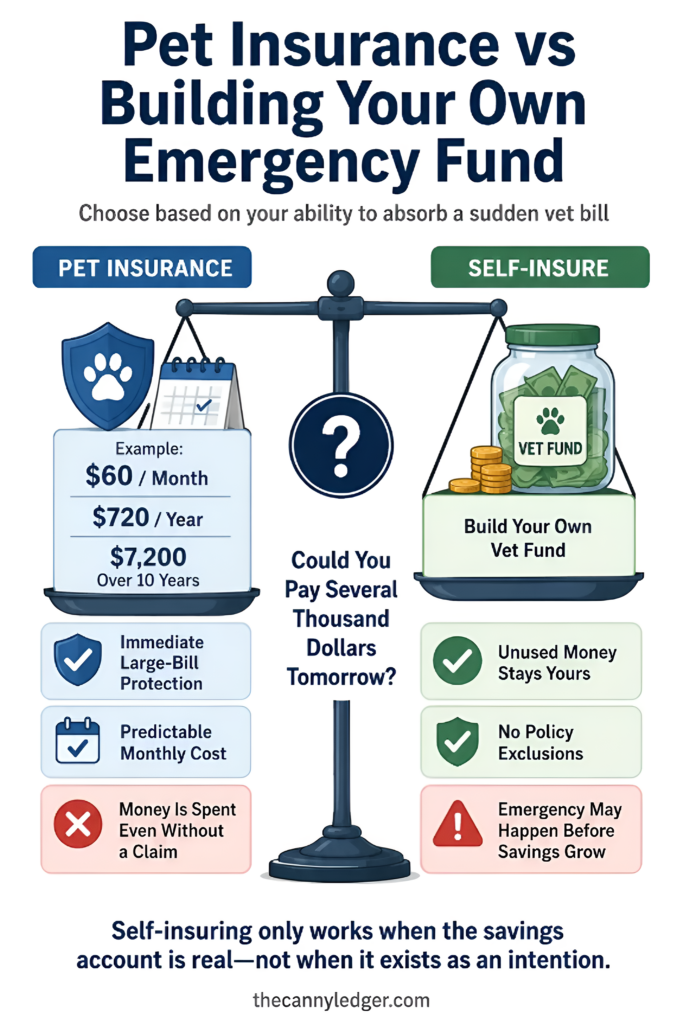
The honest answer depends on your own risk tolerance and whether you actually have the discipline to set money aside consistently rather than just hoping nothing goes wrong. A dog owner paying $60 a month for insurance spends $720 a year, and if that dog stays healthy for a decade, that’s $7,200 spent without a single claim, money that could have sat in a dedicated savings account instead. The counterargument is what happens the one time something does go wrong. Emergency surgery or a serious diagnosis can run into the thousands of dollars in a single visit, and without either insurance or a dedicated emergency fund already built up, that’s the kind of bill that gets put on a credit card at a brutal interest rate rather than paid outright. Our guide to the cheapest vet in Winnipeg without insurance covers the self-insuring path in more depth, including which Winnipeg clinics keep routine and emergency costs lowest for owners choosing to set money aside instead of paying a monthly premium.
Good Stuff and Bad Stuff by Provider
Petsecure, good stuff: Dental included on every plan, four tiers let you match coverage to budget, strong local vet and shelter endorsements across Manitoba.
Petsecure, bad stuff: Claims processing runs slower than competitors by reputation, lower tiers cap out at limits that can feel restrictive for a major illness.
Trupanion, good stuff: No lifetime payout cap, per-condition deductible rewards owners of pets with chronic conditions, direct vet payment avoids the upfront cash crunch.
Trupanion, bad stuff: Consistently the priciest of the three, no coverage for exam fees or routine wellness care, premiums tend to climb as your pet ages.
Fetch, good stuff: No breed exclusions regardless of your dog or cat’s breed, covers pets of any age at enrollment, strong for owners of breeds other insurers penalize.
Fetch, bad stuff: Lower maximum annual payout than Trupanion’s unlimited model, dental isn’t bundled into the base plan.
Common Questions
Does pet insurance in Manitoba cover pre-existing conditions? No provider covers pre-existing conditions, this is standard across the entire Canadian pet insurance industry, not specific to any single company, so getting a policy started while your pet is young and healthy matters more than shopping for the “best” provider after a condition has already been diagnosed.
Is there a waiting period before coverage actually starts? Yes, every major provider covered here applies a waiting period, typically a few days for accidents and a couple of weeks for illness, after your policy start date before claims are eligible, so signing up the week before a planned procedure won’t get that procedure covered.
Can I switch providers later if I’m not happy with my current one? Yes, but be aware that whatever condition your pet has already been diagnosed with at a previous insurer would likely be treated as pre-existing by the new one, so switching works cleanly mainly while your pet remains healthy rather than after a claim has already been filed.
Getting the Actual Quote Beats Any General Comparison
Every figure in this article is a benchmark drawn from general Canadian pricing data, not a quote built around your specific dog’s breed, your cat’s age, or your own address in Winnipeg. The genuinely useful next step is pulling a real quote from Petsecure, Trupanion, and Fetch using your actual pet’s details, since the gap between a benchmark range and your real premium can be significant in either direction depending on factors a general comparison like this one simply can’t account for. If you’re mapping out a household’s full insurance budget rather than just pet coverage, our comparison of term vs whole life insurance in Winnipeg and our Winnipeg car insurance rates and calculator cover two other recurring costs worth weighing alongside whatever you decide here.