
Filter any Winnipeg listings site for “under $1,000” and the results look promising at first glance, dozens of hits, plenty of photos. Look closer and the picture narrows fast: a lot of what shows up is a single room in someone’s house, a basement suite with a shared entrance, or a full apartment that’s technically listed at $999 with heat, water, and parking billed separately on top. The mistake most renters make isn’t searching for a budget unit, it’s assuming that search will return the same kind of full, private, all-in apartment that used to be common at that price a few years ago.
- Why $1,000 Isn’t the Easy Line It Used to Be
- Older Bachelor and Studio Units
- Basement Suites
- Room Rentals: The Most Reliable Way Under $1,000
- Splitting a Bigger Apartment Instead
- The Utilities Trap That Blows Past $1,000
- Where the Cheaper Units Actually Cluster
- When $1,000 Still Isn’t Enough
- Common Questions About Budget Renting in Winnipeg
As of mid-2026, a genuinely private, self-contained apartment under $1,000 a month is possible in Winnipeg but no longer typical, since even studios now average just above that line citywide. What’s realistically and consistently available under $1,000 falls into four categories: older bachelor or studio units in specific buildings and neighborhoods, basement suites, individual room rentals in a shared house, and a bedroom in a larger apartment split with roommates.
Why $1,000 Isn’t the Easy Line It Used to Be
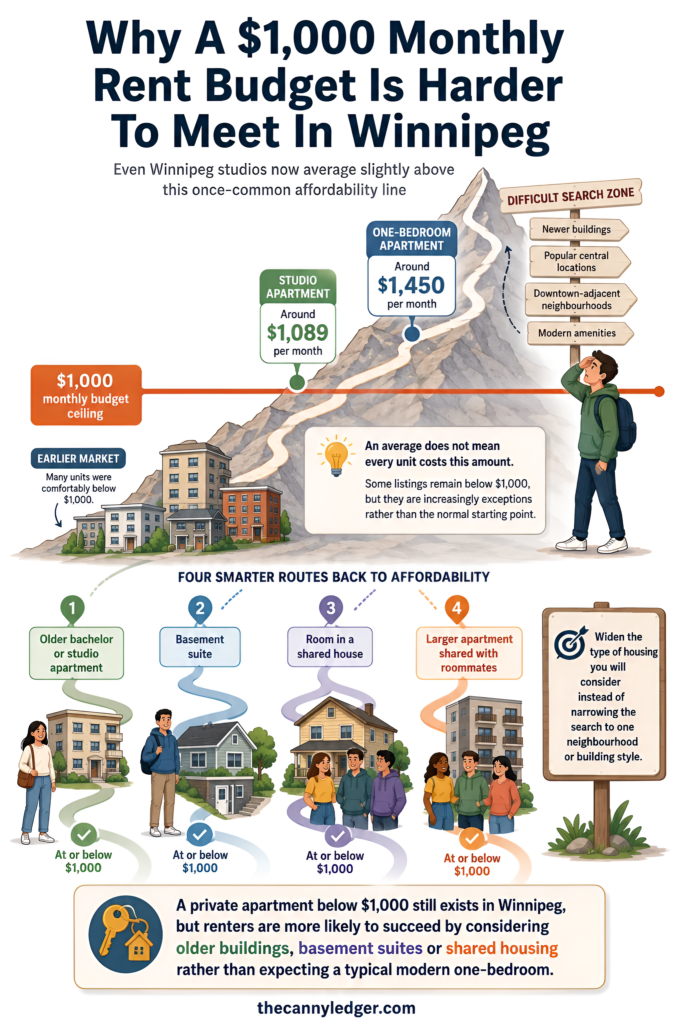
Citywide, studio apartments in Winnipeg average around $1,089 a month as of mid-2026, which puts even the smallest standard unit type slightly over the $1,000 mark on average. One-bedrooms average closer to $1,450. That doesn’t mean nothing exists below $1,000, averages always have a range beneath them, but it does mean the units that land under that number are increasingly the exception rather than the baseline, especially for anyone searching a newer building or a downtown-adjacent neighborhood.
The practical result: renters chasing a strict $1,000 ceiling get better results widening what they’re searching for, not narrowing it further to a single neighborhood or building type. A studio a few years older than average, a basement suite, or a shared arrangement all open up options a straight full-apartment search won’t surface.
Older Bachelor and Studio Units
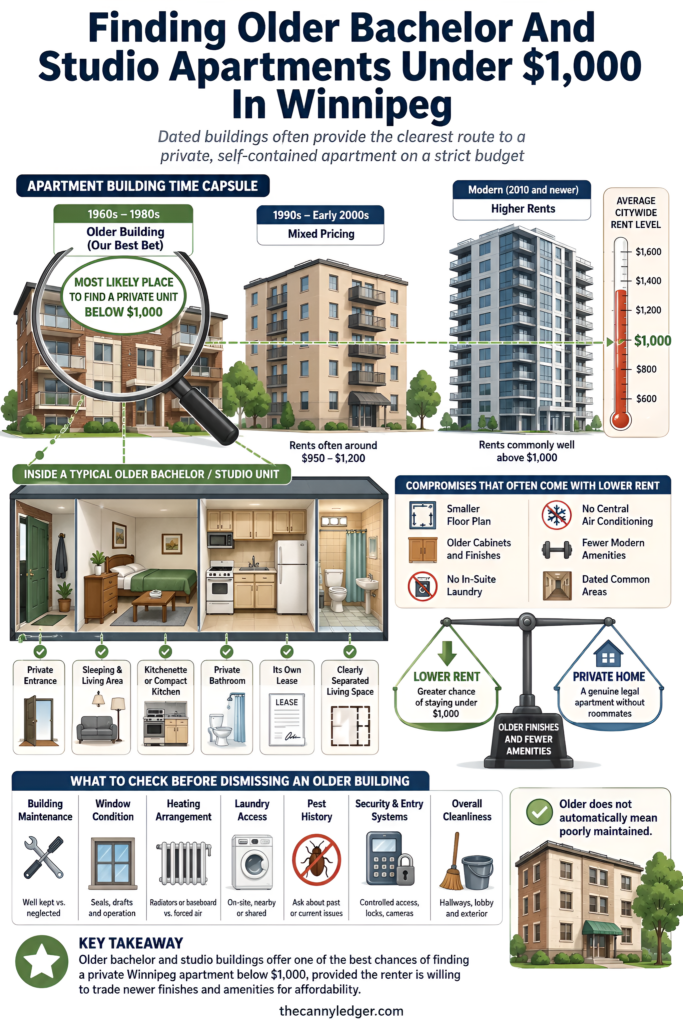
The most straightforward route to a private apartment under $1,000 is an older building, since Winnipeg’s bachelor and studio market skews cheaper than the newer purpose-built stock that’s pulled citywide averages upward. Buildings from the 1960s through the 1980s, often without in-suite laundry or central air, are where most of the remaining sub-$1,000 private units cluster. They’re smaller and dated compared to newer construction, but they’re also a real, legal, self-contained apartment, which puts them ahead of some of the workarounds renters end up considering when a strict budget rules everything else out.
Basement Suites
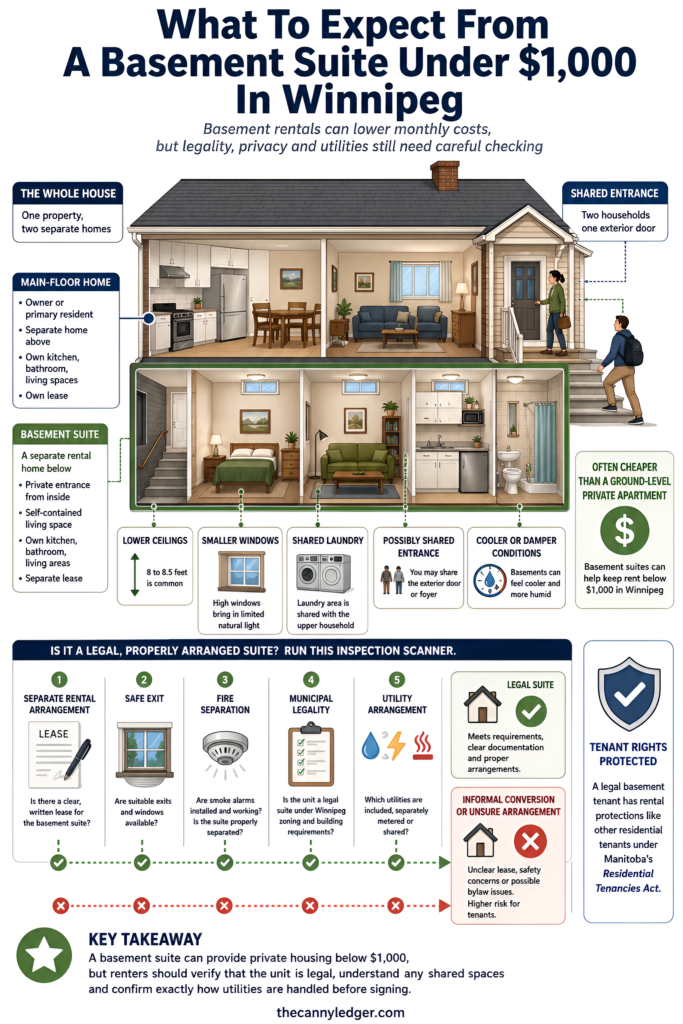
A basement suite is usually the next cheapest step down from a full ground-level apartment, and it’s common enough in Winnipeg to be its own category rather than a rare find. The tradeoffs are real, lower ceilings, smaller windows, and sometimes a shared laundry or entrance with the unit upstairs, but a legal basement suite still comes with its own lease and the same tenant protections as any other rental. The full breakdown of what to check before signing, including how to confirm a suite is legally registered rather than an informal conversion, is covered in budgeting for a basement suite in Winnipeg.
Room Rentals: The Most Reliable Way Under $1,000
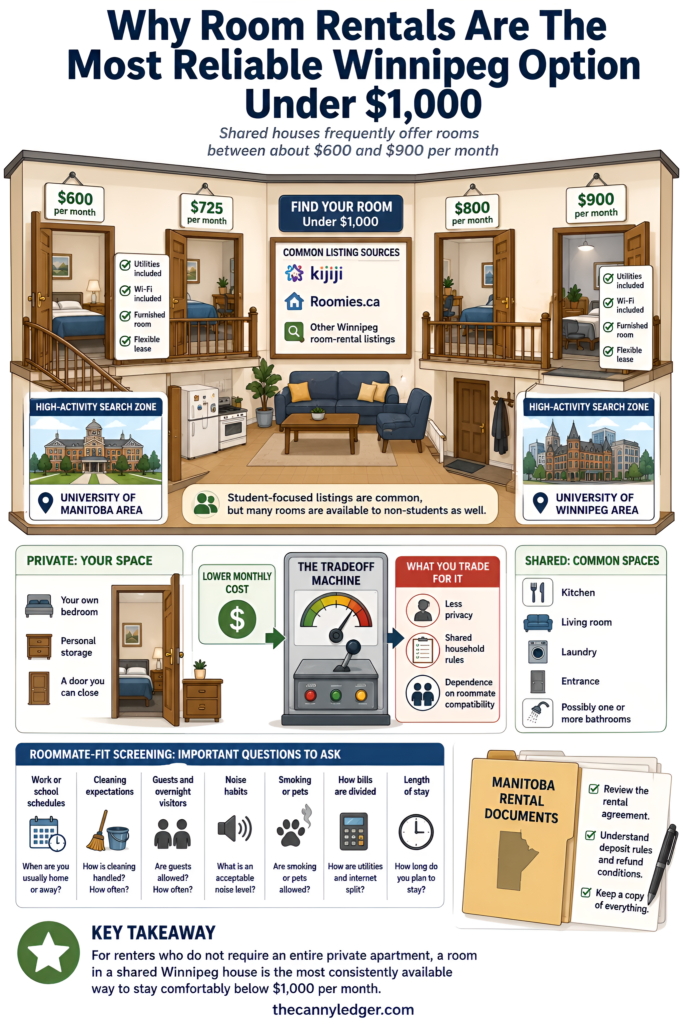
If a private apartment isn’t a hard requirement, a room in a shared house is the most consistent way to land comfortably under $1,000. Scanning live Winnipeg listings on Kijiji and Roomies.ca turns up individual rooms commonly posted anywhere from about $600 to $900 a month, with several including utilities and Wi-Fi in that price. Rooms near the University of Manitoba and University of Winnipeg show up especially often in that range, aimed squarely at students splitting a house, but plenty of listings aren’t student-specific at all. The tradeoff for the lower cost is obvious: shared kitchen and living space, less privacy, and a roommate situation that’s only as good as the people you end up living with. The full rundown on how these arrangements actually work in Manitoba, deposit rules included, is in room rentals in Winnipeg.
Splitting a Bigger Apartment Instead
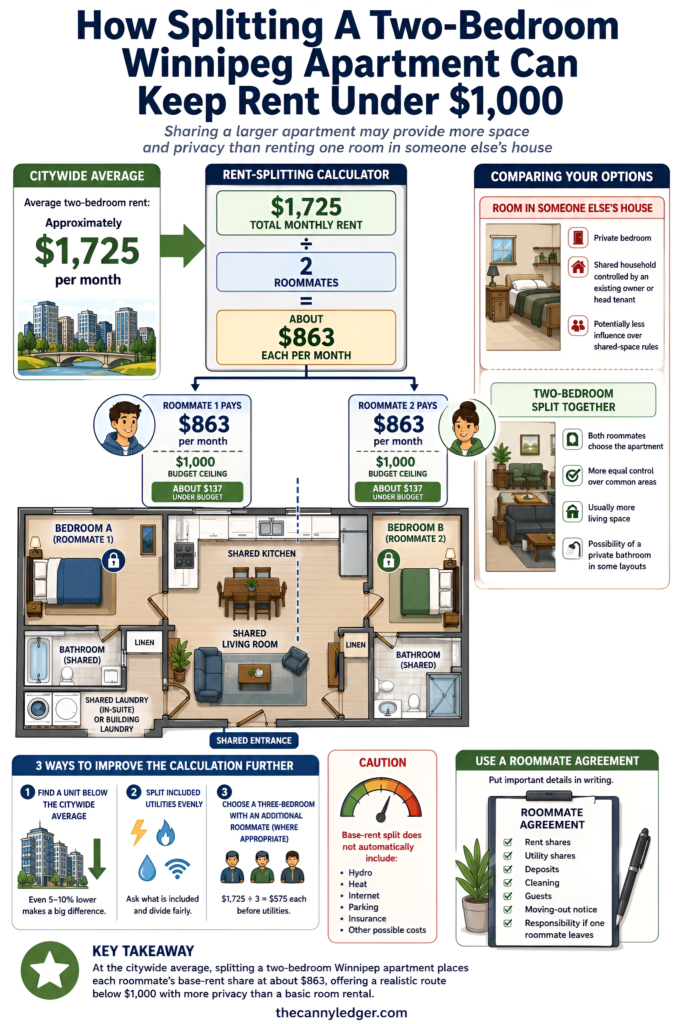
There’s a second path to the same result: renting a two-bedroom with a roommate rather than searching for a one-bedroom alone. At an average two-bedroom rent of roughly $1,725 a month citywide, splitting evenly puts each person at just under $863, well inside a $1,000 budget even before shopping around for anything below that citywide average. This route usually buys more space and privacy than a shared room in someone else’s house, since each roommate typically gets their own bedroom and often a private bathroom, while still landing meaningfully under what either person would pay renting a comparable unit solo. A closer look at how the math shifts across unit sizes is in cheap 1, 2, and 3 bedroom apartments in Winnipeg compared.
The Utilities Trap That Blows Past $1,000
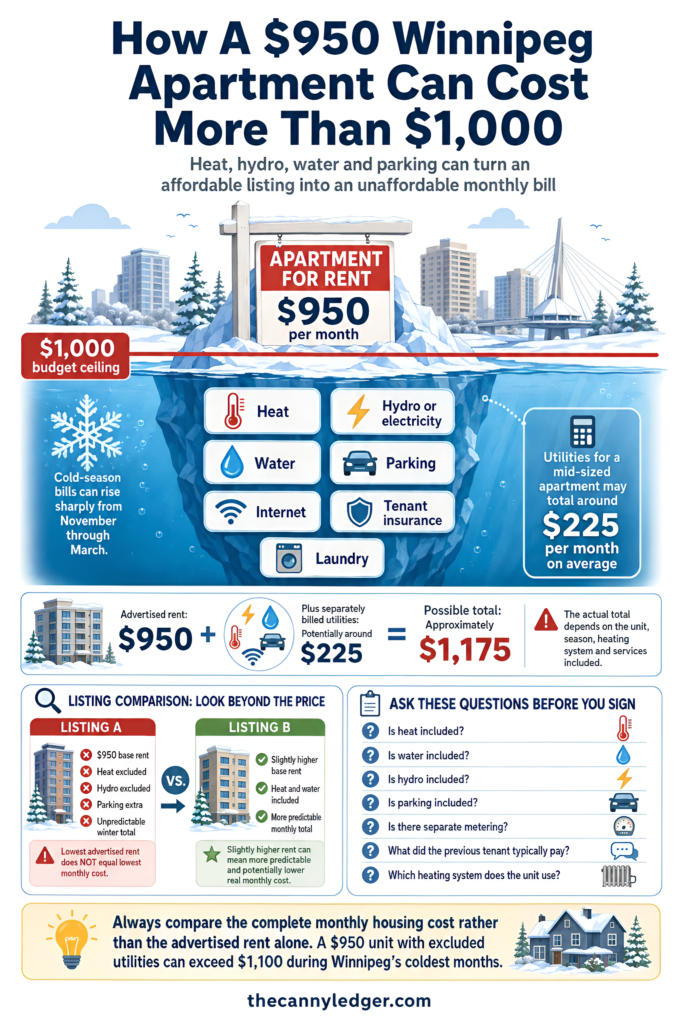
A listing at $950 isn’t actually a $950 unit if heat and hydro are billed separately, and older buildings, the exact ones most likely to sit under $1,000 in the first place, are disproportionately the ones that exclude utilities from rent. Winnipeg winters make this a real budgeting risk rather than a minor detail: monthly utility costs for a mid-sized apartment run somewhere around $225 on average, and heating bills specifically spike hard from November through March. A $950 unit with utilities excluded can land closer to $1,100 or more in the coldest months, quietly blowing past the exact ceiling the listing seemed to guarantee. Always ask directly whether heat, water, and hydro are included before comparing a listing’s sticker price against anything else on your shortlist, and lean toward utilities-included listings if predictable monthly costs matter more to you than shaving a few dollars off the base rent.
Where the Cheaper Units Actually Cluster
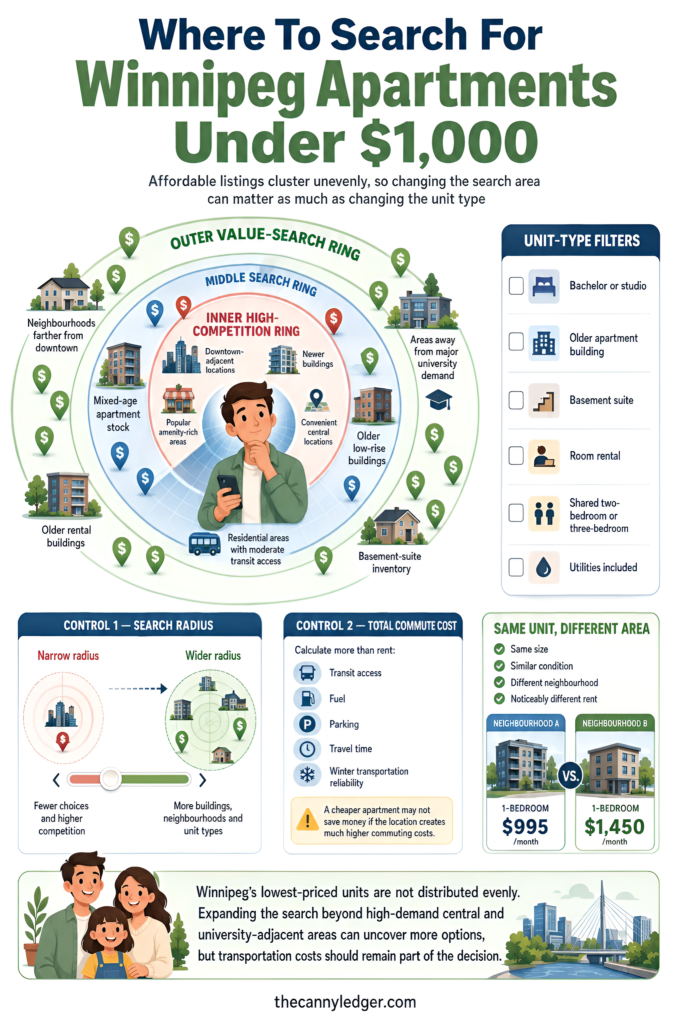
Sub-$1,000 units aren’t spread evenly across the city, they concentrate in specific neighborhoods further from downtown and away from the university campuses. A full breakdown of which areas consistently run cheaper and why is covered in cheapest neighborhoods in Winnipeg to rent, worth checking before committing to a search radius, since the same unit type can cost noticeably more or less depending entirely on which part of the city it’s in.
When $1,000 Still Isn’t Enough
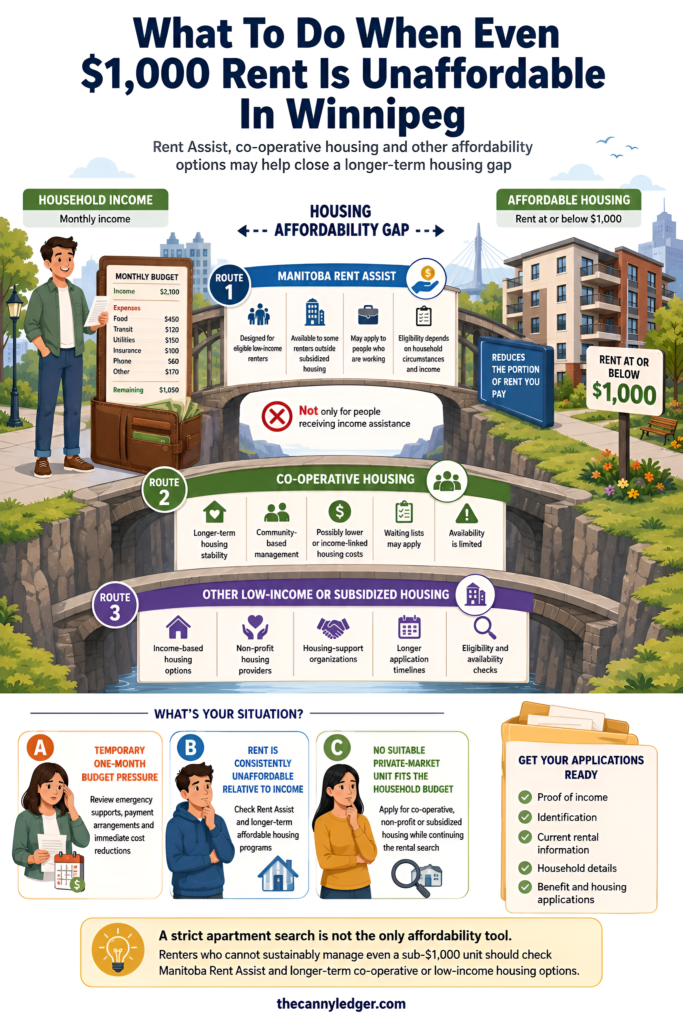
For renters whose income makes even a sub-$1,000 unit a stretch, Manitoba’s Rent Assist program exists specifically to close that gap for low-income renters who don’t already have subsidized housing. It’s worth checking eligibility before assuming a strict budget search is the only lever available, since the income thresholds for Rent Assist are higher than a lot of renters expect, and it applies to people who are working, not just those on income assistance. Co-op and other low-income housing options are also worth a look for anyone facing a longer-term affordability gap rather than a one-time budget crunch.
Common Questions About Budget Renting in Winnipeg
Are the “under $1,000” filters on rental sites accurate? Not always. Some platforms apply the filter to the base rent only, missing utilities, parking, or a mandatory tenant services fee that pushes the real monthly cost higher. Always read the full listing rather than trusting the filtered price alone.
Is it worth widening my search outside Winnipeg to save money? It can be, but factor in transportation costs and commute time before assuming a cheaper surrounding-area rent is the better deal overall. A lower rent that adds a long daily drive or an extra transit transfer often erases most of the savings once gas, parking, or extra transit fare gets added back in.
Should I be suspicious of a private apartment listed well under the going rate for its size? It’s worth asking why. Sometimes it’s simply an older, less updated unit or a landlord who hasn’t raised rent in a while, both legitimate. Other times it signals a unit that isn’t legally registered as a rental suite, which strips away your usual tenant protections. When in doubt, confirm directly with the Residential Tenancies Branch before signing anything.
Realistically hitting a $1,000 budget in Winnipeg right now means picking one of the paths above rather than hoping a full, modern, private one-bedroom shows up at that price by chance. Start with whichever tradeoff you’re most comfortable with, an older building, a shared space, or a longer commute, and search from there instead of against a single filtered number that most current listings won’t actually clear.