

The Winnipeg Humane Society runs a program most pet owners in this city have never heard of, and it exists specifically for the moment a vet diagnoses something urgent and the owner simply can’t cover the bill at their regular clinic. Urgent Care isn’t advertised the way a wellness clinic or an adoption event is, but it’s a real, standing option, and knowing it exists before an emergency hits is exactly the kind of thing that separates a stressful vet bill from a genuinely catastrophic one.
- Winnipeg Humane Society’s Urgent Care Program Exists for Exactly This Situation
- Subsidized Spay and Neuter Through SNAP
- Animal Hospital of Manitoba’s Once-a-Year Subsidy Program
- Community Veterinary Outreach’s Free Pop-Up Clinics
- MB Animal Alliance’s One Health Program for Remote and Underserved Areas
- Payment Plan Financing Through Scratchpay
- Building Your Own Pet Emergency Fund Instead
- Comparing This to Just Buying Pet Insurance
- Common Questions
- Start With a Phone Call Before an Emergency, Not During One
Cheapest vet care in Winnipeg without insurance runs through a mix of subsidized programs, income-qualified clinics, and interest-free financing rather than any single discount vet chain. The Winnipeg Humane Society’s Urgent Care and SNAP programs, Animal Hospital of Manitoba’s annual subsidy program, and Scratchpay’s zero-percent financing at several local clinics together cover most of the gap that pet insurance or a full-price emergency vet bill would otherwise leave.
Winnipeg Humane Society’s Urgent Care Program Exists for Exactly This Situation
The Winnipeg Humane Society Clinic runs an Urgent Care program offering subsidized, short-term veterinary treatment specifically for pets diagnosed with an urgent condition whose owners can’t afford the cost at their own regular clinic. This isn’t a walk-in option, and it isn’t automatic. You call the WHS Clinic directly at 204-982-2036 to see if you and your pet qualify and to apply, and the program is funded entirely through donor support, which means capacity genuinely varies depending on what’s available at the time you call rather than being guaranteed on demand. The clinic itself is fully equipped for serious cases too, running two surgery suites, X-ray, ultrasound, and a full diagnostic lab, performing more than 1,000 special surgeries and dental procedures a year alongside its urgent care work, so this isn’t a stripped-down basic-care-only setup.
One detail worth knowing upfront: WHS also partners with private vet clinics across the city as Vet Clinic Partners for certain urgent situations, though some of those pathways specifically require a Transfer of Guardianship, meaning surrendering ownership of the animal to WHS, before treatment proceeds. That’s a serious decision with real consequences worth understanding fully before pursuing that particular route, and it only applies to a subset of cases, not to Urgent Care generally.

Subsidized Spay and Neuter Through SNAP
Spay and neuter surgery is one of the more predictable, plannable vet expenses a new pet owner faces, and Winnipeg has a genuinely affordable path if the full-price version doesn’t fit the budget. WHS’s Subsidized Spay and Neuter Assistance Program, known as SNAP, offers real, current pricing within Winnipeg city limits: a dog spay or neuter runs $70, which includes the surgery itself plus two vaccines and deworming, and a cat spay or neuter runs just $20. Dogs receiving surgery in Winnipeg also get a free tattoo as part of the package. If you live outside Winnipeg, or you’re bringing an animal in through a rescue or trap-neuter-return program, the pricing shifts higher but remains well below typical full-service veterinary rates, running $115 for a dog spay and $90 for a dog neuter, or $65 and $60 respectively for cats.
To access SNAP if you can’t afford a standard clinic’s rate for this procedure, email the program directly to apply, and proof of household income is required at booking if you’re located outside city limits. The WHS Clinic performs more than 7,000 spay and neuter surgeries a year, a huge share of them through this exact subsidized channel, so this is a well-established, heavily used program rather than a token gesture.

Animal Hospital of Manitoba’s Once-a-Year Subsidy Program
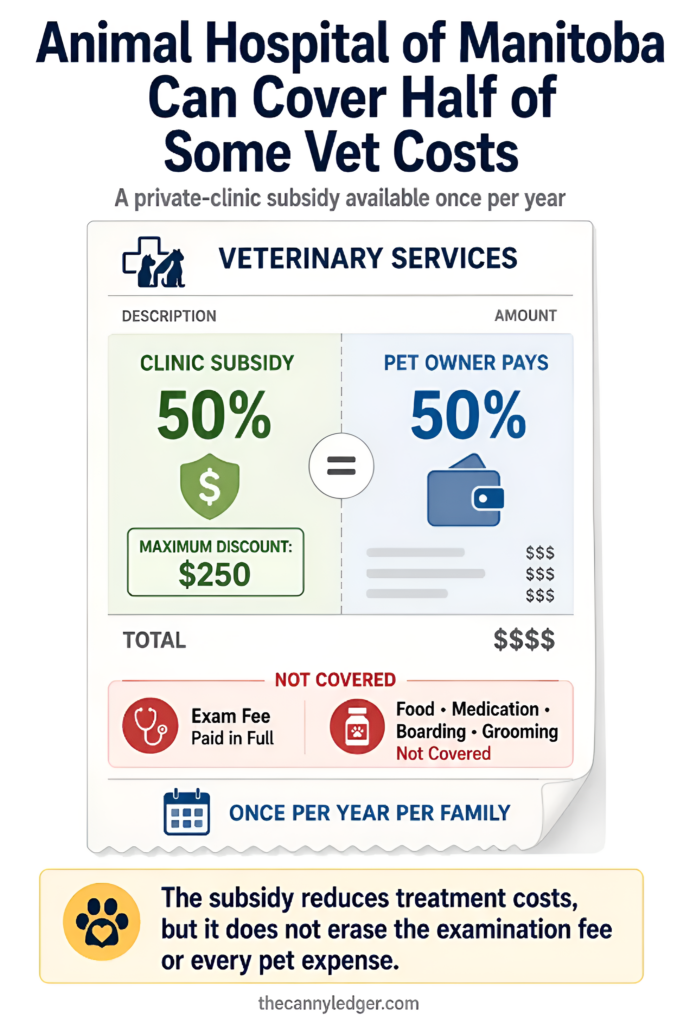
Beyond the Humane Society, at least one private Winnipeg veterinary practice runs its own dedicated affordability program. Animal Hospital of Manitoba’s Veterinary Service Subsidy Program, created by Dr. Zheng, covers 50 percent of the cost of veterinary services a pet requires, up to a maximum discount of $250, with the pet owner responsible for the full examination fee and the remaining half of whatever additional services are needed. The program can be used once per year per family, and it applies specifically to veterinary services, not food, medications, boarding, or grooming, so it’s built for treatment costs rather than the ongoing costs of pet ownership generally.
What makes this program worth knowing about specifically is that it’s not tied to a broader nonprofit’s fundraising capacity the way WHS’s donor-funded Urgent Care program is. It’s a standing policy at a specific private clinic, which means it’s worth calling Animal Hospital of Manitoba directly to ask about it rather than assuming a private, for-profit clinic wouldn’t have anything like this to offer.
Community Veterinary Outreach’s Free Pop-Up Clinics
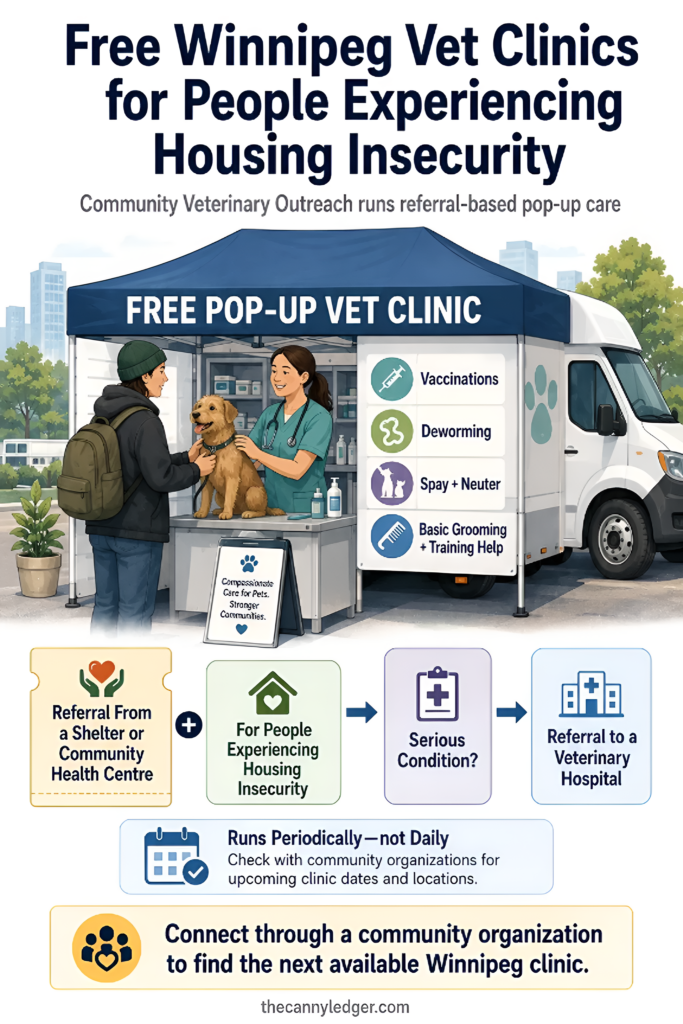
For Winnipeggers experiencing housing insecurity specifically, Community Veterinary Outreach runs periodic free pop-up clinics in the city offering vaccinations, deworming, and spaying and neutering at no cost, alongside grooming and basic training help. These clinics have drawn as many as 70 people in a single day when held in Winnipeg, run through referrals from community organizations like shelters and health centres, and typically prioritize people who haven’t had a veterinary relationship with any clinic in the past year, though the program makes exceptions for genuine emergencies and for spay and neuter requests specifically. If animals show up with conditions too serious to treat on the spot during a single-day pop-up, the clinic provides referrals to full veterinary hospitals for proper follow-up rather than turning owners away with nothing.
This isn’t a standing, walk-in-anytime resource the way WHS’s clinic is, since it depends on Community Veterinary Outreach’s pop-up schedule in the city, but connecting with a shelter or community health centre that has a relationship with the organization is the practical way to find out when the next Winnipeg clinic is happening.
MB Animal Alliance’s One Health Program for Remote and Underserved Areas
For pet owners outside Winnipeg’s core, or in communities with genuinely limited access to any veterinary care at all, MB Animal Alliance runs a One Health Program delivering low-cost veterinary clinics directly to underserved communities across Manitoba, with a particular focus on remote and Indigenous communities. The Winnipeg Humane Society has partnered on this work directly, recently securing $250,000 in provincial funding specifically for mobile veterinary clinics offering spaying, neutering, and wellness exams in northern communities at low or no cost, an amount WHS is matching itself. Since 2024, the humane society reports running 22 remote clinics across 17 underserved communities through this partnership, a scale that reflects a genuinely sustained program rather than a one-off initiative.

Payment Plan Financing Through Scratchpay
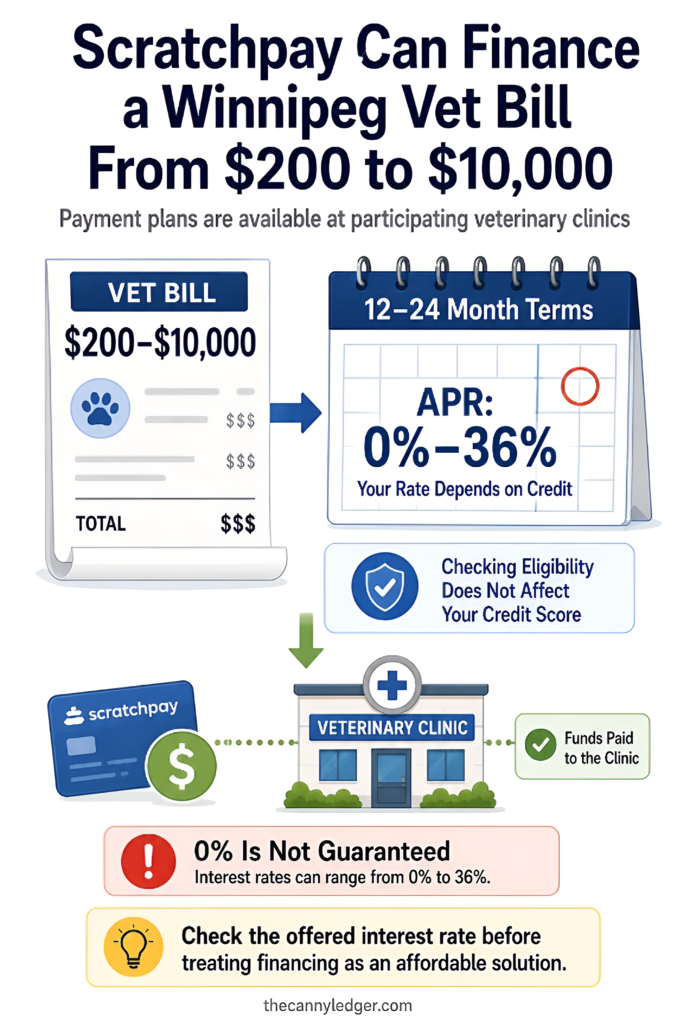
For costs that don’t fit any subsidized program’s eligibility criteria, whether that’s income level, location, or the specific type of care needed, Scratchpay offers a financing option accepted at several private Winnipeg veterinary clinics, including Arrowwood Animal Hospital, Silver Heights Vet Hospital, Seasons Veterinary Clinic, St. James Veterinary Hospital, and Sage Creek Animal Hospital. Plans run from $200 to $10,000 over 12 to 24 month terms, with APRs ranging from 0 percent for borrowers with strong credit up to 36 percent for those with weaker credit profiles, and checking your eligibility doesn’t affect your credit score the way a full loan application typically would. Funds go directly to the veterinary clinic rather than to you, so there’s no risk of the money being used for something other than the actual vet bill it was approved for.
The zero-percent option specifically is worth asking about directly at whichever participating clinic you’re using, since it’s not automatically the rate you’ll be offered, it depends on your individual credit profile, but for someone who qualifies, spreading a large emergency bill over 12 or 18 months at no interest is a meaningfully different financial situation than either paying it all at once or putting it on a high-interest credit card out of necessity.
Building Your Own Pet Emergency Fund Instead
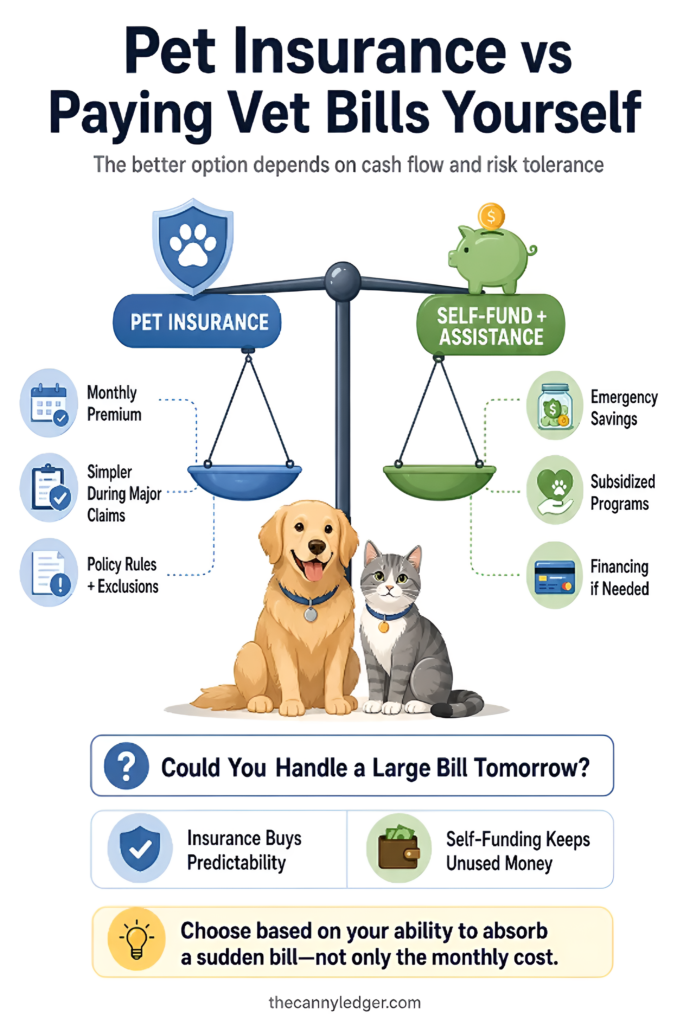
Every option covered above solves a problem after it’s already arrived. The other approach worth genuinely considering is setting aside a modest, consistent amount specifically earmarked for pet care each month, treating it the same way a household treats a car repair fund. Even $30 to $50 a month, roughly comparable to a mid-range insurance premium, builds toward several thousand dollars over a few years if nothing major happens, and unlike a monthly insurance premium, that money stays entirely yours if your pet turns out to be one of the lucky ones who never needs an expensive procedure. The obvious risk is timing. If something serious happens in year one before the fund has grown, you’re back to relying on the subsidized options and financing covered above rather than having a cushion already built, which is exactly why these two strategies work best paired together rather than treated as an either-or choice.

Comparing This to Just Buying Pet Insurance
Every subsidized program and financing option in this article assumes you’re going without insurance, whether by choice or because a specific provider or plan didn’t work out for your budget. It’s worth being honest that this path involves more legwork than paying a monthly premium and letting a claims process handle things when something goes wrong. Our comparison of the best pet insurance in Winnipeg covers what Trupanion, Petsecure, and Fetch actually cost and cover if you decide the monthly premium is worth trading for less legwork during an actual emergency, since the right answer here genuinely depends on your own risk tolerance and cash flow rather than one approach being universally better than the other.
Common Questions
Do any of these subsidized programs require my pet to already be spayed or neutered? No, several of these programs, including SNAP specifically, exist to help pay for that exact procedure, so it isn’t a prerequisite for accessing subsidized care.
Is there a limit to how many times I can use WHS’s Urgent Care program? The program doesn’t publish a fixed annual limit the way Animal Hospital of Manitoba’s once-per-year subsidy does, but since it runs entirely on donor funding, availability depends on what resources are on hand each time you apply rather than a guaranteed benefit.
Will using Scratchpay financing affect my ability to get pet insurance later? No, financing an existing vet bill and buying an insurance policy going forward are unrelated. Just remember that any condition already treated and financed before a new policy starts would likely be treated as pre-existing and excluded from that new coverage.
Start With a Phone Call Before an Emergency, Not During One
The single most useful thing to do with everything covered here is make a couple of calls now, to the WHS Clinic and to a Scratchpay-participating clinic near you, rather than waiting until you’re already standing in an exam room with a bill you weren’t expecting. Knowing which subsidized program you’d realistically qualify for and which local clinic already accepts flexible financing means an actual emergency becomes a matter of picking up the phone rather than researching your options for the first time while genuinely panicked. If ongoing pet food costs are also stretching your budget alongside vet bills, our guide to the animal food bank in Winnipeg covers a related resource worth knowing about too.