
The first-time buyer test that determines whether you can open an FHSA and the one that determines whether your eventual withdrawal actually qualifies aren’t the same test, and they treat your spouse’s home ownership completely differently. When you open the account, your spouse or common-law partner’s existing home ownership counts against you if you live with them. When you actually withdraw the money years later, it doesn’t. Missing that distinction is exactly how someone assumes they’re ineligible to open an FHSA when they genuinely aren’t, or the reverse.
- What Actually Counts As A Housing Unit
- Co-op Shares Qualify, But Only The Right Kind
- Condo Ownership Has A Specific Start Date
- Owning A Rental Property Doesn’t Disqualify You
- Land Alone Doesn’t Qualify Without A Building Agreement
- Making Sure Your Own Purchase Actually Qualifies
- What People Get Wrong About Qualifying Homes Most Often
Beyond that opening-versus-withdrawal distinction, the actual definition of what counts as a qualifying home carries its own specific rules worth understanding before you’re relying on them to make a tax-free withdrawal.
What Actually Counts As A Housing Unit
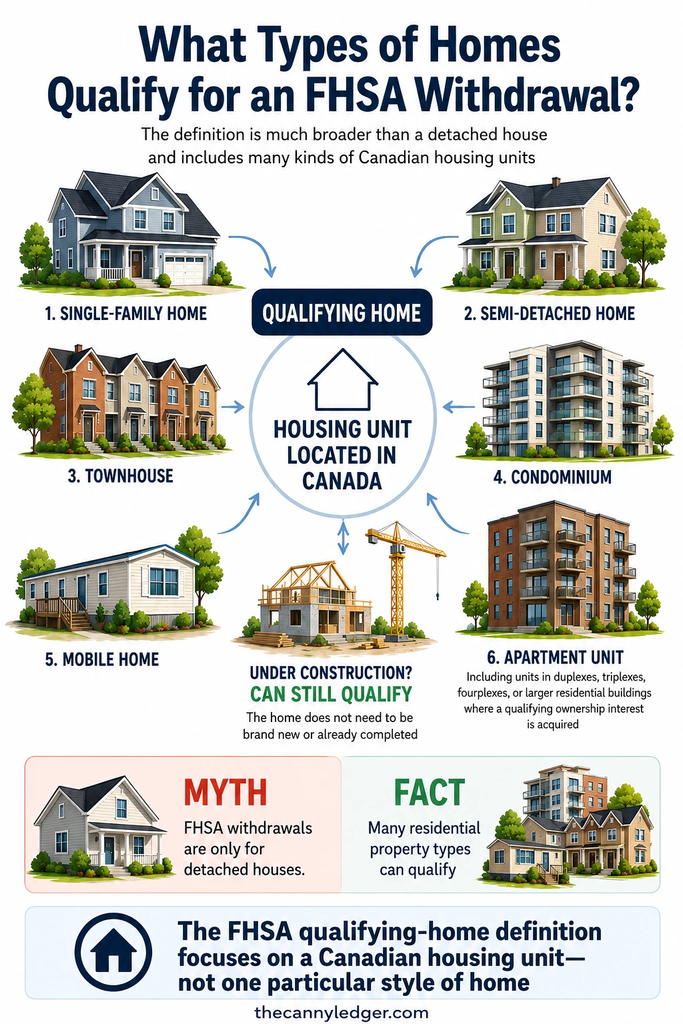
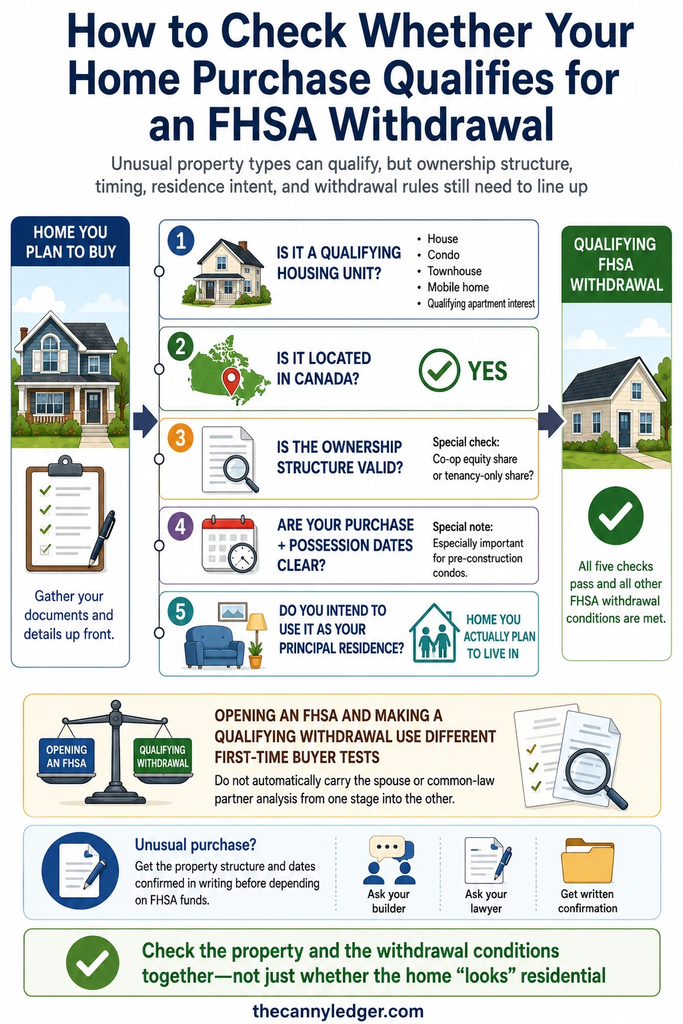
A qualifying home is defined as a housing unit located in Canada, and that definition covers meaningfully more property types than people typically assume. Single-family and semi-detached homes, townhouses, mobile homes, condominium units, and apartments in duplexes, triplexes, fourplexes, or larger apartment buildings all qualify, whether the property already exists or is still under construction at the time you’re buying it. This is a genuinely broad definition, one financial advisor described the criteria as covering essentially any actual equity ownership interest in what could reasonably be considered a personal residence.
That breadth matters for anyone assuming only a detached house counts, since a condo unit, a mobile home, or even an apartment in a fourplex all satisfy the same qualifying home definition a single-family house does. The property being under construction rather than already built doesn’t disqualify it either, provided the other conditions around your written purchase agreement and occupancy timeline are met.
Co-op Shares Qualify, But Only The Right Kind
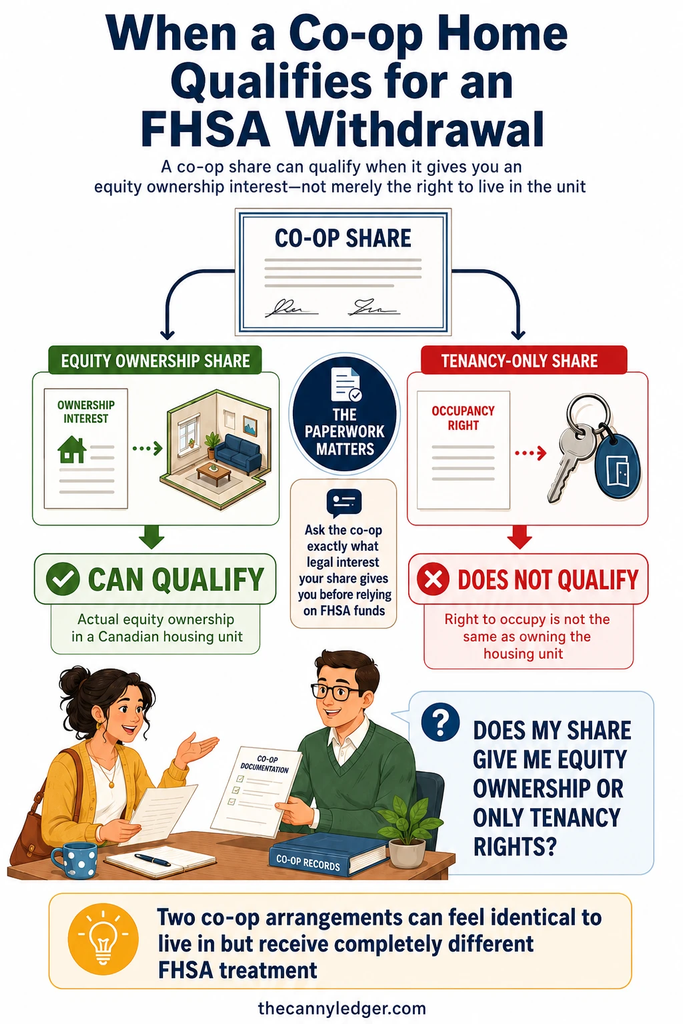
A share in a co-operative housing corporation genuinely can count as a qualifying home, but the specific type of share matters enormously here. A share that entitles you to actual equity ownership in a housing unit located in Canada qualifies just like any other property type, while a share that only grants you a right to tenancy in that unit doesn’t qualify at all, even though both arrangements might feel similar from the perspective of someone living there.
This distinction is worth confirming directly with the co-op itself before assuming your specific share arrangement qualifies, since the practical experience of living in a co-op unit can look identical regardless of which type of share you actually hold, while the tax treatment of a withdrawal funding that purchase differs completely depending on which one it is.
Condo Ownership Has A Specific Start Date
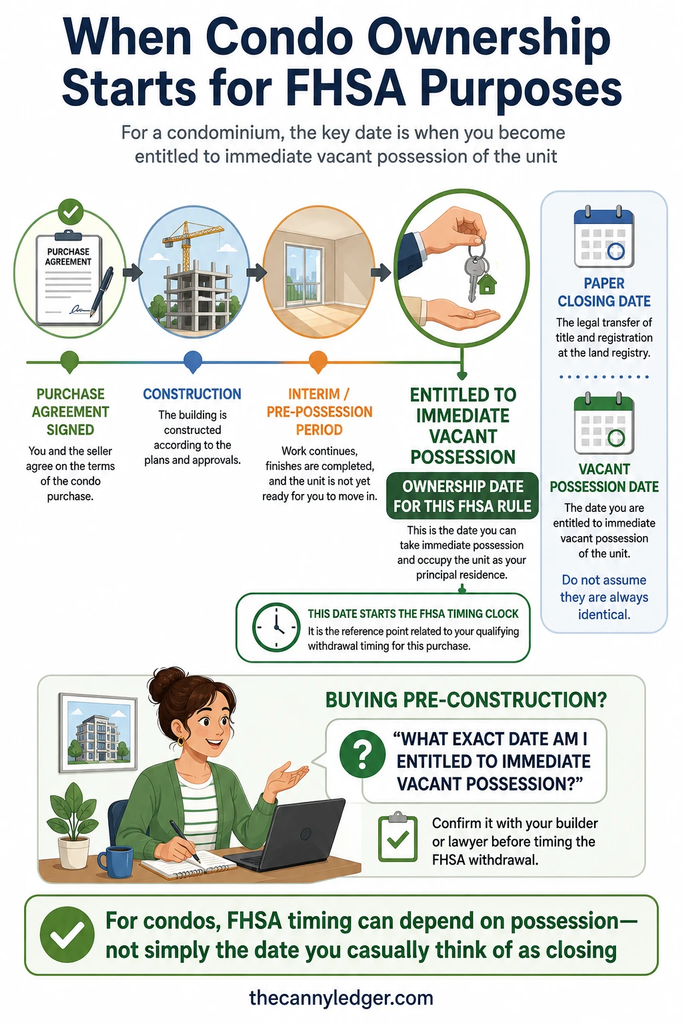
For condominium units specifically, you’re considered to own the unit starting the day you become entitled to immediate vacant possession of it, a more precise trigger than simply closing on the purchase in a general sense. This timing detail connects directly to the 30 day withdrawal window covered elsewhere in the FHSA rules, since knowing the exact date your ownership technically begins is what determines when that clock actually starts running.
Anyone closing on a pre-construction condo specifically should confirm this vacant possession date directly with their builder or lawyer rather than assuming it lines up neatly with the closing date on paper, since construction delays and interim occupancy periods can genuinely separate the two in ways that affect exactly when your qualifying home purchase is considered complete.
Owning A Rental Property Doesn’t Disqualify You
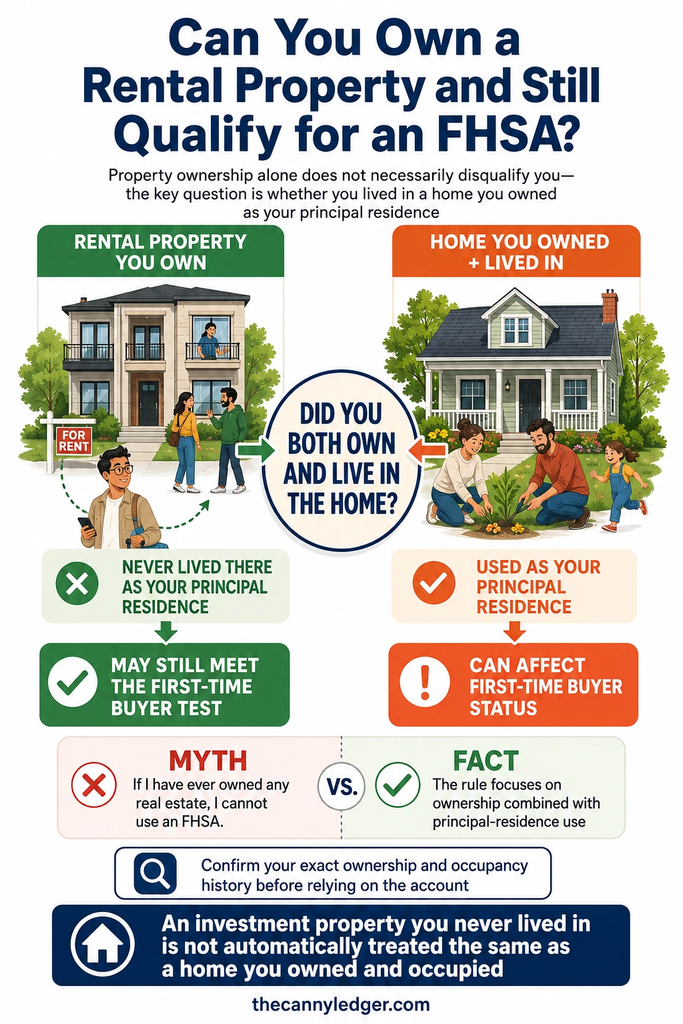
This surprises people who assume any prior property ownership rules them out entirely, someone who owns or has owned a rental property, but never lived in it as their own principal residence, can still be considered a first-time home buyer for FHSA purposes. The disqualifying factor is specifically having lived in a qualifying home you owned as your principal residence, not property ownership in general.
This matters directly for anyone who’s built up a rental property or two without ever having lived in either one personally, since the common assumption that any property ownership at all disqualifies you from the FHSA is broader than what the actual rule requires. Confirming your specific situation against this narrower definition, rather than assuming general property ownership rules you out, is worth doing before deciding an FHSA isn’t available to you.
Land Alone Doesn’t Qualify Without A Building Agreement
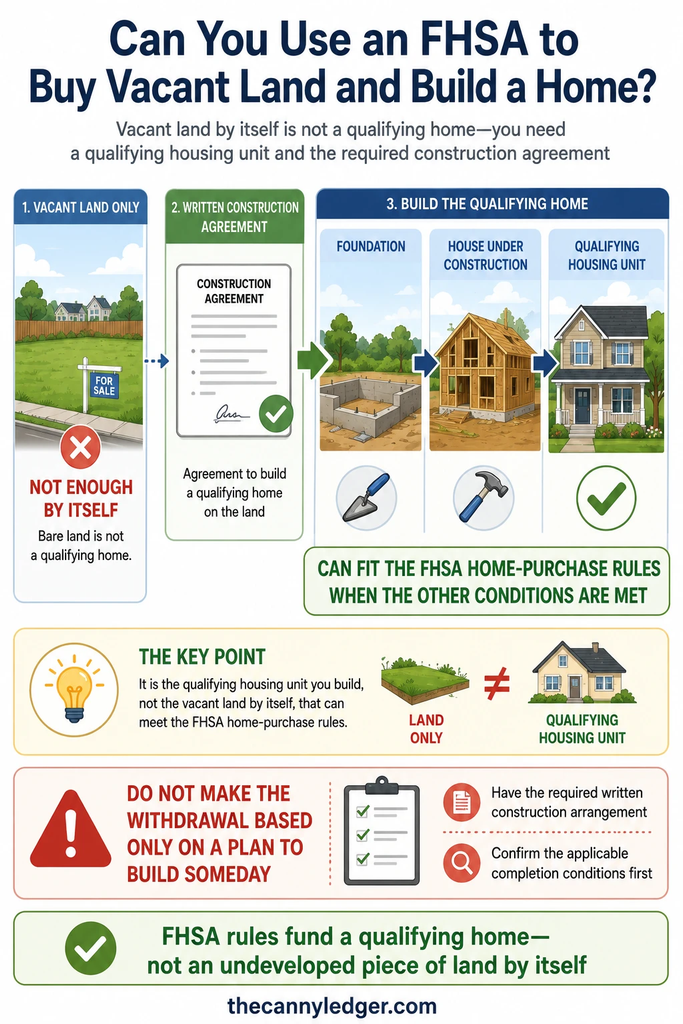
Simply purchasing a vacant piece of land doesn’t satisfy the qualifying home definition on its own, since the definition centers on a housing unit rather than the underlying property itself. A buyer intending to build a home eventually needs a written agreement specifically covering the construction of a qualifying home on that land, with the same completion deadline requirements that apply to any other qualifying purchase, rather than treating the land purchase itself as sufficient.
This is worth knowing directly for anyone planning to buy land now with the intention of building later, since a withdrawal made purely against the land purchase, without that construction agreement already in place, risks falling outside the qualifying definition entirely.
Making Sure Your Own Purchase Actually Qualifies
Confirm your specific property type against the full list covered here before assuming a less conventional purchase, a mobile home, a co-op share, or a pre-construction unit, doesn’t fit the definition, since the actual scope is genuinely broader than most people expect. If you’re purchasing a co-op unit specifically, get written confirmation of exactly what type of share you’re acquiring before relying on an FHSA withdrawal to fund it.
And since the spousal test differs so significantly between opening your account and actually withdrawing from it, our broader look at FHSA withdrawal rules covers the full withdrawal-specific conditions in depth, worth reviewing alongside our FHSA eligibility breakdown rather than assuming the same spousal rule applies at both stages.
What People Get Wrong About Qualifying Homes Most Often
Does a property have to be brand new to qualify as a qualifying home? No, both existing homes and homes still under construction satisfy the qualifying home definition, provided the other purchase and occupancy conditions are met alongside it.
If I owned a home outside Canada, does that count against my first-time buyer status? Generally only if it would have qualified as a qualifying home had it been located in Canada, since the definition specifically extends the same property-type test to foreign properties when assessing your prior ownership history.
Can I use my FHSA toward a second property I don’t intend to live in full time? No, the qualifying home has to be intended as your principal residence, which rules out a purchase meant primarily as a rental, vacation property, or investment rather than the home you’re actually planning to live in.