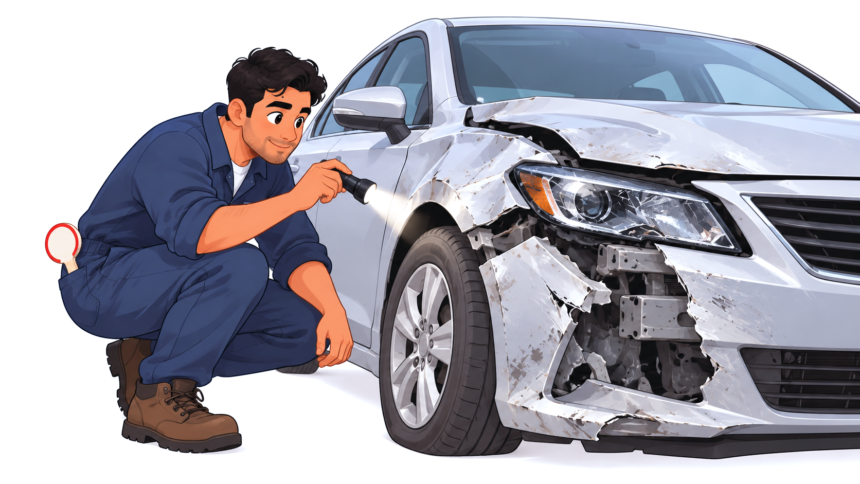
Every vehicle MPI declares a total loss doesn’t just disappear into a scrapyard. It gets sold, publicly, through a weekly online auction anyone can register to bid on, and the corporation is explicit about why: an efficient, cost-effective salvage sales process contributes directly to keeping insurance rates lower for every Manitoban, not just the people bidding on wrecked cars. What used to be an in-person auction event ended years ago, replaced entirely by an online system most Winnipeggers have never actually looked into, even though it’s open to the general public, not just licensed dealers or parts recyclers.
- What “Salvage” Actually Means at MPI
- Salvageable vs Non-Repairable Vehicles
- How the Online Auction Actually Works
- Where You Can Actually View a Vehicle Before Bidding
- How Payment and Pickup Actually Work
- The Inspections You Can’t Skip Before Driving a Rebuilt Salvage Vehicle
- Why MPI Sells Its Own Write-Offs This Way
- Common Questions About MPI Salvage Auctions
MPI sells its salvage vehicles exclusively through online auctions run in partnership with Impact Auto Auctions (IAA), open to anyone who registers a free buyer account. Vehicles are assigned a salvage status based on their damage, salvageable vehicles can eventually be repaired and legally registered again after passing mandatory inspections, while more severely damaged vehicles can never be put back on the road regardless of repair work done.
What “Salvage” Actually Means at MPI
A vehicle becomes salvage when MPI determines it’s a total loss, either because repair costs exceed what the vehicle is worth, or because the damage itself is severe enough that repair isn’t a reasonable option. Once that determination happens, MPI assigns the vehicle a specific salvage status based on its damage and history, which then governs everything about what can legally happen to that vehicle afterward, whether it can eventually return to the road or whether it’s permanently restricted from ever being driven again.
Salvageable vs Non-Repairable Vehicles
This distinction matters enormously to anyone considering a salvage purchase, since it determines whether a vehicle has any legitimate future as a working car at all. A vehicle with a salvageable status has collision damage, structural damage, or both, but MPI’s own guidance is clear that these vehicles can be repaired and legally returned to Manitoba roads once they pass the required inspections. Not every salvage vehicle carries this status, though, some are damaged severely enough that no amount of repair work will ever make them legally registrable again, regardless of how much money a buyer puts into fixing them up. Before bidding on anything, confirming exactly which status a specific vehicle carries is the single most important piece of due diligence a buyer can do, since a beautifully low winning bid on a vehicle that can never be titled again isn’t a bargain, it’s a total loss of a different kind.
How the Online Auction Actually Works
MPI moved entirely away from in-person salvage auctions back in September 2020, shifting to a fully online model through its partnership with Impact Auto Auctions. Getting started takes two steps: creating a free account directly with IAA, then completing buyer registration specifically to bid on MPI salvage listings. Once registered, auctions run on a weekly live online format, with each listing typically moving through the bidding process in about a minute, and the corporation’s own materials frame this shift plainly, an online-only process is more cost-effective to run than the old in-person model, and those savings feed back into lower overall insurance costs for Manitoba drivers generally. Each listing includes a genuinely useful package of information before you ever place a bid, multiple photos including a 360-degree view of both the exterior and interior, current odometer readings, and enough detail to make an informed decision without physically inspecting the vehicle first for most listings.
Where You Can Actually View a Vehicle Before Bidding
This is a detail worth knowing before assuming you can walk up and inspect anything in person. Salvage items located at MPI’s own yards, 1981 Plessis Road or 400 Gunn Road in Winnipeg, can only be viewed online, no in-person inspection option exists for vehicles stored at these two locations regardless of how seriously you’re considering a bid. Salvage items stored outside Winnipeg work differently, some of those storage facilities do allow in-person viewing, but only by contacting that specific facility directly to arrange it, it isn’t a standing open-viewing policy. For anyone used to walking a lot before bidding at a traditional auto auction, this online-only viewing restriction for Winnipeg-stored vehicles is a real adjustment, and it makes the photo package and listed condition details considerably more important to review carefully than they might be elsewhere.
How Payment and Pickup Actually Work
Winning a bid isn’t the end of the process, and both payment and removal carry their own specific rules. Online credit card payment is available for registered Canadian buyers with at least six months of purchase history in good standing, capped at $25,000 per transaction, with a 2.4 percent surcharge added to any credit card payment, and partial payments aren’t accepted through this method. Notably, in-person credit card payments aren’t accepted at all, so anyone planning to pay that way needs to do it online regardless of proximity to the salvage yard. Once payment clears, removal is entirely the buyer’s responsibility: vehicles have to be towed away following the requirements of Manitoba’s Highway Traffic Act and Drivers and Vehicles Act, and a vehicle purchased at the Winnipeg yard stays in MPI’s salvage yard until the buyer or their arranged towing company actually removes it, it doesn’t get delivered.
The Inspections You Can’t Skip Before Driving a Rebuilt Salvage Vehicle
For anyone planning to actually repair and drive a salvageable purchase rather than part it out, this step is completely non-negotiable. MPI’s own guidance states plainly: no salvage purchase can be registered or driven without both a Body Integrity Inspection Certificate (BIIC) and a Certificate of Inspection (COI), no exceptions. The BIIC confirms structural integrity has been properly restored, while the COI covers general safety, and a salvageable vehicle has to be towed to and from these inspections rather than driven, since it isn’t legally permitted on the road until both certifications are complete. Only once a vehicle passes both inspections does its status officially change to “rebuilt,” the point at which it can finally be registered and legally driven again. Questions about this specific process can be directed to MPI’s Vehicle Standards & Inspections department at 204-985-0920, or toll-free at 1-866-323-0542.
Why MPI Sells Its Own Write-Offs This Way
It’s worth understanding the logic behind this whole system, since it connects directly to how Autopac premiums get set for every Manitoba driver. When MPI declares a vehicle a total loss, that vehicle still has real recoverable value, whether as a repairable project, a parts source, or scrap material, and selling it through a competitive auction rather than disposing of it directly recovers more of that value on MPI’s behalf. Since MPI is a non-profit Crown corporation funding claims through the premiums Manitoba drivers pay, more salvage recovery revenue genuinely does translate into less pressure on future rate increases, the same regulatory process covered in how Autopac rates actually get set each year. This isn’t just marketing language around the program, it’s a direct, if modest, piece of the same cost structure that determines what every Manitoba driver pays for basic coverage.
Common Questions About MPI Salvage Auctions
Can anyone bid on MPI salvage vehicles, or do I need a dealer licence? No dealer licence is required, registration with IAA is open to the general public, though the six-month purchase history requirement for online credit card payments specifically applies to that one payment method, not to bidding or buying overall.
Is it cheaper to buy a salvageable vehicle and repair it myself than buying a used vehicle outright? It depends entirely on the specific vehicle, the extent of the damage, and current repair costs, there’s no universal answer, and the inspection requirements before a rebuilt vehicle can be registered add real time and cost on top of the repair work itself that’s worth factoring into any comparison.
What happens if I buy a vehicle and later discover it’s actually non-repairable rather than salvageable? This is exactly why confirming the specific salvage status before bidding matters so much, a non-repairable vehicle can never be registered for road use regardless of repair quality, so verifying status directly through the listing details before placing any bid is the only way to avoid this outcome entirely.
Register with IAA before assuming you can simply show up and bid, confirm a specific vehicle’s salvage status carefully before placing any offer, and budget for both the mandatory inspections and your own towing arrangements as real costs on top of the winning bid itself. For what happens on the other end of MPI’s system, when a vehicle gets damaged but isn’t written off, how to file a claim and where to actually get it repaired are both covered in their own dedicated guides.