
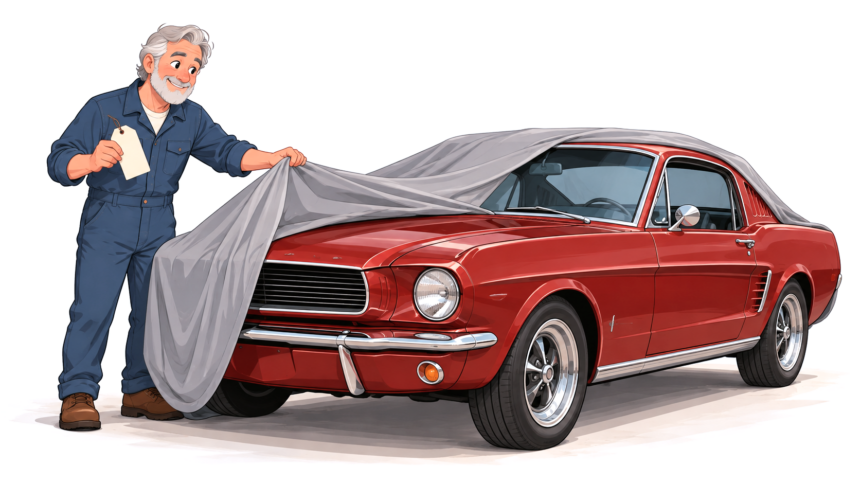
A standard auto insurance policy pays a total loss claim based on the vehicle’s depreciated value, or the cost to replace it, whichever the insurer decides is lower. For a daily driver losing value every year, that’s a reasonable way to settle a claim. For a 1967 Camaro appreciating in value the longer it’s owned, that same settlement method can leave an owner badly shortchanged after years of restoration work and rising market value. This is the specific problem classic car insurance exists to solve, and it solves it through a completely different payout structure rather than just a cheaper premium.
- The Payout Structure Is the Real Difference
- Why the Premium Is Often Lower Despite a Higher Insured Value
- The Age and Value Thresholds That Actually Apply
- What Actually Counts as Acceptable Storage
- New Purchase Coverage Windows Differ by Province
- Coverage Works Differently in the Public Insurer Provinces
- What to Actually Check Before Buying a Policy
- Frequently Asked Questions
Classic car insurance in Canada covers vehicles that meet an insurer’s age, value, and usage requirements under an agreed value policy, which pays the full insured amount with no depreciation on a covered total loss, rather than the depreciated actual cash value a standard auto policy would pay. This coverage typically costs less than standard insurance for the same vehicle specifically because it comes with real restrictions on how the car can be used, not driven daily and generally stored securely, that lower the insurer’s actual risk.
The Payout Structure Is the Real Difference
This is worth understanding in detail since it’s the entire reason this category of insurance exists. Hagerty Canada’s own explanation of agreed value coverage confirms it guarantees payment of the full insured amount, with no depreciation and including applicable taxes, if a covered total loss occurs. A standard policy instead pays either the vehicle’s depreciated cash value or the cost to replace it, whichever is lower, a structure built for vehicles that lose value over time rather than gain it. For a collector car that’s appreciated significantly since purchase or restoration, the difference between these two payout methods can be substantial, which is exactly why agreed value coverage is worth seeking out specifically rather than assuming a standard policy provides equivalent protection at a lower price.
Why the Premium Is Often Lower Despite a Higher Insured Value
This seems counterintuitive at first, insuring a vehicle for its full agreed value while paying less than a standard policy on a cheaper daily driver, but the mechanics make sense once the usage restrictions are accounted for. A classic car policy generally requires the vehicle not be used as a daily driver, limiting it to pleasure driving, car shows, club events, and similar occasional use rather than a daily commute. Less time on the road, particularly during rush hour commuting when most collisions actually happen, translates into meaningfully lower risk for the insurer, which is reflected directly in the premium regardless of how the vehicle’s own value compares to a typical daily driver’s.
The Age and Value Thresholds That Actually Apply
Eligibility isn’t just about a vehicle being old. Hagerty’s own Canadian program defines antique and classic cars as model year 1989 or older, with a $3,500 minimum insured value, a specific pair of thresholds that separates true classic and antique coverage from a broader “collector vehicle” category that can include newer specialty and modified vehicles under different program terms. A vehicle that technically qualifies by age but has a low market value may not clear the minimum threshold, which is worth checking directly before assuming any older car automatically qualifies for this specific type of policy.
What Actually Counts as Acceptable Storage
Secure storage is generally preferred across classic car insurance programs, though the specifics vary. An enclosed garage is the standard expectation, and some provinces also accept a carport or driveway as adequate storage rather than requiring a fully enclosed structure. This is worth confirming directly for a specific vehicle and location rather than assuming a driveway automatically satisfies every insurer’s requirement, since a policy issued on the assumption of garage storage that later turns out not to be met can complicate a claim.
New Purchase Coverage Windows Differ by Province
This is a real, useful provincial difference worth knowing if a new collector vehicle purchase is on the horizon. Hagerty’s Canadian program automatically extends coverage to a newly purchased collector vehicle for up to $50,000 of its value, but the length of that automatic window isn’t the same everywhere. Alberta, British Columbia, New Brunswick, Nova Scotia, Ontario, and Quebec get 30 days of this automatic coverage, while Manitoba, Newfoundland and Labrador, Prince Edward Island, and Saskatchewan get 14 days. Anyone in the second group planning a new purchase has meaningfully less time to formally add the vehicle to their policy before that automatic protection lapses, which is worth planning around rather than discovering after the fact.
Coverage Works Differently in the Public Insurer Provinces
In British Columbia, Manitoba, and Saskatchewan, where a public insurer holds the exclusive right to sell mandatory basic coverage, a classic car policy from a specialist insurer typically layers on top of that mandatory government coverage rather than replacing it entirely. A payout in these provinces generally happens after settlement with the applicable government policy first, which is a structural detail worth understanding upfront rather than assuming a specialist collector policy operates as complete standalone coverage the way it would in a private-market province.
What to Actually Check Before Buying a Policy
Confirm the specific vehicle actually meets both the age and minimum value thresholds for the collector or classic category being applied for, rather than assuming age alone is sufficient. Confirm what qualifies as acceptable storage in your specific province, and don’t assume a driveway or carport is automatically fine everywhere. If comparing this against ordinary quote-shopping strategies, remember a specialist collector insurer typically isn’t part of a standard multi-quote comparison the way a regular auto policy would be. And if a new collector vehicle purchase is planned, know the specific automatic coverage window that applies in your province before assuming a full month exists to formalize the paperwork.
Frequently Asked Questions
Can a classic car insured under an agreed value policy still be driven regularly? Generally no in the strict sense of a daily commuter vehicle, since these policies are built around pleasure use, club events, and occasional driving, though the specific mileage and usage rules that apply depend on the individual insurer and vehicle category.
Does a classic car policy require an appraisal to set the agreed value? Not always, since some insurers don’t require a formal appraisal on most vehicles and will simply confirm the owner’s stated value is reasonable, though additional documentation may be requested for higher-value or unusual vehicles during underwriting.
Are modified or newer “future classic” vehicles eligible for this kind of coverage? Yes, many specialist insurers extend collector vehicle programs to modified vehicles and newer cars considered future classics, though the specific mileage, usage, and eligibility rules for that category typically differ from the rules applied to a pre-1990 antique or classic vehicle.
Does switching a vehicle from a standard policy to a classic car policy affect coverage for other vehicles in the household? No, a classic car policy applies specifically to the insured collector vehicle and doesn’t change how any other vehicle on a separate standard policy is covered, which means a household can hold both types of coverage simultaneously without conflict.