

- Eligibility Depends on the Functional Criteria
- What the Credit Is Actually Worth in Manitoba
- Applying: The T2201 Form and What Happens After
- Check Consultant Fees Before Signing
- What DTC Approval Unlocks Beyond the Tax Credit Itself
- If the Credit Goes Unused: Transferring to a Supporting Family Member
- Manitoba-Specific Filing Mechanics
- Common Questions About the Disability Tax Credit in Winnipeg
To qualify for and claim the Disability Tax Credit in Winnipeg, you need CRA approval based on a qualifying impairment or therapy, certified through Form T2201. The DTC is a non-refundable credit that reduces income tax otherwise payable. It is not a fixed annual cash benefit, and approval does not guarantee the same tax saving for every household.
Eligibility Depends on the Functional Criteria
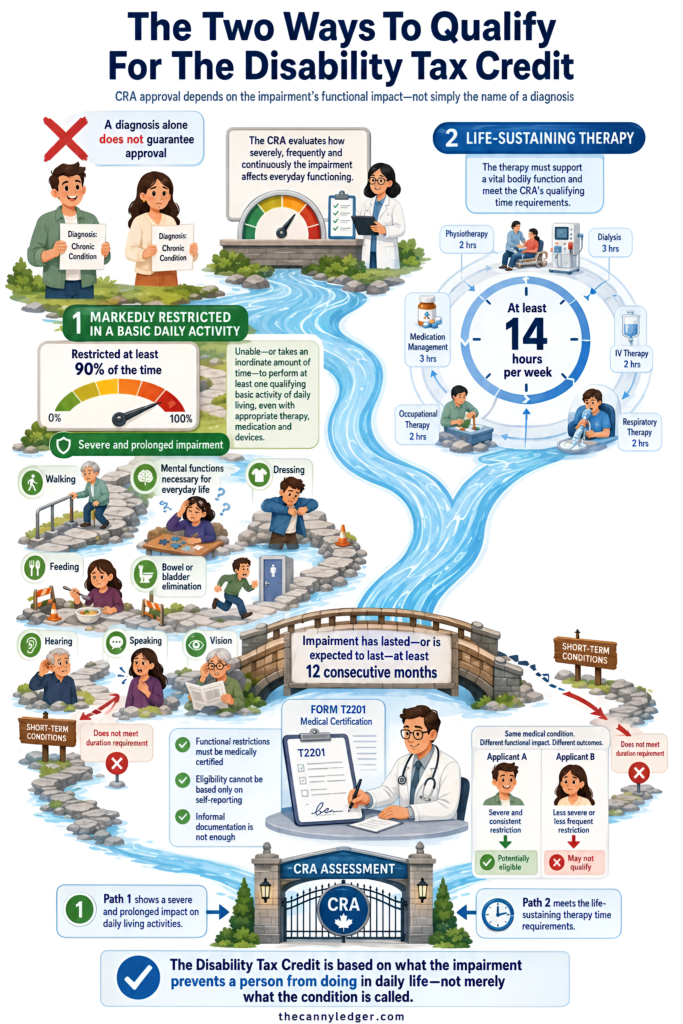
Eligibility can involve a marked restriction in one category, the cumulative effects of significant limitations in two or more categories, or qualifying life-sustaining therapy. A diagnosis alone does not establish eligibility. The medical practitioner must describe how the applicable criteria are met.
Use the detailed criteria for the relevant category rather than treating every impairment as the same test. Prolonged generally means lasting, or expected to last, at least 12 continuous months. A practitioner certifies the information; the CRA makes the eligibility decision.
What the Credit Is Actually Worth in Manitoba
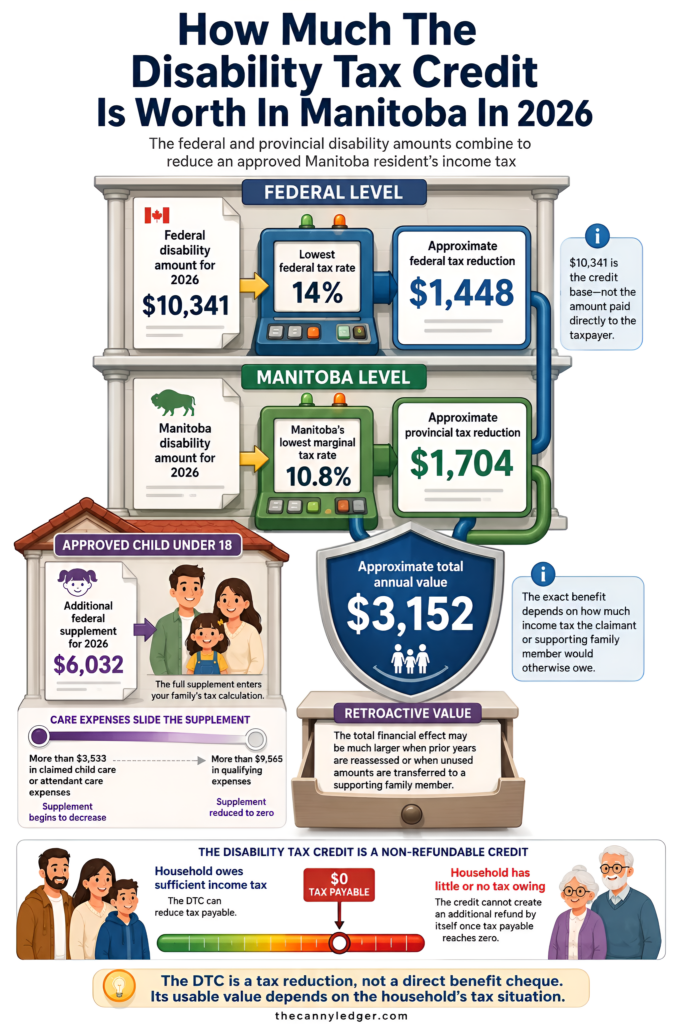
For 2026, the federal disability amount is $10,341. At 14%, it produces a maximum federal reduction of $1,447.74 before any applicable child supplement. Your usable credit depends on tax otherwise payable.
Manitoba has its own disability amount. It must not be confused with the $15,780 Basic Personal Amount. For example, the published 2025 Manitoba disability amount is $6,180, giving a maximum provincial reduction of $667.44 at 10.8%. That 2025 example is not a 2026 total. Use the provincial form for the year being claimed. All amounts are Canadian dollars.
A child supplement may also apply, subject to that year’s limits and reductions for certain care expenses. Calculate the federal and provincial claims separately rather than promising a flat combined payment.
Applying: The T2201 Form and What Happens After
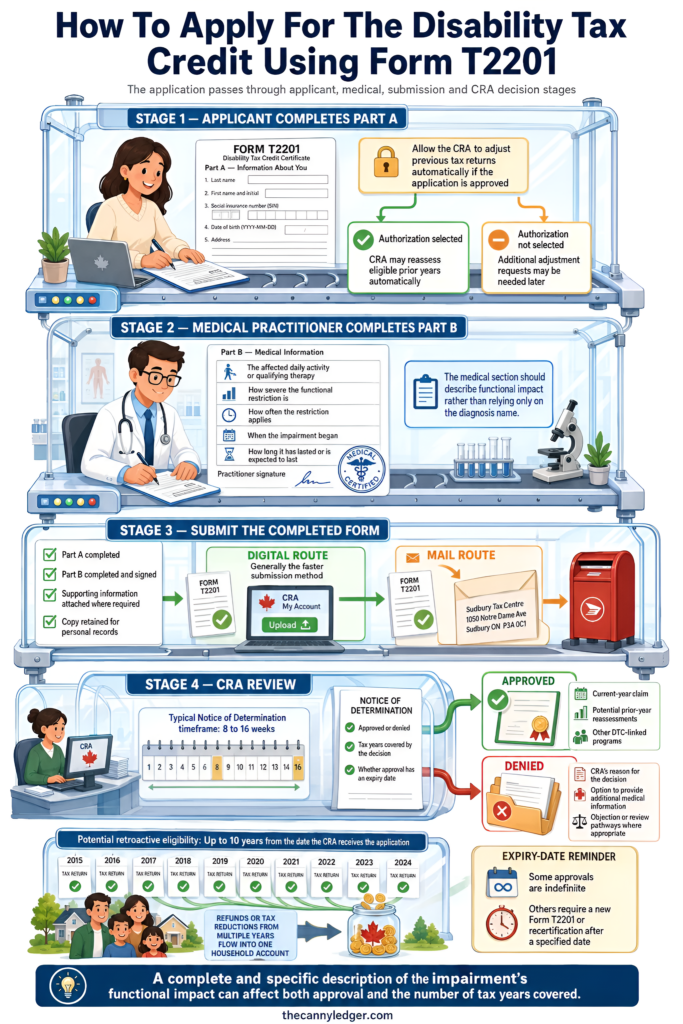
Apply using the current digital or paper T2201 process. The applicant or legal representative completes Part A and an authorized medical practitioner completes Part B. Both parts must use the same submission method.
For the digital route, begin through the DTC application in your CRA account and give the reference number to the practitioner. For paper, use the current form and its mailing instructions. Since July 14, 2026, ordinary Submit Documents uploads are no longer the application route unless the CRA requests information. Pre-2023 forms have not been accepted since September 8, 2026.
The notice of determination identifies the decision and approved years. Eligible unclaimed years may be adjusted going back up to ten years, subject to the applicable rules. Processing time and any refund depend on the application and tax records.
Check Consultant Fees Before Signing
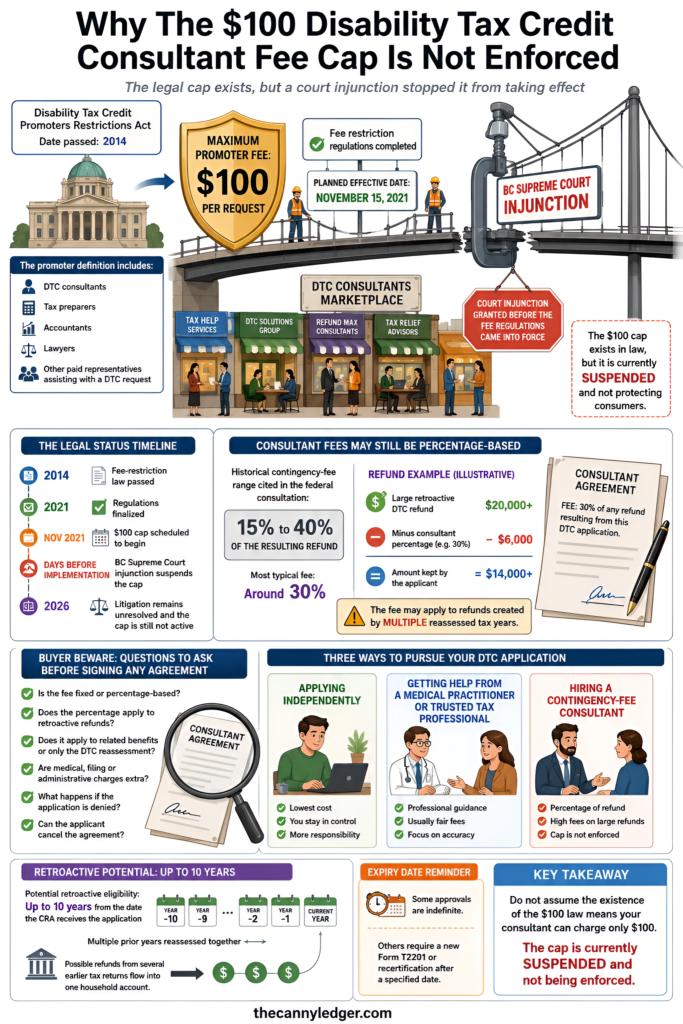
The CRA currently states that the promoter-fee regulations are suspended by court injunction. Do not assume the proposed $100-per-request protection limits a consultant’s bill.
Before hiring help, obtain a written explanation of the fee, applicable taxes, services, cancellation terms and how any percentage is calculated. A hypothetical 30% fee on a $5,000 adjustment is $1,500 before tax. That is an illustration, not a claim about a particular provider. Paying a promoter does not guarantee approval.
What DTC Approval Unlocks Beyond the Tax Credit Itself
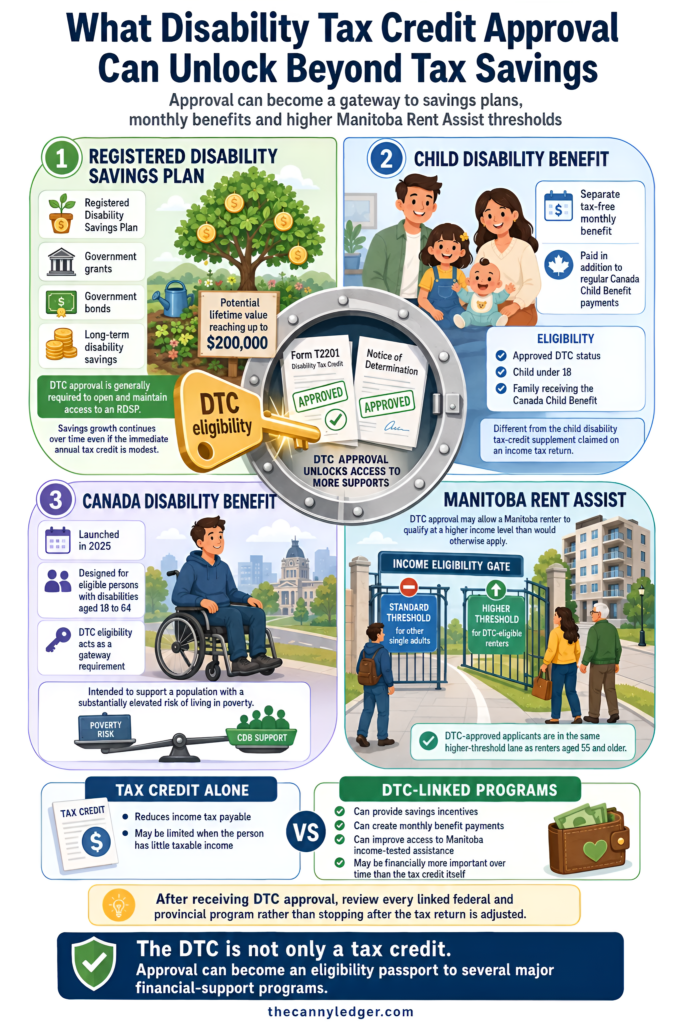
DTC eligibility can help you access a Registered Disability Savings Plan or Child Disability Benefit, but each program has additional rules.
The Canada Disability Benefit requires DTC approval along with age, residency, tax-filing and other conditions. It is a separate application and income-tested payment. In Manitoba, DTC eligibility can also affect the single-person income category for non-EIA Rent Assist. Check Rent Assist eligibility separately.
If the Credit Goes Unused: Transferring to a Supporting Family Member
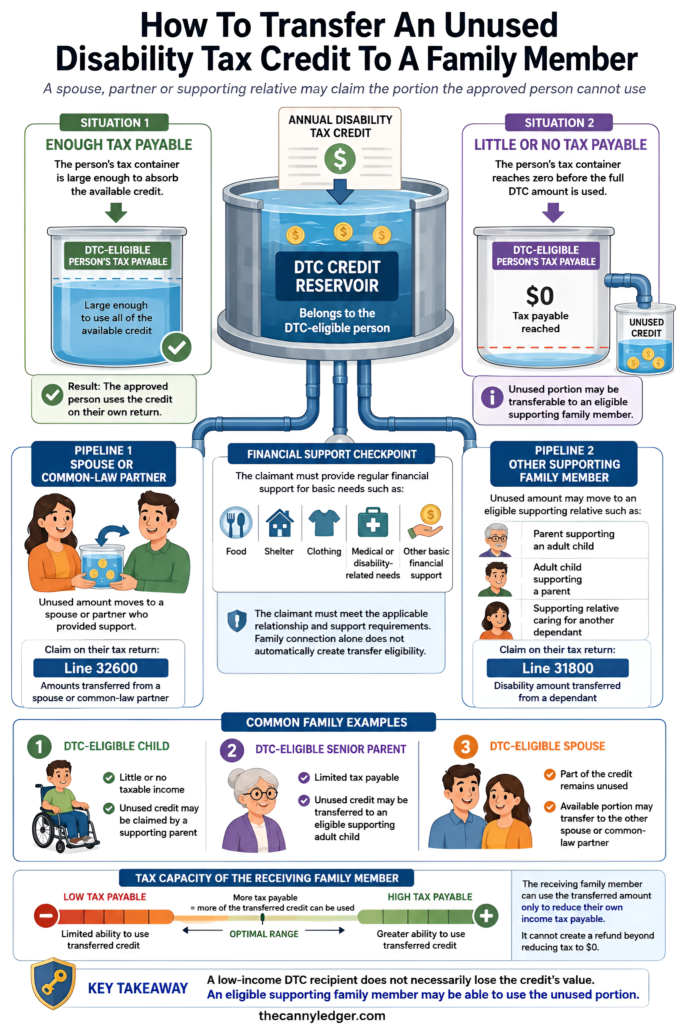
If the approved person cannot use the entire disability amount, an eligible supporting relative may be able to claim the unused portion. Transfers depend on support and relationship requirements. Identify the supporting person in Part A where applicable.
A family relationship alone is not sufficient. Calculate the amount needed on the approved person’s return before transferring the remainder. Spousal transfers and transfers from other dependants use different return lines.
Manitoba-Specific Filing Mechanics
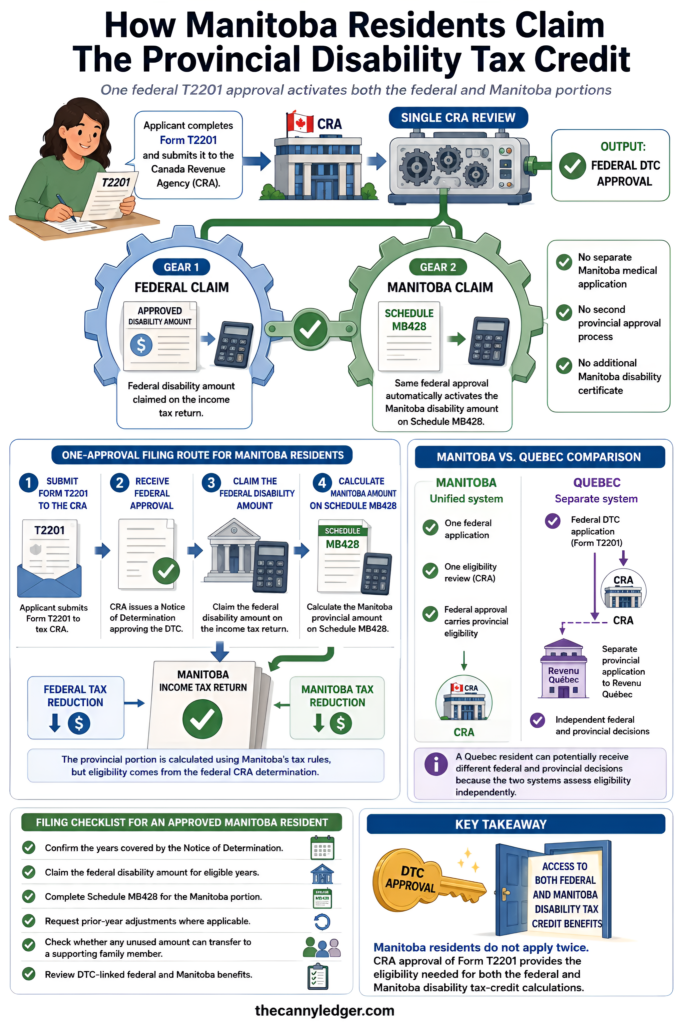
After approval, claim the federal amount and complete the relevant Manitoba tax calculation for each approved year. Approval does not mean every future return or family transfer is automatically completed.
Within the Manitoba income-tax return, distinguish the disability amount from other personal credits. Keep the determination and supporting records with your tax documents.
Common Questions About the Disability Tax Credit in Winnipeg
Must I pay a consultant?
No. The CRA application and instructions are available without a promoter. Ask your medical practitioner about any charge for completing the certificate before proceeding. If you need help with the return, check whether a free tax clinic can handle your situation.
What if I disagree with the decision?
Compare the reasons in the notice with the application and eligibility criteria. An income-tax objection generally must be filed within 90 days of the notice of determination. Follow the review and objection instructions promptly. Do not assume that discussing new information with a practitioner extends the deadline.