

The person selling you an insurance policy might legally represent you, or they might legally represent the insurance company, and most Winnipeggers never ask which one applies to the conversation they’re having. An independent broker works on your behalf, shopping multiple insurers to find coverage that actually fits your situation. A captive agent works for one specific insurance company, selling only that company’s products regardless of whether a competitor down the street might genuinely serve you better. Neither structure is inherently dishonest, but knowing which one you’re dealing with before you start comparing quotes changes what questions are actually worth asking.
- Broker or Agent? The Distinction That Actually Matters
- How Your Broker Actually Gets Paid
- Confirm the License First
- How Many Insurers Does This Broker Actually Represent?
- Specialist vs Generalist Brokers
- What Happens When You Actually Need to File a Claim
- Questions Worth Asking Before You Commit
- Red Flags Worth Walking Away From
- Comparing Quotes the Right Way
- Common Questions
- Confirm Fit Before You Sign
Choosing the right insurance broker in Winnipeg means confirming their license status directly with the Insurance Council of Manitoba, understanding how many insurers they actually represent, asking specifically how they get paid, and evaluating their claims support before you ever need to file one. The cheapest quote from a broker with limited market access and no real claims support isn’t actually the best deal, even if the premium looks appealing on paper.
Broker or Agent? The Distinction That Actually Matters
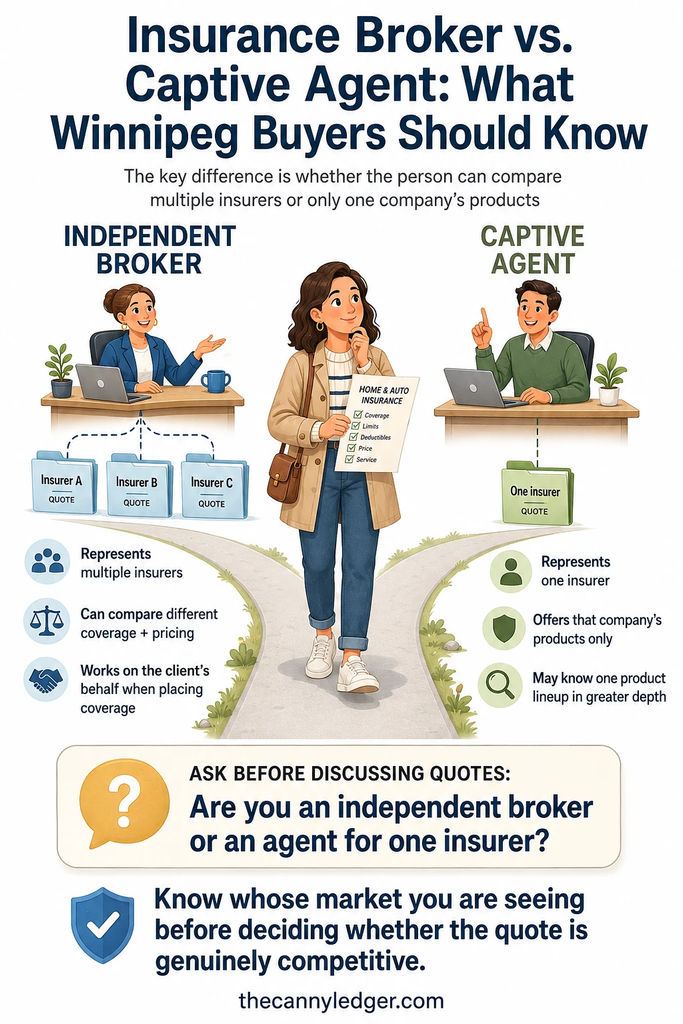
An independent broker isn’t tied to any single insurance company, meaning they can genuinely compare coverage and pricing across multiple insurers and recommend whichever actually fits your specific situation best. A captive agent, by contrast, represents one insurer exclusively and can only offer that company’s products, which isn’t automatically a worse arrangement, some captive agents genuinely know their single insurer’s products in exceptional depth, but it does mean you’re not getting a market comparison from that conversation the way you would from an independent broker. Before you get deep into a coverage conversation, asking directly whether you’re speaking with an independent broker or a captive agent tells you immediately whether the recommendations you’re about to hear reflect a genuine market comparison or a single company’s product lineup.
How Your Broker Actually Gets Paid
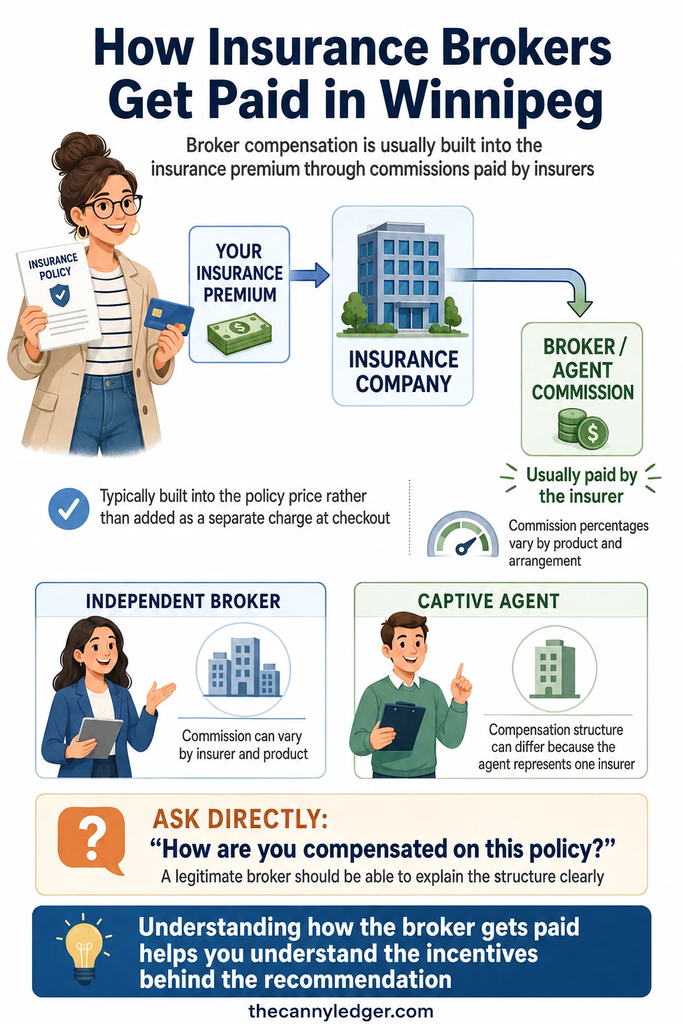
Insurance brokers and agents earn commission directly from the insurer once a policy sells, a percentage of your premium that’s already built into the price you pay rather than an additional fee charged on top. Independent brokers in Canada typically earn meaningfully higher commissions than captive agents, sometimes around 15 percent on new personal lines policies compared to 5 to 10 percent for a captive agent, with commercial general liability specifically running closer to 12.5 percent. This commission structure genuinely matters for one reason: since a broker earns more from you buying a policy at all than from any single insurer’s product specifically, an independent broker’s financial incentive points toward finding you genuinely suitable coverage rather than pushing one specific company’s product regardless of fit. Ask any broker directly how they’re compensated before working with them, a legitimate broker will answer this plainly rather than deflecting.
Confirm the License First
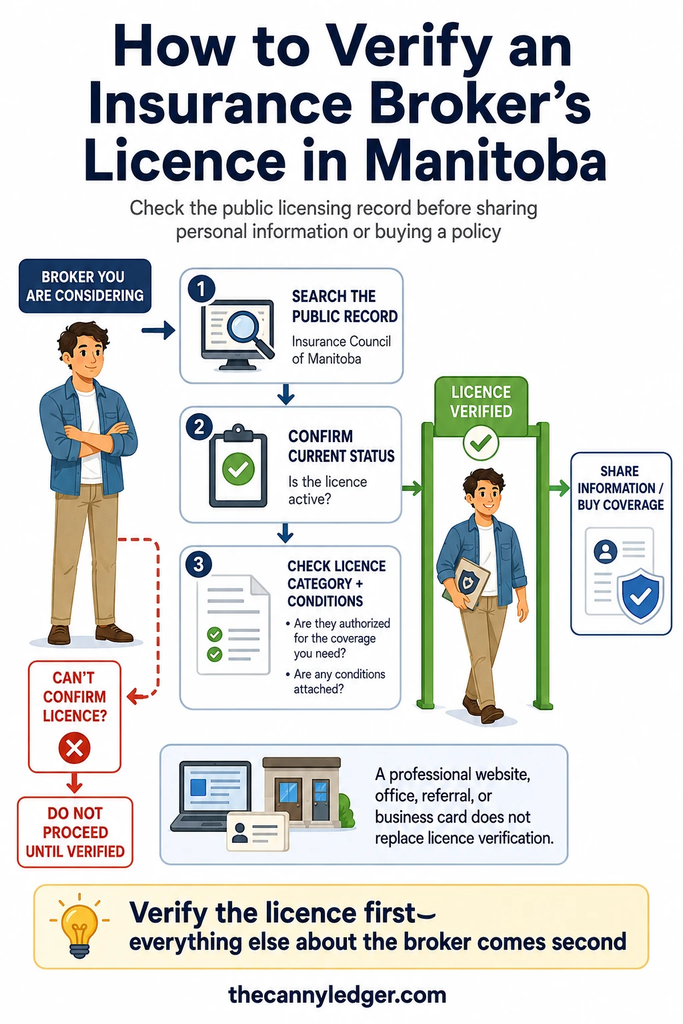
Before evaluating anything else about a broker’s fit for your situation, our directory of Winnipeg insurance companies and brokers covers exactly how to verify a broker’s license directly through the Insurance Council of Manitoba’s free public search tool, confirming their current status, license category, and any conditions attached before you share personal or financial information with them. Skipping this step and trusting a professional appearance or a friend’s referral alone is exactly the gap Manitoba’s licensing system exists to close.
How Many Insurers Does This Broker Actually Represent?
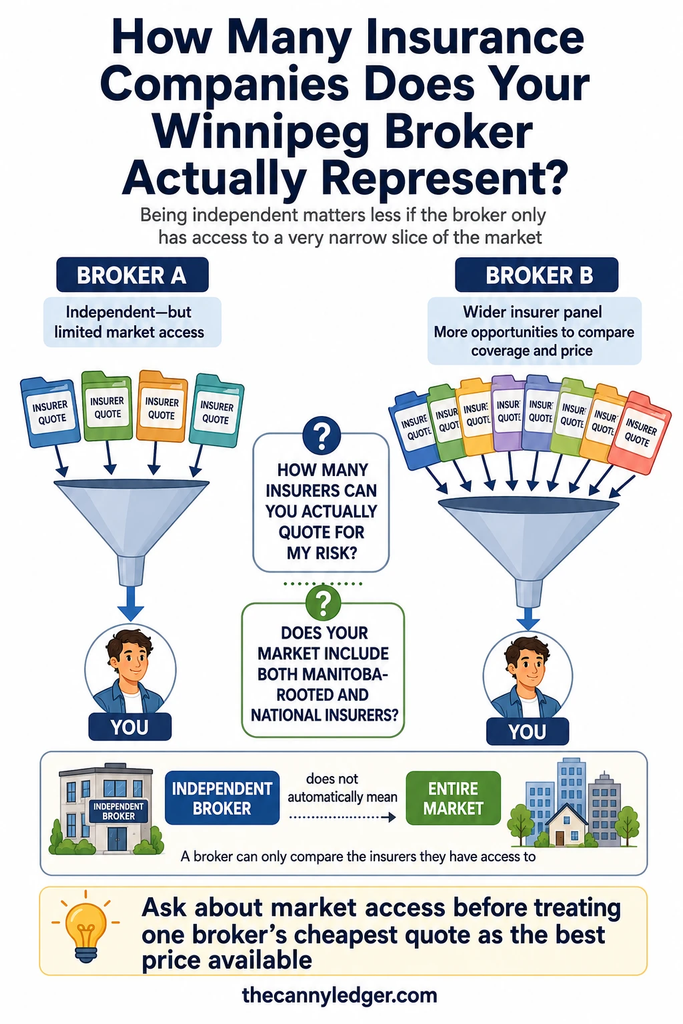
An independent broker’s actual value comes down to genuine market access, and that access varies enormously between brokers, some represent a handful of insurers while others carry relationships with dozens. Asking directly how many insurers a specific broker represents, and whether that list includes both Manitoba-rooted companies and larger national insurers, tells you how much real comparison shopping that broker can actually do on your behalf. A broker representing only three or four insurers, even as a technically independent broker, offers meaningfully less market coverage than one working with fifteen or more, and that difference directly affects whether you’re getting a genuine best-available quote or simply the best of a narrow selection.
Specialist vs Generalist Brokers
Some brokers handle a broad range of personal and commercial lines, home, auto, and general business coverage, while others specialize deeply in one category, agricultural insurance, professional liability, or construction risk specifically. For straightforward personal coverage, a generalist broker usually serves you well, but for anything genuinely specialized, our guides to farm and agricultural insurance in Winnipeg, professional liability insurance in Winnipeg, and construction and renovation insurance in Winnipeg all cover coverage categories genuinely benefiting from a broker who specializes in that specific risk area rather than a generalist handling it as one product line among many. Asking a prospective broker directly what share of their book of business covers your specific situation, agricultural risk, professional services, or construction, gives you a real sense of whether their expertise actually matches your need.

What Happens When You Actually Need to File a Claim
A broker’s real value often shows up not at the point of sale, but months or years later when an actual claim happens, and this is worth asking about directly before you ever need it. Does the broker stay involved through the claims process, advocating on your behalf with the insurer, or does the relationship effectively end once the policy is sold, leaving you to navigate a claim entirely through the insurer’s own claims department without support? A broker who describes concrete claims support, helping gather documentation, communicating with adjusters, or advocating for a fair settlement, is offering something genuinely different from one who simply processes the initial sale and steps back.

Questions Worth Asking Before You Commit
Beyond the structural questions already covered, a short set of direct questions clarifies fit quickly. Ask how long the broker has worked in this specific market and whether they have direct experience with businesses or households in circumstances similar to yours. Ask what happens if you need to make a change mid-policy, adding a driver, adjusting coverage limits, or reporting a change in circumstances, and how quickly that typically gets handled. Ask whether they proactively review your coverage at renewal or simply auto-renew the same policy each year without checking whether your needs or the market itself have shifted. A broker’s compensation model shapes these behaviours directly, so a broker who answers these specifically, with concrete examples, is showing you something real about how they actually operate day to day.

Red Flags Worth Walking Away From
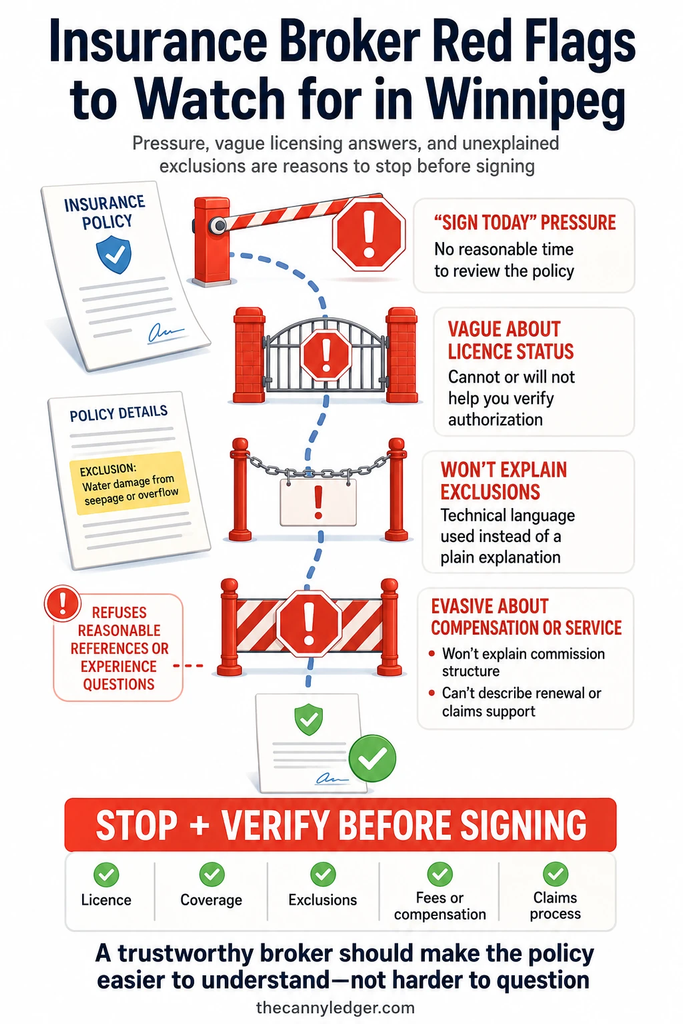
Certain signals are worth treating as genuine warnings rather than minor annoyances. Pressure to sign immediately without time to review the policy documents, vague or evasive answers about license status or commission structure, an unwillingness to explain exactly what a specific exclusion or limit means in plain language, and an inability or refusal to provide references from existing clients all suggest a broker prioritizing the sale over your actual interests. Since Manitoba’s Insurance Act specifically prohibits unlicensed individuals from holding themselves out as agents or brokers, any hesitation around confirming license status specifically deserves genuine suspicion rather than benefit of the doubt.
Comparing Quotes the Right Way
Getting multiple quotes only produces a genuinely useful comparison if you’re comparing equivalent coverage, not just headline premium numbers. Confirm that coverage limits, deductibles, and specific exclusions match closely enough across quotes to make the price comparison meaningful, since a noticeably cheaper quote sometimes reflects lower coverage limits or broader exclusions rather than genuinely better value. Our broader guide to small business insurance in Winnipeg and coverage for specific categories like non-profit insurance in Winnipeg both cover the specific coverage types worth confirming match across every quote you’re comparing before price becomes the deciding factor.

Common Questions
Is it worth paying more to work with an independent broker instead of going directly to an insurer? Often yes, particularly for anything beyond straightforward, standard coverage, since the commission structure means an independent broker doesn’t cost you more out of pocket than buying directly, while giving you access to a genuine market comparison a direct purchase wouldn’t provide.
Can I switch brokers if I’m not happy with my current one, or am I locked in? Yes, you’re generally free to switch brokers at any point, and your policy itself typically stays with the same insurer regardless of which broker services it, so switching brokers doesn’t necessarily mean switching insurers unless you choose to shop your coverage at the same time.
Does a broker specializing in one industry cost more than a generalist? Not necessarily, specialist brokers are compensated through the same commission structure as generalists, so the specialization itself doesn’t typically translate into a higher direct cost to you, though the actual premiums quoted will still reflect your specific risk profile regardless of which type of broker you work with.
Confirm Fit Before You Sign
The single most useful step before committing to any Winnipeg insurance broker is having a direct conversation covering their license status, how many insurers they represent, how they’re compensated, and what claims support actually looks like, rather than defaulting to whoever answered the phone first or came recommended casually. A broker who answers all four of those questions clearly and specifically has already shown you more about their actual value than any marketing material could.