
- The Actual Size of the Price Difference
- The Battery Pack Is the Real Reason Why
- Specialized Repairs Add Their Own Cost on Top
- What Actually Works in an EV Owner’s Favour
- Battery Degradation Itself Isn’t What Auto Insurance Covers
- Home Charging Equipment Is a Different Policy’s Problem
- What to Actually Do Before Buying or Insuring an EV
- Frequently Asked Questions
Electric vehicles don’t crash more often than gas-powered ones. That fact surprises a lot of people shopping for their first EV, since the premium quote they get back rarely reflects it. The actual driver of a higher EV premium isn’t how often the car gets into an accident, it’s what happens financially once it does, and that difference comes down almost entirely to one component sitting under the floor of the car.
Auto insurance for electric vehicles in Canada typically costs more than for a comparable gas-powered vehicle, driven primarily by the high cost of replacing a damaged battery pack rather than by any difference in how often EVs are involved in collisions. Coverage itself works the same way as it does for any other vehicle, mandatory liability plus optional collision and comprehensive, but the dollar amounts behind that coverage, and a few EV-specific gaps worth knowing about, differ enough to matter when shopping for a policy.
The Actual Size of the Price Difference
Insurance Business Magazine’s own reporting on data from Sussex Insurance found EV owners paid an average of $3,131 annually for auto insurance, compared to $2,289 for owners of comparable gas-powered vehicles, a difference of 36.8 percent based on 12 months of actual premium and claims data. That gap tends to catch new EV owners off guard specifically because it isn’t advertised anywhere during the purchase process, and it can meaningfully offset the fuel savings an EV owner might be counting on elsewhere in their budget.
The Battery Pack Is the Real Reason Why
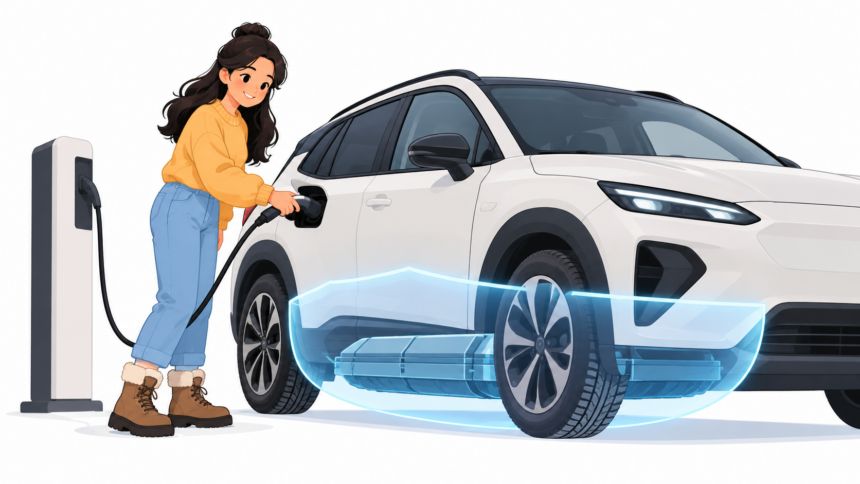
This is the mechanic worth understanding in detail, since it explains almost everything else about EV insurance pricing. Ratehub’s own explanation, citing figures from Mitsubishi Canada, puts the cost of replacing an EV battery between $5,000 and $20,000 depending on the vehicle’s make, model, and battery capacity. The battery pack itself commonly represents somewhere between 30 and 50 percent of an EV’s total value, a figure confirmed in Canadian insurance industry reporting, which means damage to that single component, even from a moderate collision that would leave a comparable gas vehicle repairable, can push total repair costs past the threshold where an insurer declares the whole vehicle a total loss instead of fixing it.
Specialized Repairs Add Their Own Cost on Top
Beyond the battery itself, EV repairs generally require certified technicians trained to work safely around high-voltage systems, and the number of shops with that certification remains smaller than the number of shops that can handle a standard gas vehicle repair. This scarcity affects both labour rates and how long a vehicle sits waiting for repair, and a longer repair timeline can itself add cost through extended rental car coverage while the vehicle is out of service. None of this reflects anything about how the vehicle is driven, but it factors directly into what an insurer expects to pay out on an EV claim compared to an equivalent gas vehicle claim.
What Actually Works in an EV Owner’s Favour
The full picture isn’t one-sided. Several insurers offer specific discounts for electric and hybrid vehicles that can meaningfully offset some of the premium gap described above, and it’s worth asking directly whether a specific insurer offers one before assuming the higher sticker price is fixed. EVs also tend to come equipped with advanced safety technology, automatic emergency braking and lane-keeping assistance among them, and regenerative braking reduces wear on physical brake components, which can mean lower costs for the kind of routine mechanical repairs that have nothing to do with the battery at all.
Battery Degradation Itself Isn’t What Auto Insurance Covers
This distinction is worth being clear about, since it’s a common point of confusion. Auto insurance covers sudden, accidental damage, a collision, theft, or a comprehensive-covered event like vandalism or weather. The gradual loss of battery capacity that happens naturally over years of charging cycles isn’t a sudden or accidental event, and it falls instead under the vehicle manufacturer’s own battery warranty rather than anything an auto insurance policy is designed to address. Anyone concerned specifically about long-term battery health should be looking at the manufacturer’s warranty terms directly rather than assuming their auto policy has that concern covered.
Home Charging Equipment Is a Different Policy’s Problem
A home Level 2 charging station, the faster charging setup many EV owners install at home beyond the standard charger that comes with the vehicle, generally falls under home insurance as a permanent fixture attached to the property rather than under the auto policy covering the vehicle itself. This is worth confirming directly with a home insurer before assuming a home charging station is automatically covered under whichever policy protects the car, since the two policies address entirely different property and a gap between them is possible if neither side assumes responsibility for it.
What to Actually Do Before Buying or Insuring an EV
Get an actual insurance quote for the specific EV model under consideration before finalizing a purchase, since the premium gap between EVs and comparable gas vehicles varies significantly by make and model rather than applying as one flat percentage across every EV. Ask directly whether the insurer offers a green vehicle or electric vehicle discount, since these aren’t always advertised prominently. And confirm your home insurance covers any home charging equipment you’re planning to install, rather than assuming it falls under the auto policy by default.
Frequently Asked Questions
Does a damaged EV battery always mean the whole vehicle is written off? Not always, since the insurer still weighs the same total loss threshold used for any vehicle, comparing total repair cost against the vehicle’s actual cash value, but the battery’s high replacement cost makes crossing that threshold happen faster than it would for equivalent damage on a gas vehicle.
Do older, used EVs cost as much to insure as new ones? Generally less, since insurance costs scale with the vehicle’s actual value the same way they do for any car, though a used EV’s battery health and remaining warranty coverage are worth confirming directly with a seller before purchase, separate from the insurance question entirely.
Is a waiver of depreciation endorsement worth adding to a new EV specifically? It can be, since the same endorsement available for any new vehicle applies to a new EV too, and given how quickly a battery-related total loss can occur on a newer EV, protecting against depreciated payout specifically matters more than it might for a comparable gas vehicle.
Does driving an EV fewer kilometres per year lower the insurance premium the way it might for a gas car? Yes, annual mileage remains a standard rating factor regardless of powertrain, so a low-mileage EV driver can still see a lower premium than a high-mileage one, even though the underlying battery-replacement risk that drives EV pricing up doesn’t disappear entirely.