

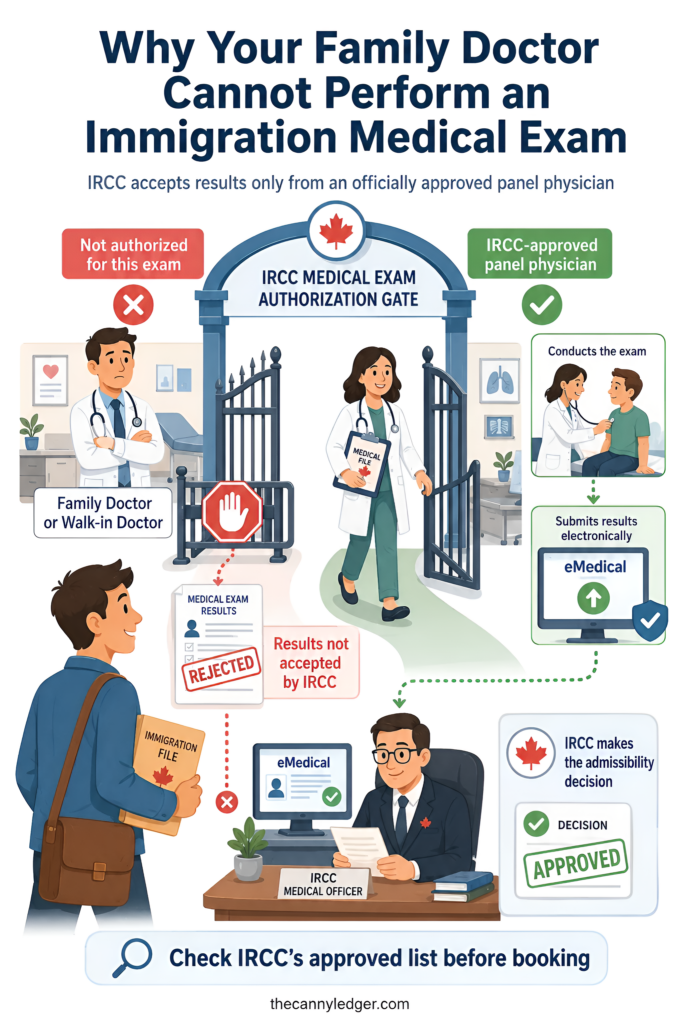
Your family doctor cannot perform this exam, even if you’ve seen them for years, even if they’re one of the best physicians in the city. That single rule trips up more people than almost anything else about the immigration medical exam, because it runs against the instinct to just book with someone you already trust. Only a doctor specifically approved by Immigration, Refugees and Citizenship Canada, known as a panel physician, is authorized to conduct this exam, and results from anyone outside that approved list get rejected outright, no exceptions for how qualified the doctor otherwise is.
- Only a Panel Physician Can Do This, Not Your Family Doctor
- Who Actually Needs the Exam
- What the Exam Actually Involves
- How Much It Costs in Winnipeg
- Finding a Panel Physician in Winnipeg
- How Long Results Stay Valid, and What Happens After
- What Could Make You Medically Inadmissible
- What to Bring and How to Prepare
- Common Questions
- The One Thing Worth Doing Before You Book Anything
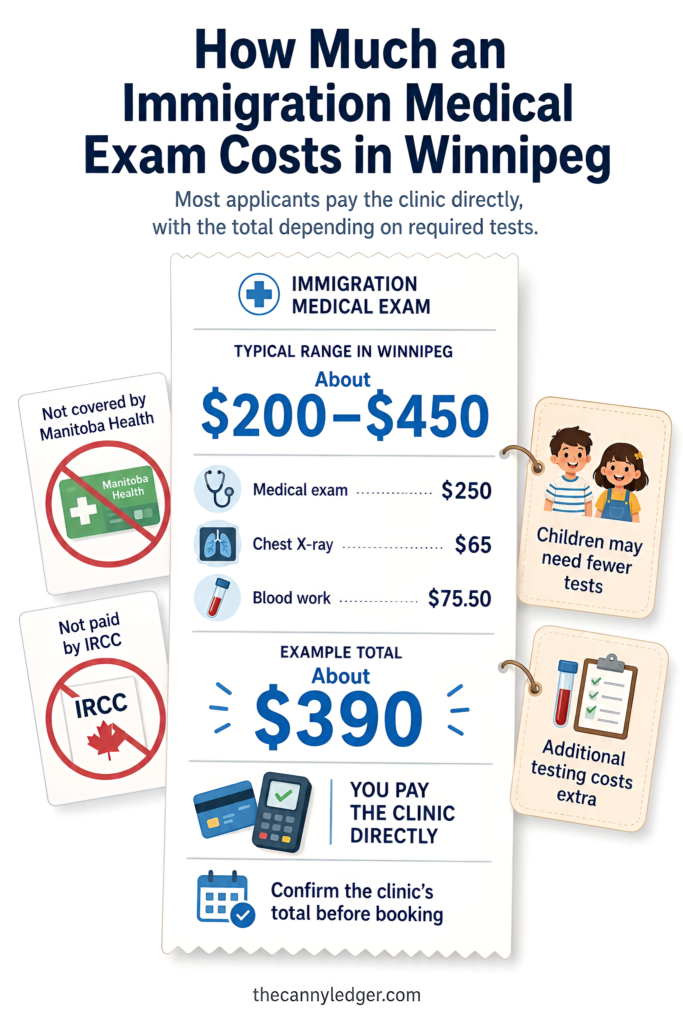
An immigration medical exam in Winnipeg costs roughly $200 to $450 depending on your age and which tests are required, must be completed by an IRCC-approved panel physician rather than your own doctor, and typically takes 30 to 60 minutes for the appointment itself, with blood work and imaging sometimes requiring a separate visit. The fee isn’t covered by Manitoba Health or by IRCC, and it’s paid directly to the physician’s clinic.
Only a Panel Physician Can Do This, Not Your Family Doctor
Panel physicians go through a specific authorization process with IRCC and follow standardized forms and procedures that a regular clinic visit doesn’t use, which is the practical reason a walk-in clinic or your own GP can’t substitute even informally. The physician examines you and submits results directly to IRCC, almost always through an electronic system called eMedical, but the physician doesn’t actually decide whether you’re medically admissible. That call belongs to an IRCC medical officer who reviews the results separately, which means even a completely clean exam doesn’t guarantee approval on its own, it simply gets your file past that specific stage.
In genuinely exceptional circumstances, IRCC can grant what’s called a dispensation, temporarily authorizing a non-panel physician, but this is reserved for narrow situations, such as no panel physician being available who can offer service in an applicant’s preferred official language within 250 kilometres or a four-hour drive. For the overwhelming majority of people in Winnipeg, this doesn’t apply, and the practical starting point is finding an actual panel physician rather than hoping for an exception.
Who Actually Needs the Exam
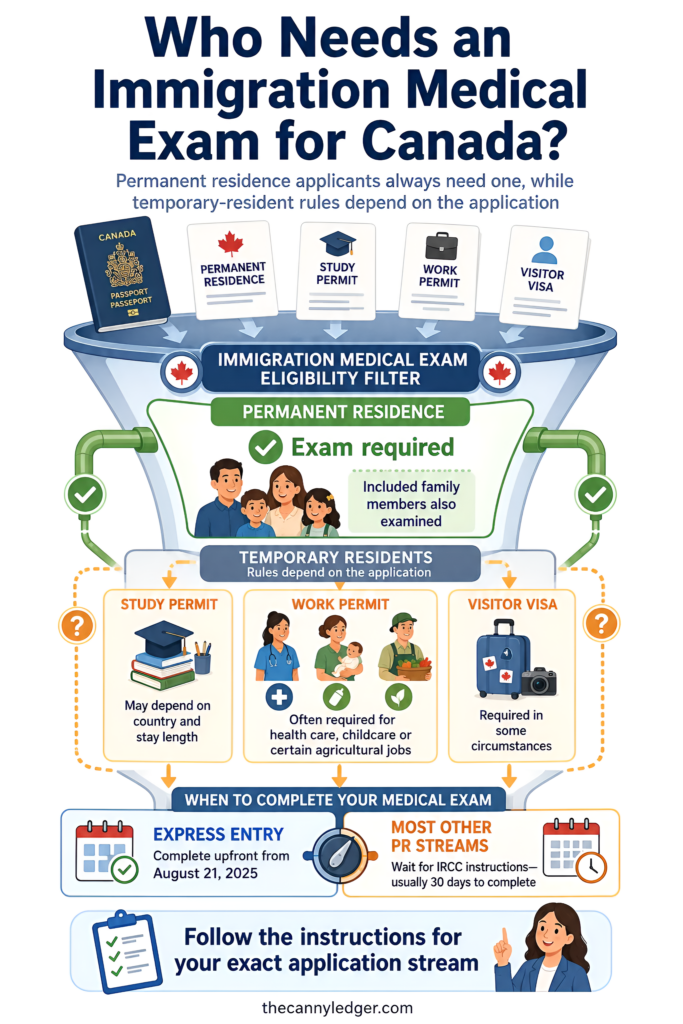
Every permanent residence applicant needs one, along with every family member included on that application, even family members who aren’t planning to move to Canada themselves. Beyond permanent residence, the exam applies to a meaningful slice of temporary residents too, people from certain countries applying for a study permit longer than six months, some work permit categories, particularly jobs involving close contact with others such as health care, childcare, or certain agricultural work, and in some cases visitor visa applicants from designated countries. If you’re unsure whether your specific application category requires one, that’s worth confirming directly through your application instructions or IRCC’s own guidance rather than assuming either way, and a settlement worker at an organization like the Immigrant Centre in Winnipeg can often point you toward the right IRCC resource if you’re unsure where to look.
Timing has shifted recently for one major stream specifically. As of August 21, 2025, Express Entry permanent residence applicants are expected to self-initiate their medical exam rather than waiting for IRCC to send formal instructions, meaning you book and complete it upfront if you want it ready before or shortly after receiving an Invitation to Apply. For most other permanent residence streams, including family sponsorship and standard Provincial Nominee Program applications, IRCC still sends formal medical instructions after your application is submitted, and you generally have about 30 days from that request to complete the exam.
What the Exam Actually Involves
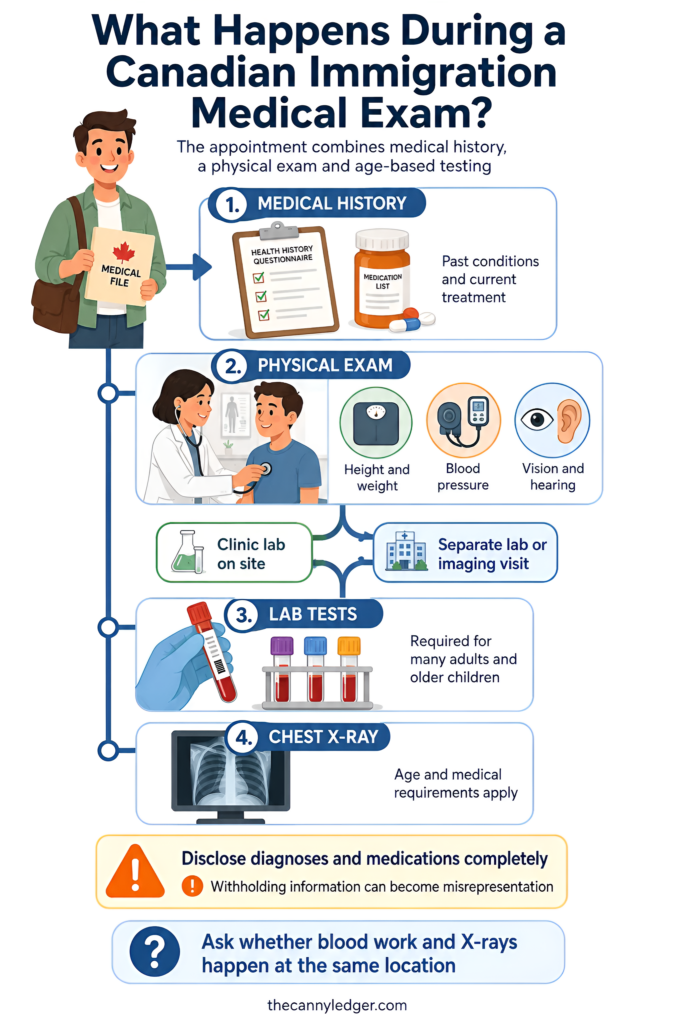
The appointment itself covers a review of your medical history through a written questionnaire, a physical examination, and, depending on your age, a chest X-ray and laboratory blood work. Adults and older children typically face the fuller battery, including bloodwork screening for conditions like syphilis and HIV, while younger children usually skip some of these components. The physician also records your height, weight, blood pressure, and does basic vision and hearing checks as part of the physical exam. If your clinic doesn’t have an X-ray machine or lab on site, you may need a short trip to a separate imaging clinic or lab as part of the same overall appointment, which is worth asking about when you book so you can plan your morning or afternoon around it rather than being surprised.
Answer the medical history questionnaire honestly and completely. Withholding something that later shows up in test results, a past diagnosis, current medication, or a prior condition, can be treated as misrepresentation on your immigration file, a genuinely serious consequence entirely separate from whatever the medical condition itself might mean for your admissibility.
How Much It Costs in Winnipeg
Pricing isn’t set by IRCC or by Manitoba Health, it’s set individually by each panel physician’s clinic, which is exactly why costs vary somewhat between providers in the same city. Assiniboine Medical Clinic, one of Winnipeg’s panel physician locations, publishes its current pricing directly: $250 for the medical exam itself, $65 for the required X-ray, and $75.50 for required blood work, for a total in the range of $390 if all three components apply to you, payable by debit or credit for the exam and cash specifically for the X-ray. That range lines up with the broader $200 to $450 figure commonly cited for Winnipeg overall, with the lower end typically applying to children who need fewer tests and the higher end applying to adults requiring the full battery.
Beyond the base exam, know that any follow-up specialist referral or additional testing a physician orders based on your initial results comes as an added cost you’re responsible for, not something absorbed into the original fee. Since prices can shift and vary by clinic, confirming the current total directly with whichever physician you book, rather than budgeting off a number from an old quote or a general estimate, avoids an unpleasant surprise on appointment day.
Finding a Panel Physician in Winnipeg
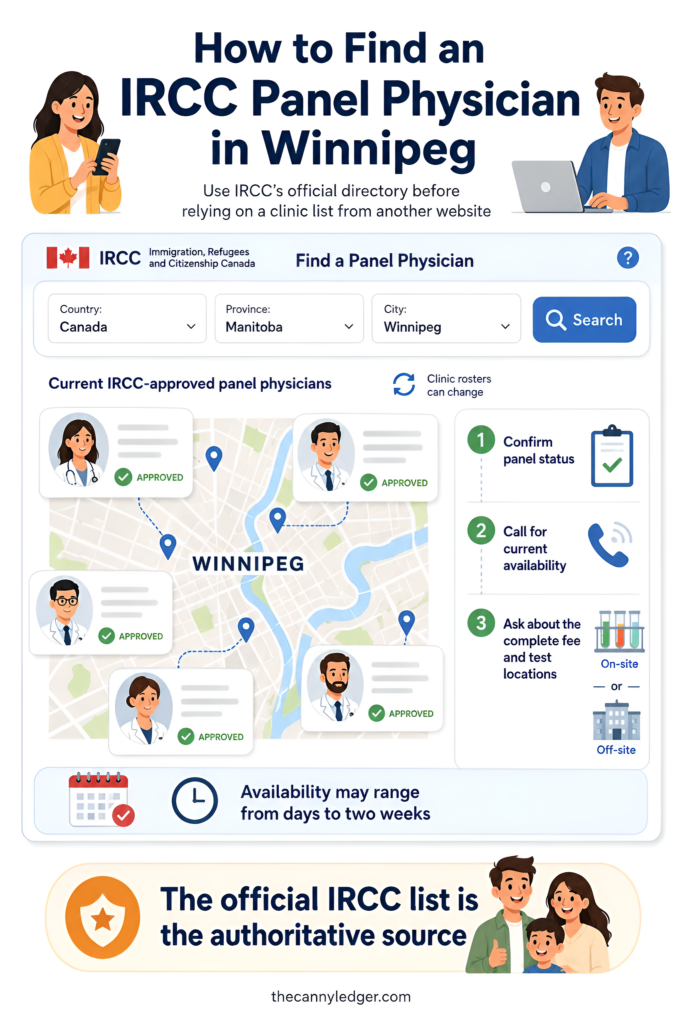
IRCC maintains the only fully authoritative, continuously updated list of panel physicians, searchable by location through its own online tool, and this is genuinely the right first stop rather than any third-party directory, since panel physician status can change and a clinic listed elsewhere may no longer be current. That said, several Winnipeg clinics have operated as panel physician locations with a track record worth knowing about by name: Assiniboine Medical Clinic on Lodge Avenue, Southend Medical and Walk-In Clinic in the Meadowood area, and Bison Family Medical Clinic of Pembina, among others. Winnipeg has generally had somewhere in the range of a dozen or more active panel physicians at any given time, spread across different parts of the city, which gives you real choice rather than a single option to wait on.
Given how often clinic rosters and contact details shift, the responsible move is always confirming panel physician status and current appointment availability directly with IRCC’s own list or by calling the clinic before booking, rather than relying on any list, including this one, as permanently accurate. Most Winnipeg panel physicians can get you an appointment within a few days to two weeks depending on demand, though it’s worth booking further ahead during peak Manitoba Provincial Nominee Program intake periods when demand for these appointments climbs across the city.
How Long Results Stay Valid, and What Happens After
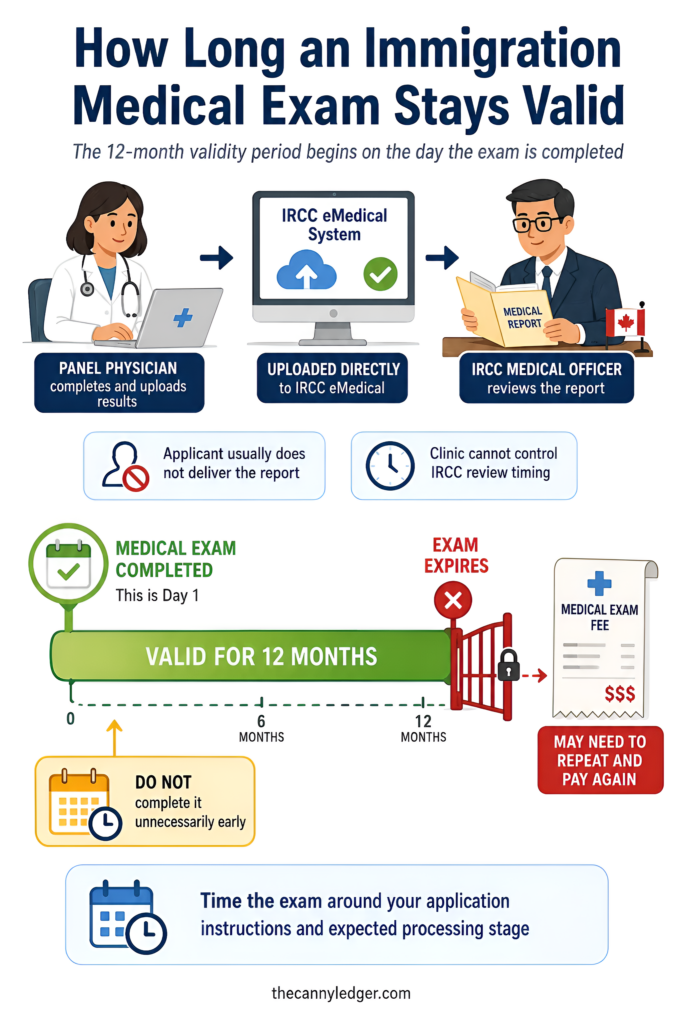
Once completed, an immigration medical exam is valid for 12 months from the date it was performed, not from when your application was submitted or approved, which matters if your overall immigration process stretches out longer than expected and your exam quietly expires before a final decision comes through. If that happens, you’d need to redo the exam, at your own cost again, so timing it reasonably close to when you expect a decision, rather than as early as physically possible, can save you an unnecessary second appointment and fee.
Results get uploaded electronically by the panel physician, and you typically don’t receive your own copy of the full report, since it goes directly to IRCC’s system rather than through you as an intermediary. IRCC’s medical officers then review the file and enter a determination that flows back into your overall application status, a process that happens on IRCC’s own timeline rather than something the panel physician can speed up or influence once the exam itself is complete.
What Could Make You Medically Inadmissible
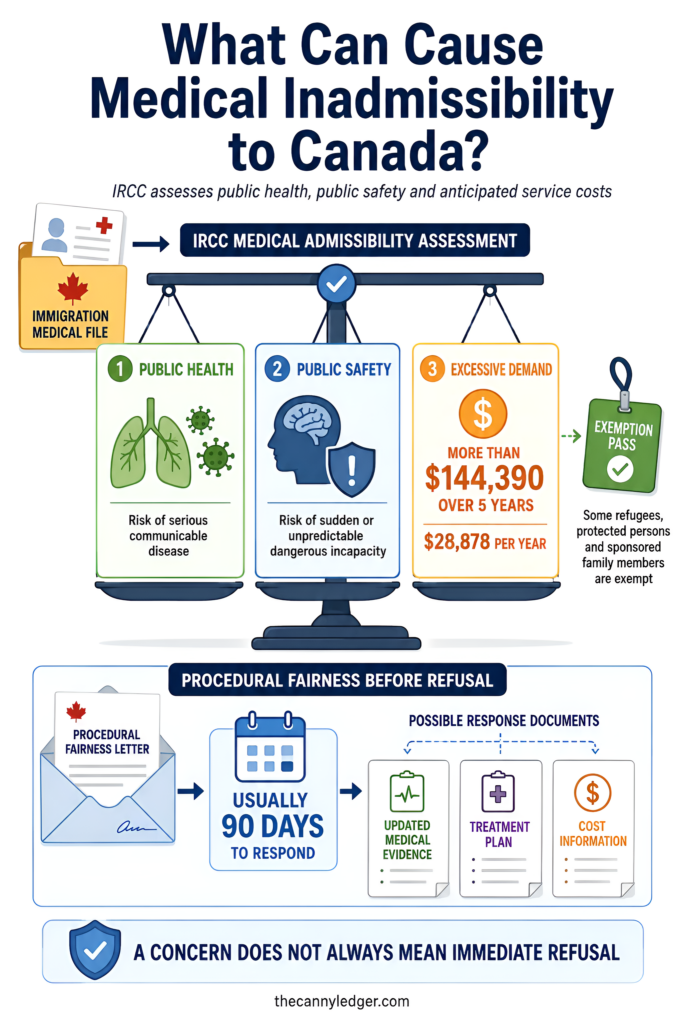
Three grounds exist for medical inadmissibility under Canadian immigration law: your condition being a danger to public health, a danger to public safety, or likely to cause excessive demand on Canada’s publicly funded health and social services. The first two grounds are relatively narrow, centred on things like active, untreated infectious disease or a documented risk of sudden incapacity or unpredictable dangerous behaviour. The third ground, excessive demand, is the one that catches more people off guard, since it’s a cost calculation rather than a judgment about how serious a condition sounds. For 2026, the excessive demand cost threshold sits at $144,390 projected over five years, or $28,878 per year, and if the anticipated public cost of the health or social services your condition would require exceeds that figure, it can trigger a finding of inadmissibility on this ground specifically.
Refugees and their dependants, protected persons, and certain sponsored family members, including dependent children, spouses, and common-law partners in specific streams, are exempt from the excessive demand ground entirely, so this doesn’t apply universally across every application type. If a medical officer does flag a potential excessive demand concern, you’d receive a procedural fairness letter with a window, typically 90 days, to respond with additional evidence, an updated diagnosis, a lower-cost treatment plan, or other information that could change the assessment, rather than facing an automatic refusal the moment a concern is raised.
What to Bring and How to Prepare
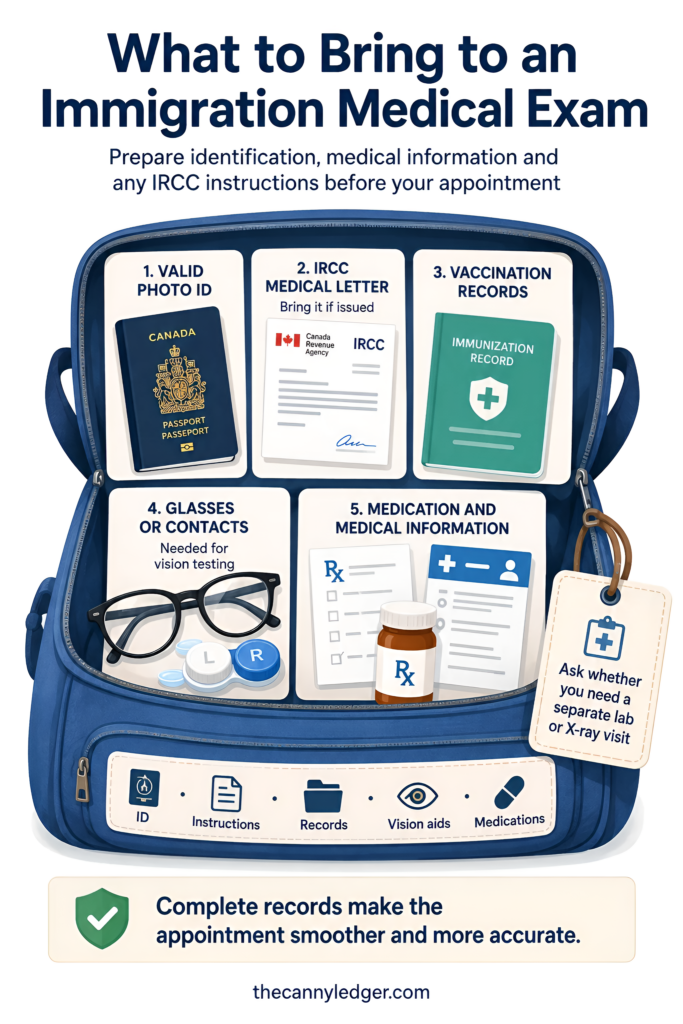
Bring valid photo identification, typically your passport, along with any IRCC-issued medical instruction letter if you’ve received one, your vaccination records if you have them, and glasses or contacts if you wear them, since vision testing is part of the exam. If you take regular medications, bring a list or the medications themselves, since the physician will ask about current prescriptions as part of the medical history review. If you have prior medical records relevant to a chronic condition, bringing them along, rather than trying to describe a complex history from memory during the appointment, generally makes for a smoother and more accurate exam.
Our newcomer’s guide to Winnipeg covers where a medical exam typically fits into the broader sequence of early tasks for someone newly arrived, our directory of new immigrant services in Winnipeg rounds up settlement organizations that can help you navigate the broader process, and our guide to free and low-cost immigration help in Winnipeg covers where to turn if a medical inadmissibility concern turns into something that needs an actual lawyer involved rather than paperwork you can handle alone.
Common Questions
Can I choose which panel physician to use, or does IRCC assign one? You choose. IRCC’s list simply shows who’s authorized in your area, and you book directly with whichever clinic works for your schedule and budget, though a specific physician within a clinic may not always be available and the clinic might assign you to a colleague instead.
Does a clean exam guarantee my application will be approved? No. Passing the medical exam only means you’ve cleared the health admissibility stage. Your overall application still needs to satisfy every other eligibility requirement for your specific immigration category.
What happens if I need a second exam because my results expired? You’d book and pay for an entirely new exam with a panel physician, following the same process as the first time, since results aren’t extendable or renewable without a fresh appointment.
The One Thing Worth Doing Before You Book Anything
Confirm your specific application actually requires the exam, and if it does, confirm the physician you’re about to book with is currently listed as an active panel physician through IRCC’s own tool, before you pay a cent or take time off work for the appointment. Those two checks take a few minutes and prevent the single most common and most expensive mistake in this whole process, showing up to an appointment that either wasn’t necessary yet or wasn’t with someone actually authorized to perform it.