
Only 21 percent of Canadians know what a Licensed Insolvency Trustee actually is. Once they learn what the role involves, more than half of Canadians carrying debt problems say they’d actually consider consulting one, a genuine awareness gap for a profession that sits at the most serious end of Canada’s entire debt relief system. This comparison is built from research into each organization’s regulatory status, national footprint, and service model, not personal use of any of them, and it deliberately covers different ground than our earlier comparison of debt consolidation companies, since debt relief as a category stretches well past consolidation into territory those non-profits and lenders can’t legally touch.
This piece centers on Licensed Insolvency Trustees specifically, what genuinely sets them apart from every other company using the phrase “debt relief,” the major national firms, and how to verify any one of them directly through the government’s own records before trusting a search result.
What Actually Makes An LIT Different From Everyone Else
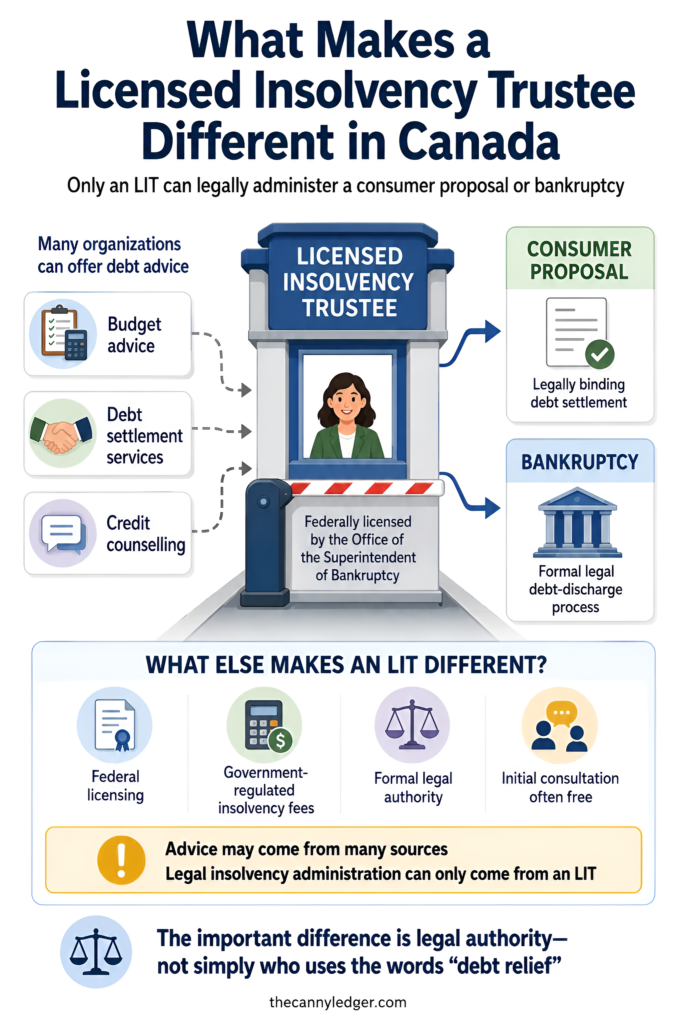
Anyone can offer debt relief advice or services in Canada, but only a Licensed Insolvency Trustee is federally licensed by the Office of the Superintendent of Bankruptcy to legally administer a consumer proposal or bankruptcy, the two processes capable of genuinely reducing or discharging debt rather than just restructuring it. That licensing distinction matters more than it might seem, since a company can market itself using nearly identical language to an LIT firm while offering something structurally different and unregulated underneath. LITs are also unique in having their fees for consumer insolvency work regulated directly by the federal government, and most offer an initial consultation at no cost, a genuinely different fee structure than the debt settlement companies covered in our broader guide to debt relief in Canada.
The Major National Firms Worth Knowing About
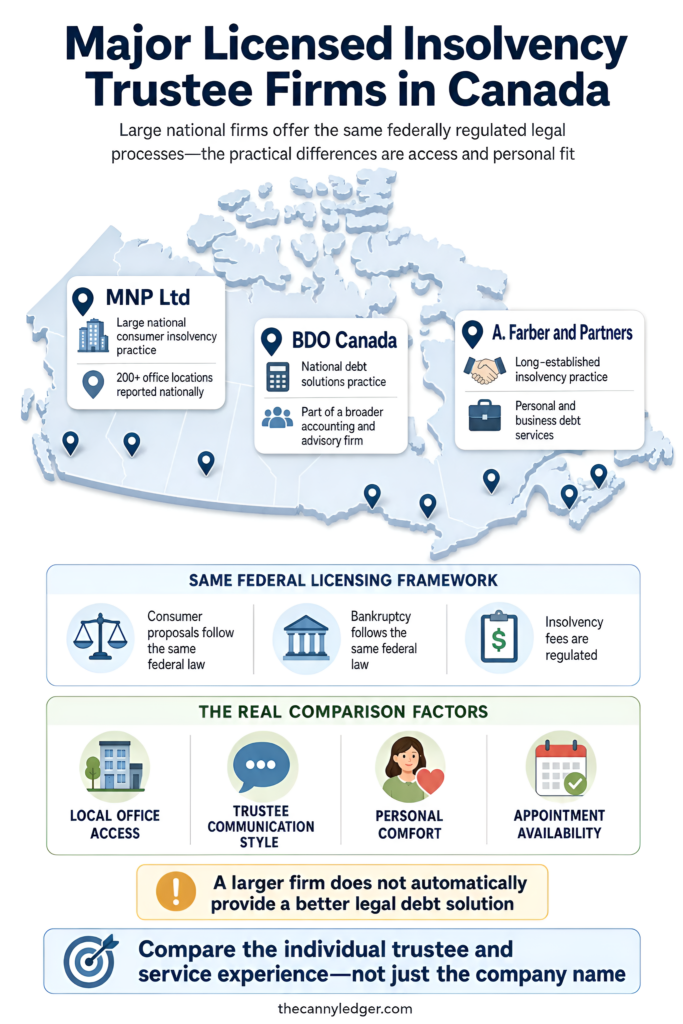
A handful of large, established firms dominate the LIT landscape nationally, each operating dozens of offices across the country rather than a single local practice. MNP Ltd describes itself as Canada’s largest consumer insolvency firm, with dozens of Licensed Insolvency Trustees spread across more than 200 offices nationally, backed by its parent firm’s decades of accounting and consulting history. BDO Canada runs a comparable national debt solutions practice under the same accounting firm structure that handles corporate audits and tax work, giving it a similarly broad footprint. A. Farber and Partners is a longer-established, Toronto-founded insolvency firm with a national presence built specifically around personal and business insolvency rather than a broader accounting practice. All three, and the many smaller regional firms alongside them, operate under the exact same federal licensing and fee regulation, which means the meaningful differences between them come down to local office access and personal fit with a specific trustee rather than one firm offering a fundamentally better legal product than another.
Verifying Any Trustee Directly Rather Than Trusting A Search Result
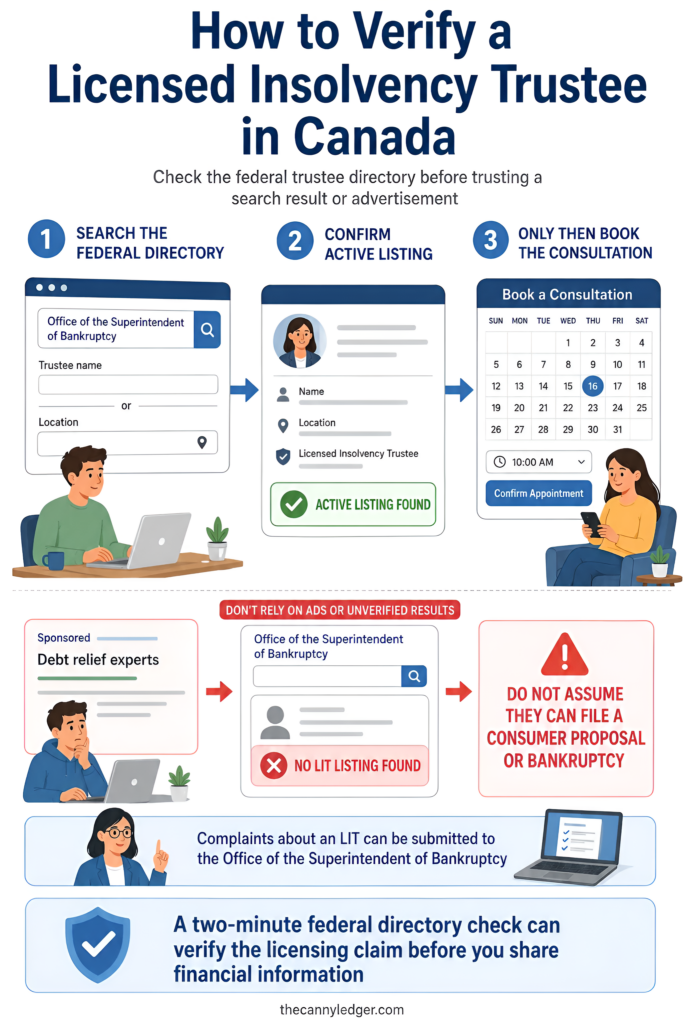
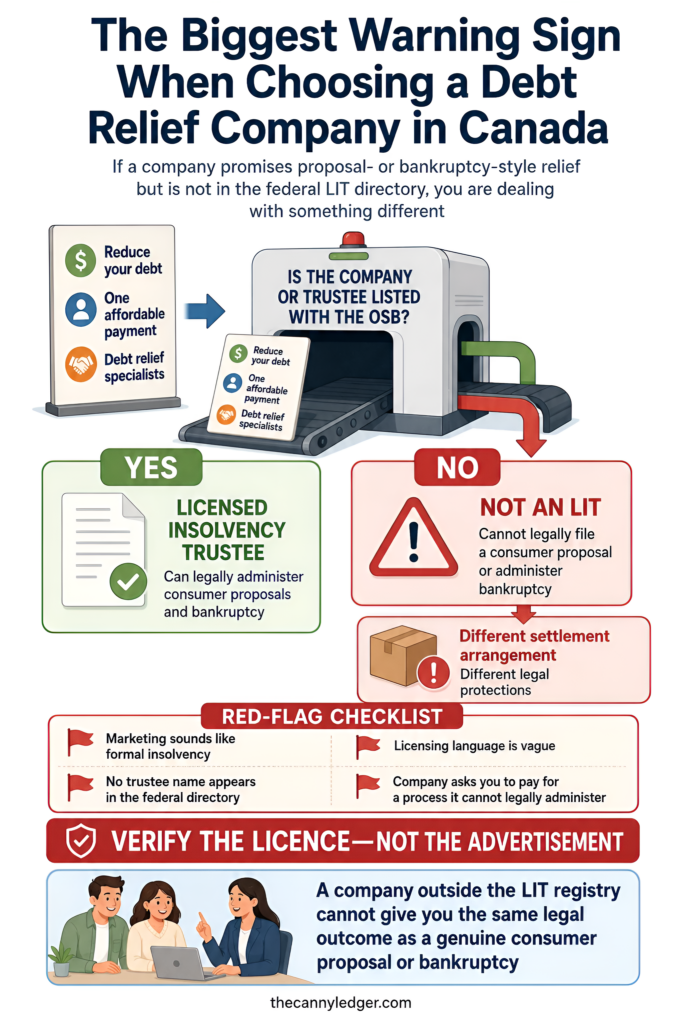
The Office of the Superintendent of Bankruptcy maintains a public, searchable directory of every active Licensed Insolvency Trustee in Canada, searchable by name or location, and confirming someone’s listing there takes only a few minutes before your first meeting. This step matters specifically because the phrase “licensed insolvency trustee” is legally protected, but a company’s marketing can still imply a level of licensing or authority it doesn’t actually have through careful wording rather than an outright false claim. If a complaint ever arises about how an LIT handled your file, the OSB itself accepts and reviews those complaints directly, a real accountability mechanism that doesn’t exist in the same form for unregulated debt relief companies.
Where The Rest Of The Debt Relief Landscape Fits
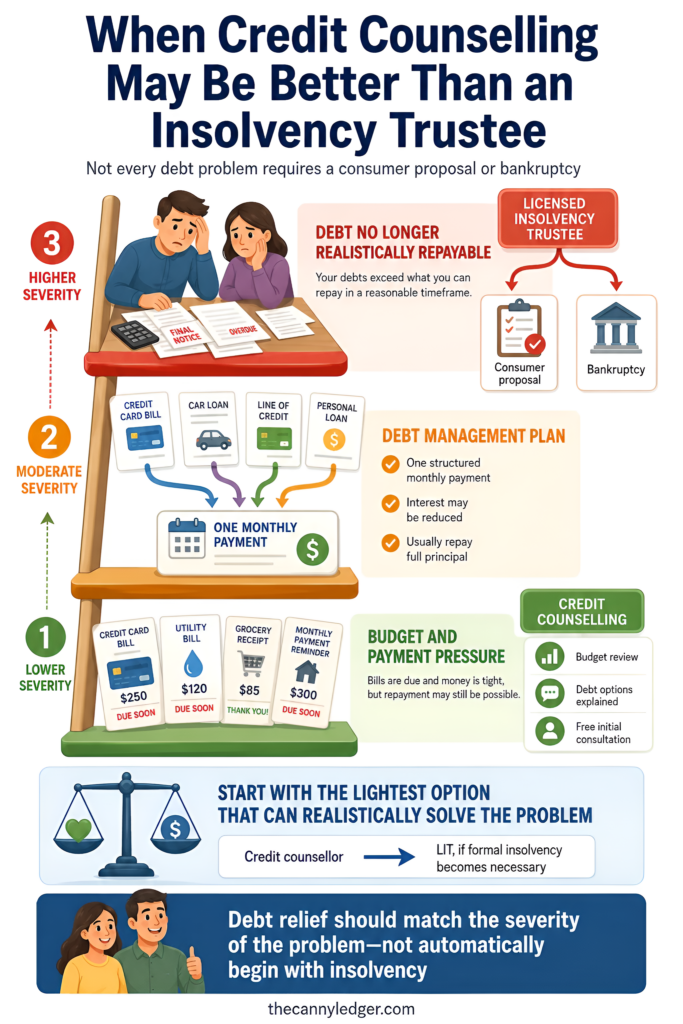
Not every debt relief situation calls for an LIT specifically, and it’s worth being direct about that rather than implying insolvency is always the answer. Non-profit credit counselling agencies, covered in depth in our debt consolidation companies comparison, handle debt management plans for people whose situation doesn’t require formal insolvency, and speaking with a counsellor directly is often the right first call regardless of how severe your debt feels, since they can point you toward an LIT specifically if your situation genuinely calls for one rather than assuming it does. Our comparison of debt management plans against formal debt settlement covers exactly where that lighter-touch option stops being enough.
The Warning Sign Worth Repeating In This Specific Context
Since the phrase “debt relief” gets used by both fully regulated LIT firms and unregulated for-profit debt settlement operations, the distinction is worth restating directly rather than assuming it’s obvious. A company that isn’t listed in the OSB’s own trustee directory cannot legally file a consumer proposal or administer a bankruptcy on your behalf, regardless of how confidently its marketing implies otherwise. If a “debt relief” company is quoting you a solution that sounds like a consumer proposal or bankruptcy but the company itself doesn’t appear in that federal registry, that’s not a minor technicality, it’s a sign you’re dealing with something else entirely, likely an unregulated settlement arrangement with none of the legal protections a genuine LIT process carries, and a fundamentally different outcome than genuine debt forgiveness achieved through the proper legal channel.
Choosing Where To Start
If your debt situation genuinely might call for a consumer proposal or bankruptcy, search the OSB’s own directory for a trustee near you rather than starting from a paid search result, and take advantage of the free initial consultation most firms offer before committing to anything. If you’re not sure whether your situation has reached that point, a credit counsellor can offer an honest, no-cost read on whether a lighter option still fits or whether it’s genuinely time to talk to a trustee. And whichever door you walk through first, confirming the company or individual you’re dealing with actually holds the licensing they’re implying takes a few minutes and protects you from the exact kind of confusion the debt relief industry’s overlapping language is designed to create.