
- Bachelor vs Studio: Same Thing, Different Word
- What You’re Actually Getting for the Square Footage
- Old Stock vs New Micro-Units: Two Very Different Price Tags
- Where the Older, Cheaper Buildings Cluster
- The Tenant Services Deposit Most Renters Don’t Expect
- Utilities in Older Bachelor Buildings
- Best Places to Actually Search
- Common Questions About Bachelor and Studio Apartments in Winnipeg
Small doesn’t automatically mean cheap anymore. Winnipeg’s downtown core has picked up a wave of “micro-apartment” and loft-style developments over the past few years, and a lot of them are the same square footage as an old bachelor unit from the 1970s while charging noticeably more for it. Anyone assuming a smaller unit is a guaranteed budget win can end up paying premium rent for a floor plan that would’ve been a basic, affordable option a decade ago.
Genuinely cheap bachelor and studio apartments in Winnipeg still exist, but they cluster in specific older buildings and neighborhoods rather than showing up evenly across every listing labeled “small” or “compact.” Citywide, studios average around $1,089 a month as of mid-2026, but that number sits well below what a new-build micro-loft downtown actually charges, and well above what an older walk-up in the right neighborhood can still go for.
Bachelor vs Studio: Same Thing, Different Word
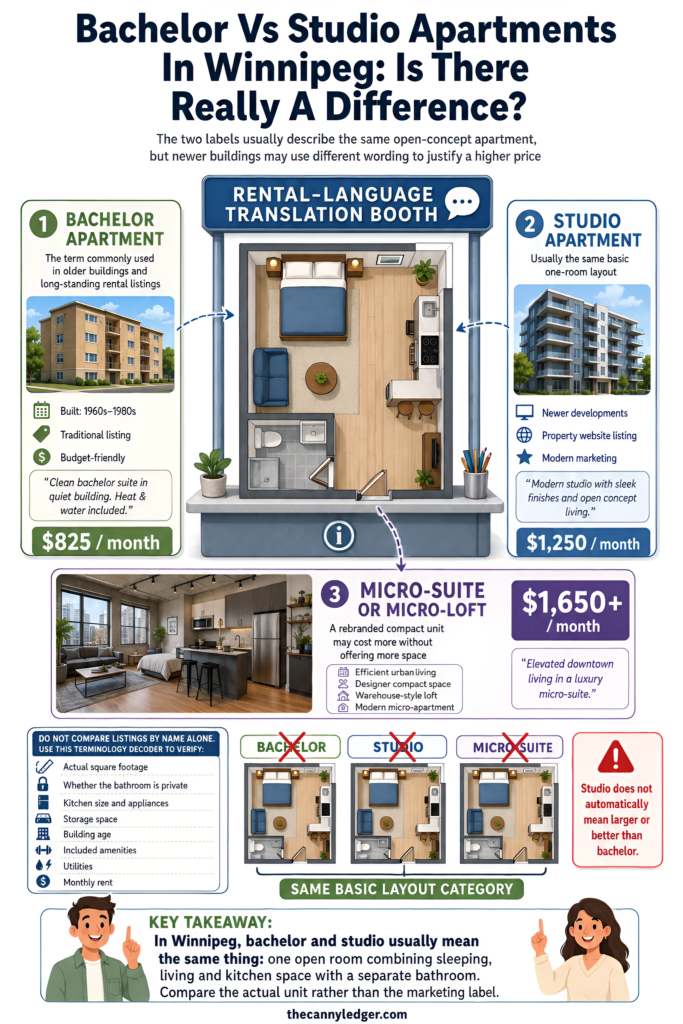
In Winnipeg listings, “bachelor” and “studio” get used almost interchangeably, both describe a single main room that combines the bedroom, living area, and kitchen, usually with a separate bathroom as the only enclosed space. Older buildings tend to use “bachelor,” a term that’s stuck around from decades of Manitoba rental listings, while newer developments favor “studio” or “micro-suite” as a rebrand, sometimes attaching a higher price to the same basic layout. Functionally there’s rarely a real difference, so don’t assume a “studio” listing is a different, larger category than a “bachelor” one without checking the actual square footage.
What You’re Actually Getting for the Square Footage
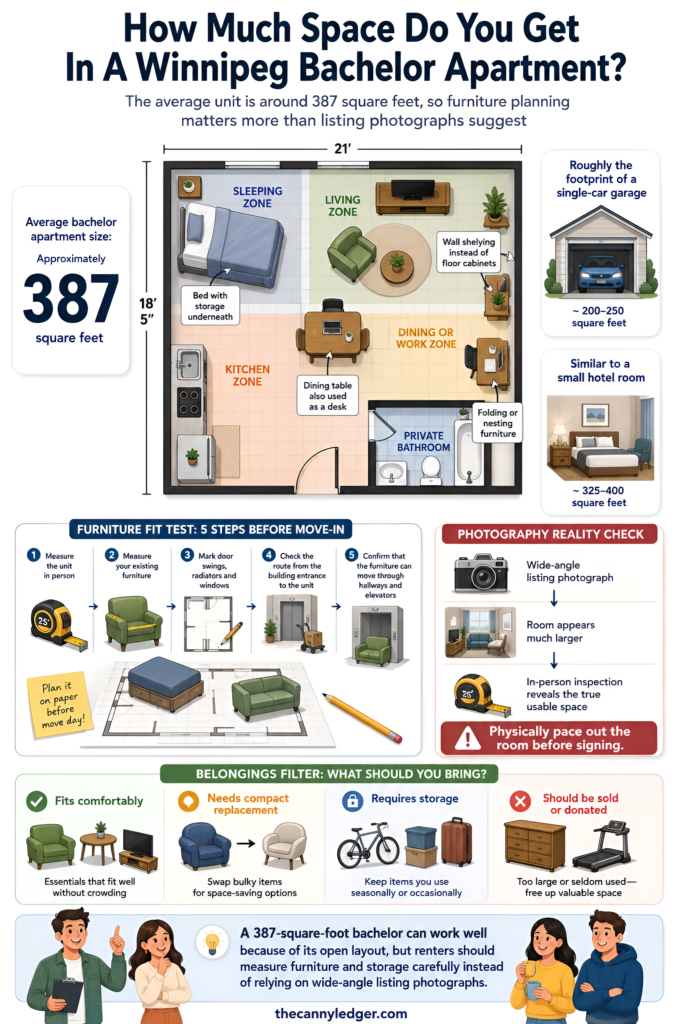
The average bachelor apartment in Winnipeg runs around 387 square feet, roughly the footprint of a single-car garage or a small hotel room. That’s tight, but the open layout, no walls separating the kitchen from the living and sleeping space, tends to make it feel more usable than the raw number suggests. Before signing anything, it’s worth physically pacing out whether your furniture and general amount of stuff will actually fit, since photos taken with a wide-angle lens can make a bachelor unit look considerably roomier than it is in person.
Old Stock vs New Micro-Units: Two Very Different Price Tags
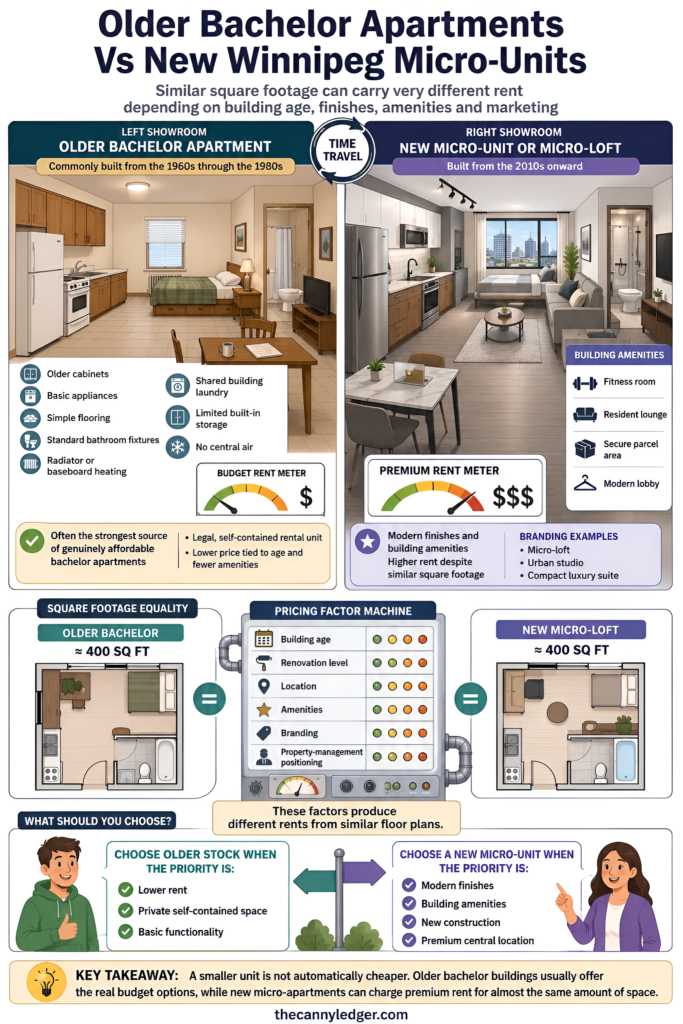
This is the split that trips up a lot of budget-focused renters. Older bachelor buildings, mostly walk-ups and mid-rises built between the 1960s and 1980s, make up the bulk of what’s actually affordable in this category. They’re dated, often without in-suite laundry or central air, but they’re legitimate, legal rental units at a real budget price point. Newer downtown developments marketing themselves as micro-lofts or micro-apartments are a different animal entirely: similar square footage, sometimes even smaller, but built with modern finishes, in-building amenities, and rent to match. A unit at 400 square feet in a converted warehouse loft downtown can cost noticeably more than a similarly sized bachelor a few blocks away in an older building, purely because of the finishes and branding, not the space itself.
Where the Older, Cheaper Buildings Cluster
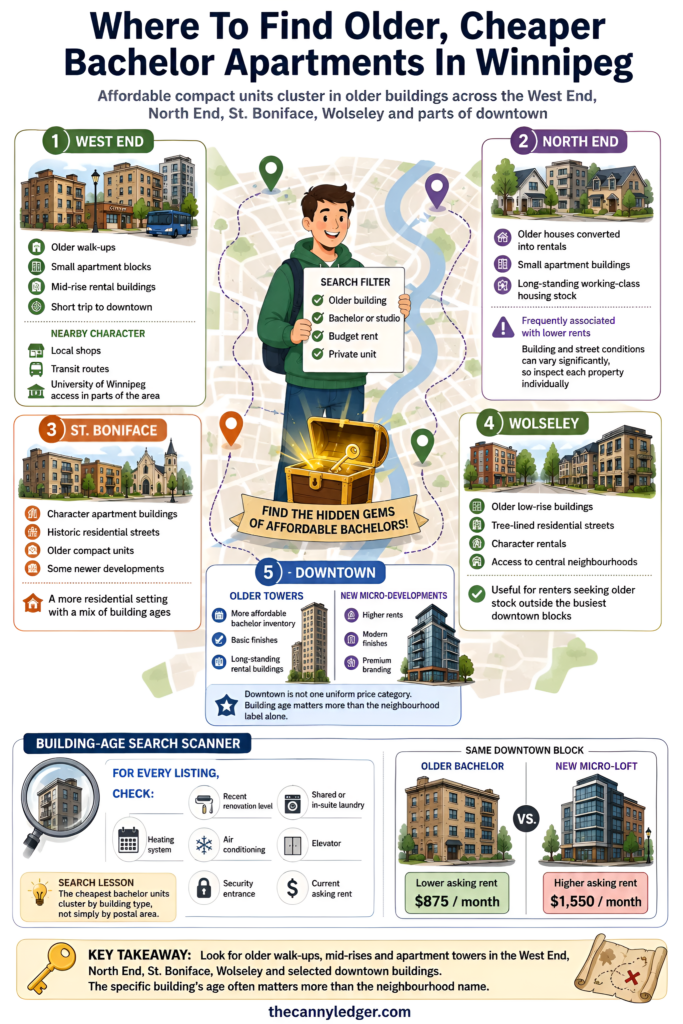
Older bachelor stock tends to concentrate in the same areas that show up consistently on Winnipeg’s cheaper rent-tracking zones, particularly the West End and North End, both close enough to downtown for an easy commute without downtown’s price premium. St. Boniface and Wolseley also carry a mix of older, smaller units at a more residential pace, useful if a busier downtown block isn’t the priority. Downtown itself is a mixed bag: it holds both some of the oldest, most affordable bachelor stock in the city and the newest, priciest micro-lofts, so the neighborhood name alone tells you less than checking the specific building’s age.
The Tenant Services Deposit Most Renters Don’t Expect
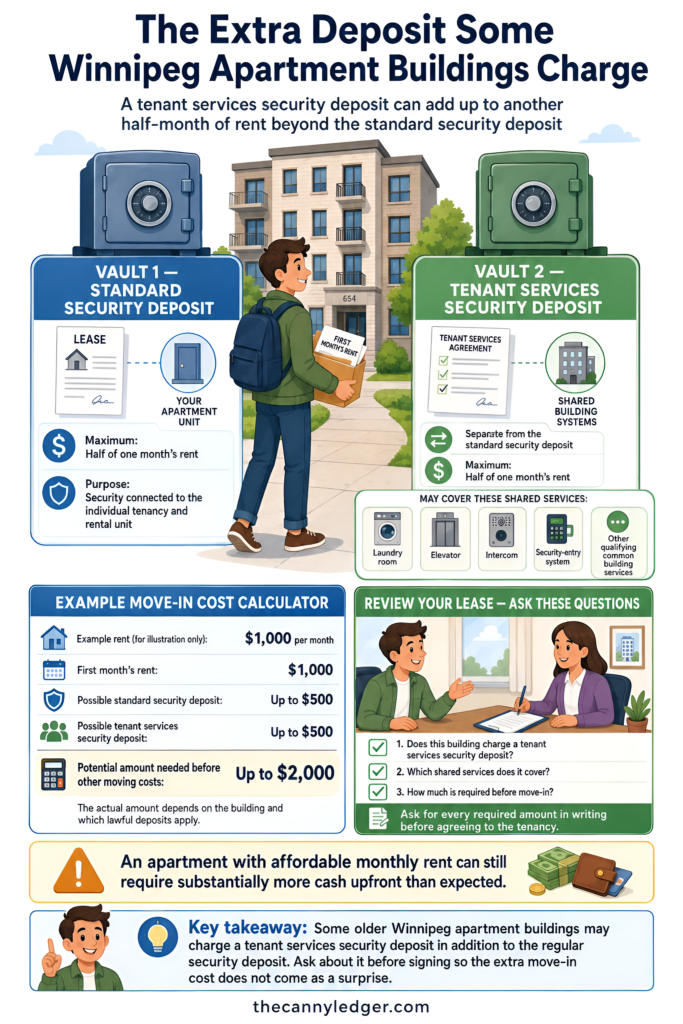
Older apartment buildings with shared amenities, laundry rooms, elevators, or an intercom and security system, can charge something beyond the standard security deposit: a tenant services security deposit, also capped at half a month’s rent in Manitoba. It’s a separate line item from the regular deposit, meant to cover those shared building services rather than damage to your specific unit, and it’s easy to miss when budgeting for move-in costs on an older highrise. Ask directly whether a building charges this before signing, since it can add several hundred dollars to what you need upfront beyond the rent and standard deposit.
Utilities in Older Bachelor Buildings
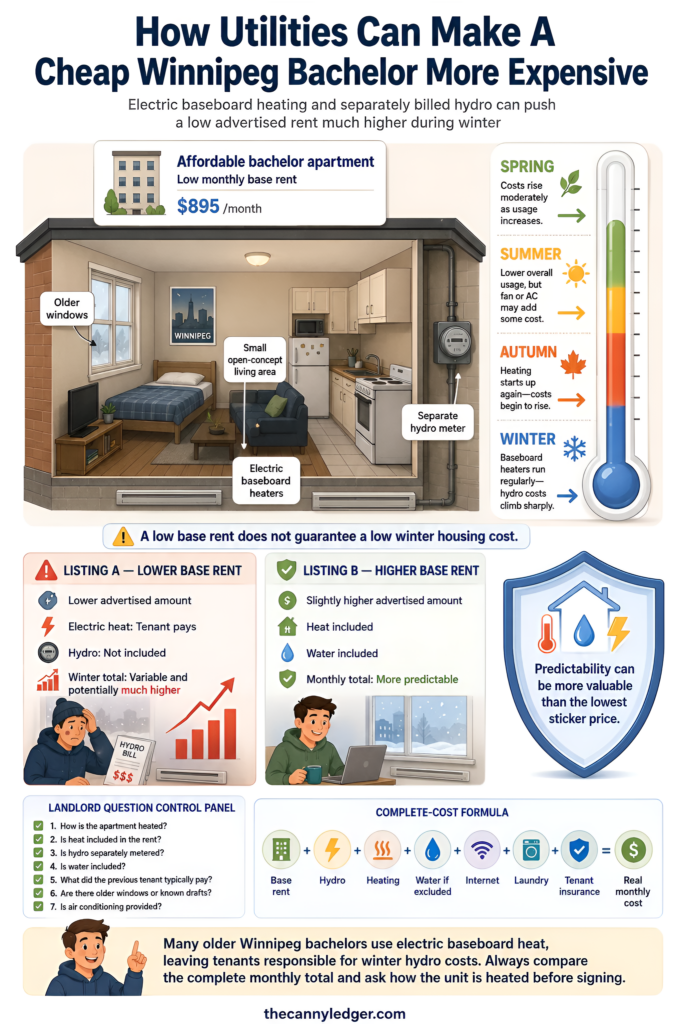
A lot of older Winnipeg bachelor units run on electric baseboard heating rather than a shared building furnace, which usually means hydro is billed separately and can climb fast through a Manitoba winter. A unit advertised at a genuinely low base rent can end up costing considerably more once heating season hits if utilities aren’t included, so always ask specifically how the unit is heated and whether that cost sits inside or outside the quoted rent. For anyone who’d rather have one predictable monthly number, it’s worth prioritizing listings that include utilities even if the base rent runs a little higher.
Best Places to Actually Search
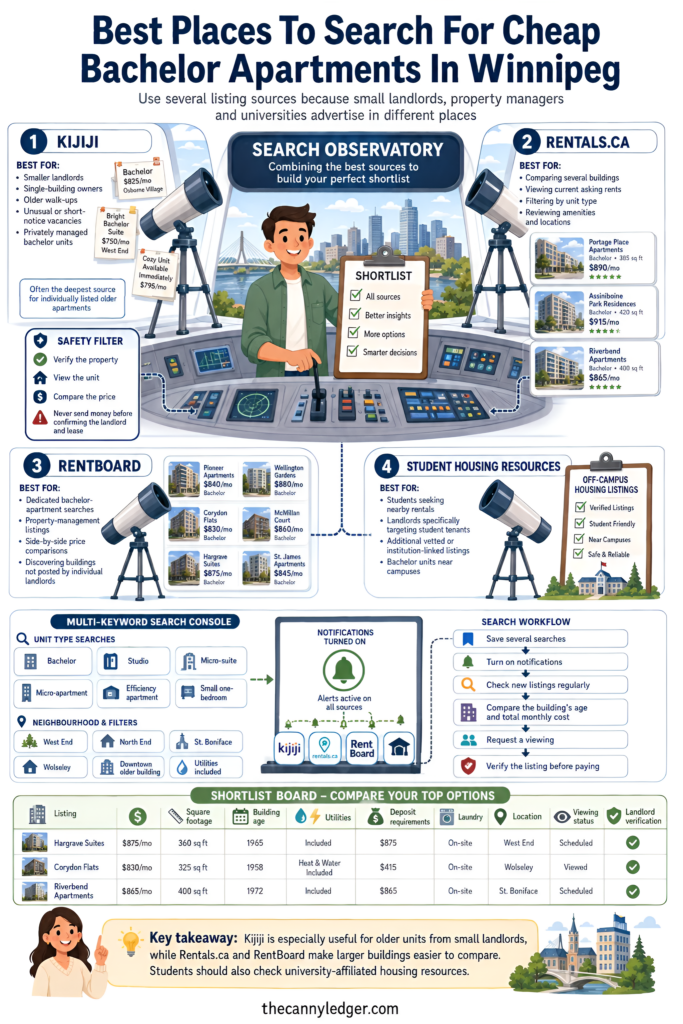
Kijiji remains the deepest source for individually listed bachelor units in Winnipeg, especially from smaller landlords managing a single older building rather than a large property management company. The full search strategy for filtering out stale or misleading posts applies just as much here as with any other unit type. Beyond Kijiji, rentals.ca and RentBoard both maintain dedicated bachelor apartment listings pulled from larger property management companies, useful for comparing several buildings’ current asking rents side by side rather than one listing at a time. Students specifically have an extra resource worth checking first, covered in student rentals and apartments in Winnipeg, since university-affiliated listing registries sometimes carry bachelor units landlords don’t bother posting elsewhere.
Common Questions About Bachelor and Studio Apartments in Winnipeg
Is the security deposit smaller for a bachelor unit since it’s a smaller space? Not because it’s smaller specifically, but the math works out that way anyway. Manitoba caps deposits at half of one month’s rent, so a $900 bachelor naturally has a lower dollar-amount deposit than a $1,500 one-bedroom, purely because the rent itself is lower, not because of any special discount tied to unit size.
Is a slightly bigger one-bedroom worth it if the price gap to a bachelor is small? Worth genuinely considering rather than defaulting to whichever is cheaper on paper. If a one-bedroom is only $50 to $100 more a month than a bachelor in the same building or area, the extra separation between sleeping and living space, and the resale value if you ever want a roommate, can outweigh the small monthly saving. It comes down to how much you personally value having a door between your bed and your kitchen.
What should I check before signing on an older bachelor unit specifically? Beyond the usual condition report, ask about the heating type and whether it’s included in rent, whether there’s a tenant services deposit on top of the standard one, and whether laundry is in-suite, in-building, or requires a trip elsewhere. These three details vary more in older buildings than in newer ones, where they’re usually already standardized and disclosed upfront.
Search with the building’s age and heating setup in mind as much as the listed rent itself, since two bachelor apartments at the same monthly price can end up costing very differently once utilities and move-in fees are factored in. Starting with Kijiji for older independent listings, then cross-checking rentals.ca or RentBoard for a wider comparison, covers most of what’s actually available in this category right now.