


“Is leasing cheaper than buying” doesn’t actually have a single correct answer, and anyone who tells you it does is skipping the part of the math that actually determines it: how many kilometres you drive, how long you keep a vehicle, and, if you’re in Manitoba specifically, how this province taxes the two transactions in genuinely different ways than most lease-versus-buy calculators built for other provinces assume. That last part gets skipped constantly, and it’s worth understanding before any of the more familiar mileage-cap and monthly-payment comparisons even come into play.
- The Manitoba tax mechanic almost every generic comparison misses
- How a lease payment is actually built, versus a loan payment
- Running the actual multi-year comparison
- Mileage limits and what Winnipeg driving actually looks like
- Wear and tear, early termination, and the parts of a lease that punish flexibility
- Who leasing genuinely makes sense for
- Who buying genuinely makes sense for
- Insurance considerations specific to a leased vehicle
- So, is it actually cheaper?
The Manitoba tax mechanic almost every generic comparison misses
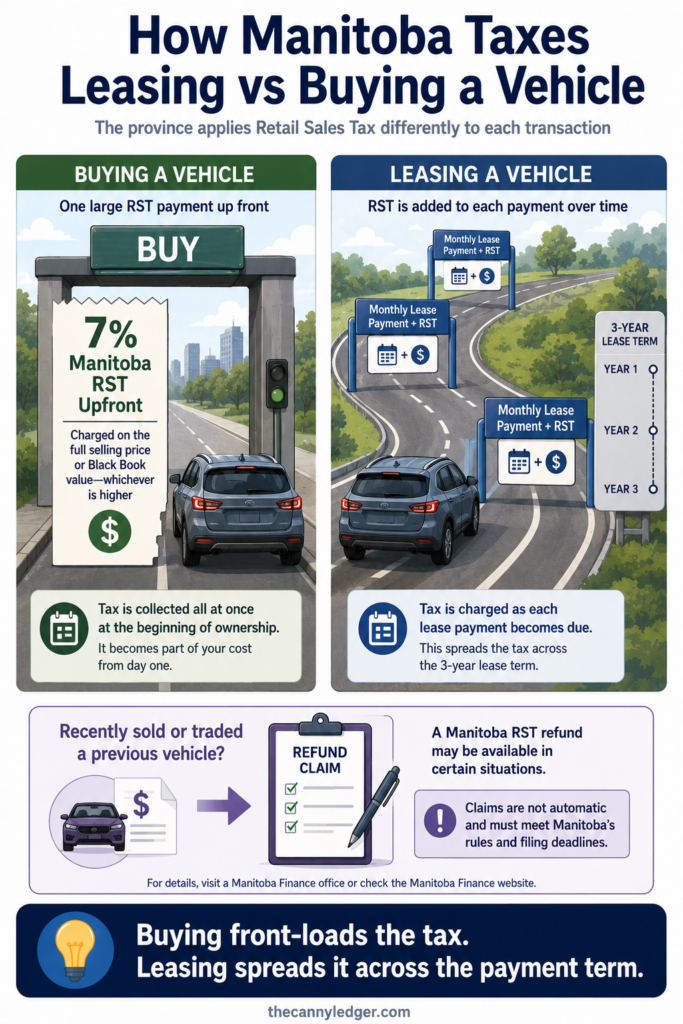
When you buy a vehicle in Manitoba, whether with cash or financed, Retail Sales Tax is charged upfront on the full purchase price, currently 7 percent, calculated on the vehicle’s selling price or Black Book value, whichever is higher. When you lease, Manitoba does something structurally different: RST is charged on each individual lease payment as it comes due, rather than as a single lump sum on the vehicle’s full value at signing. Functionally, this spreads your tax obligation out across the lease term instead of front-loading it into your down payment or your first month’s costs, which changes the actual cash-flow comparison between leasing and buying in this specific province compared to a jurisdiction that taxes both transactions the same way.
There’s a practical follow-on worth knowing too: if you lease a vehicle and then sell or trade a previous vehicle within roughly six months of that lease starting, or if the lease concludes and you’ve paid RST across your payments totalling the equivalent of the vehicle’s full taxed value, Manitoba’s Retail Sales Tax Act includes a refund mechanism, administered by Manitoba Finance, that can return some of what you’ve paid. It’s a genuinely underused provision, and it’s worth a call to Manitoba Finance directly if your situation involves trading in a recently owned vehicle around the same time you’re entering a new lease, since the paperwork isn’t automatic and claims need to be filed within a defined window.
How a lease payment is actually built, versus a loan payment
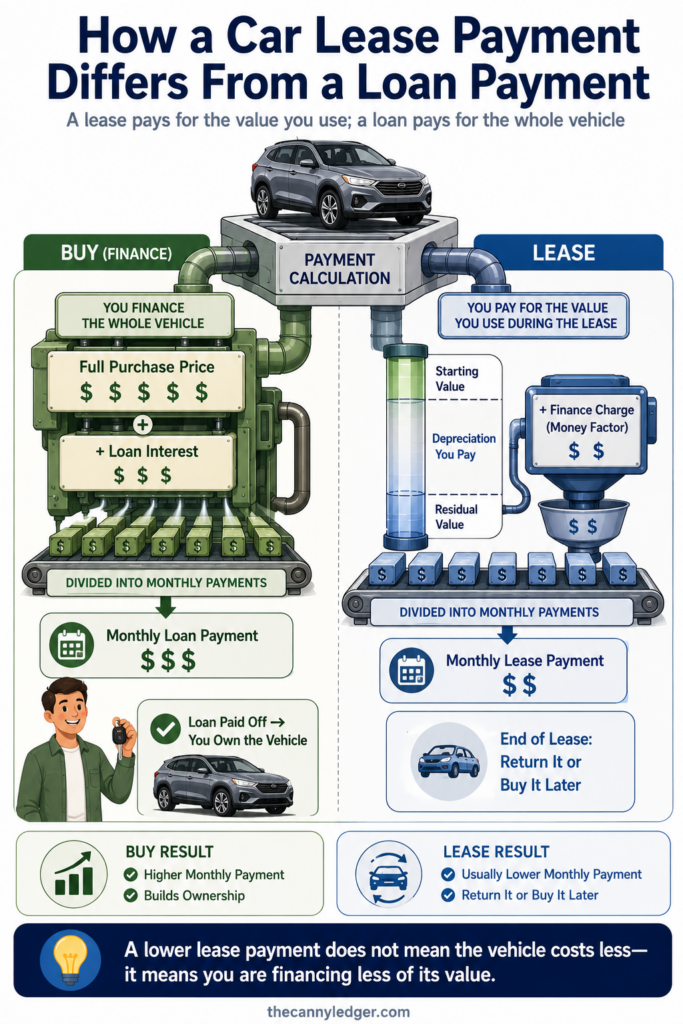
A financed purchase is straightforward in structure: you’re paying down the full purchase price plus interest over the loan term, and at the end, you own the vehicle outright. A lease payment is built from two entirely different components. The first is depreciation, the gap between the vehicle’s starting value and its predicted residual value, the amount the leasing company expects the car to be worth when you hand it back, spread across the term. The second is a finance charge calculated using something called a money factor, functionally the lease’s version of an interest rate, just expressed as a small decimal rather than a percentage.
Because a lease payment only covers the portion of the vehicle’s value you’re actually using up during the term, rather than the entire purchase price, the monthly number is almost always lower than an equivalent loan payment on the same vehicle. That’s the appeal, and it’s real. What it isn’t is free: at the end of a lease, you’ve paid for the use of a depreciating asset and have nothing to show for it beyond the option to buy it at a predetermined price, while a loan, once paid off, leaves you holding an asset with real resale value.
Running the actual multi-year comparison
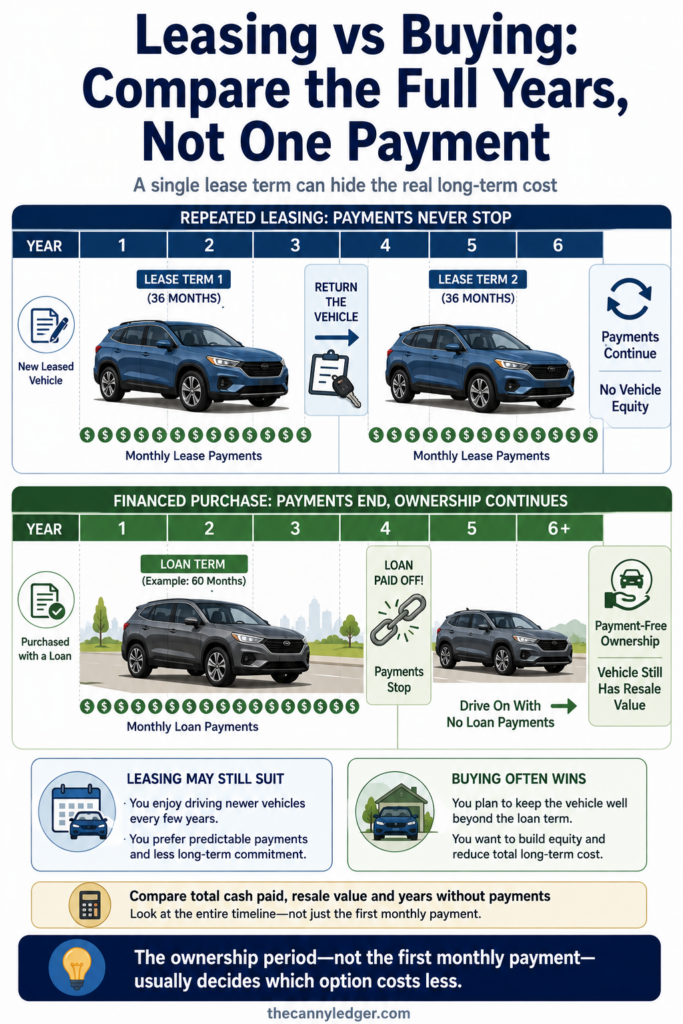
The comparison that actually matters isn’t one lease term against one loan term, since a single three-year lease with a low monthly payment will almost always look cheaper in isolation than a five- or six-year loan. The comparison that matters is what happens over the years you’d actually be driving, repeated leases against a purchase you hold onto well past the loan’s payoff date.
Someone who leases continuously, rolling into a new lease every three years indefinitely, is making payments essentially forever and never builds equity in anything. Someone who finances a purchase and keeps driving the vehicle for several years after the loan is paid off gets a meaningful stretch of payment-free ownership, holding an asset that still carries real value even after depreciation. Run the full comparison out five or six years rather than stopping at the end of a single lease or loan term, and buying frequently comes out ahead in total dollars spent for someone who keeps vehicles long-term, while leasing tends to win for someone who genuinely values driving a new vehicle every few years and would trade in or sell a purchased vehicle on roughly the same cycle anyway, since trading in a financed vehicle early carries its own real costs in the form of remaining loan balance and lost equity.
Mileage limits and what Winnipeg driving actually looks like
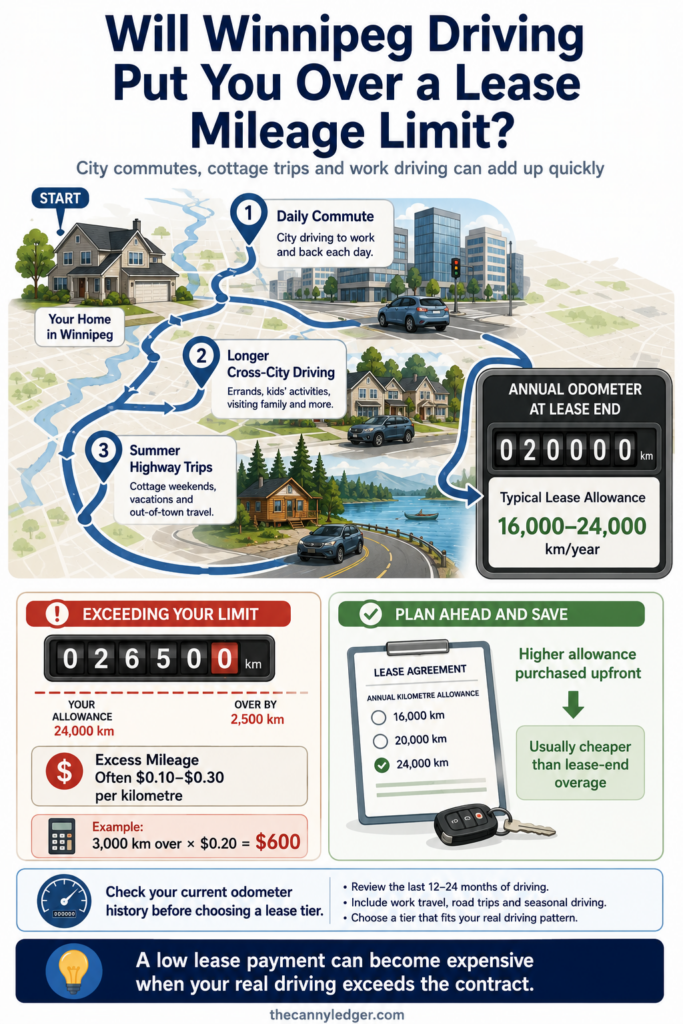
Canadian leases typically cap annual mileage somewhere between 16,000 and 24,000 kilometres, with overage charges at lease-end commonly running ten to thirty cents per kilometre once you exceed that allowance. This is worth taking seriously rather than treating as a formality, particularly for anyone commuting from the suburbs, driving to a cottage regularly through the summer, or working a job that puts real kilometres on a vehicle day to day. Winnipeg’s sprawl means a commute from the far reaches of the city, or trips out to the Interlake or cottage country, can add up faster than the standard lease allowance anticipates, and going even a few thousand kilometres over the limit across a three-year term can turn what looked like the cheaper monthly option into a lease-end bill that erodes or eliminates the savings entirely.
If your driving is genuinely light, a daily commute under normal city distances with limited highway trips, mileage caps are unlikely to be an issue and this consideration matters much less. If you’re unsure, pulling your current vehicle’s odometer history and calculating your actual annual average before committing to a lease’s mileage tier is worth the ten minutes it takes, and most leasing companies let you purchase a higher mileage allowance upfront for a smaller monthly increase rather than facing the much steeper overage rate at return.
Wear and tear, early termination, and the parts of a lease that punish flexibility
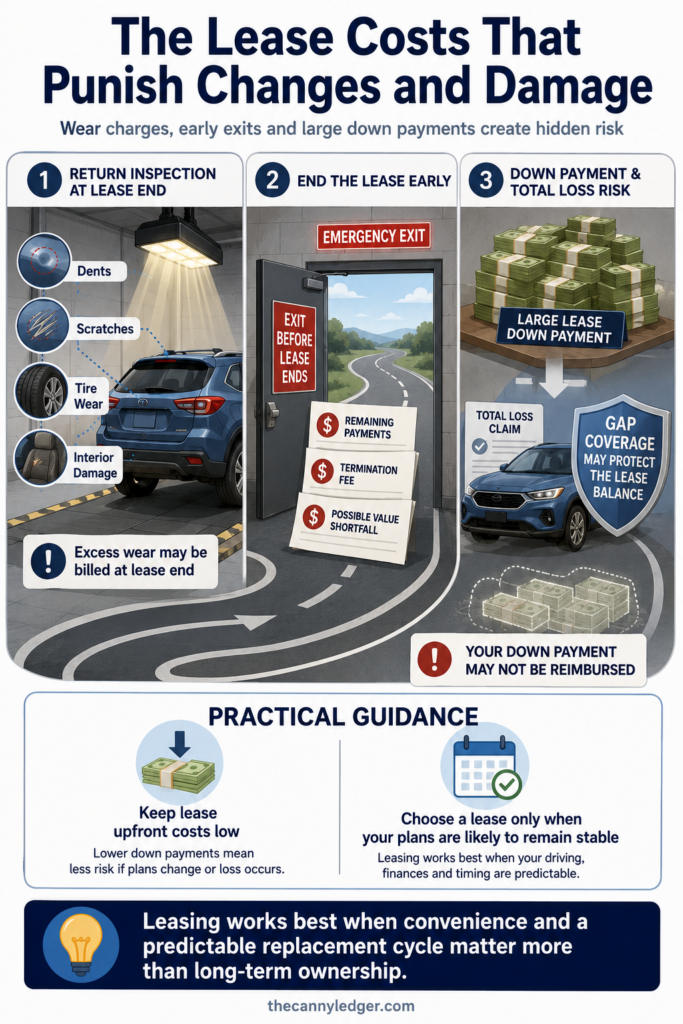
Normal wear is permitted on a leased vehicle, but anything beyond that, meaningful dents, significant scratches, excessive tire wear, interior damage, gets charged at the lease-end inspection, and ending a lease early is genuinely expensive, typically leaving you responsible for the remaining payments, an early termination fee, and potentially the gap between the vehicle’s actual market value and its predicted residual value, making a lease a poor fit for anyone whose situation, income, or vehicle needs might change meaningfully within the term.
It’s also worth knowing that a large down payment on a lease carries a specific risk most buyers don’t anticipate: if the vehicle is totalled or stolen early in the term, gap insurance typically covers the outstanding balance owed to the leasing company, but it does not reimburse your down payment, which simply disappears in that scenario. Keeping a lease’s upfront cost minimal and letting the value flow through the monthly payments instead is generally the more financially sound structure for exactly this reason.
Who leasing genuinely makes sense for
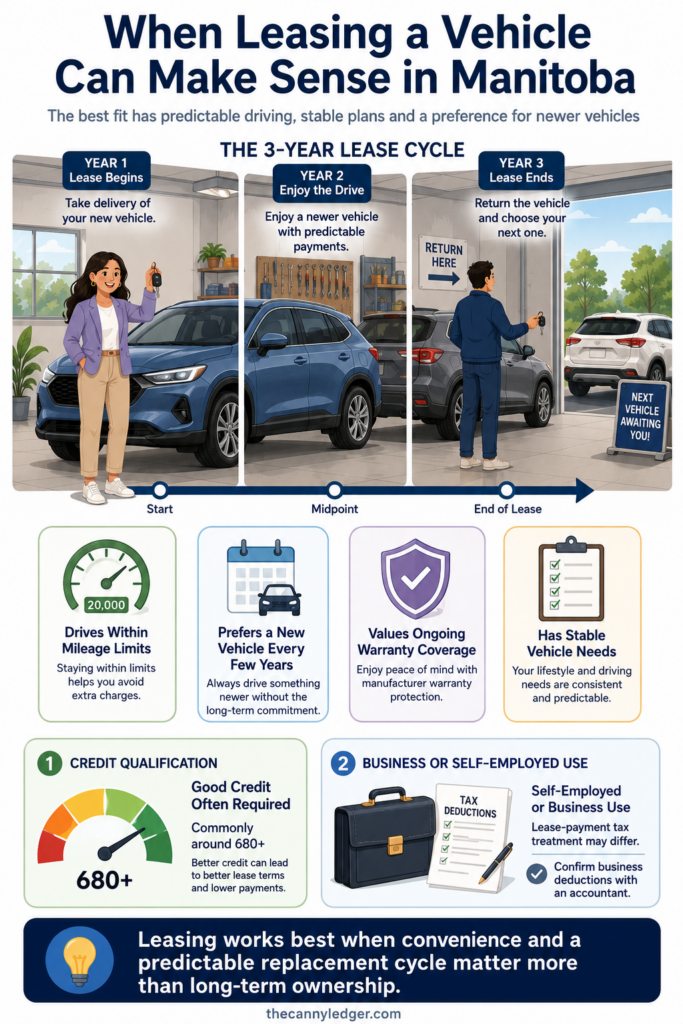
Leasing tends to suit someone who values driving a newer vehicle on a predictable cycle, drives well within standard mileage limits, and would rather have manufacturer warranty coverage for essentially the entire time they’re driving the car than deal with out-of-warranty repairs on an aging, owned vehicle. It also carries a genuine advantage for anyone self-employed and using the vehicle for business purposes, since lease payments can offer different tax deductibility treatment than loan interest and depreciation on a purchased vehicle, a detail worth discussing directly with an accountant rather than assuming based on general advice. Leasing also typically requires good credit, generally 680 or higher, meaning it isn’t the accessible option for buyers already working with a damaged credit history the way our bad credit car loans in Winnipeg guide covers, since a leasing company is taking on residual value risk a lender extending a straightforward loan isn’t exposed to in the same way.
Who buying genuinely makes sense for
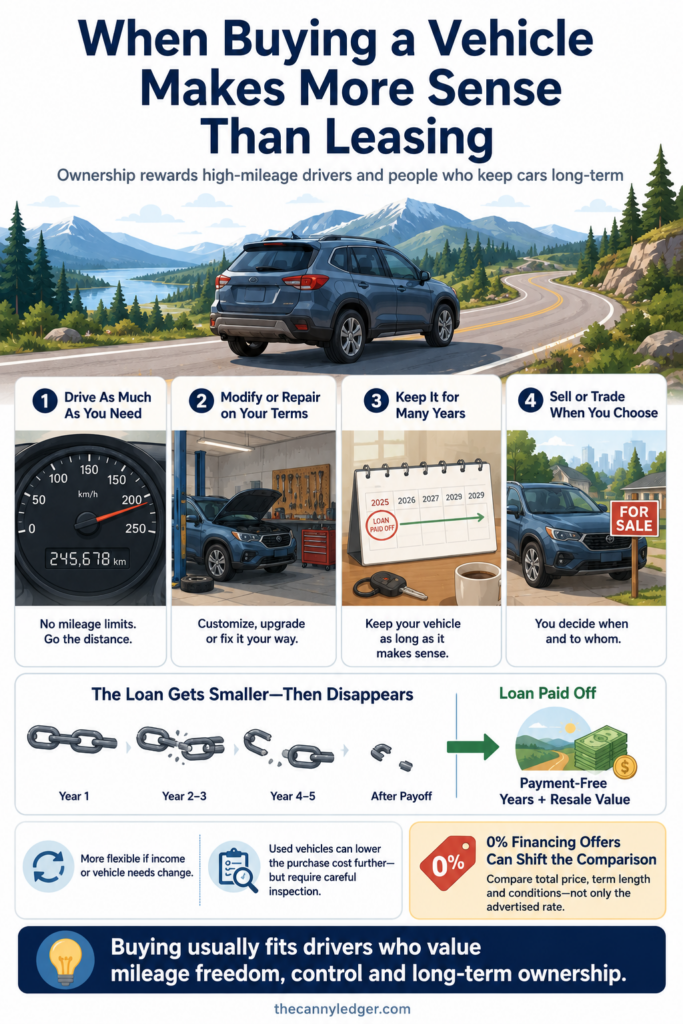
Financing a purchase suits anyone who drives higher-than-average mileage, plans to keep a vehicle well beyond a typical loan term, or simply wants the flexibility to modify, sell, or trade a vehicle on their own timeline rather than within a lease’s rigid structure. If a used vehicle purchase is part of that comparison rather than new, our buying a used car in Winnipeg guide covers the specific checks worth running before committing to that route. It’s also the more forgiving option if your income or situation might shift unpredictably over the next few years, since owning outright, or even mid-loan, carries none of a lease’s early termination penalties if your plans change. Our car loans in Winnipeg guide covers the financing side of this decision in depth, including the 0 percent promotional offers that sometimes make buying even more competitive against a lease’s low monthly payment than the sticker numbers alone suggest.
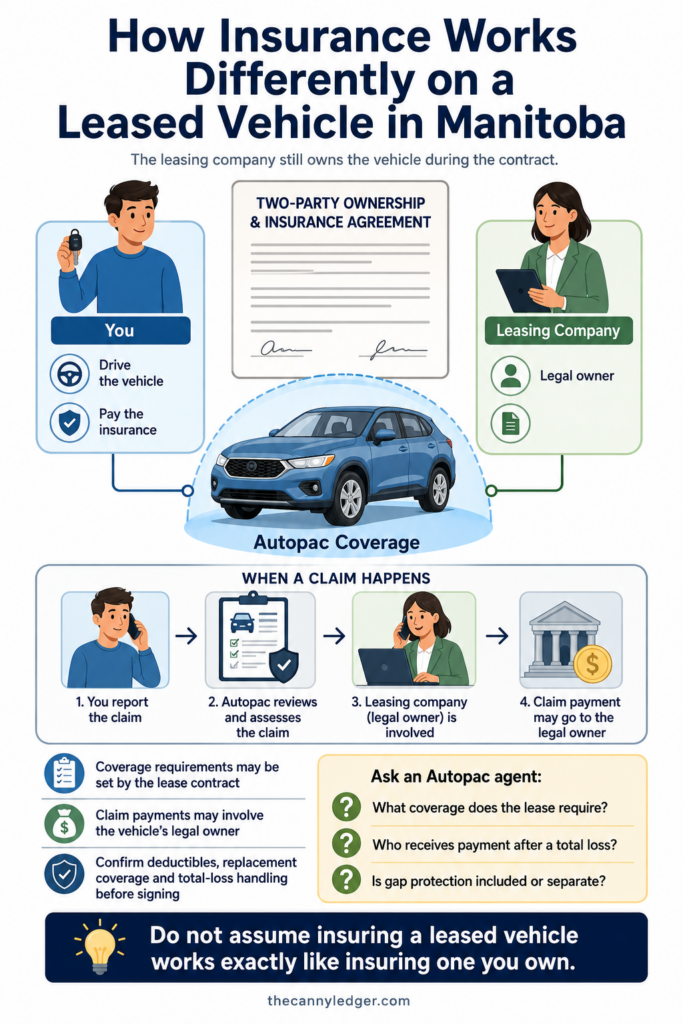
Insurance considerations specific to a leased vehicle
Because a leasing company technically retains ownership of a leased vehicle even while you’re the one driving and insuring it, your Autopac coverage requirements and how a claim gets processed can differ subtly from a vehicle you own outright. It’s worth confirming these specifics directly with an Autopac agent before signing a lease rather than assuming your coverage works identically either way. Our Winnipeg car insurance rates and calculator, what is MPI, and Manitoba Public Auto Insurance guides are a useful starting point for understanding how Autopac’s structure applies to your specific situation, whether you end up leasing or buying.
So, is it actually cheaper?
For most people who drive a normal amount and keep vehicles for a reasonable stretch of years, buying tends to cost less in total dollars over time, precisely because a lease never stops costing you money the way a paid-off loan does. Leasing wins specifically for the driver who genuinely wants a new vehicle every few years regardless of the cost comparison, who drives well under the mileage cap, and who values predictable payments and constant warranty coverage over building equity in something they own. Run your own numbers against your own actual mileage and how long you realistically keep a vehicle before deciding, factor in how Manitoba’s RST is calculated differently on each path, and treat the lower monthly payment on a lease as the start of the comparison rather than the answer to it.