
Almost every article on this question ends the same way, with some version of “it depends on your situation,” and then stops right there without actually telling anyone what their situation should lead them to conclude. That’s not wrong exactly, the right answer does vary by household, but it’s also not useful, since it hands the reader back the exact question they came in with. This one is going to commit to an actual answer, organized around the small number of factors that actually determine it, rather than retreating into a shrug.
- Who Actually Doesn’t Need It
- Who Clearly Does
- The Middle Ground Nobody Actually Addresses
- The “I Have Coverage Through Work” Objection
- The Cost Objection, Addressed Honestly
- The Investment Alternative, Given a Fair Hearing
- The Part Where Most People Get This Wrong
- My Actual Answer
- What to Actually Do With This
- Frequently Asked Questions
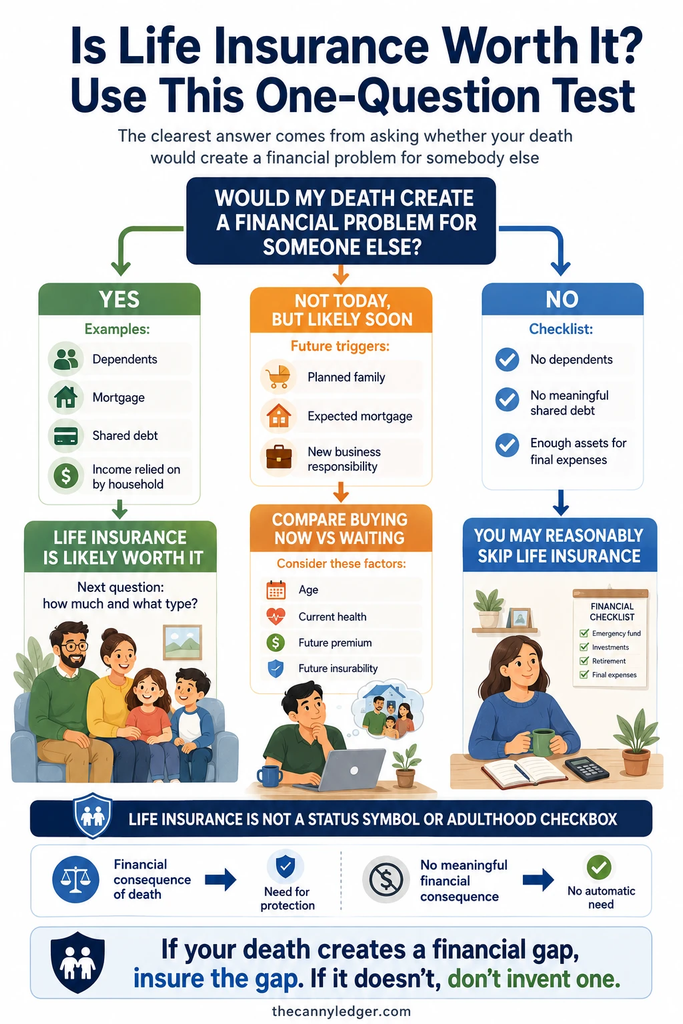
Life insurance is worth it for most Canadians with dependents, a mortgage, or shared debt, since the cost of a term policy is small relative to the financial gap it would close, and it’s not worth it for someone with no dependents, no debt, and enough savings to cover their own final expenses. Everyone else sits somewhere between those two extremes, and the honest answer for that middle group depends on a handful of specific, checkable facts rather than a feeling.
Who Actually Doesn’t Need It
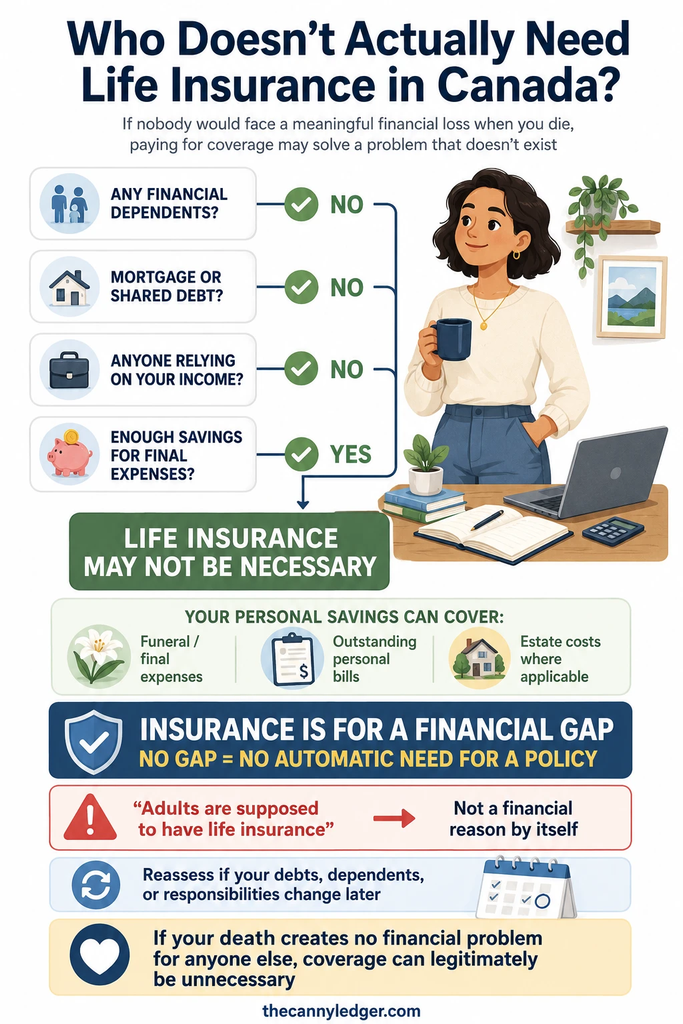
Start with the group where “not worth it” is the correct answer, not a hedge. Someone single, with no dependents, no meaningful debt, and enough in savings and assets to cover their own funeral and final expenses has nobody whose finances would actually suffer from their death. MoneySense puts this plainly through a financial advisor’s own words, describing life insurance as something to skip specifically when someone has “enough savings and assets to cover all your end-of-life expenses,” a threshold that the Financial Consumer Agency of Canada frames similarly in its own general guidance on who the product is actually meant to protect. That’s a real, legitimate category of person, and buying coverage anyway out of general anxiety or a sense that adulthood requires it is paying an ongoing premium against a risk that doesn’t actually create a problem for anyone.
Who Clearly Does
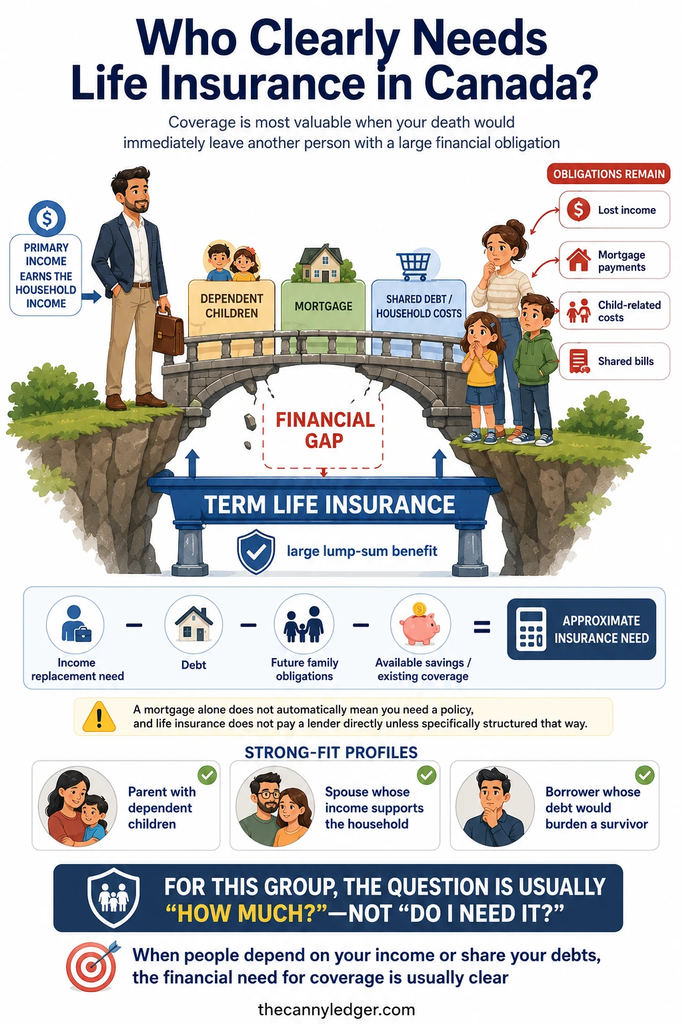
The other end is just as clear. A parent whose children depend on their income, a spouse contributing to a household budget that would actually strain without it, or anyone carrying a mortgage or other debt that would otherwise fall to a survivor, has a real financial gap that opens the moment they die. Sizing that gap correctly rather than guessing at a round number is its own separate task, but the existence of the gap itself isn’t really in question for this group. The relevant comparison here isn’t whether life insurance is expensive in the abstract, it’s whether a modest monthly premium is a bigger burden than the actual financial hole a death would leave behind, and for almost everyone in this category, it clearly isn’t.
The Middle Ground Nobody Actually Addresses
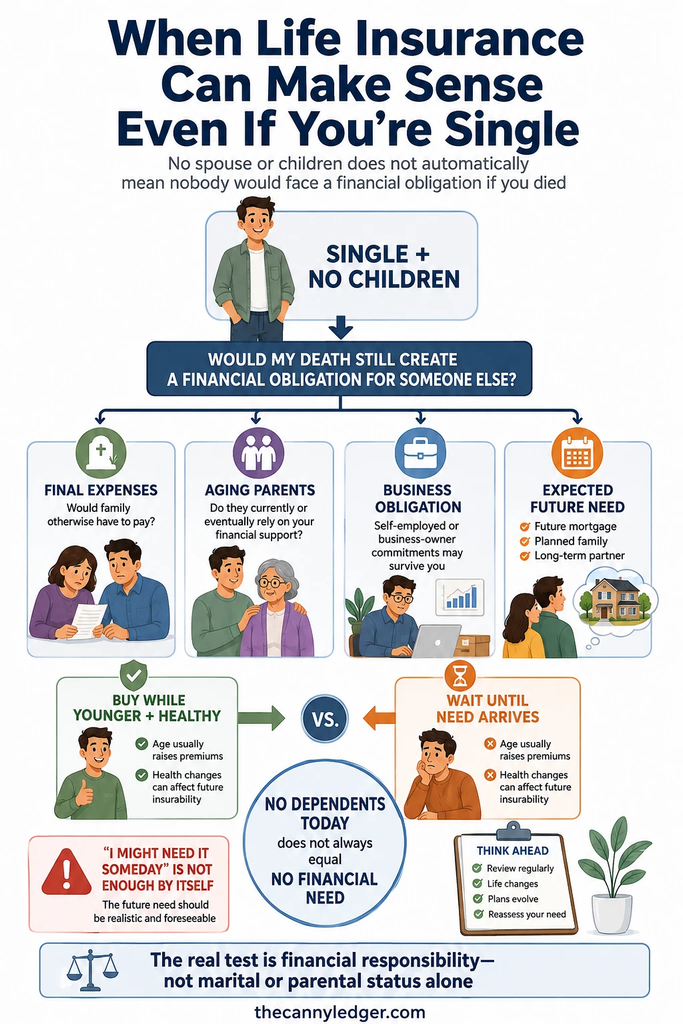
This is where most of the real uncertainty lives, and it’s the group every other article rushes past to get to a tidy conclusion. Someone single with no kids and no debt isn’t automatically in the “doesn’t need it” category the moment those three boxes get checked. Sun Life’s own guidance for single people points out several real reasons coverage can still make sense here, funding final expenses so nothing falls to family, covering a business obligation if self-employed or a business owner, or setting money aside for aging parents who might eventually need care. None of these require a spouse or children to matter. They just require honestly asking whether death would create a financial obligation for someone else, even a smaller or less obvious one than a mortgage.
There’s also a timing argument worth taking seriously rather than dismissing as a sales pitch. Someone who’s single and debt-free today but expects that to change within a few years, a future mortgage, a future family, has a real reason to consider locking in a term policy now rather than waiting, since health can change unpredictably and premiums only climb with age. This isn’t the same as saying everyone should buy coverage just in case. It’s saying that for someone who already expects to need it eventually, the cost of waiting is a real, calculable one, not a hypothetical.
The “I Have Coverage Through Work” Objection
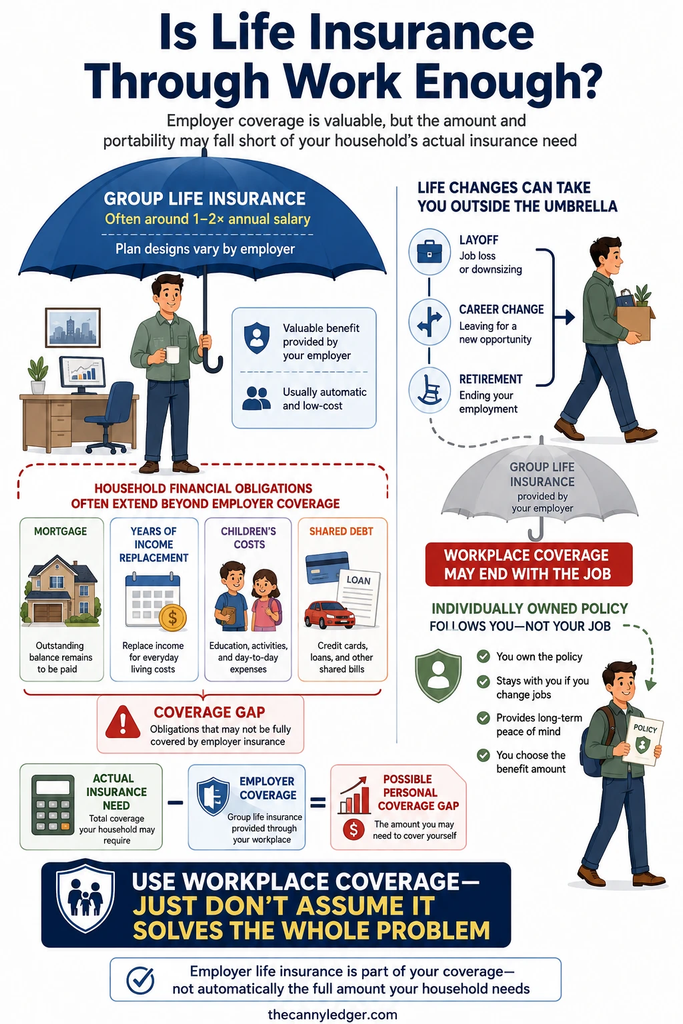
This is one of the more common reasons people talk themselves out of buying anything personally, and it deserves a direct answer rather than a vague caution. Group life insurance through an employer is real coverage, but it typically caps out at a flat multiple of salary, often one or two times annual income, and it generally disappears the day employment ends, whether through a layoff, a career change, or retirement, a limitation CLHIA’s own industry data reflects in how much of the country’s total coverage still runs through individually owned policies rather than workplace plans alone. For someone whose actual calculated need is meaningfully larger than that multiple, or who wants coverage that doesn’t depend on staying at a specific job, workplace coverage alone is filling only part of the actual gap, not all of it. It’s a real benefit worth using, just not a substitute for an individually owned policy sized to the actual number a household needs.
The Cost Objection, Addressed Honestly
Cost is the reason people most often cite for skipping coverage they otherwise admit they probably need, and it’s worth being straightforward about how thin that objection actually is for most healthy adults in their 20s, 30s, and even 40s. A basic term policy can be found for a small monthly amount, often less than a typical streaming subscription bill for meaningful coverage at younger ages. The honest version of the cost objection isn’t “I literally cannot afford this.” It’s usually “I haven’t prioritized this over other spending,” which is a completely different problem with a completely different solution, and pretending the two are the same is how a real, closeable gap stays open for years longer than it needs to.

The Investment Alternative, Given a Fair Hearing
The argument that money spent on premiums would grow faster invested elsewhere is worth taking seriously rather than waving away, and for permanent insurance specifically, it holds up reasonably well against a disciplined investor with an established habit of actually following through on that plan. It falls apart faster for term insurance, since a term premium is small enough that the amount being “saved” by skipping it rarely represents meaningful investable capital, and more importantly, an investment account doesn’t replace the specific thing life insurance actually does, guaranteeing a large, immediate lump sum exists the moment it’s needed, regardless of how long someone has been saving or how the market happened to be performing that particular year.

The Part Where Most People Get This Wrong
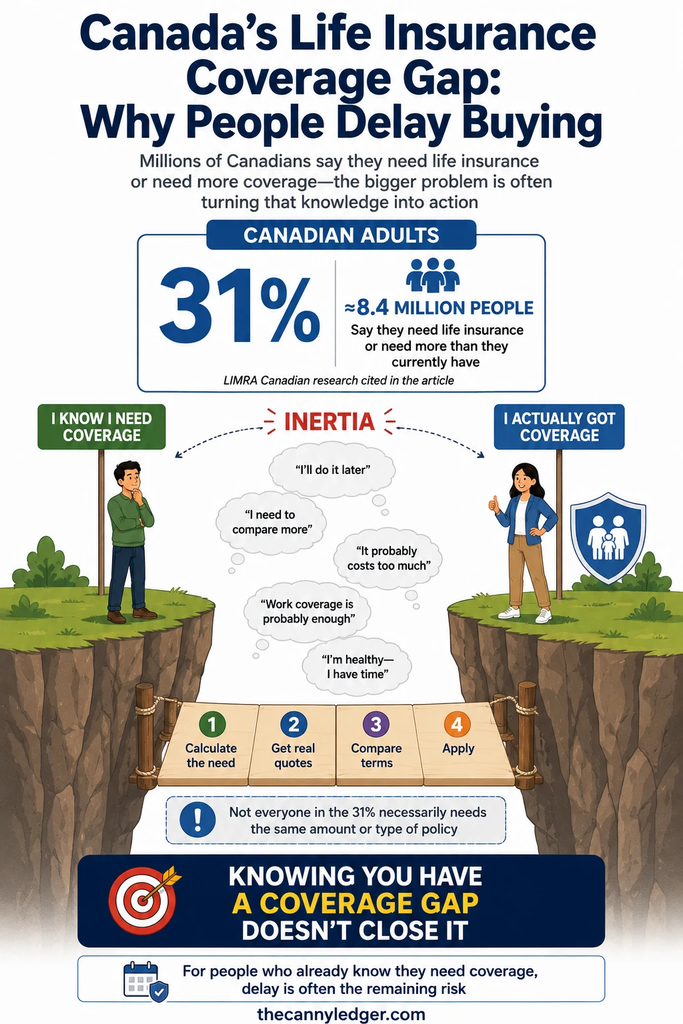
According to LIMRA’s own Canadian research, 31 percent of Canadian adults, roughly 8.4 million people, say they need life insurance or need more of it than they currently have. That’s a huge number of people who have already answered their own version of this question honestly and just haven’t acted on the answer yet. The gap between knowing coverage is worth it and actually buying it is rarely a real cost problem. It’s inertia, the same force that delays plenty of financial decisions that are obviously correct once actually looked at directly.
My Actual Answer
If dependents, a mortgage, or shared debt exist, life insurance is worth it, close to without exception, and the only real question is how much and what type, not whether. If none of those apply and there’s enough saved to cover final costs, it’s perfectly fine to skip it, and there’s no reason to feel behind for doing so. Everyone in between owes themselves an honest five-minute answer to a single question, would my death create a financial problem for someone else, even a modest one, rather than defaulting to whatever their peer group happens to be doing.
What to Actually Do With This
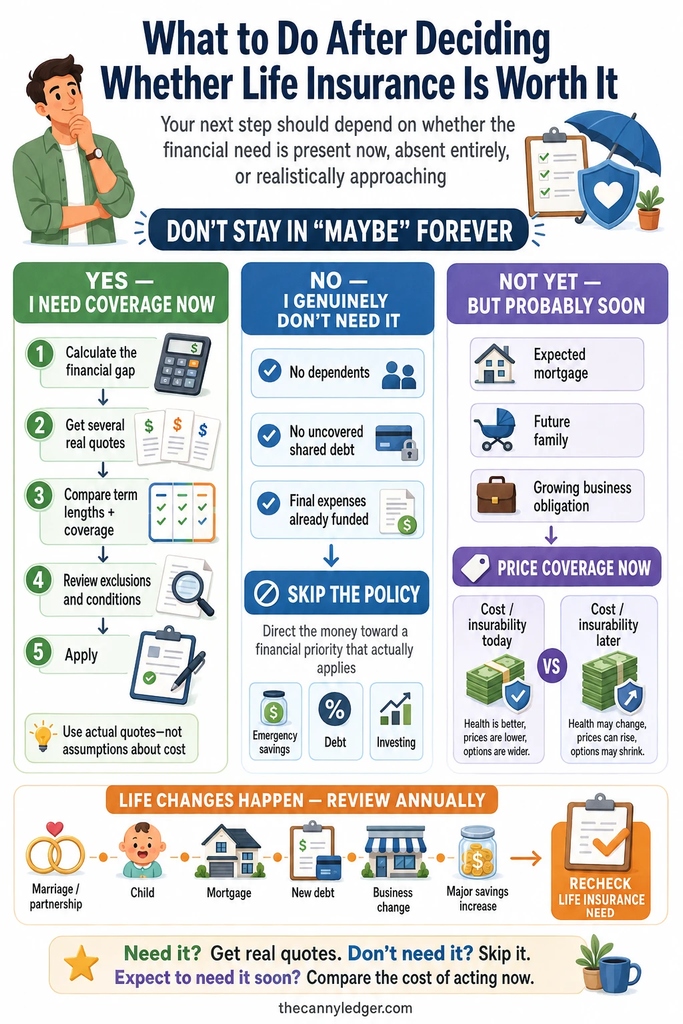
Answer the one question this whole article comes down to honestly. If the answer is yes, even a qualified yes, get a few real quotes rather than continuing to guess at what coverage would cost, since that number is almost always smaller than people expect once they actually check. If the answer is a clear no, the honest thing to do is stop feeling guilty about not having a policy and put that mental energy toward whatever financial priority actually applies to a life without dependents or debt. And if the honest answer is “not yet, but probably soon,” treat locking in coverage now, while healthy, as the cheaper version of a decision that’s coming either way.
Frequently Asked Questions
Does owning a business change this answer even for someone without personal dependents? Yes, often significantly, since business-specific obligations like a buy-sell agreement or a business loan can create the same kind of financial gap a mortgage would, even for someone with no spouse or children relying on them personally.
Is it worth buying life insurance purely to avoid burdening family with funeral costs? For many people, yes, since a modest policy sized specifically to funeral and final expenses is inexpensive and removes a real cost that would otherwise fall to family or an estate, even when no larger income replacement need exists.
Should someone who already has a will and some savings still consider life insurance? It depends on what those savings are actually earmarked for. Savings meant for retirement or a home don’t serve the same purpose as a death benefit meant to replace income or cover debt immediately, so having some savings doesn’t automatically make life insurance redundant.
Does the tax treatment of the payout factor into whether it’s worth it? It’s a meaningful point in its favour. The death benefit reaches a beneficiary completely tax-free, which means the full coverage amount is available to a family exactly when they need it, without the payout itself getting reduced by tax first.