“My insurance covers repairs” isn’t quite the flat guarantee most drivers assume it to be. It’s true right up until the cost of fixing a specific vehicle crosses a specific line, at which point the same policy stops paying for repairs entirely and switches to a cash payout instead. Understanding exactly where that line sits, and what actually decides it, matters more than knowing the general fact that collision damage is covered.
- Which Coverage Actually Pays Depends on How the Damage Happened
- The Total Loss Threshold That Actually Decides Repair Versus Write-Off
- The Insurer Decides, Not a Fixed Formula Alone
- Fault and the Deductible Still Apply Either Way
- You Have the Right to Choose Your Own Repair Shop
- What Happens If You Disagree With a Total Loss Decision
- What to Actually Do After an Accident
- Frequently Asked Questions
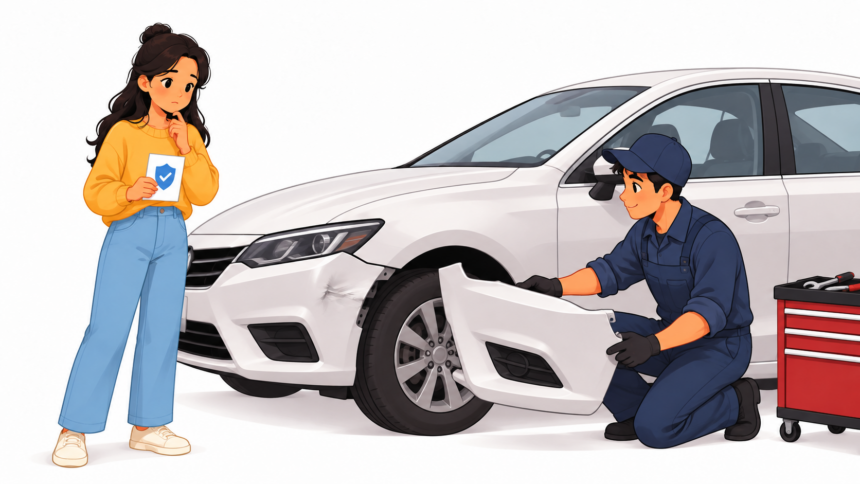
Auto insurance does cover repair costs after an accident through collision or comprehensive coverage depending on how the damage happened, but only up to the point where those repair costs approach the vehicle’s actual cash value, after which the insurer typically declares the vehicle a total loss and pays a cash settlement instead of paying for the repair. Which specific coverage applies, whether the insurer chooses to repair or write off the vehicle, and which repair shop actually does the work are all separate decisions worth understanding individually rather than assuming “covered” means the same thing in every scenario.
Which Coverage Actually Pays Depends on How the Damage Happened
Collision coverage pays for damage from an actual collision, hitting another vehicle, a stationary object, or rolling the car, regardless of who’s at fault. Comprehensive coverage instead pays for damage from causes other than a collision, theft, vandalism, weather, or an animal strike, for example. Both are optional coverages layered on top of the mandatory liability portion every policy carries, and a driver needs to actually hold whichever specific coverage applies to the cause of their own damage for repairs to be paid at all. Someone carrying only liability coverage, with no collision or comprehensive added, would find repairs to their own vehicle aren’t covered under that policy regardless of who caused the accident.
The Total Loss Threshold That Actually Decides Repair Versus Write-Off
This is the specific mechanic most drivers never think about until it applies to them directly. CAA South Central Ontario’s own explanation confirms insurers calculate a total loss ratio, comparing the cost of repairs against the vehicle’s actual cash value, and compare that ratio against an industry-standard range of 70 to 80 percent. Once repair costs cross into that range, the insurer typically declares the vehicle a total loss rather than paying to fix it, since spending that much on repairs no longer makes economic sense relative to what the vehicle itself is worth. TD Insurance’s own explanation confirms this decision also factors in whether the vehicle has non-repairable structural damage, which can trigger a total loss determination even below that percentage threshold on safety grounds alone.
The Insurer Decides, Not a Fixed Formula Alone
Crossing the repair cost threshold doesn’t automatically mean the vehicle gets written off, and staying below it doesn’t guarantee a repair either. The specific threshold used varies somewhat by insurer, and factors like salvage value, the practical safety of the repair, and overall repair quality all factor into the final call. This means two vehicles with similar percentage-based numbers can end up with different outcomes depending on the specific insurer and the specific circumstances of that vehicle’s damage.
Fault and the Deductible Still Apply Either Way
Whether the vehicle is repaired or declared a total loss, the standard deductible still applies to the claim, subtracted from whatever amount the insurer ultimately pays. Fault determination affects who ultimately bears the cost long term through future premiums, but it doesn’t change whether the immediate coverage itself responds, since collision coverage exists specifically to pay for a driver’s own vehicle damage regardless of fault. This is worth understanding since the fault conversation and the repair-versus-write-off conversation are two separate questions, not one combined decision.
You Have the Right to Choose Your Own Repair Shop
This is a fact many drivers don’t realize applies to them. Alberta’s Automobile Insurance Rate Board confirms directly that while an insurer may recommend a specific repair shop through a private business arrangement, the driver retains the right to accept that recommendation or choose a different shop entirely. An insurer’s recommended shop, often called a direct repair program, can offer real conveniences like a streamlined estimate process and a guaranteed turnaround time, but choosing a different, independently selected shop doesn’t forfeit coverage or reduce what the insurer pays toward the repair itself.
What Happens If You Disagree With a Total Loss Decision
A driver who wants to keep a vehicle the insurer has declared a total loss generally can, though it changes the settlement. BrokerLink’s own explanation confirms this is a real option, with the insurer typically deducting the vehicle’s salvage value from the payout if the owner chooses to keep it rather than surrender it. This is worth knowing specifically for a vehicle with sentimental value or one the owner is confident they can repair themselves for less than the insurer’s own estimate, though a vehicle kept this way generally receives a salvage title that can complicate future resale or re-insurance.
What to Actually Do After an Accident
Report the damage to your insurer promptly regardless of how minor it looks, since a delayed report can complicate a claim even when the coverage itself clearly applies. Ask directly whether your insurer is treating the claim as repairable or heading toward a total loss determination, and request the specific percentage or dollar threshold they’re using for that vehicle. And confirm which repair shop you actually want the work done at before assuming the insurer’s first recommendation is the only option available to you.
Frequently Asked Questions
Does the insurer’s chosen repair shop offer a different warranty than an independently chosen one? It can, since some direct repair program shops offer a warranty backed jointly by the insurer and the shop, though many independent shops offer comparable or even longer warranties on their own work, which is worth comparing directly rather than assuming one option is automatically better.
Can a driver get a second opinion on a total loss determination? Yes, requesting an independent appraisal is a reasonable step if the settlement amount or the total loss determination itself seems inaccurate, and confirming your vehicle’s actual market value against comparable listings before that conversation strengthens the case for a specific number.
Does an older car ever get repaired even when repair costs are close to its value? Sometimes, since a lower-value vehicle can still fall under the total loss threshold in dollar terms even when the percentage looks high, and an insurer weighing salvage value and repair quality may still choose to repair rather than write off a vehicle in that specific situation.
Does adding a waiver of depreciation change how a total loss is calculated? Yes, this specific optional endorsement changes the settlement basis from depreciated actual cash value to the vehicle’s original purchase price or replacement cost, which directly affects the total loss payout on a newer vehicle that qualifies for it.