

Nobody should have to choose between feeding themselves and feeding their dog. That’s the exact framing the Winnipeg Humane Society uses for its Pet Food Bank, and the numbers behind it tell a genuinely alarming story: usage climbed almost 300 percent in 2025 alone, with close to 400 families now relying on the program every month, and the organization expects that number to keep climbing into 2026. This isn’t a niche program serving a handful of people, it’s a rapidly growing response to a real, worsening affordability gap that’s pushing pet owners toward an impossible decision.
- The Winnipeg Humane Society Pet Food Bank
- How to Actually Apply and What to Expect at Pickup
- The Mobile Pet Food Bank: Reaching People Who Can’t Get to the Shelter
- Beyond Food: Programs That Keep Pets From Being Surrendered
- Why Demand Has Exploded
- How to Help Instead of Access
- If You’re Outside Winnipeg’s Core Service Area
- Common Questions About Pet Food Assistance in Winnipeg
Direct answer: the Winnipeg Humane Society runs the city’s primary pet food assistance program, providing free dog and cat food to eligible households through an application-based system, capped at four pets per household with one request allowed per month and enrollment lasting up to a year before needing renewal. A separate Mobile Pet Food Bank, run in partnership with Bear Clan Patrol, brings free pet food directly into neighbourhoods where getting to the shelter itself is a real barrier.
The Winnipeg Humane Society Pet Food Bank

The WHS Pet Food Bank provides free dog and cat food to pet owners facing financial or personal hardship, distributed on a first-come, first-served basis depending on current supply levels, since the amount and type of food available shifts with what’s been donated at any given time. The program sets real structure around access rather than operating as an open, unlimited resource: households can register up to four pets, one food request is permitted per month, and approved enrollment stays active for a full year from the date of approval before needing to be renewed. This isn’t a walk-in service, applying happens directly through the WHS website before ever showing up to collect food, and clients picking up their order need to specifically identify themselves as Pet Food Bank clients at that point.
How to Actually Apply and What to Expect at Pickup

Applying starts online through the WHS Pet Food Bank page rather than a phone call or an in-person visit, and the organization asks applicants to keep their information current, particularly around pet count and household circumstances, since that’s what determines ongoing eligibility across the full year of enrollment. Once approved, pickup happens at the Winnipeg Humane Society’s own location, and because supply varies, it’s worth going in without a fixed expectation of a specific brand or quantity of food, the program’s own framing is explicit that what’s available depends entirely on current donation levels rather than a guaranteed fixed package. Near the end of that one-year enrollment window, the organization specifically encourages reapplying if support is still needed, rather than assuming renewal happens automatically without any action.
The Mobile Pet Food Bank: Reaching People Who Can’t Get to the Shelter

Not every pet owner who needs this support can easily get to the Humane Society’s own location, and WHS built a direct response to that gap. The Mobile Pet Food Bank partners with Bear Clan Patrol, a well-known Winnipeg community safety and support organization, to bring free dog and cat food directly into neighbourhoods through pop-up events, often hosted at the Bear Clan Den on Selkirk Avenue. These events specifically address transportation and accessibility barriers that a fixed shelter location can’t solve on its own, and they’ve run in partnership with Feed the Furbabies Canada and with food donations from organizations like Mars Petcare, extending the reach of the core Pet Food Bank program into parts of the city where getting to 45 Hurst Way simply isn’t realistic for everyone who needs the help.
Beyond Food: Programs That Keep Pets From Being Surrendered

Food insecurity is rarely the only pressure a struggling pet owner faces, and WHS runs several other community support programs specifically built to keep pets in their homes rather than surrendered to a shelter. The Urgent Care program offers low-cost, short-term veterinary treatment for pets with a diagnosed urgent condition when an owner genuinely can’t afford care through their regular clinic, reachable directly through the WHS Clinic. Emergency Boarding provides temporary housing for a pet during a genuine crisis, a hospital stay, a house fire, a natural disaster, arranged through the Intake Department rather than a standard boarding request. A free Behaviour Helpline connects pet owners directly with trained counsellors for behavioural issues that might otherwise lead to a difficult rehoming decision, addressing the reality that behavioural problems, not just cost, are a real driver of pet surrenders. Together, these programs reflect an approach built around keeping a specific pet with a specific family through a hard stretch, rather than treating food assistance as the only lever available.
Why Demand Has Exploded
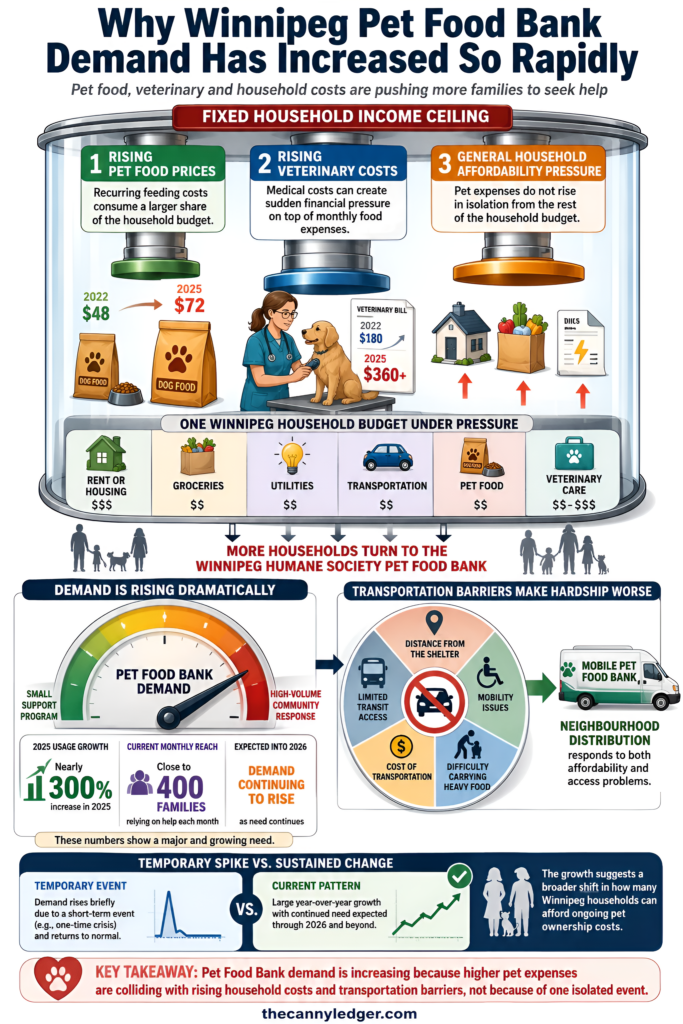
The scale of recent growth isn’t a minor fluctuation. WHS staff have directly connected rising Pet Food Bank demand to the same cost pressures showing up across household budgets more broadly, rising pet food prices, rising veterinary costs, and a general economic squeeze that’s pushed pet ownership costs beyond what a growing number of Winnipeg households can absorb without help. A representative from the organization specifically noted that access and transportation challenges compound the underlying affordability problem, which is part of why the Mobile Pet Food Bank exists as a direct response rather than simply expanding the main program’s capacity alone. The nearly 300 percent jump in usage over a single year suggests this isn’t a temporary spike tied to one specific event, but a sustained shift in how many Winnipeg households need this kind of support just to keep a pet fed.
How to Help Instead of Access

For anyone in a position to support the program rather than use it, WHS accepts direct pet food donations at their location, and financial contributions specifically earmarked for the Pet Food Bank through their donation page. Community and corporate partnerships have played a real role in keeping the program running at its current scale, the Winnipeg Jets Wives and Girlfriends organized a pet food drive at a Jets home game in early 2026 specifically in support of the program, an example of the kind of visible community fundraising that’s helped offset the sharp rise in demand. Even a modest, recurring monthly donation matters here given how directly food supply levels determine what a given household actually receives at pickup.
If You’re Outside Winnipeg’s Core Service Area

For pet owners elsewhere in Manitoba, or anyone wanting a broader view of pet food assistance across Canada, Humane Canada’s National Pet Food Bank Map tracks pet food bank programs nationwide, a useful tool for confirming whether a similar resource exists closer to a specific community outside Winnipeg’s immediate reach. This kind of program has become common enough across Canada that a genuine gap in access, rather than a genuine absence of any pet food assistance nearby, is often the real barrier worth investigating first.
Common Questions About Pet Food Assistance in Winnipeg
Does the WHS Pet Food Bank help with anything besides dog and cat food? The core program is specifically focused on dog and cat food. For other pet-related financial pressures, veterinary costs or a housing-related pet crisis, the Urgent Care and Emergency Boarding programs covered above are the more relevant WHS resources to look into separately.
What happens if I need more food before my monthly request is due again? The one-request-per-month structure is built around typical, ongoing need rather than emergency top-ups, so anyone facing an urgent gap before their next scheduled request should contact WHS directly to ask about options, including whether a Mobile Pet Food Bank event happens to be scheduled sooner in their area.
Is there any connection between needing the Pet Food Bank and needing housing support? Not directly through WHS, but pet owners facing a broader financial squeeze are often navigating both at once. Anyone dealing with housing costs on top of pet-related expenses may find it worth checking pet-friendly apartment options on a budget or Manitoba’s Rent Assist program alongside pet food assistance, since housing and pet costs frequently strain the same household budget together.
Apply through the WHS website before assuming a pet has to go without, and don’t wait until the situation feels like an emergency to look into it, the one-year enrollment window and monthly request structure work best when set up before a household is already in crisis. Between the core Pet Food Bank, the Mobile Pet Food Bank reaching neighbourhoods directly, and the surrounding support programs aimed at keeping pets in their homes, real help exists for Winnipeg pet owners facing a genuine, growing affordability gap.

