

- Can a Winnipeg Landlord Say No to Pets?
- The Pet Deposit Rule Most Renters Get Wrong
- Real Numbers: What Move-In Costs With a Pet
- Service Animals Are a Different Legal Category
- The Citywide Rule That Has Nothing to Do With Your Landlord
- Where to Actually Search for Pet-Friendly Listings
- Questions to Ask Before You Fall in Love With a Unit
- Common Questions About Renting With Pets in Winnipeg
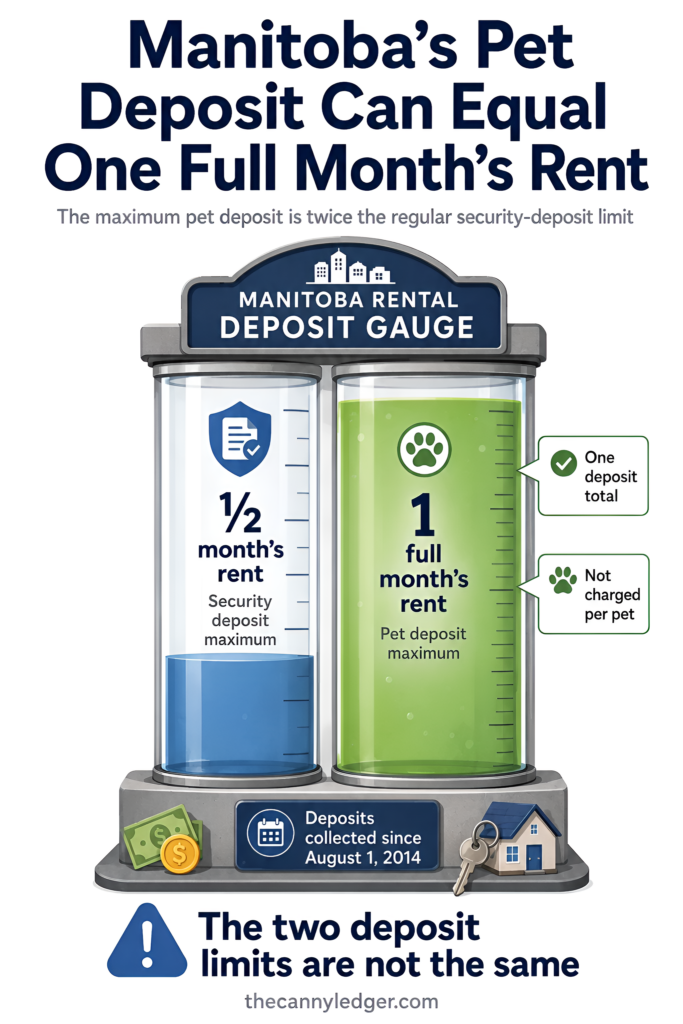
Most renters budgeting for a move already know Manitoba caps the standard security deposit at half a month’s rent. What catches a lot of pet owners off guard is that the pet deposit isn’t held to that same cap. On a rental where the security deposit runs $650, a landlord can legally ask for a full $1,300 more just for the pet, nearly triple what a renter without an animal would need to move in with.
Here’s the direct answer: yes, Manitoba landlords can legally refuse pets entirely, and when they do allow them, they’re permitted to charge a pet damage deposit worth up to one full month’s rent, separate from and in addition to the regular security deposit. Finding an affordable pet-friendly unit in Winnipeg means budgeting for that reality upfront rather than discovering it partway through move-in.
Can a Winnipeg Landlord Say No to Pets?
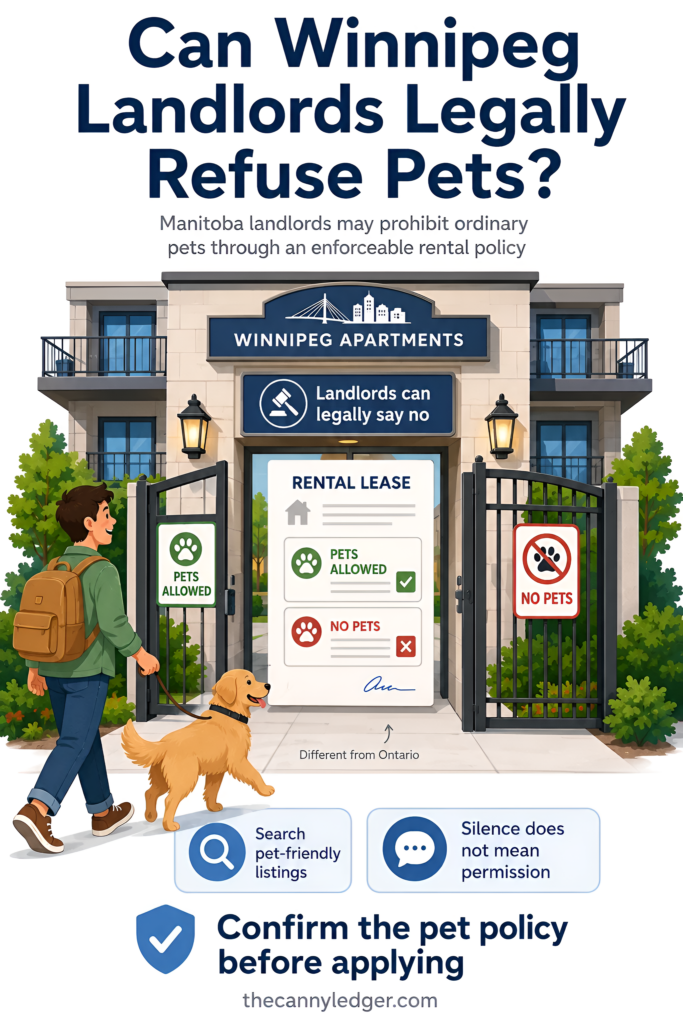
Unlike Ontario, where a “no pets” clause in a lease is legally void, Manitoba landlords are within their rights to prohibit pets entirely, and that clause holds up if a tenant tries to challenge it later. This makes Manitoba’s rental market meaningfully less pet-friendly by default than some other provinces, which is part of why hunting specifically for pet-friendly listings, rather than assuming most buildings will accommodate a pet, matters more here than it might elsewhere in the country.
The Pet Deposit Rule Most Renters Get Wrong
A fair number of online guides get this detail wrong, stating that Manitoba’s pet deposit is capped at half a month’s rent, the same as the standard security deposit. It isn’t. According to Manitoba’s Residential Tenancies Branch, a pet damage deposit collected on or after August 1, 2014 can be up to a full month’s rent, twice the ceiling on the regular security deposit. Landlords can only charge one pet damage deposit total, regardless of how many pets a tenant has, and that deposit can’t be charged at all for tenants relying on a service animal.
Real Numbers: What Move-In Costs With a Pet
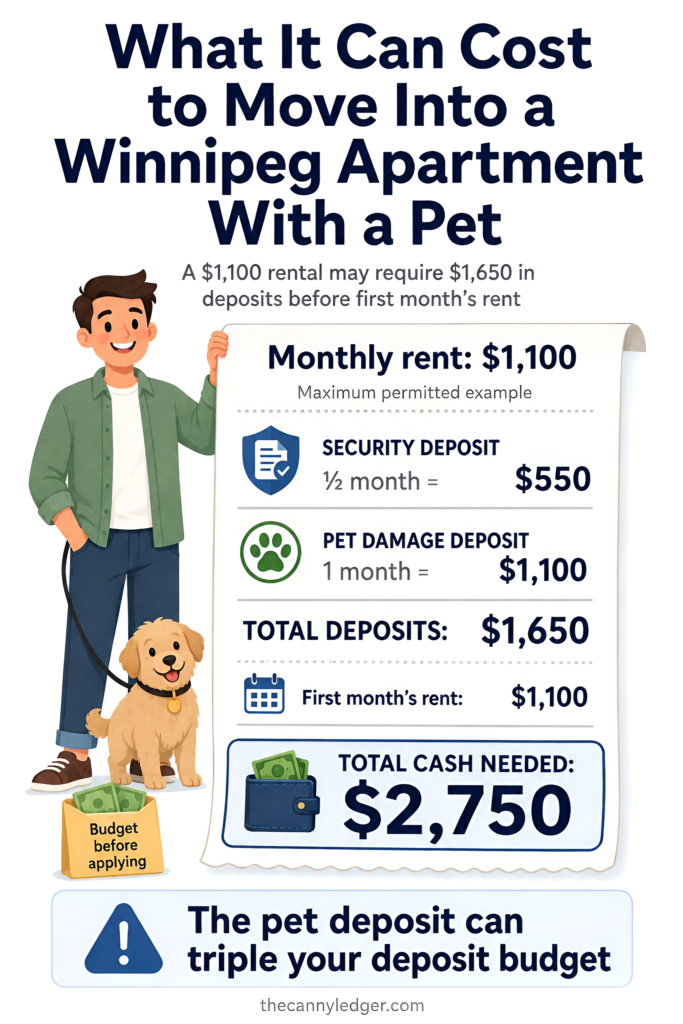
Run the math on a modest $1,100 a month one-bedroom and the gap becomes concrete. The standard security deposit tops out at $550. Add a pet damage deposit at the maximum allowed rate and a pet-owning tenant could be asked for another full $1,100 on top of that, bringing total move-in deposits to $1,650 before first month’s rent is even factored in. That’s not a hypothetical worst case, it’s simply what the law permits a landlord to request, so budgeting only for a security deposit and assuming a small add-on for the pet is a common and expensive miscalculation.
Service Animals Are a Different Legal Category
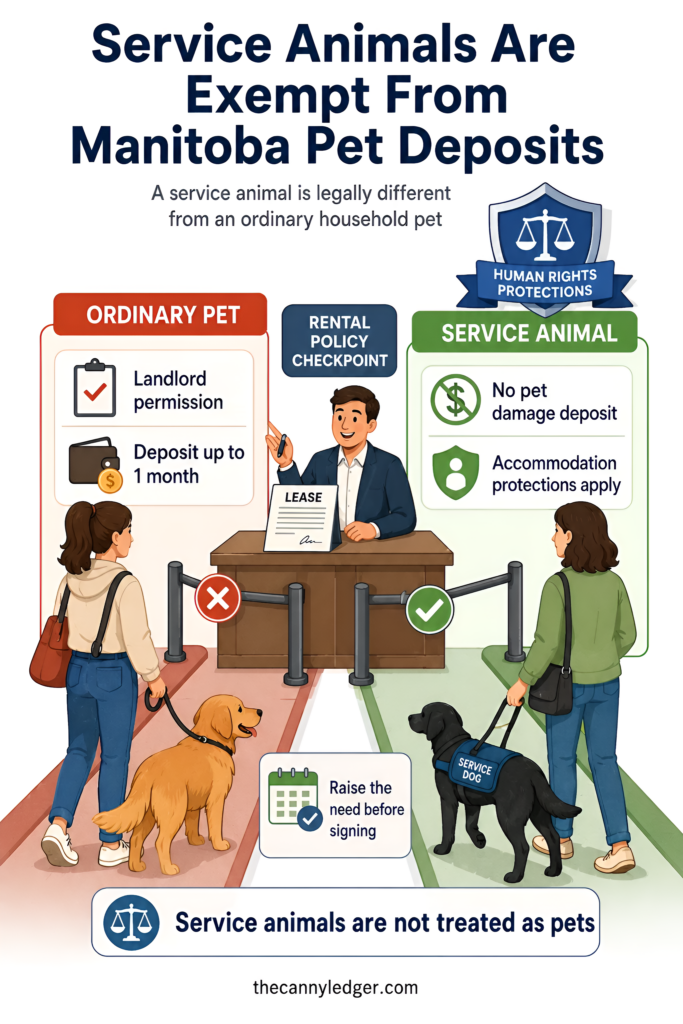
Manitoba law draws a clear line between pets and service animals. A landlord cannot charge a pet damage deposit for a tenant who relies on a service animal, and refusing to rent to someone specifically because of a service animal raises separate human rights concerns beyond ordinary tenancy law. If a landlord’s listing says “no pets” but a prospective tenant needs a service animal, that’s worth raising directly and early, since the legal protections here are different from the ones covering an ordinary pet.
The Citywide Rule That Has Nothing to Do With Your Landlord
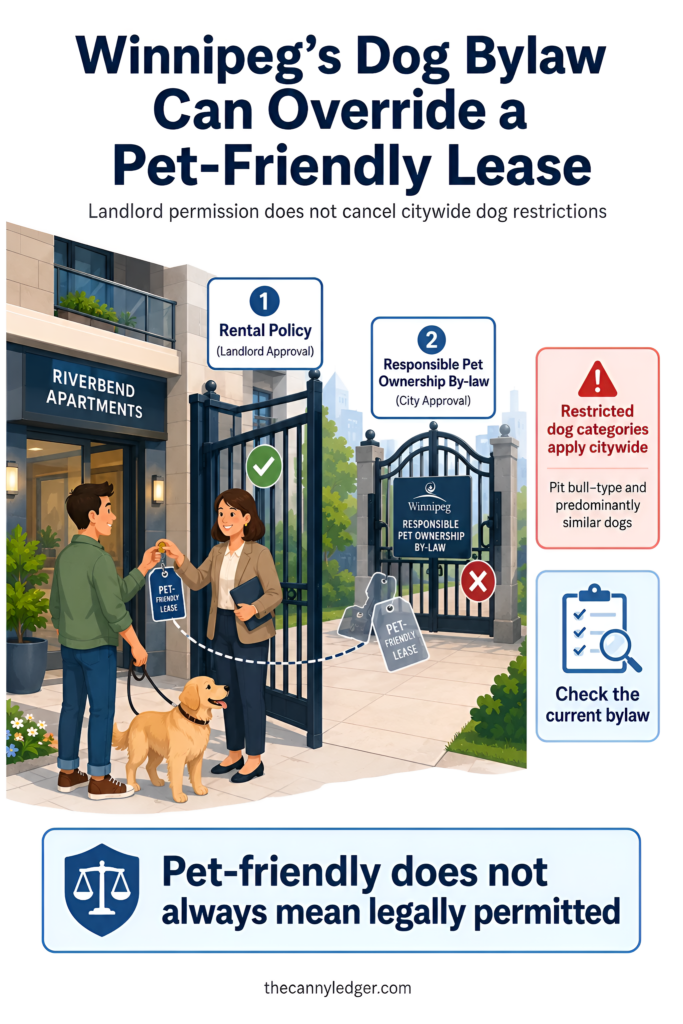
Even a landlord who’s happy to rent to pet owners can’t override a separate layer of restriction: Winnipeg’s Responsible Pet Ownership By-law prohibits certain dog breeds citywide, including American Pit Bull Terriers, Staffordshire Bull Terriers, American Staffordshire Terriers, and dogs with a predominantly similar appearance, such as most American Bully dogs. This ban has been in place since 1990 and survived a close 2022 city council vote to repeal it, so it isn’t a lease term a landlord can waive even if they wanted to. Anyone with, or planning to get, a dog that might fall into this category should check the current bylaw details directly before assuming a pet-friendly building solves the whole problem, since the debate over the ban is ongoing and worth tracking if it affects your household.
Where to Actually Search for Pet-Friendly Listings
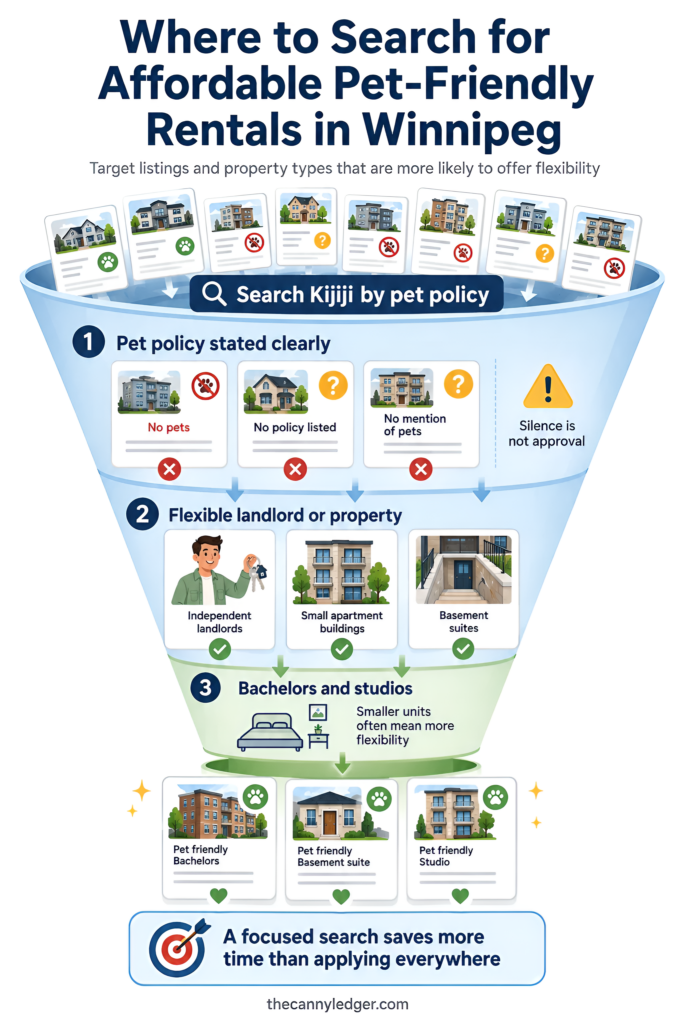
Because Manitoba landlords can refuse pets outright, filtering generic listings and hoping for the best wastes time. Kijiji remains one of the deepest sources for Winnipeg rentals, and searching it effectively means looking specifically for listings that state pet policy upfront rather than assuming silence means yes. Smaller, independently-managed buildings and basement suites are often more flexible on pets than large corporate-managed apartment complexes, simply because an individual landlord can make a one-off decision a property management company’s blanket policy won’t allow. If a strict budget and pet ownership are both non-negotiable, checking bachelor and studio listings alongside pet policy can widen the pool of realistic options, since smaller units in older buildings sometimes come with more flexible landlords even if the space itself is tighter.
Questions to Ask Before You Fall in Love With a Unit
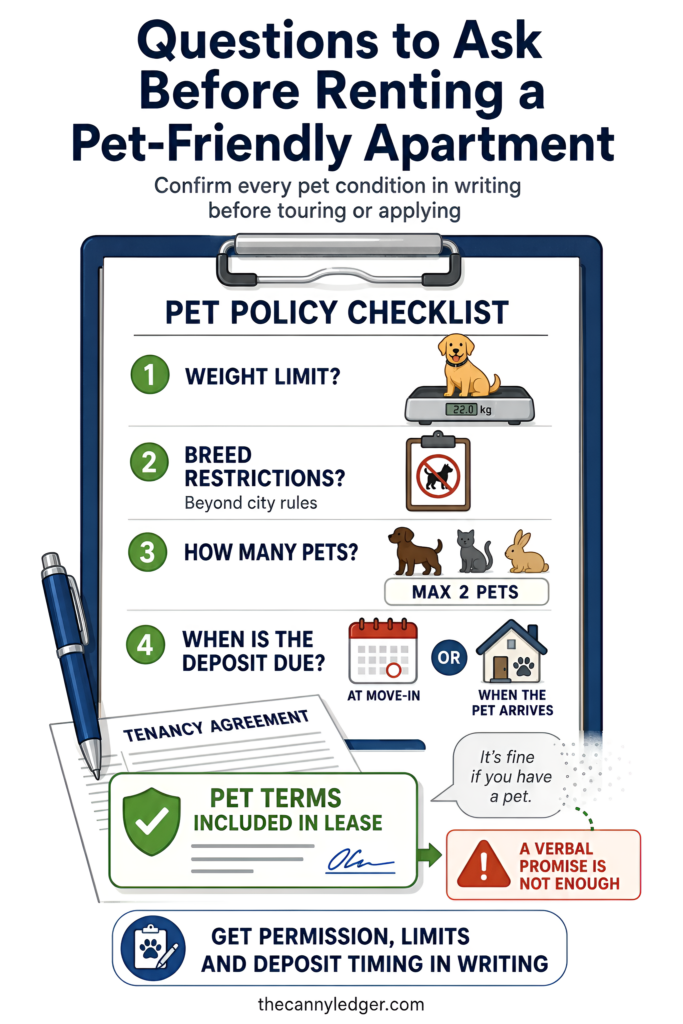
Before touring a unit or submitting an application, ask directly whether there’s a weight limit, a breed restriction beyond the citywide ban, or a cap on the number of pets allowed, and get the answer in writing as part of the lease rather than a verbal assurance. A landlord who’s flexible in conversation but never puts pet terms into the actual tenancy agreement leaves a tenant with no real recourse if the policy quietly changes later. It’s also worth asking whether the pet deposit is charged at move-in or only once a pet is actually brought into the unit, since Manitoba rules allow either timing depending on when the pet arrives relative to the start of the tenancy.
Common Questions About Renting With Pets in Winnipeg
Can a landlord evict a tenant over a pet after initially allowing it? Yes, if the pet causes real problems. A landlord can pursue eviction if a pet substantially damages the unit, seriously disturbs other tenants, or poses a genuine safety risk, though minor, ordinary pet-related wear generally doesn’t meet that bar. The pet damage deposit exists specifically to cover the damage scenario without needing to go that far.
Do apartment buildings in Winnipeg commonly add their own breed or weight restrictions beyond the citywide ban? Yes, and these vary building to building since they’re a landlord’s own policy, not law. A building might allow cats but not dogs, cap dog weight at a certain size, or limit tenants to one pet total, none of which is dictated by the city bylaw covering only the prohibited breeds. Always confirm a specific building’s own rules rather than assuming the citywide bylaw is the only restriction in play.
Does renter’s insurance matter more for pet owners? It’s worth having regardless, but pet owners have an extra reason to check what’s covered. Some renter’s insurance policies exclude liability for dog bites from certain breeds or require disclosing pet ownership upfront, so it’s worth reading the policy specifically with a pet in mind rather than assuming a standard policy automatically covers pet-related incidents.
Budget for the full pet damage deposit from the start rather than treating it as a minor add-on, and confirm a building’s specific pet policy and any breed restrictions in writing before getting attached to a unit. Doing that upfront avoids the two most common ways pet owners get blindsided partway through a Winnipeg apartment search.