
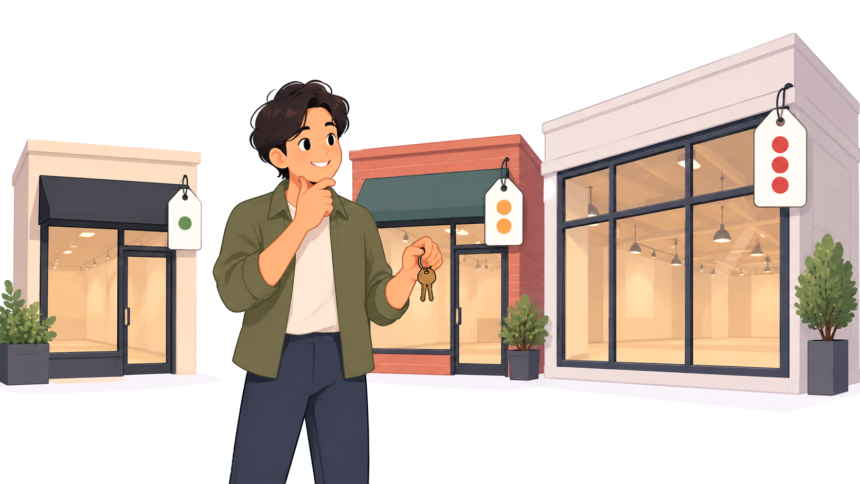
Scroll through commercial listings in Winnipeg and the quoted rent almost never tells the whole story. A recent listing from a local commercial brokerage advertised retail space at $10.95 a square foot, a number that looks genuinely affordable next to residential rent, until you spot the second line: $5.30 a square foot in CAM and tax charges on top, pushing the real cost closer to $16.25 a square foot before a single sale gets made. Most first-time small business tenants budget around that first number and get blindsided by the second.
- What “Cheap” Actually Means Per Square Foot
- The Second Number That Changes Everything: Additional Rent
- Industrial Space: The Cheapest Square Footage in the City
- Retail Space Costs More, But Foot Traffic Is the Trade-off
- Skipping the Lease Entirely: Coworking and Shared Office Space
- Running the Business From Home Instead
- The Permit You Still Need After Signing a Lease
- Where to Actually Search for Listings
- Common Questions About Renting Commercial Space in Winnipeg
Here’s the direct answer: commercial rent in Winnipeg averages around $17.13 a square foot across all property types, with industrial space running cheapest at roughly $10.65 and retail the most expensive at about $22.74. For businesses that don’t need a full storefront or warehouse, coworking desks starting around $280 a month and home-based business permits both offer a genuinely cheaper way in.
What “Cheap” Actually Means Per Square Foot
Winnipeg’s commercial market splits into three broad categories, and the price gap between them is wide. Industrial space, warehouses, distribution centers, and light manufacturing units, runs the cheapest at an average asking rate of $10.65 a square foot. Retail space sits at the opposite end, averaging $22.74 a square foot, since storefronts are paying for visibility and foot traffic rather than just square footage. Office space falls somewhere between the two, though it doesn’t get tracked separately with the same consistency as industrial and retail. Blended across every commercial category in the city, the citywide average lands at $17.13 a square foot, with the cheapest listed spaces going for as little as $1.15 and premium locations asking up to $40.
On a 1,000 square foot unit, that gap between industrial and retail works out to roughly $12,000 a year, real money for a small operation deciding between a workshop tucked into an industrial park and a storefront on a busy street.
The Second Number That Changes Everything: Additional Rent
Most commercial leases in Winnipeg follow a net lease structure, meaning the quoted rent is only the base rent, not the full cost. On top of that, tenants typically pay “additional rent” or CAM (common area maintenance) charges covering property taxes, insurance, and shared building upkeep, and that second number can add anywhere from a few dollars to nearly as much as the base rent itself. The listing mentioned earlier isn’t an outlier: another current Winnipeg industrial listing quotes $15.95 a square foot in net rent plus $3.25 in CAM and tax, while a separate retail listing lists a $12.95 base rent with additional rent still being estimated. Before comparing two listings by their headline rent alone, always ask for the full all-in cost per square foot, since the cheaper-looking option on paper isn’t always the cheaper option once both numbers are added together.
Industrial Space: The Cheapest Square Footage in the City
For businesses that don’t need customer-facing space, a workshop, storage, light manufacturing, or a distribution operation, industrial space is consistently the most affordable route into commercial real estate in Winnipeg. The market currently includes warehouse and distribution units ranging from under 1,000 square feet up to 175,000 square feet, so a small operation isn’t forced into a lease sized for a much bigger business. Most listings run on a triple net (NNN) lease structure, which means the additional rent conversation above applies here just as much as anywhere else, so factor it in before assuming the lowest per-square-foot number in this category is the final cost.
Retail Space Costs More, But Foot Traffic Is the Trade-off
Retail’s higher average rent buys something industrial space doesn’t: visibility to walk-in customers. A storefront in a high-traffic area justifies its premium if the business genuinely depends on people seeing it from the street or wandering in, a café, a boutique, a service business built on impulse visits. For a business that gets most of its customers through appointments, online orders, or referrals rather than foot traffic, paying retail rates for that visibility is often money spent on something the business doesn’t actually need.
Skipping the Lease Entirely: Coworking and Shared Office Space
For businesses that need a professional space without committing to a multi-year commercial lease, coworking memberships are worth a serious look. Across several Winnipeg providers, a dedicated desk membership commonly runs somewhere between $280 and $380 a month, while day passes start around $65 and private offices can range from roughly $300 up to $750 a month depending on size and provider. Launch Coworking operates three Winnipeg locations, in the Exchange District, Osborne Village, and the city’s southside, all on month-to-month terms rather than a locked-in lease, which matters for a business that isn’t sure yet how much space it’ll need in a year. Larger providers like Regus offer the same flexibility with locations in areas like Osborne Village, and current listings on Kijiji show shared workspace memberships starting well under $200 a month for the most basic access tier.
Running the Business From Home Instead
The cheapest commercial space is often no commercial space at all. The City of Winnipeg doesn’t require a business licence for a home-based business, but zoning rules still apply, and a home-based business development permit is required if business mail comes to the home or administrative work happens there. Businesses that serve customers directly on the premises, a beauty service, pet grooming, repair work, or counselling, or that employ up to two non-resident staff, need an additional administrative conditional use approval on top of that permit. It’s a smaller hurdle than a commercial lease, but it’s a real one, and skipping it isn’t a shortcut worth taking, since operating without the required permit puts the business at risk if a neighbour complains or the city audits the property.
The Permit You Still Need After Signing a Lease
Here’s a step a lot of first-time commercial tenants miss entirely: signing a lease doesn’t automatically mean you’re legally allowed to open. Winnipeg requires a building occupancy permit confirming how a space is permitted to be used before a business can occupy it, and that permit needs to match the specific use, a space previously occupied by a hair salon isn’t automatically cleared for a restaurant, even if the square footage and layout look similar. Confirming this before signing, not after, avoids paying rent on a space for weeks while an occupancy classification gets sorted out.
Where to Actually Search for Listings
Beyond Kijiji for smaller, independently listed spaces, larger commercial listing platforms and local brokerages like ICI Properties list current asking rents with the base and additional rent broken out separately, which makes comparing real total cost across several properties much easier than working from a single listing at a time. Cross-checking a handful of listings across platforms before committing to a broker or a specific building gives a much clearer sense of what a realistic budget looks like for your specific space type and size.
Common Questions About Renting Commercial Space in Winnipeg
What’s the real difference between a gross lease and a net lease? A gross lease bundles rent, taxes, insurance, and maintenance into one flat number, simpler to budget around but less common in Winnipeg’s commercial market. A net lease, the more typical structure here, splits base rent from additional rent, so the quoted per-square-foot number is only part of the real monthly cost.
Do I need a business licence to open a storefront, even though home-based businesses don’t need one? Yes. The home-based business exemption applies specifically to operating out of a residence. A commercial storefront or office falls under the standard business licensing process through the City of Winnipeg, separate from the zoning permit needed for the space itself.
Is the additional rent portion of a commercial lease negotiable? Sometimes, though less often than base rent. CAM charges reflect actual building operating costs, so landlords have less room to move on them, but the base rent, lease length, and any tenant improvement allowance are usually more open to negotiation, especially in a building with existing vacancies.
Whichever route fits the business best, a workshop in an industrial park, a coworking desk, or working from home while the zoning paperwork gets sorted, the real number to budget around is never just the headline rent. Get the full per-square-foot cost, including additional rent, and confirm the occupancy and zoning requirements before signing anything, and the “cheapest” option on paper is far more likely to stay the cheapest option once the business actually opens its doors.